

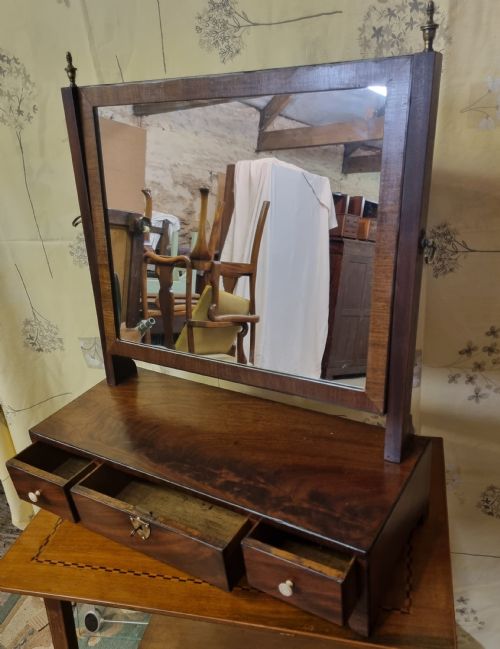
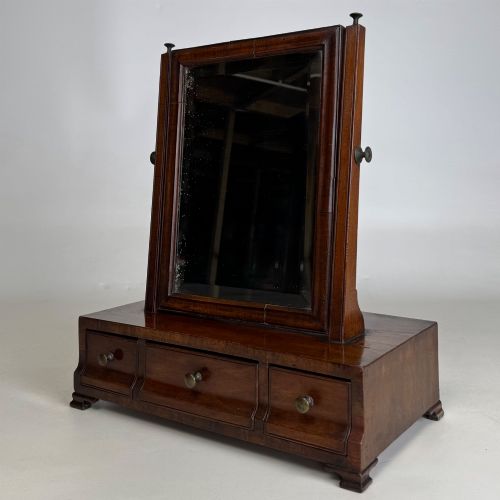
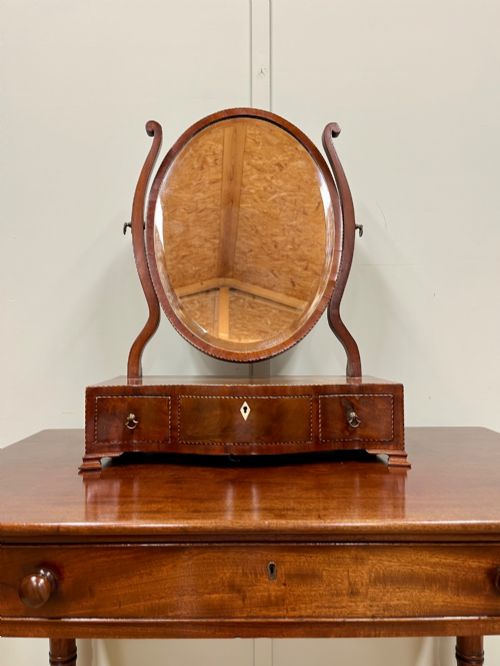
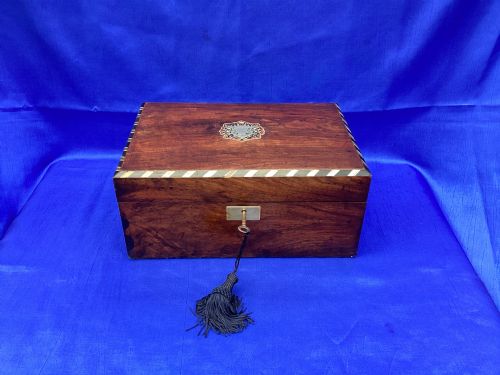
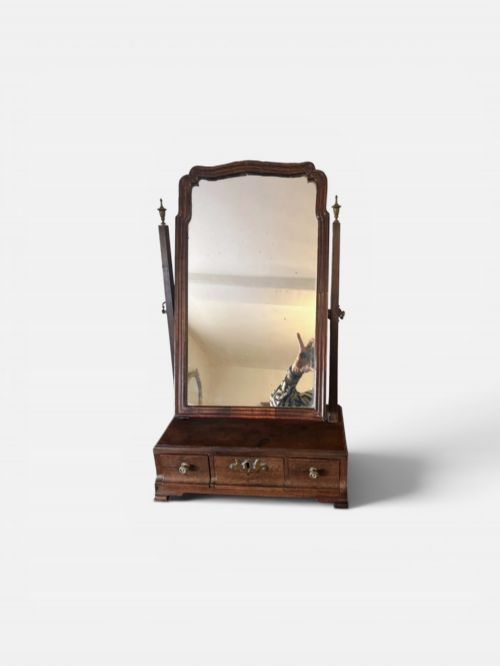
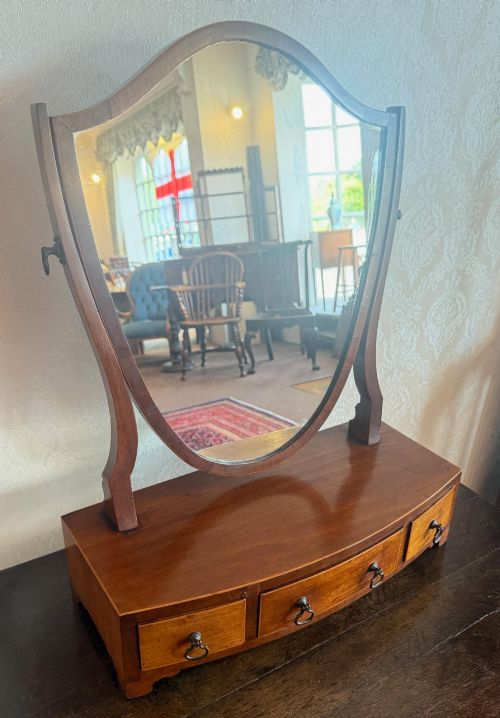
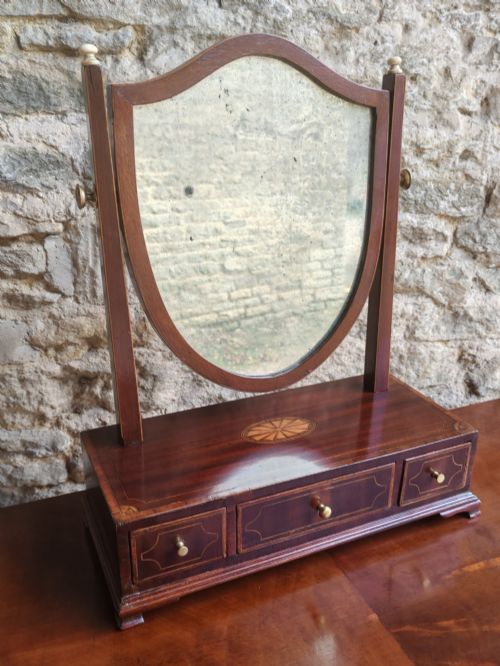

Mahogany Dressing Box
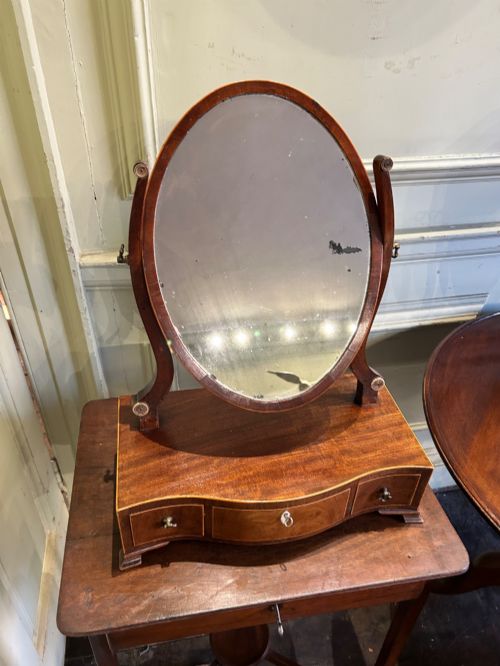
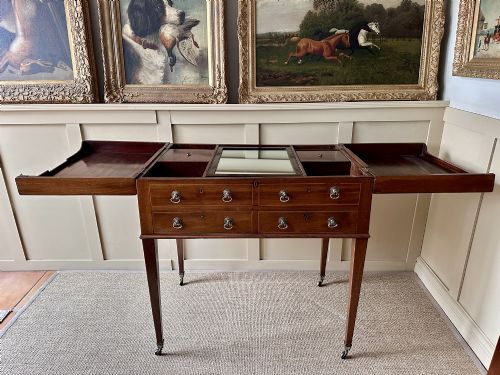
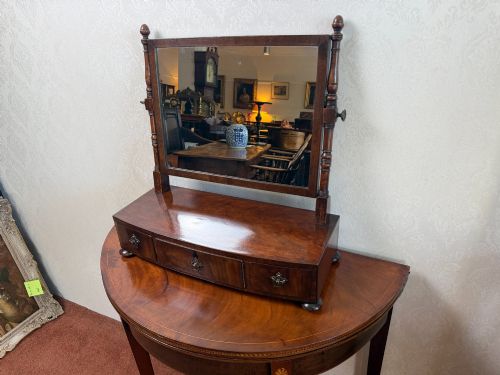
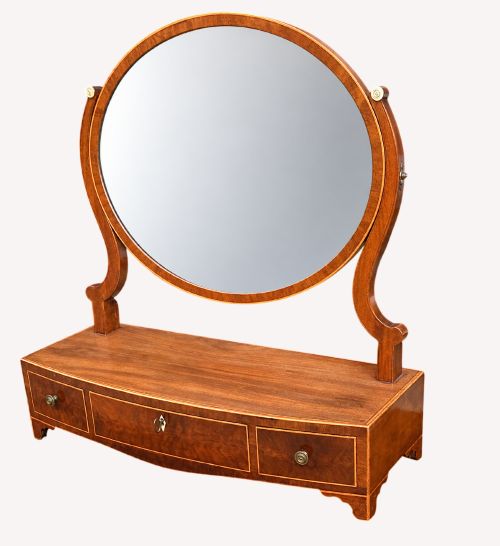
These mahogany dressing box pieces combine practical compartments with tilting mirror glass, built to sit upon a chest or table.
Mahogany Dressing Box
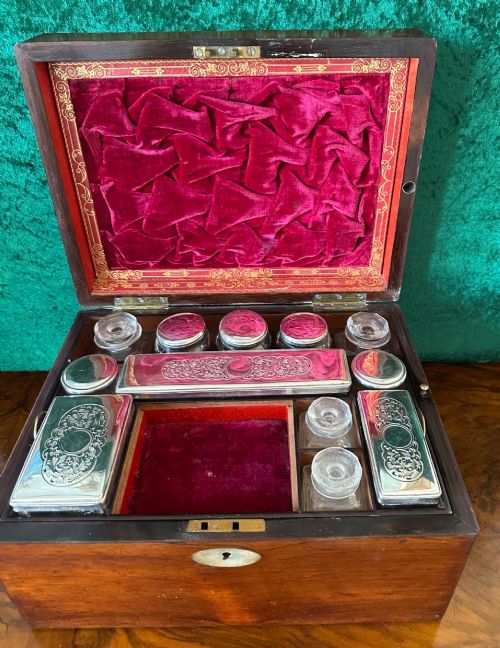
A mahogany dressing box brings together two distinct traditions of personal grooming furniture, spanning the eighteenth and nineteenth centuries. Buyers searching for a mahogany dressing box encounter small toilet mirrors fitted with drawer bases, alongside compartmented travelling and vanity boxes. Georgian and Regency pieces predominate here, supplemented by Victorian examples.
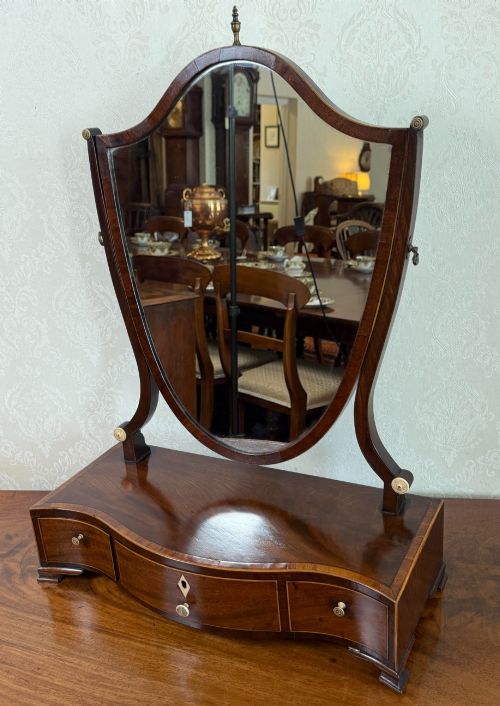
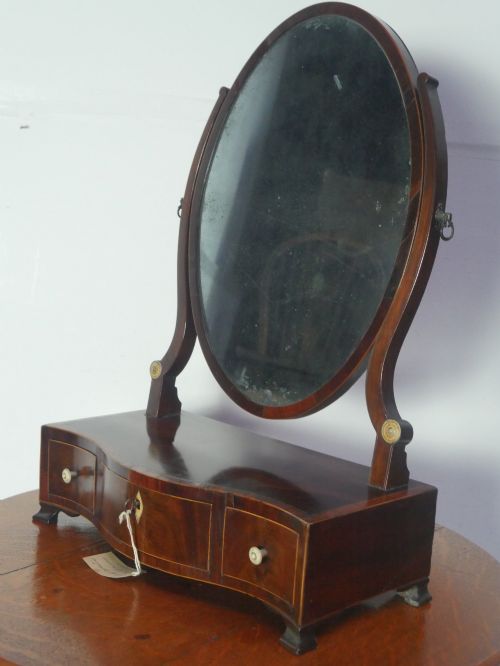
The form ranges from simple rectangular swing mirrors to sophisticated serpentine and bow-fronted box bases containing drawers for small valuables. Makers also produced larger table mirrors and fitted boxes furnished with bone, brass, and glass elements. These items served daily grooming routines in bedchambers and dressing rooms.
Materials and Construction
Makers built these pieces primarily using solid and veneered mahogany, frequently selecting flame mahogany for figured grain effects on drawer fronts and box lids. Secondary timbers supported structural elements while decorative details relied upon boxwood stringing, crossbanding, and occasional parcel-gilding.
Fitted interiors incorporated glass mirror plates, brass hinges and locking mechanisms, bone pulls, and velvet linings. Construction methods involved dovetailed drawer boxes and stable frame joints designed to support adjustable swing mirrors.
Mahogany Dressing Box Retail Price Guide 2026
Typical asking prices for mahogany dressing box among the pieces listed under this phrase on Sellingantiques today, from the lower quarter to the upper quarter. They describe what is for sale here now, not the wider market.
Listings feature mahogany dressing boxes spanning the eighteenth, nineteenth, and early twentieth centuries, incorporating Georgian, Regency, and Victorian styles.
Assessing Craftsmanship and Proportion
Quality rests upon the selection of timber and the precision of the cabinetwork, particularly around curved serpentine fronts and delicate boxwood stringing. Superior examples display well-figured mahogany veneers that match symmetrically across drawer fronts and box lids.
Proportion and stability separate standard items from finer work, as does the integration of original brass hardware and well-fitted interior compartments. The retention of original mirror glass and functional locking mechanisms also influences the standing of a piece.
The Mahogany Dressing Box Glossary
- Toilet Mirror
- A small mirror mounted on a frame designed to sit upon a dressing table or chest. These often incorporate a box base with small drawers.
- Swing Mirror
- A mirror plate pivoted between two upright posts so the angle can be adjusted. This mechanism is central to most dressing boxes and table mirrors.
- Serpentine
- A front contour that curves outward in the centre and inward at the sides. This shape requires advanced cabinet-making skill to execute cleanly in solid mahogany.
- Crossbanding
- A narrow strip of veneer laid across the grain of the primary surface to form a border. It frames drawer fronts and box lids on finer pieces.
- Stringing
- Thin inlaid lines of contrasting timber, such as boxwood, used to outline panels and drawers. It provides linear definition to plain mahogany surfaces.
Mahogany Dressing Box: Frequently Asked Questions
What is a mahogany dressing box used for?
These pieces served as portable or table-mounted stations for personal grooming, holding cosmetics, brushes, and small valuables. The integrated mirror allowed users to check their appearance during daily toilette routines.
Over time, many adapted to hold modern jewellery or stationary while retaining their original compartment layouts. They remain practical storage items for dressing tables and sideboards today.
How do I date a mahogany dressing box?
Dating relies upon observing the style of the base, the shape of the mirror supports, and the construction methods of the drawers. Eighteenth-century and Georgian examples typically feature cleaner, simpler proportions with subtle stringing, whereas Victorian pieces often display heavier proportions or flame mahogany veneers.
Hardware details like brass escutcheons and hinge types also provide clues to the decade of manufacture. Comparing the secondary timbers inside drawers helps narrow down the period further.
Are the mirror plates original?
Many surviving pieces retain their original glass, which can exhibit slight foxing, minor silvering loss, or subtle distortions. Replacement mirror plates appear frequently in older pieces due to breakages over centuries of use.
Inspect the backboards and mirror framing to see if the retaining pins or wedges look undisturbed. Original glass adds historical integrity to the piece.
How do I care for a mahogany dressing box?
Keep the wood away from direct sunlight and dramatic temperature fluctuations to prevent veneer cracking or timber movement. Dust regularly with a soft, dry cloth and avoid silicone-based polishes.
Periodically check the brass pivots on swing mirrors to ensure they are not overtightened against the wooden uprights. Leather and velvet interiors benefit from gentle brushing and protection from moisture.