


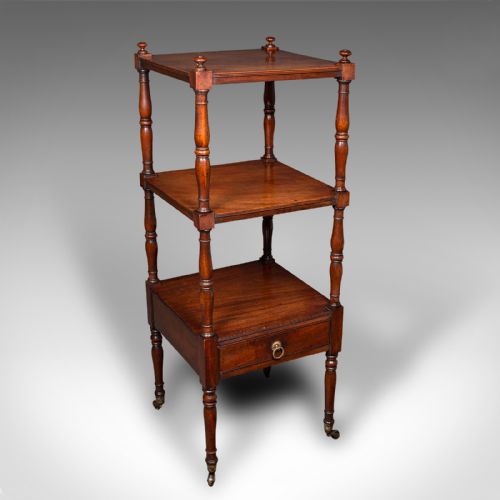

Mahogany Drawer Whatnot
A mahogany drawer whatnot is a tiered open display stand fitted with one or more storage compartments, prized for keeping prized possessions organised.
Mahogany Drawer Whatnot
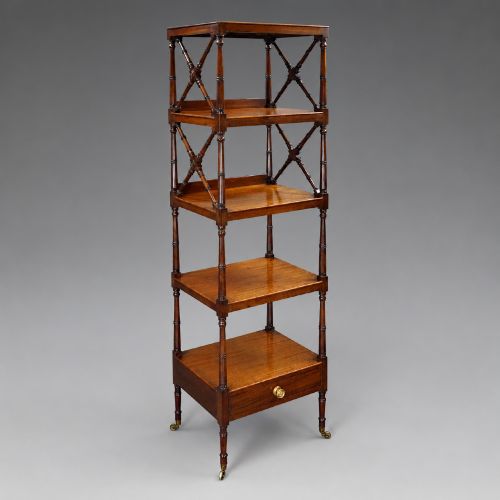
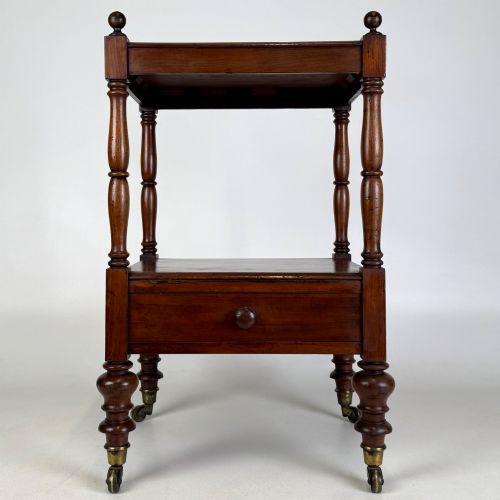
A mahogany drawer whatnot provides open tiers for display alongside enclosed storage at the base or within the tiers. These multi-purpose pieces appear frequently across Georgian, Regency, and Victorian periods.
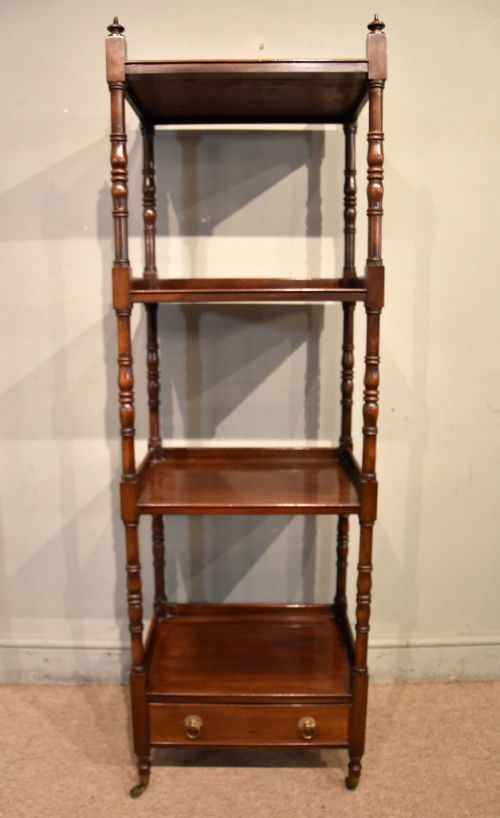
The standard form comprises three to five stacked shelves supported by turned or shaped columns, often incorporating a single lower drawer, multiple small drawers, or even a cellarette.
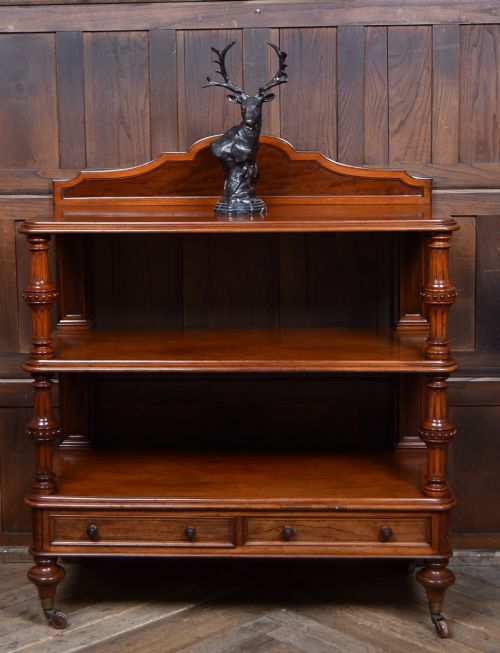
While many examples function as freestanding floor units with tiered open shelving, variations such as hanging shelves and cabinet-base hybrids also occur.
Materials and construction
Makers utilised solid mahogany and rich veneers, frequently mounting the tiered shelves on robust turned supports and finishing the bases with small feet or castors.
Fittings such as handles and castors commonly incorporate brass, while occasional decorative highlights utilise contrasting timbers like satinwood and rosewood.
Glass elements appear in related display pieces, though the core structure relies on traditional cabinet-making joinery to support multiple stacked tiers.
Scottish makers occasionally built particularly ambitious multi-tier variants packed with extra drawers for extremely thorough Victorians.
Judging quality and proportion
Quality rests primarily on the timber's grain and depth of colour, with superior examples exhibiting carefully selected mahogany figures across the tiers and drawer fronts.
Proportion and stability dictate the standing of a piece, as taller multi-tier designs require rigorous construction to maintain balance without heavy or clumsy supports.
Refinements such as multiple graduated drawers, finely turned columns, and well-integrated lower compartments elevate an example above plain utility items.
The Mahogany Drawer Whatnot Glossary
- Whatnot
- A piece of furniture consisting of a set of shelves for books or ornaments. It is often fitted with a drawer at the base.
- Étagère
- A piece of furniture with a set of open shelves for displaying small objects or ornaments. It is synonymous with the taller versions of these stands.
- Cellarette
- A lockable container or cabinet used for holding bottles of wine or spirits. Some substantial examples incorporate this feature into the lower section.
- Tier
- A single row or level in a series of structures placed one above the other. These stands commonly feature between three and five levels.
- Buffet
- A sideboard or cabinet used for serving food or storing tableware. Certain sturdy low variations share characteristics with these serving tables.
Mahogany Drawer Whatnot: Frequently Asked Questions
What was a mahogany drawer whatnot used for?
These versatile pieces served primarily in drawing rooms and dining rooms for displaying porcelain, silver, and ornaments while keeping smaller accessories tucked away in the lower drawers.
Their open tiers allowed homeowners to showcase decorative objects in an era that favoured cluttered, curated domestic interiors.
How many tiers do these stands usually have?
Most surviving examples feature between three and five open shelves stacked vertically above a base compartment or drawer.
Taller four and five-tier variants offer substantial vertical display space without taking up significant floor area in a room.
Where should I place a whatnot in my home?
They suit corners or flat walls in sitting rooms, studies, and hallways where their open shelves can hold books, plants, or collections.
Because they are finished on multiple sides, many freestanding versions look effective placed against a living room wall or beside seating.
How do I identify a Georgian piece from a Victorian one?
Georgian and Regency examples tend to feature restrained lines, lighter timber tones, and elegant proportions with delicate turned supports.
Victorian iterations often display heavier timber stock, richer golden or dark hues, and occasionally more elaborate details like mirrored backs or carved mouldings.