

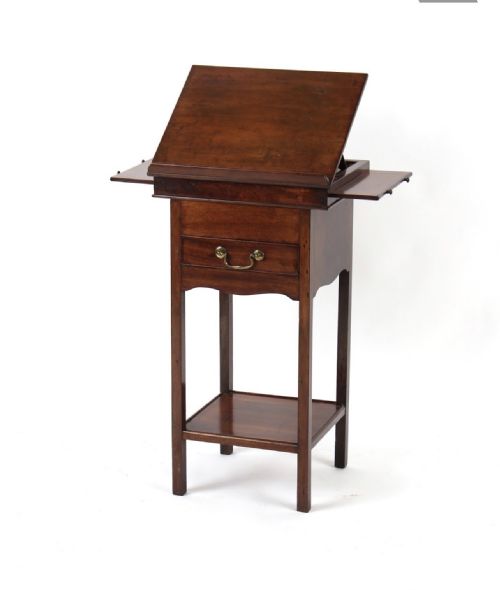


Mahogany Draft Table
A mahogany draft table is a substantial working surface built for planning and drawing, offering adjustable slopes and sturdy timber construction.
Mahogany Draft Table
A mahogany draft table is primarily found from the Georgian and Regency periods, built to serve the practical needs of architects, cartographers and designers. These pieces often feature adjustable writing surfaces, pull-out ledges and compartmented interiors tailored for plans and drawing instruments.
Most examples encountered here belong to the Georgian and Regency eras, alongside later Victorian interpretations. They appear in forms ranging from freestanding library tables to metamorphic riser desks with sophisticated mechanical actions.
The materials visible across these pieces rely heavily on rich mahogany timber, frequently paired with inset leather writing surfaces and fine secondary woods like boxwood and satinwood stringing. Brass castors and fittings frequently complete the construction.
Construction and materials
The primary material across these pieces is solid and figured mahogany, selected for its density, rich colour and stability under daily use. Cabinetmakers paired this primary timber with secondary woods for internal drawers and linings.
Adjustable mechanisms and reading slopes relied on precise joinery and brass ratchets, allowing the working surface to be raised or angled securely. Leather or baize was frequently incorporated as a writing surface inset into the timber top.
Mahogany Draft Table Retail Price Guide 2026
Typical asking prices for mahogany draft table among the pieces listed under this phrase on Sellingantiques today, from the lower quarter to the upper quarter. They describe what is for sale here now, not the wider market.
Object forms grouped under this search include dedicated reading tables, metamorphic riser desks and large folio tables intended for cartographers.
Judging quality and execution
Quality in a mahogany draft table is determined by the selection of figured mahogany timber and the crispness of any inlaid details like boxwood and satinwood. Finer pieces demonstrate superior joinery in the carcass and smooth operation of any internal mechanisms or rising desks.
The integration of brass hardware and the sophistication of the mechanical action separate standard workshop pieces from superior examples. Secondary woods and internal drawer construction also reveal the level of care taken by the cabinetmaker.
Edwards and Roberts·Gillows
The Mahogany Draft Table Glossary
- Metamorphic
- Furniture designed to transform from one form of object into another, such as a table converting into a standing desk. These pieces utilise clever internal mechanisms.
- Riser desk
- A form of writing table featuring a central section that lifts on a ratchet to create an inclined working surface. It suited draughtsmen and readers alike.
- Cartographer
- A maker of maps whose professional furniture required specialised surfaces and storage for large sheets of paper. Folio tables often served this exact purpose.
- Stringing
- Thin inlaid lines of contrasting timber, such as boxwood or satinwood, used to decorate the borders of mahogany furniture. It adds subtle visual contrast to plain surfaces.
Mahogany Draft Table: Frequently Asked Questions
What is a mahogany draft table used for?
These tables served primarily as practical working desks for architects, draughtsmen and cartographers who required stable, adjustable surfaces for drawing plans.
They also functioned as reading tables and general library furniture within prosperous domestic settings.
How do I adjust the reading slope?
Adjustment typically relies on a concealed brass ratchet mechanism fitted beneath the hinged writing surface, allowing the board to be raised to various angles.
Users simply lift the timber flap to the desired height and engage the support arm within the rack.
How do I tell a Georgian table from a Victorian one?
Georgian and Regency examples tend to feature restrained proportions, robust solid mahogany construction and simpler functional brass hardware suited to professional workspaces.
Victorian pieces often introduce richer inlaid details, such as boxwood stringing, or heavier proportions reflecting changing aesthetic tastes.
Where should I place this table in a room?
Because many examples feature finished backs and detailed timber grain all round, they sit comfortably freestanding in the middle of a study or library.
Ensure adequate natural light falls across the adjustable surface if you intend to use the writing slope for drawing or reading.