

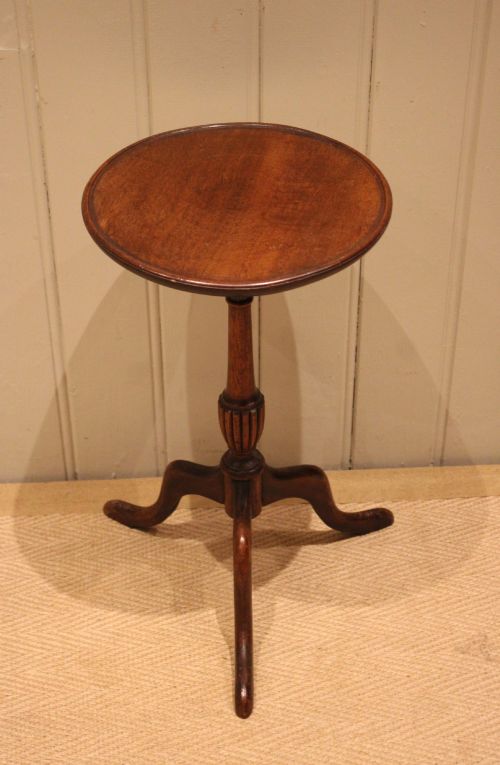
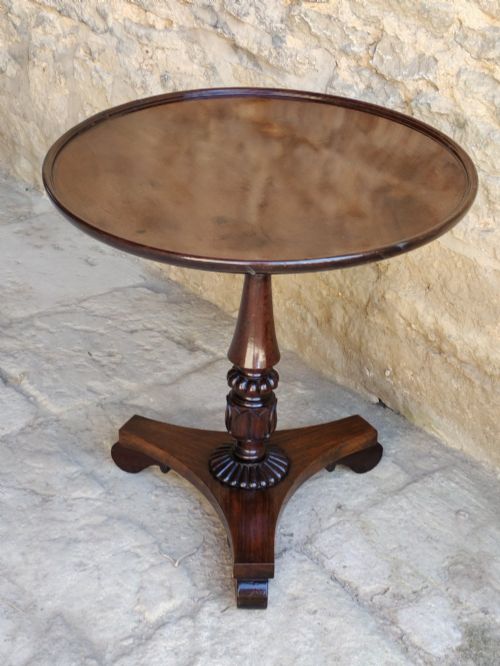
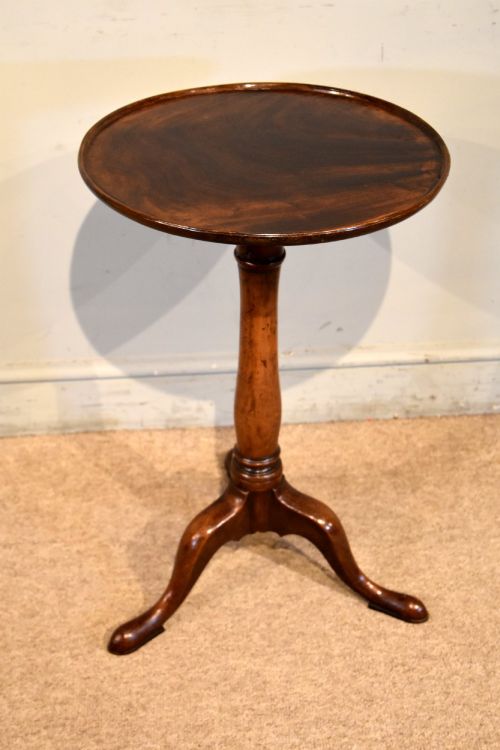
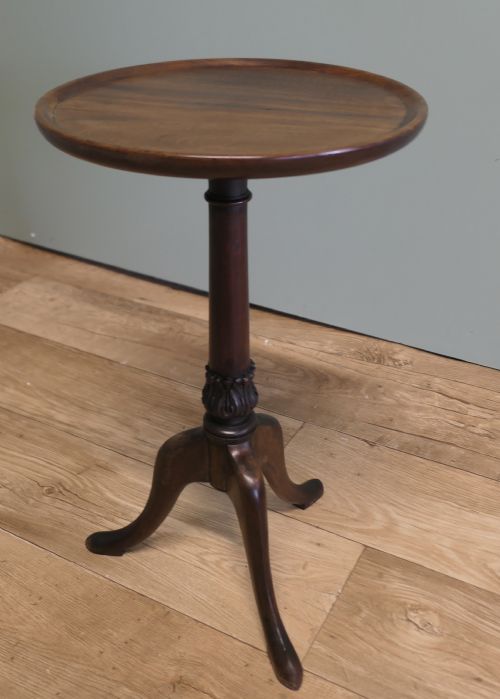
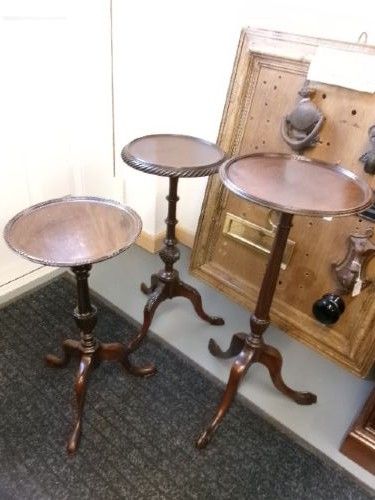
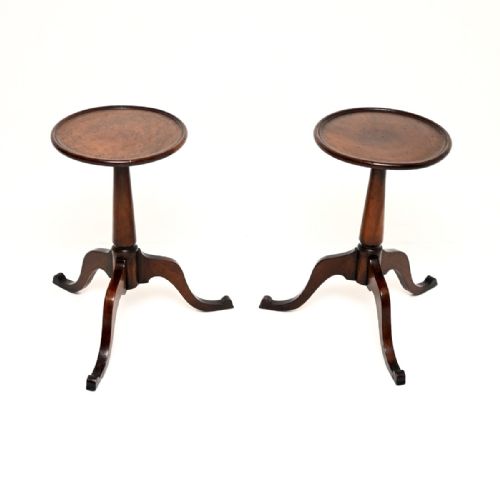
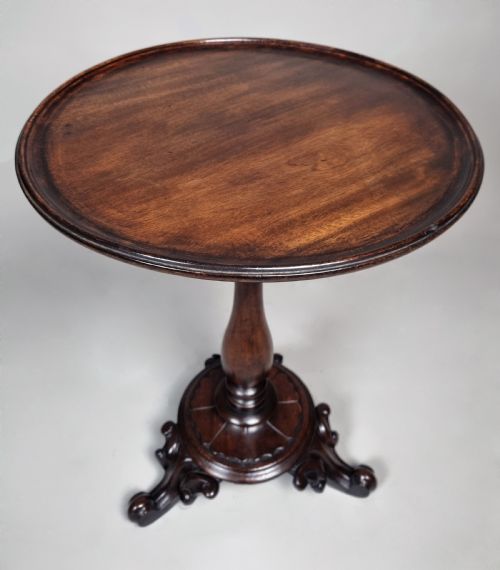
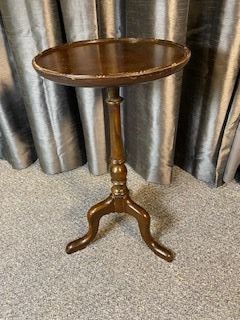
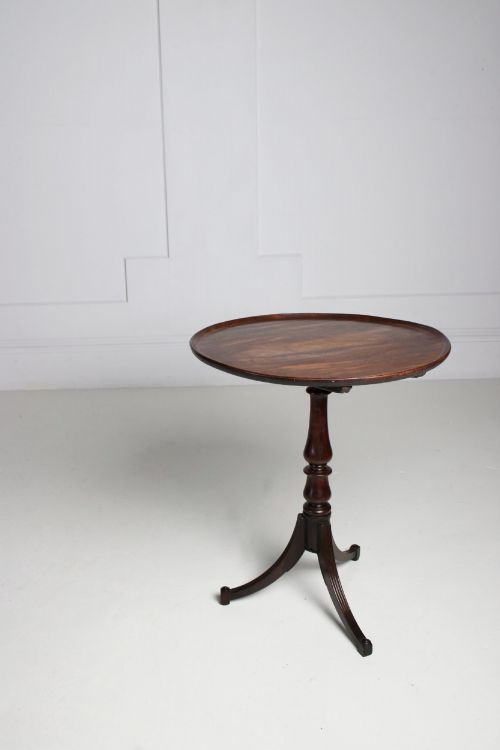
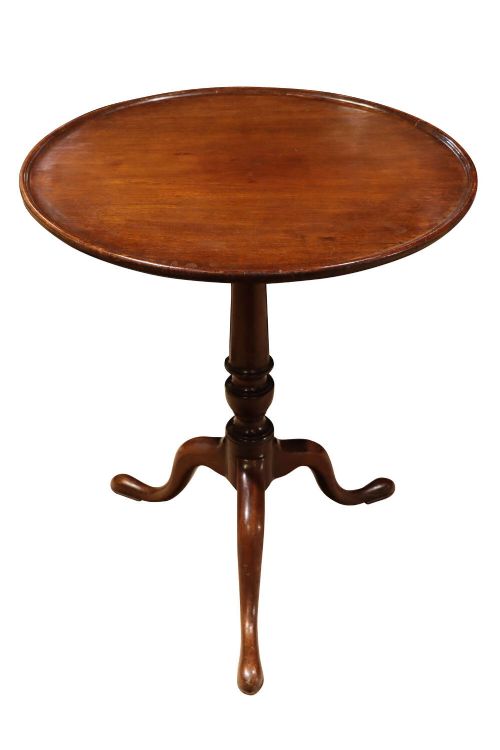
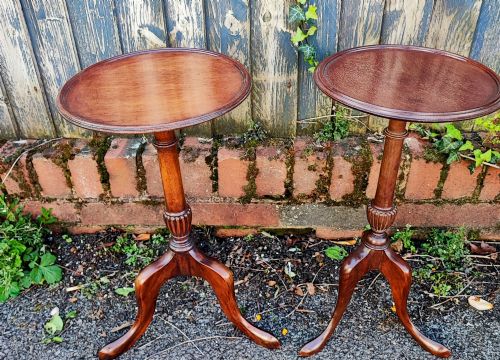
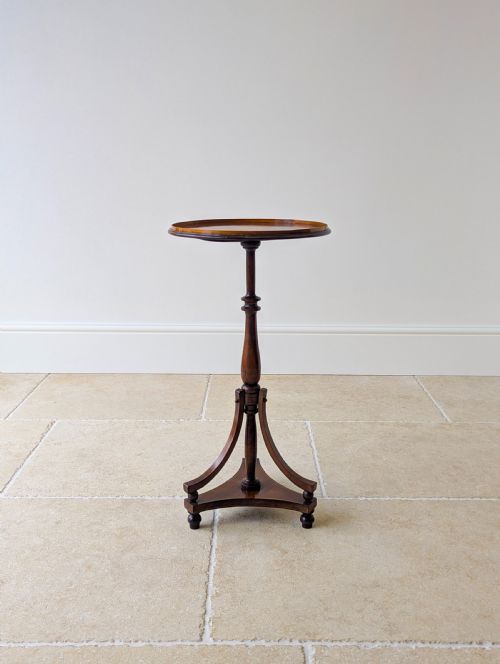
Mahogany Dish Top Tripod Table
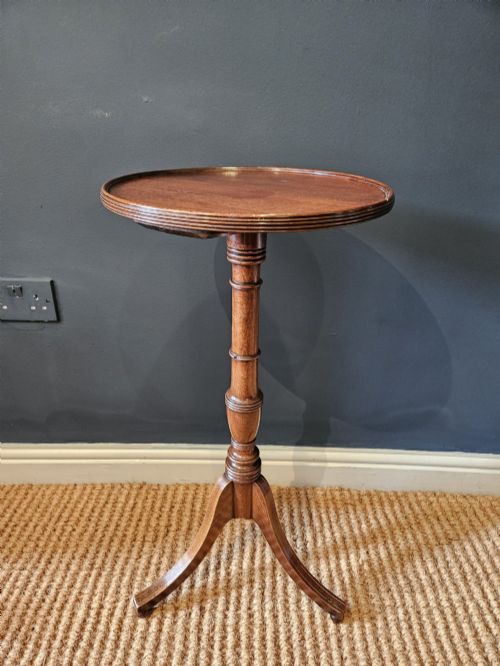
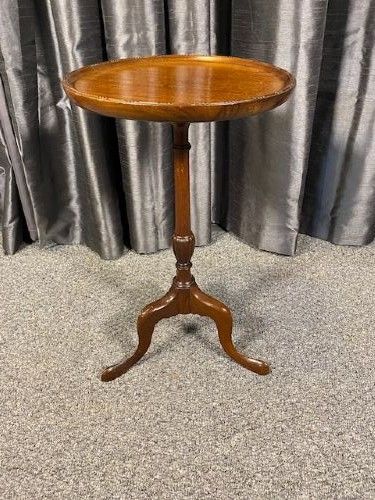
A mahogany dish top tripod table brings compact elegance to a corner, offering a raised rim to keep glasses and candlesticks secure.
Mahogany Dish Top Tripod Table
The mahogany dish top tripod table sits on a central pillar supported by three splayed legs, designed for serving wine or holding candles in eighteenth and nineteenth-century parlours.
You will most commonly encounter Georgian and George III examples alongside later Victorian and Edwardian interpretations, often sold under the alternative names of wine tables, kettle stands or supper tables.
These tables serve as versatile occasional pieces today, functioning beside a sofa or in a hallway where surface space is limited.
Materials and construction
Cabinetmakers turned solid mahogany for the central pillars and shaped the distinctive raised rims directly from thick timber planks or applied moulded borders to circular tops.
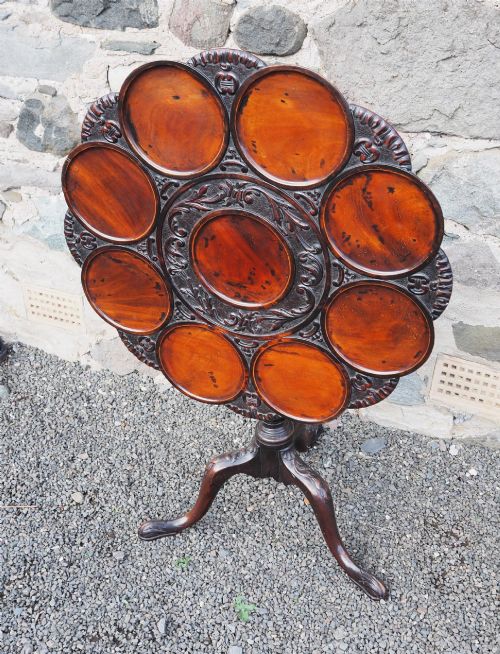
The tripod base joins the central column using traditional joinery, often incorporating a birdcage mechanism that allows the circular top to tilt and rotate.
Mahogany Dish Top Tripod Table Retail Price Guide 2026
Typical asking prices for mahogany dish top tripod table among the pieces listed under this phrase on Sellingantiques today, from the lower quarter to the upper quarter. They describe what is for sale here now, not the wider market.
Some tables feature birdcage mechanisms so the top spins like a compass while tilted.
Assessing quality and finish
Quality rests in the crispness of the turning on the central column and the proportion of the three legs as they sweep outward from the shaft.
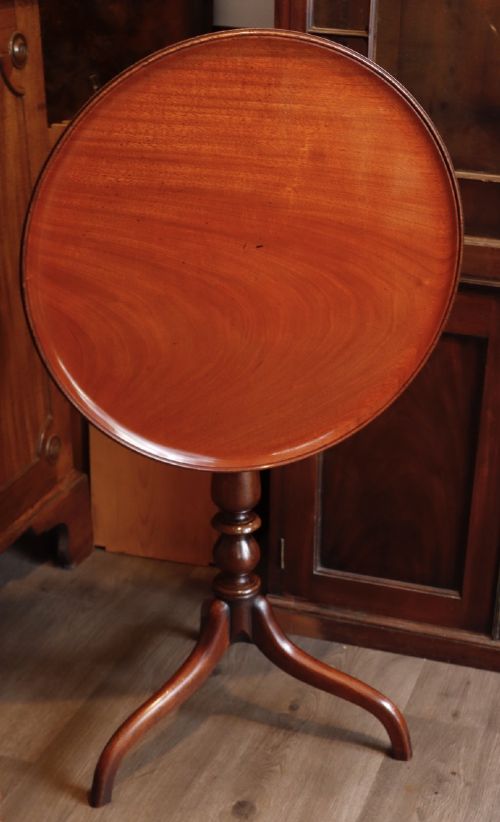
Finer examples display figured mahogany grain on the circular top and retain their original tilt mechanisms without excessive play in the joints.
Gillows
The Mahogany Dish Top Tripod Table Glossary
- Dish top
- A circular table top with a raised rim carved from the solid wood or moulded separately to prevent items from sliding off. This feature defines the primary utility of wine and candle tables.
- Tripod base
- A support structure comprising a central pedestal set upon three curving legs. This design provides stability on uneven floors.
- Tilt top
- A hinged mechanism beneath the table surface that allows the top to fold flat when not in use. It enabled these tables to be stored against walls in period rooms.
- Birdcage
- A wooden revolving assembly beneath the table top that permits both rotation and tilting. It sits atop the central column in better pieces.
- Kettle stand
- A small occasional table designed to hold a tea kettle or beverage equipment. These share the compact proportions of wine tables.
Mahogany Dish Top Tripod Table: Frequently Asked Questions
What were dish top tables used for originally?
These tables held wine bottles, glasses and candles beside seating areas during the Georgian period.
The raised rim prevented glassware from sliding off when the surface was crowded during evening gatherings.
How do I spot a tilt top mechanism?
Look underneath the circular surface for a wooden block and catch release situated at the top of the central pillar.
This mechanism allowed the table to fold flat against the wall to save space when the room was cleared.
Are these tables sturdy enough for daily use?
The three-legged design naturally accommodates uneven floorboards without rocking if the joints remain tight.
They handle lamps and drinks well, though heavy leaning should be avoided due to the lightweight pillar construction.
How do I tell an 18th-century table from a later copy?
Early pieces show hand-turned pillar work, dense mahogany weight and timber shrinkage consistent with age.
Later Victorian and Edwardian revivals often utilise machine-cut joints and different secondary woods beneath the top.