
Mahogany Dining Seating
Mahogany dining seating brings together robust tropical timber and formal English design, offering sturdy elegance for the dining room.
Mahogany Dining Seating
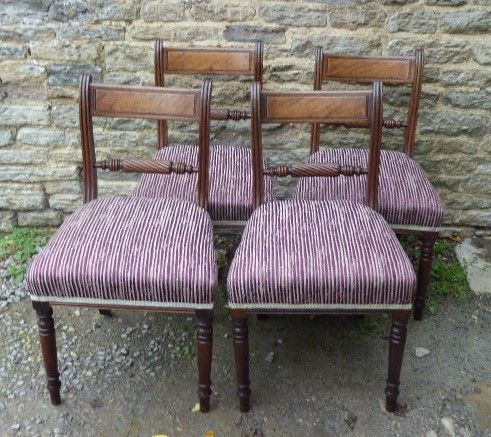
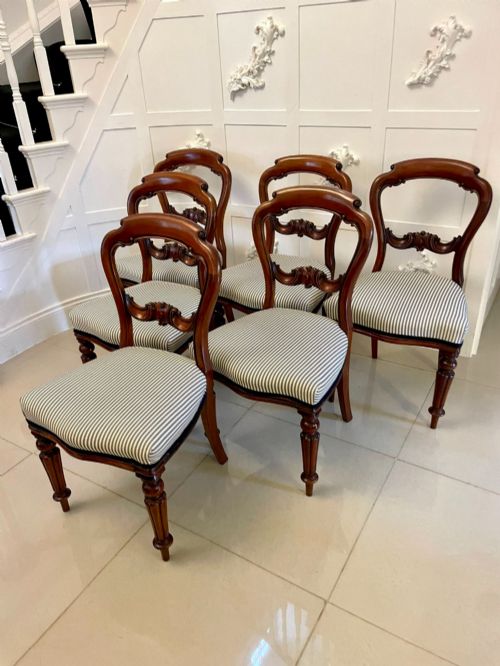
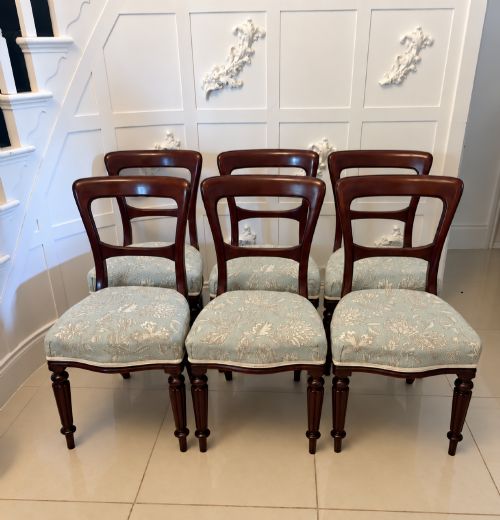
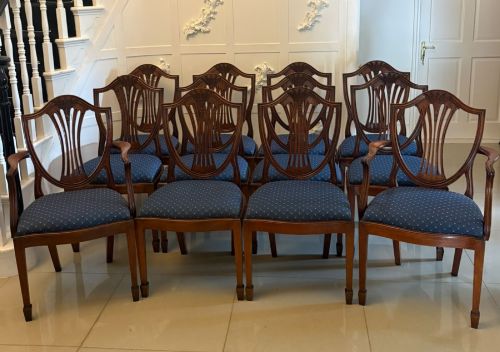
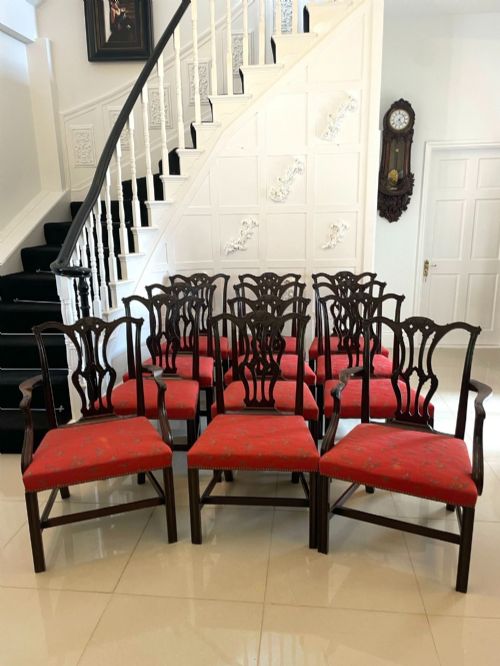
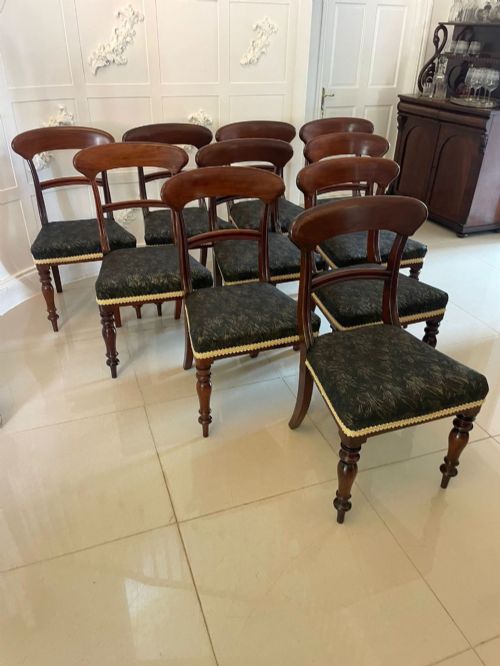
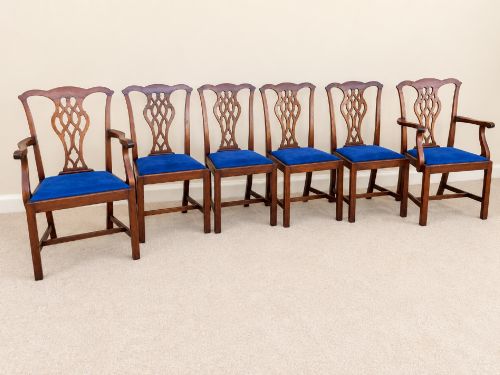
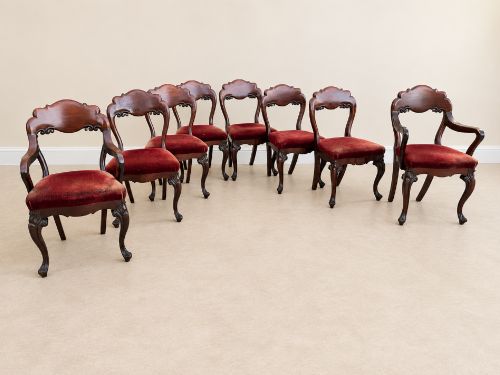
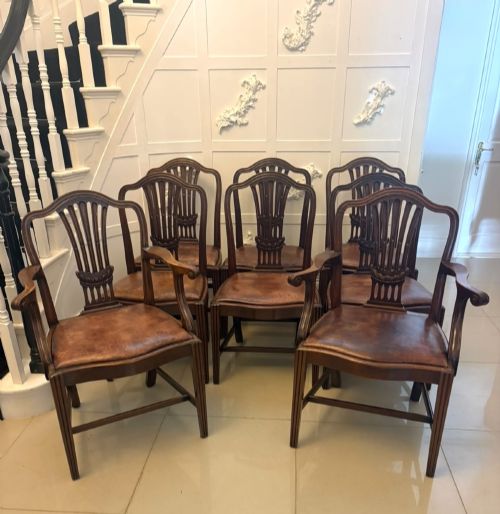
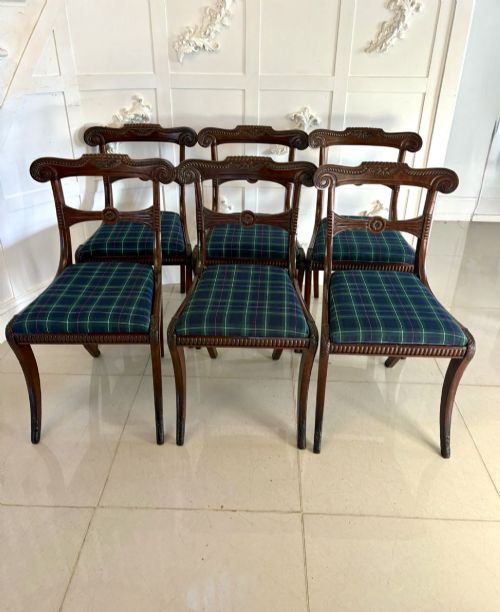
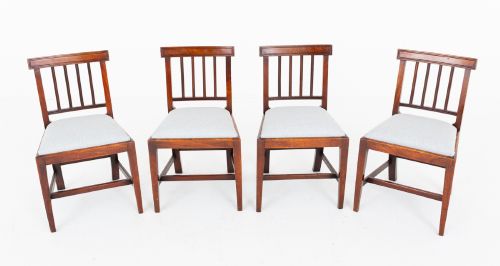
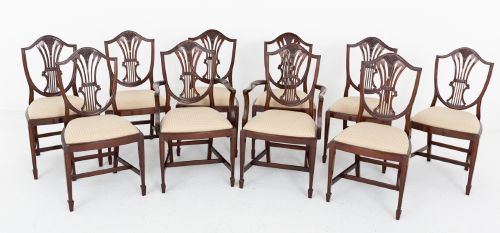
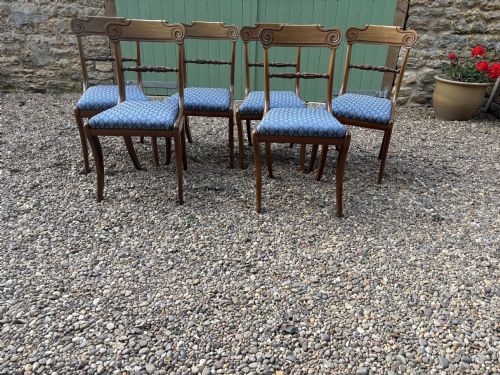
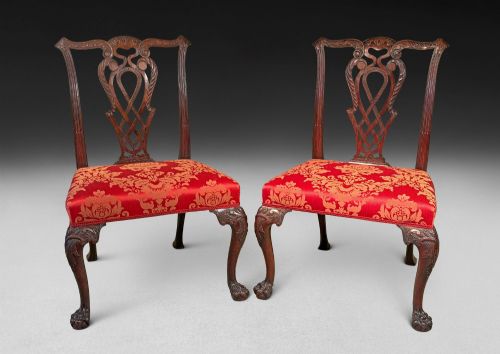
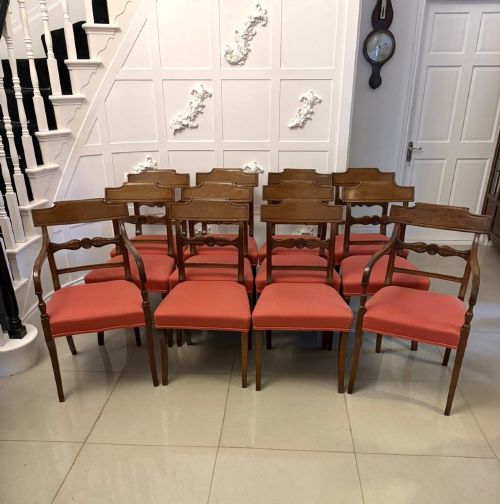
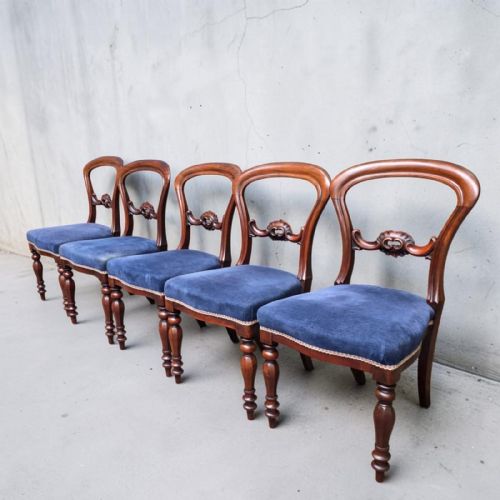
Mahogany dining seating encompasses dining chairs, armchairs, side chairs, hall chairs, and extending dining tables spanning the eighteenth, nineteenth, and early twentieth centuries. You most commonly meet sets of matching chairs alongside individual carvers and larger dining tables created during the Georgian, Regency, William IV, and Victorian periods.
The objects take various specific forms such as shield back, ladderback, bar back, and balloon back configurations, frequently grouped in sets ranging from pairs and quartets up to large sets of ten or twelve. Makers often produced these items in stylistic revivals alongside pieces made during the primary reigns.
Originating predominantly from English workshops, these items also appear with Scottish or Dutch regional characteristics, reflecting the enduring popularity of dark timber dining furniture across multiple eras.
Design and Execution
Quality separates through the crispness of the carved details, the selection of figured mahogany timber, and the integrity of the original construction. Superior sets display balanced proportions across every single chair and carver, while simpler examples show standard production methods.
The presence of documented workshop attribution or distinct regional traits elevates the standing of a set. Consistent matching across larger groups of chairs rather than assembled sets also distinguishes higher-grade dining seating.
Several dining sets include a solitary carver that spent decades looking important at the head of the table while the singles did all the work.
Gillows·Warings·Maple & Co
The Mahogany Dining Seating Glossary
- Shield back
- A chair back design shaped like a heraldic shield, popularized during the eighteenth century by designers like Hepplewhite. The wooden frame frequently incorporates carved splats and symmetrical openwork.
- Bar back
- A horizontal curved wooden slat across the upper back of a dining chair, typical of the William IV and Regency periods. This form provides back support while displaying the grain of the mahogany.
- Ball and claw
- A furniture foot carved to resemble a bird's talon gripping a ball. This decorative motif appears on eighteenth-century seating.
Mahogany Dining Seating: Frequently Asked Questions
How do I clean mahogany dining seats?
Dust the timber regularly with a dry, soft cloth to prevent grime buildup on the carved surfaces. Avoid harsh chemical cleaners that strip the polished finish.
Condition the wood periodically using traditional wax polish to maintain the natural lustre of the mahogany. Keep upholstered sections vacuumed gently and protect leather or fabric from direct sunlight.
Can I mix different chair styles?
Mixing single chairs with matching carvers at the table ends follows historical dining room traditions. Ensure the wood tone and approximate height align.
Matching larger sets maintains visual harmony across the room, but pairing period revival side chairs with an extending table creates a layered interior.
How do I date mahogany seating?
Examine the construction joints, timber weight, and carved motifs to determine the likely period of manufacture. Georgian and Regency pieces often show hand-cut joinery and dense Cuban mahogany.
Compare the back design, such as shield back or balloon back, against known stylistic timelines. Revival pieces from the Edwardian era often replicate earlier Georgian forms with distinct machine-assisted precision.
Are antique chairs sturdy enough?
Most antique dining chairs benefit from solid mahogany frames that withstand daily use. Period joinery remains robust when maintained properly.
Check the stability of the leg joints and underframes before heavy daily seating. Professional tightening of loose joints ensures the seating remains functional for modern dining.