





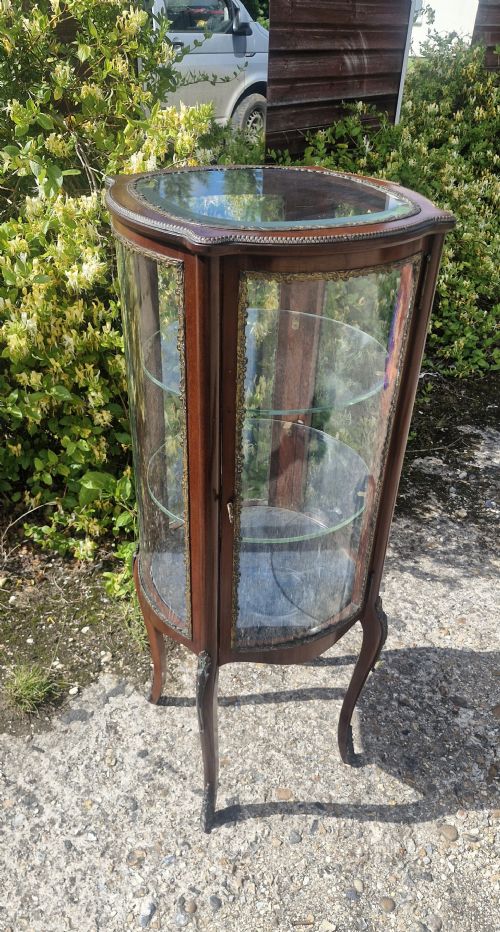


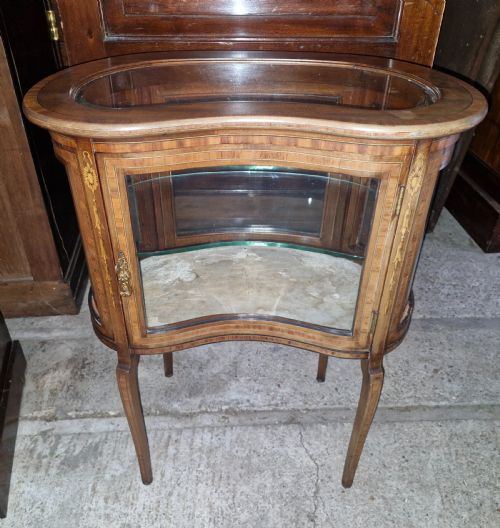


Mahogany Curio Display Table
A mahogany curio display table lets you protect small valuables while keeping them entirely visible beneath glass.
Mahogany Curio Display Table
A mahogany curio display table combines a glazed compartment for small objects with a stable wooden support structure. These pieces serve to exhibit jewellery, medals and curiosities at a comfortable viewing height while keeping them safe from dust.
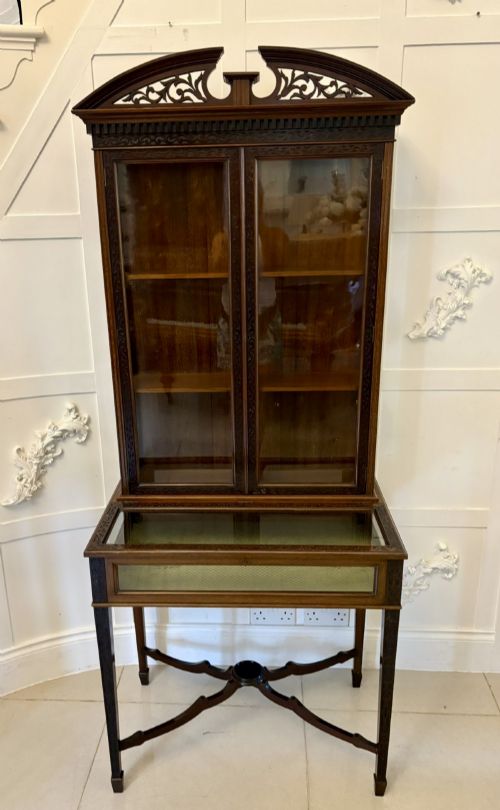
The pieces on this page appear in forms such as bijouterie tables, vitrines, whatnots and display cabinets. Edwardian examples and nineteenth-century designs dominate the selection, spanning styles from Sheraton Revival to French Louis XVI.
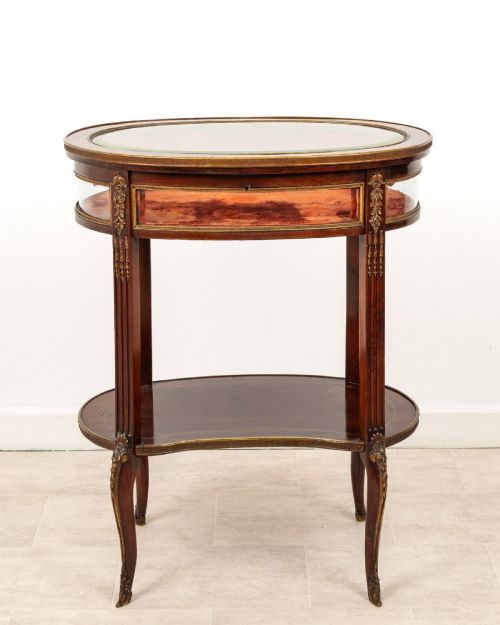
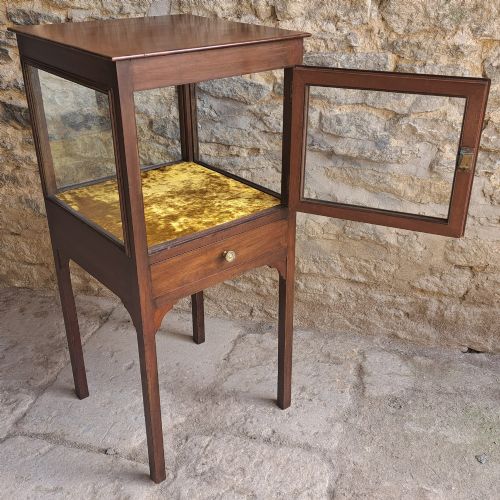
Makers often shaped these tables with serpentine or kidney outlines to soften the rectangular proportions of a room. Interiors typically feature velvet, fabric or satinwood lining to cushion the objects placed inside.
How they were made
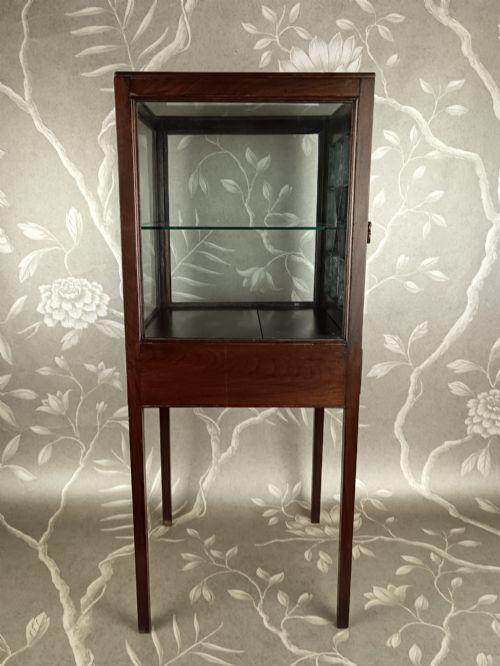
Craftsmen built these tables using solid mahogany or applied mahogany veneers over secondary timbers. Glass panels fitted into the top and sides allow light to reach the interior compartment from multiple angles.
Metal enrichment plays a significant role in the construction of many examples. Brass, ormolu and gilt metal mounts accent the edges and legs, while interior surfaces receive textile linings such as velvet or fabric.
Mahogany Curio Display Table Retail Price Guide 2026
Typical asking prices for mahogany curio display table among the pieces listed under this phrase on Sellingantiques today, from the lower quarter to the upper quarter. They describe what is for sale here now, not the wider market.
Listings feature mahogany, glass, brass, velvet, fabric, satinwood, ormolu and gilt metal across Edwardian, Victorian, Georgian and twentieth-century periods.
What varies in quality
The distinction between standard production and superior work rests on the crispness of the carving and the precision of the joinery. Finer tables exhibit intricate marquetry and careful grain selection rather than plain timber surfaces.
Hardware and metalwork also indicate the grade of the piece. Heavy cast ormolu mounts and finely chased brass details demonstrate a higher tier of workshop execution compared to simple stamped metal fittings.
The Mahogany Curio Display Table Glossary
- Bijouterie table
- A glass-topped table specifically designed for displaying small precious items, medals and trinkets. These pieces lift open or feature hinged lids to allow access to the velvet-lined interior.
- Vitrine
- An upright or table-top glass display cabinet intended for showing off porcelain, curios and fine objects. The term derives from the French word for glass.
- Ormolu
- Gilt bronze mounts applied to furniture for decorative effect. This technique was widely utilised in French and English cabinet making during the nineteenth century.
- Marquetry
- Inlaid wood patterns formed by fitting contrasting veneers into a primary background. Craftsmen used this method to create floral or geometric motifs on table tops.
- Whatnot
- An open set of shelves or a multi-tiered display piece used for ornaments and books. Victorian examples sometimes combined this open format with enclosed display areas.
Mahogany Curio Display Table: Frequently Asked Questions
What is a bijouterie table?
A bijouterie table is a specialised display piece featuring a glazed top and a shallow internal compartment lined with fabric or velvet. It allows collectors to exhibit small valuables safely.
These tables place the objects at eye level when seated, making them practical for viewing delicate items without handling them.
How do I clean the glass?
Cleaning the glass requires a soft cloth and a mild glass cleaner applied sparingly. Avoid spraying liquid directly onto the frame to protect the wood and fabric interior.
Take care around Ormolu mounts and brass inlays so that moisture does not seep into the surrounding joints.
Where should I place it?
Position your display table away from direct sunlight to prevent the interior velvet lining from fading. A central location or an area near a window provides good natural light for viewing the contents.
Ensure the room maintains stable humidity levels to protect the mahogany timber and veneered surfaces from splitting.
How do I date an Edwardian piece?
Edwardian display tables date from the reign of King Edward VII between 1901 and 1910. They frequently incorporate Sheraton Revival styling, light mahogany timbers and delicate inlaid patterns.
Construction methods from this period often show machine assistance alongside traditional hand joinery, distinguishing them from earlier Georgian work.