


Mahogany Collector Table
These pieces unite solid timbers and glass tops to exhibit small treasures, giving your home an organised focal point.
Mahogany Collector Table
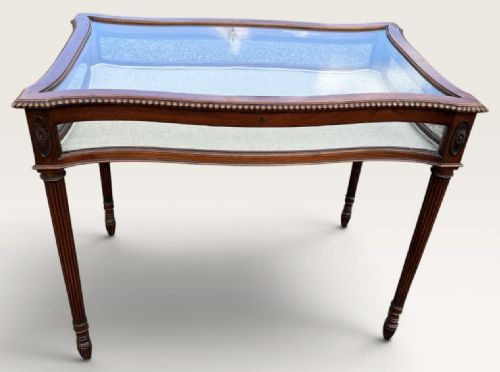
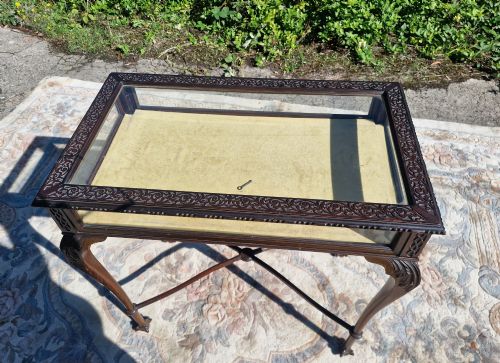
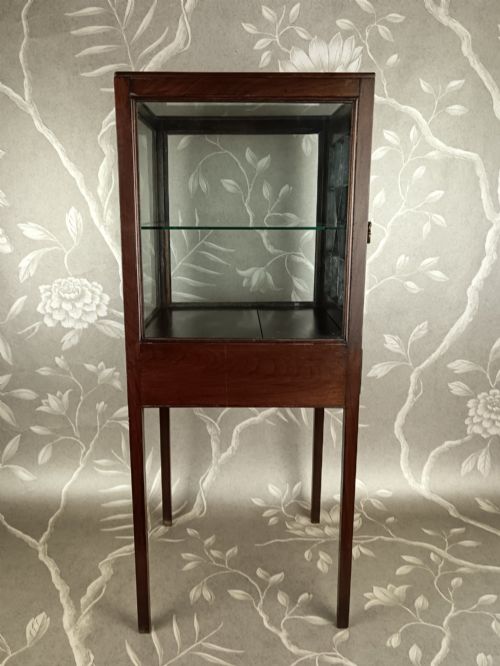
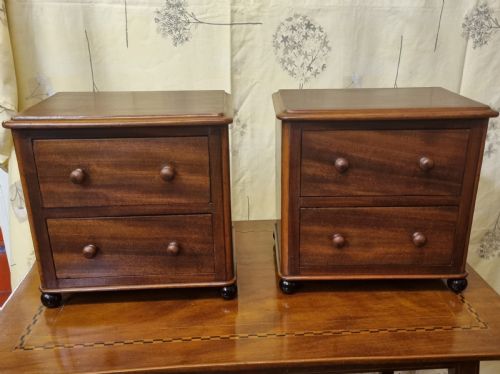
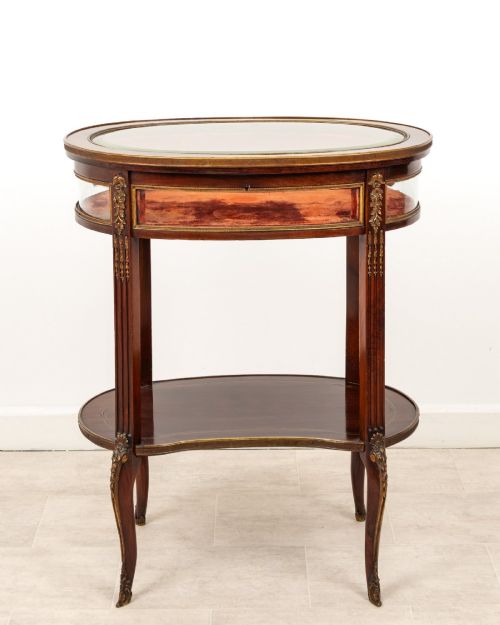
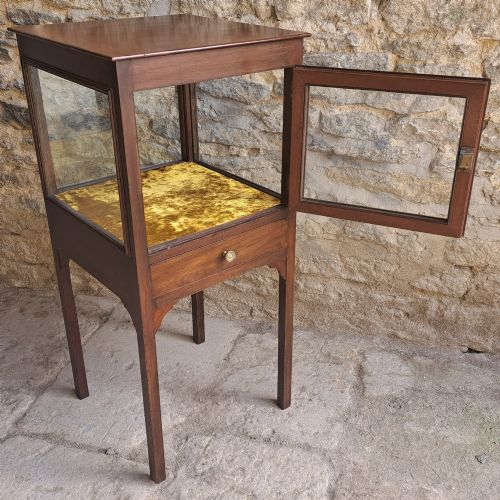
Forms range from serpentine bijouterie tables with glazed tops to tabletop cabinets and miniature chests fitted with multiple small drawers. Originating across Georgian, Victorian, and Edwardian eras, these pieces combine surface utility with enclosed storage.
Continental influences appear through French Louis XVI styles and revival pieces that incorporate delicate veneers and curved glazing. Such tables serve the dual purpose of a functional surface and a secure vitrine for delicate collections.
Materials and construction methods
Craftsmen utilised solid mahogany alongside satinwood and kingwood veneers to build sturdy frames capable of supporting glass lids and panelled doors. Wood inlay and marquetry ornament the surfaces, adding linear borders or floral motifs.
Metal elements such as brass hinges, locks, and ormolu mounts secure the glazed compartments and accent the timber framing. Silk, velvet, or fabric linings frequently pad the interior bases to protect delicate objects placed inside.
One vintage display table carries later sign-written detail advertising Breitling watches.
Distinctions in craftsmanship
Finer examples demonstrate meticulous cabinetmaking through tight dovetail joints in the drawers and crisp execution of inlaid wood marquetry. The weight and finish of the brass or ormolu mounts also indicate higher workshop standards.
The clarity and thickness of the glass panels, alongside the smooth operation of hinged lids and lockable doors, separate standard production items from exceptional commissions. Superior pieces maintain structural rigidity without relying on secondary structural reinforcements.
Edwards and Roberts·Gillows
The Mahogany Collector Table Glossary
- Bijouterie table
- A glass-topped display table specifically designed for showing jewellery and small valuable ornaments.
- Vitrine
- A glass-fronted or glass-topped cabinet intended for the exhibition of curiosities and fine objects.
- Marquetry
- Decorative patterns formed by the insertion of different coloured wood veneers into a solid background.
- Ormolu
- Gilded bronze ornamentation applied to furniture mounts, popular in revival styles.
- Serpentine
- A gently undulating curved shape resembling a snake, frequently seen on tabletops and drawer fronts.
Mahogany Collector Table: Frequently Asked Questions
What were mahogany collector tables used for originally?
These tables served wealthy households as secure display surfaces for precious personal items, miniature collections, and imported trinkets. The glazed compartments allowed owners to exhibit delicate pieces while protecting them from dust and handling.
Over time, collectors of coins, stamps, and jewellery utilised the fitted drawers and velvet-lined interiors to organise their portfolios. They functioned simultaneously as elegant furniture and private display galleries within drawing rooms.
How do I clean the interior fabric lining?
Velvet and fabric linings require gentle surface maintenance using a soft brush or a low-suction vacuum attachment to remove dust. Avoid liquid cleaners, as moisture can damage the underlying wood or cause adhesives to fail.
If the lining is heavily stained or worn, professional conservation is recommended to preserve the original integrity of the cabinet interior without altering the timber structure.
Where should I place one in my home?
Positioning these pieces away from direct sunlight protects the mahogany timber from fading and prevents interior fabrics from bleaching. Rooms with stable ambient temperatures, such as a study or drawing room, prevent the wood from drying out.
Placing the table where natural light strikes the glass top enhances the visibility of items displayed inside without risking heat damage from harsh rays.
How can I distinguish Georgian pieces from Edwardian revivals?
Georgian examples exhibit structural timber characteristics appropriate for the late eighteenth and early nineteenth centuries, often featuring hand-cut dovetails and deeper patination. The construction timber and secondary woods underneath provide reliable chronological clues.
Edwardian revival pieces frequently incorporate lighter satinwood stringing, machine-influenced joinery tolerances, and brighter brass hardware characteristic of early twentieth-century manufacturing methods.