
Mahogany Collector Drawers
Mahogany collector drawers bring together compact multiple-drawer storage pieces built for specimens, miniatures, and small items.
Mahogany Collector Drawers
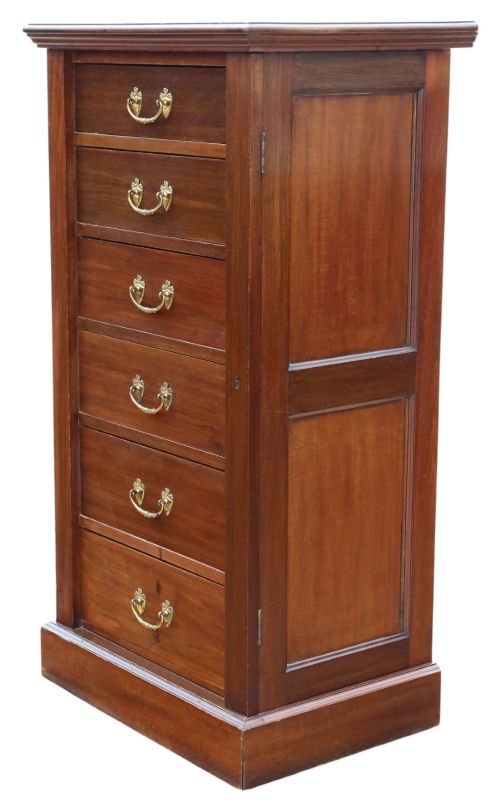
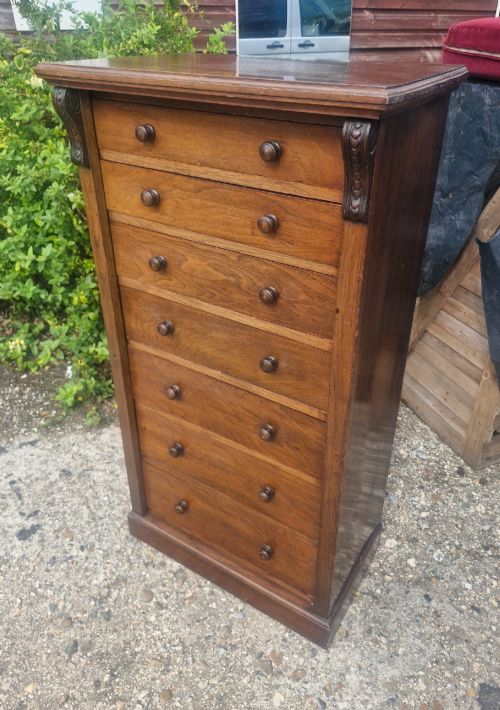
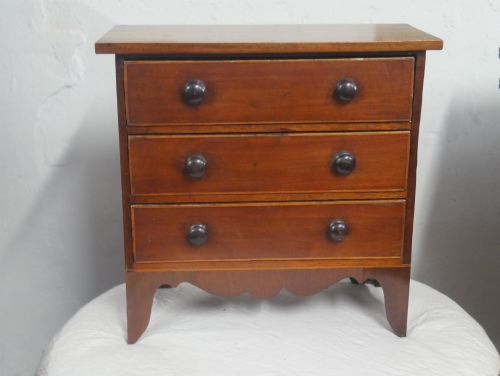
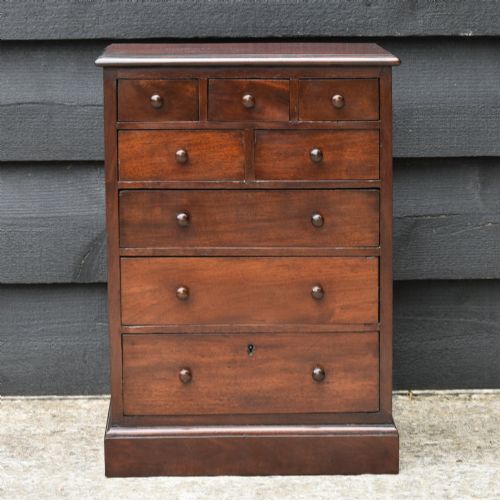
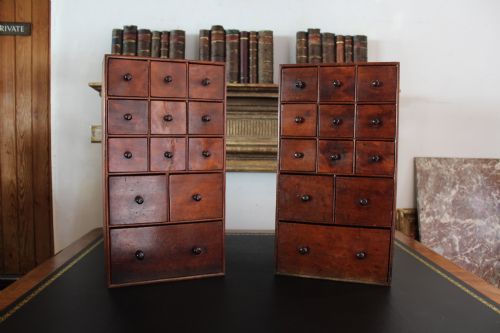
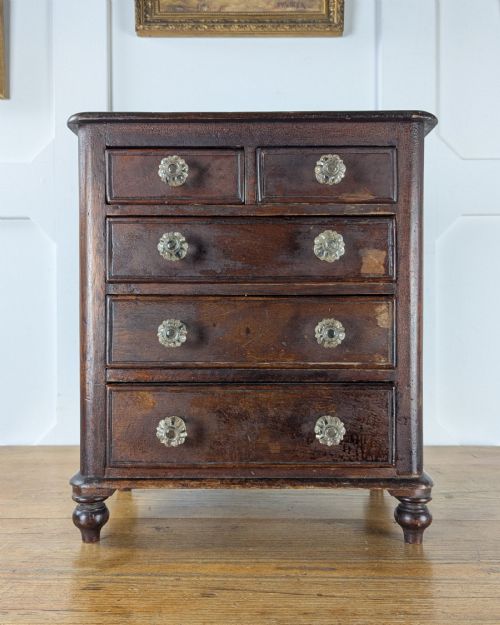
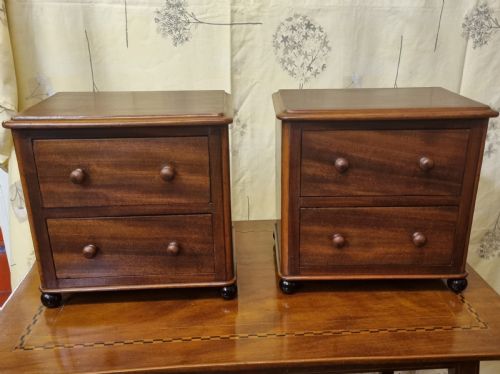
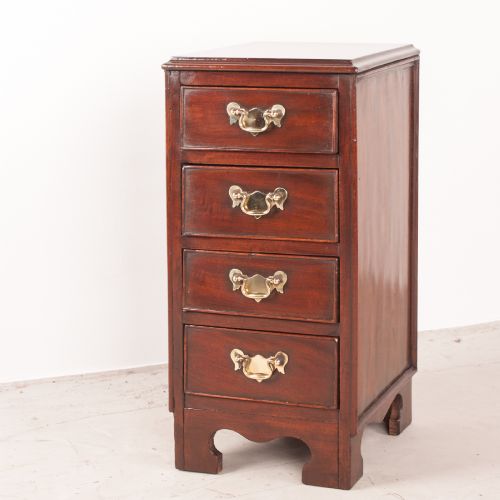
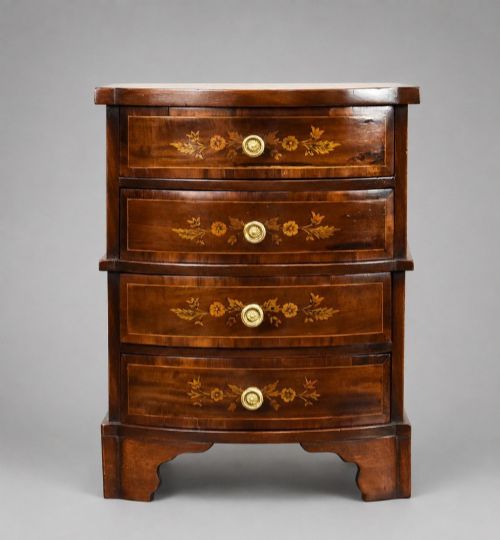
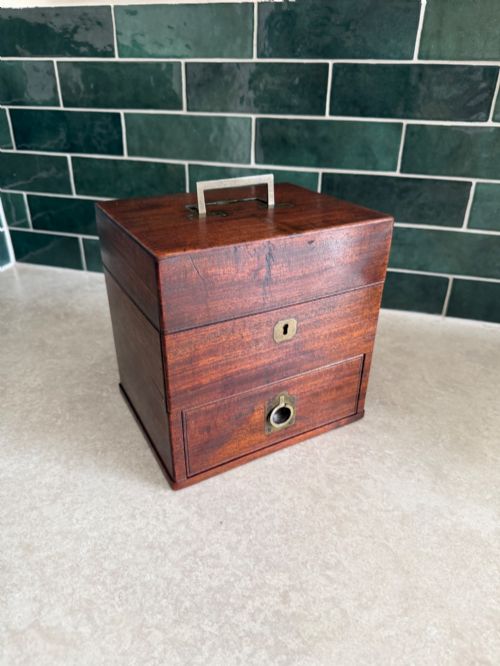
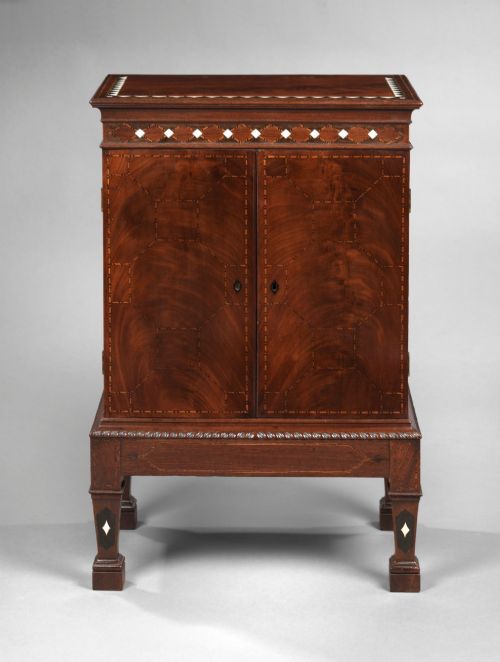
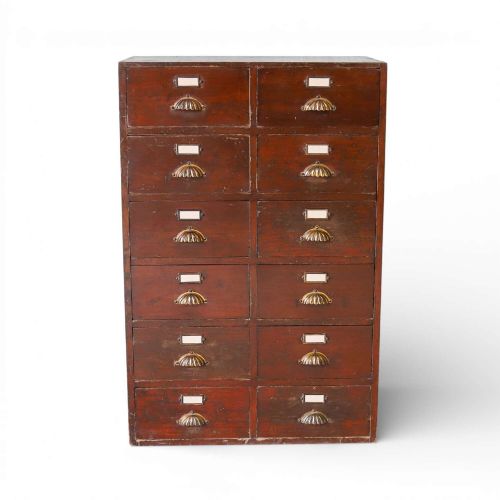
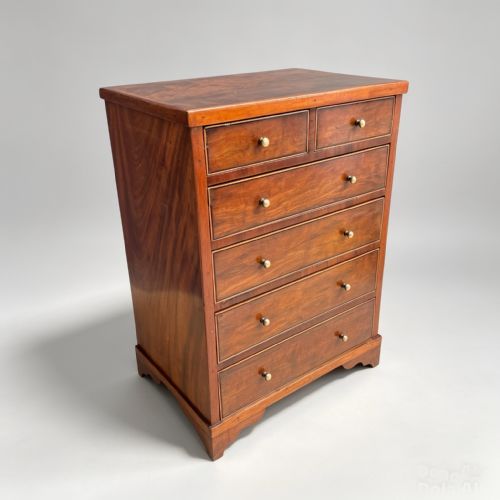
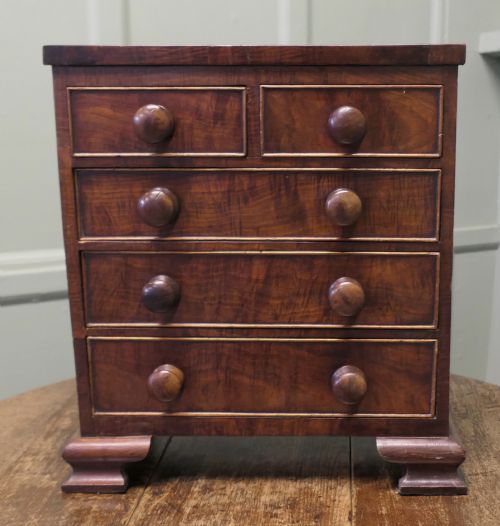
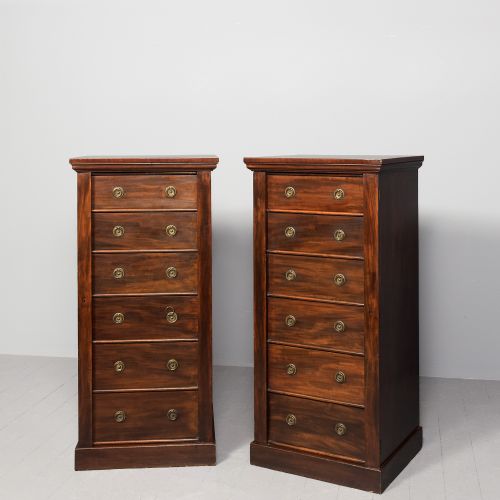
Mahogany collector drawers encompass multi-drawer storage pieces ranging from large multi-drawer cabinets and filing units to compact miniature chests and apprentice pieces. Buyers exploring mahogany collector drawers frequently encounter Wellington chests, apothecary banks, and specialist insect or specimen cabinets dating from the Georgian period through to the Edwardian era.
The forms vary widely in capacity, from small table-top trinket chests with a handful of compartments up to substantial floor-standing pieces containing thirty or more internal drawers. Many incorporate secure locking mechanisms, side locking stiles, or glazed doors designed to protect delicate contents.
Originating largely from British workshops across the 18th and 19th centuries, these pieces serve practical modern storage roles for small collectables, documents, and jewellery while retaining their original fitted interior configurations.
How they were made
Makers utilised solid mahogany and figured mahogany veneers applied over secondary timbers such as pine, oak, or cedar. Cabinet construction frequently employed tight dovetail joints for the drawer carcasses alongside brass hardware, campaign handles, and glass panel inserts.
Internal elements often feature turned wooden knobs, shell pulls, brass label holders, and specialised baize or velvet linings tailored for specific holding tasks. External finishes relied on traditional polish methods that highlight the natural grain patterns of the wood.
Some multi-drawer cabinets contain up to forty-one tiny compartments, proving that tiny drawers hold an immense fascination for collectors.
What varies in quality
Quality differences stem from the selection of figured timber veneers, the density of the primary mahogany, and the precision of the drawer dovetailing. Superior examples maintain stability across dozens of internal partitions without warping or binding.
The presence of original furniture hardware, intact locking side stiles, functional keys, and maker labels elevates a piece significantly. Finer specimens display meticulous attention to internal drawer fit and original timber linings rather than later replacements.
Watkins And Doncaster·Brady Of Edmonton·James Gardner
The Mahogany Collector Drawers Glossary
- Wellington chest
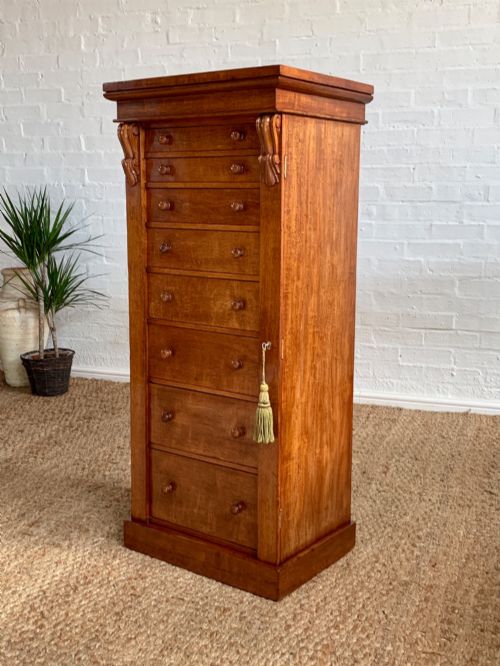
- A tall, narrow chest of drawers secured by a hinged locking pilaster or stile on one side that fastens over the drawer edges. This locking mechanism prevents access to any drawer unless the primary front door or side bar is unlocked.
- Apprentice piece
- A small-scale item created by a trainee craftsman to demonstrate mastery of joinery techniques before admission to a trade guild. These scaled-down chests mirror full-size furniture in every structural detail.
- Cartonnier
- A structured cabinet fitted with multiple tiers of pigeonholes or shallow drawers designed originally for holding papers, documents, or folios. The French form frequently employs fine mahogany veneers.
- Specimen cabinet
- A specialised storage unit constructed with numerous shallow internal drawers intended for holding natural history specimens, butterflies, fossils, or coins. The drawers often feature glass covers or dust-proofing lips.
- Campaign filing cabinet
- A portable or modular storage unit built for travel, typically fitted with flush brass handles, reinforced corners, and robust locking mechanisms. These pieces divide into sections for ease of transport.
Mahogany Collector Drawers: Frequently Asked Questions
What were mahogany collector drawers originally used for?
These pieces served naturalists, doctors, and collectors as secure storage for insects, botanical specimens, apothecary bottles, and coins. The compartmentalised drawers kept delicate items organised and protected from dust and light.
Over time, many of these cabinets transitioned into domestic settings for storing letters, small collectables, and jewellery while preserving their original internal layouts.
How do you distinguish a Wellington chest from a standard chest of drawers?
A Wellington chest stands out through its tall, narrow proportions and a hinged locking pilaster attached to one vertical edge. Swinging this locking piece open allows the stack of drawers to pull out.
Standard chests of drawers lack this side-locking stile and generally feature wider, shallower proportions designed for domestic clothing storage rather than secure collection management.
Are apprentice pieces the same as miniature chests?
Apprentice pieces represent a specific category of miniature furniture constructed by trainees to prove their woodworking proficiency to master craftsmen. While they function visually as miniature chests, their joinery matches the exact standards of full-sized furniture.
Other miniature chests served as salesman samples or specialty desk accessories rather than formal guild test pieces.
How should I care for mahogany multi-drawer cabinets?
Maintain these cabinets in stable room environments away from direct sunlight and sudden humidity shifts to protect the mahogany veneer and internal drawer runners. Gentle dusting with a dry, soft cloth preserves the polished surface.
Avoid applying modern silicone polishes, as traditional timber finishes respond best to occasional natural wax conditioning.