
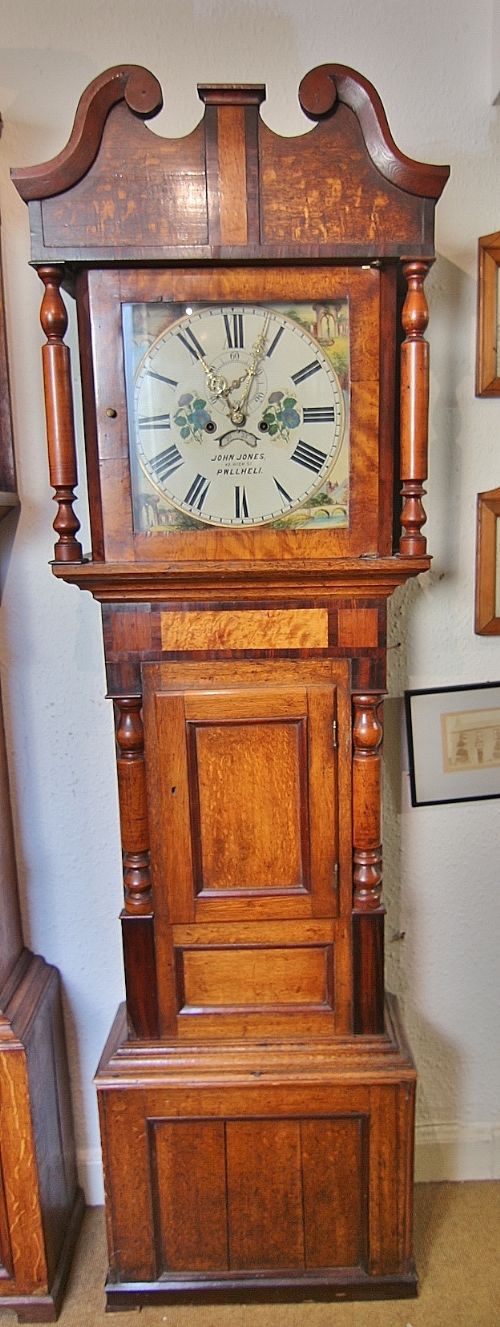
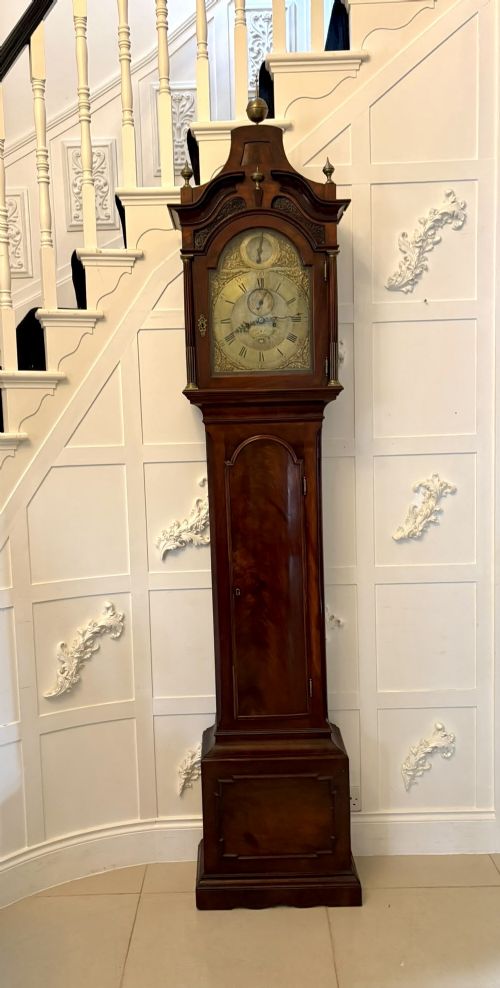
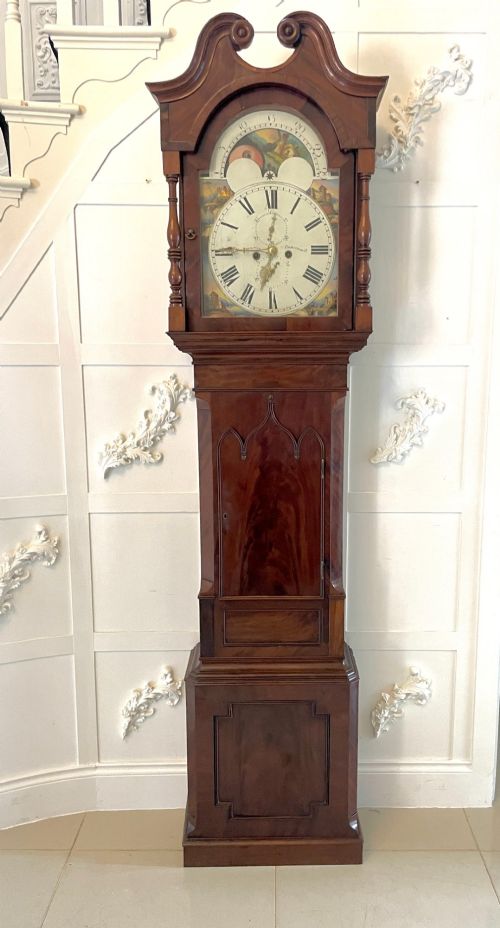
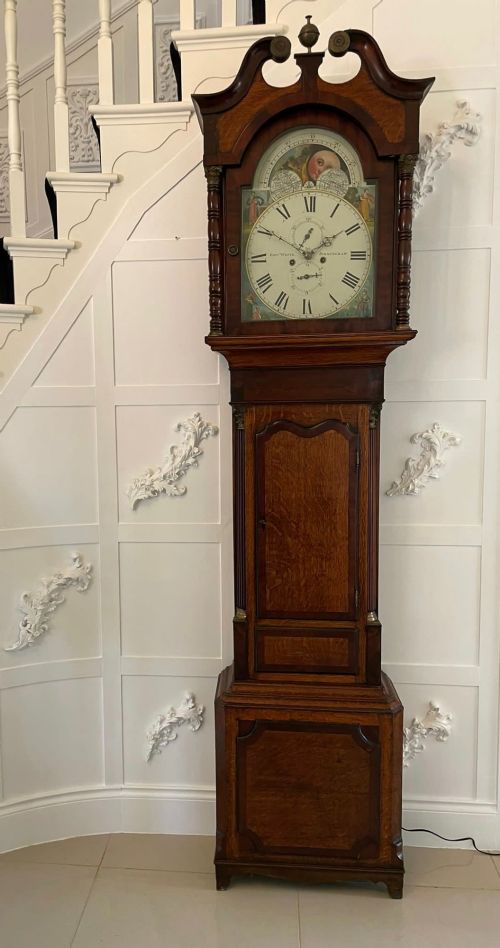
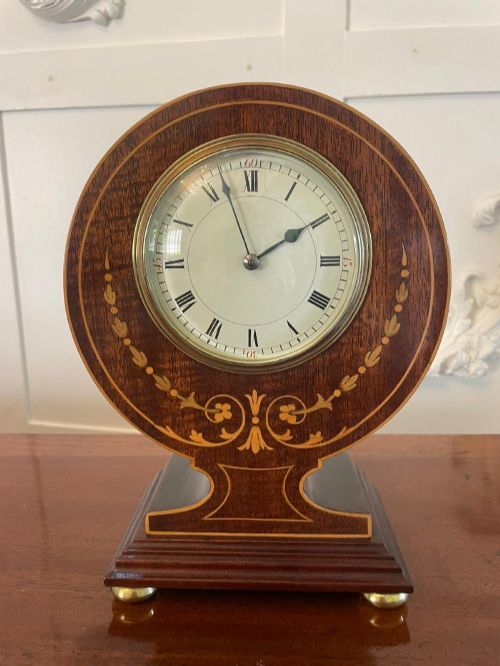
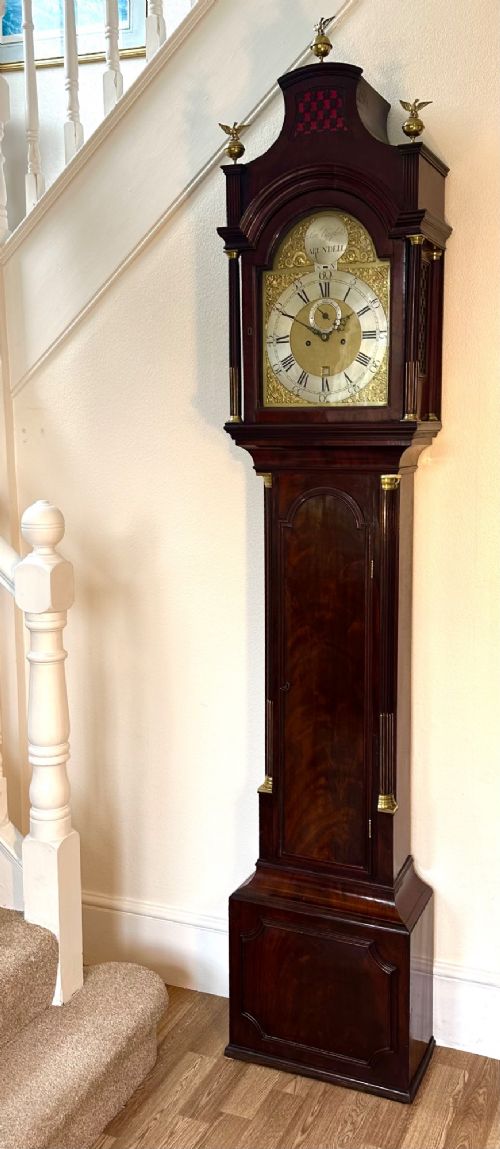
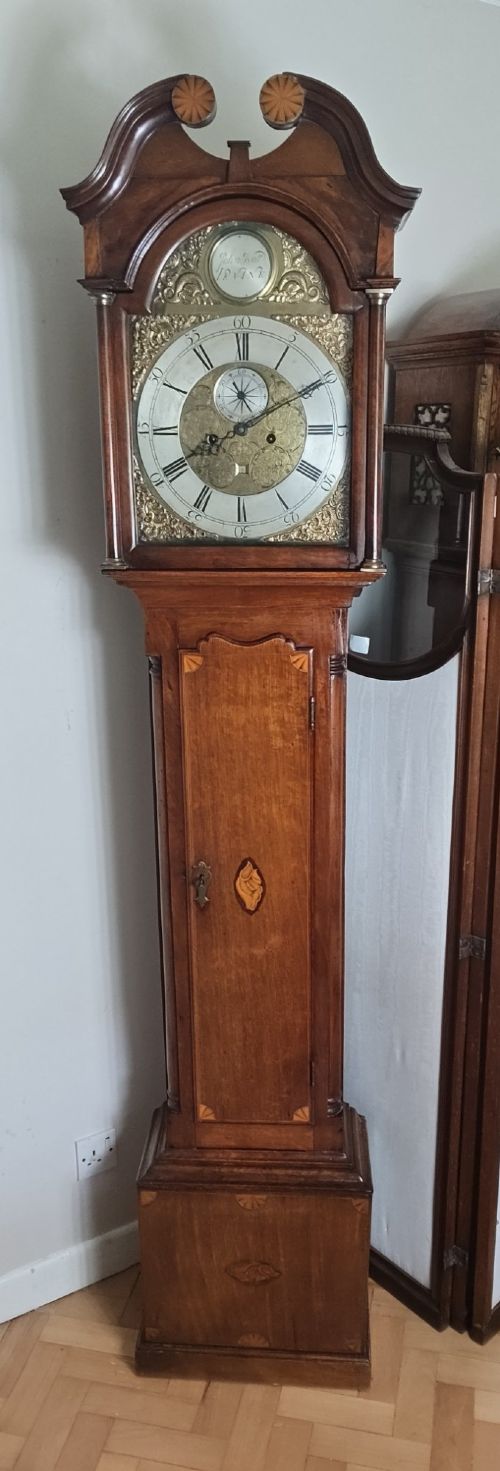
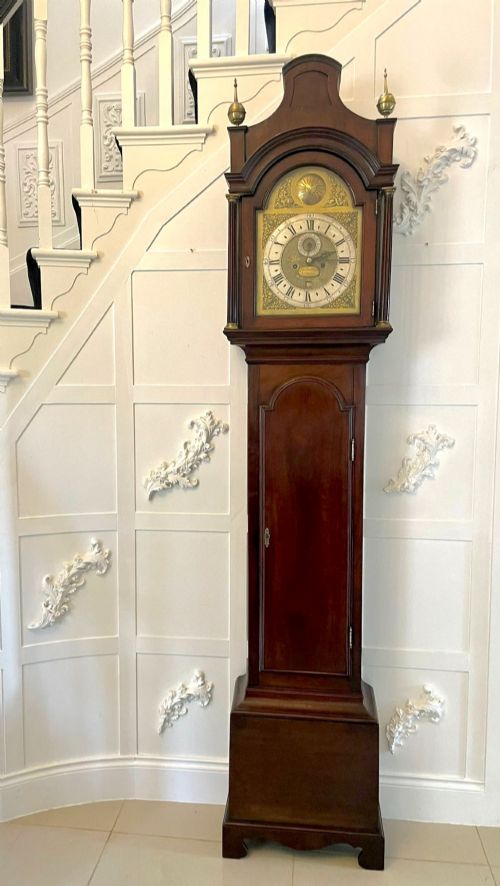
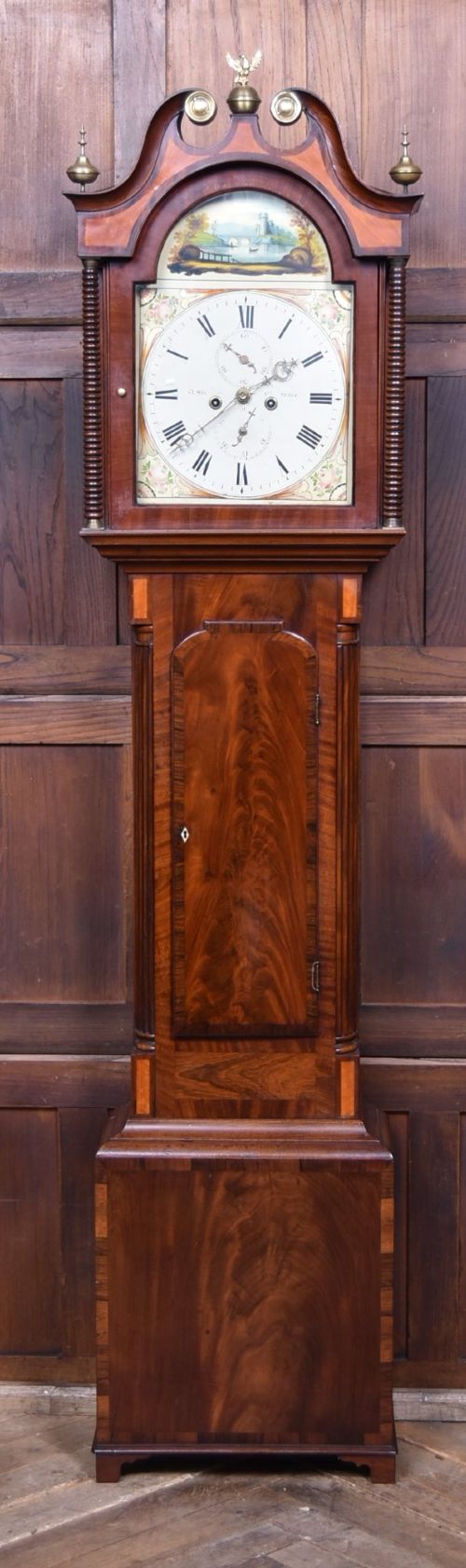


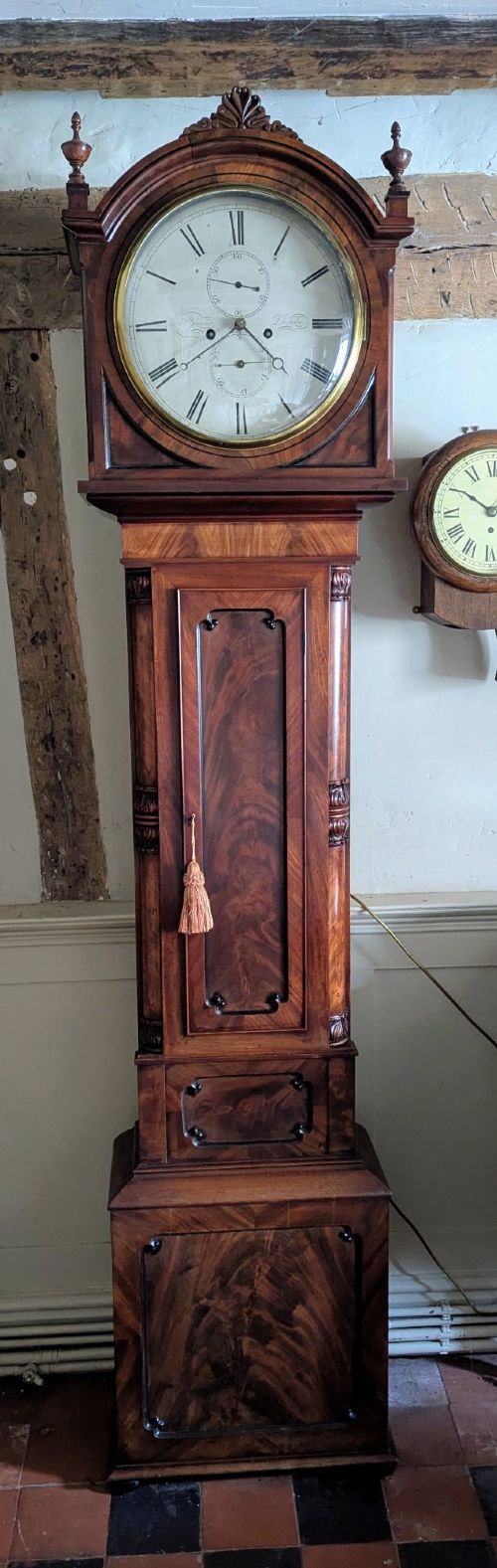
Mahogany Cased Clock
A mahogany cased clock brings together solid timber and precision mechanics, offering the classic forms of Georgian and Victorian timekeeping.
Mahogany Cased Clock
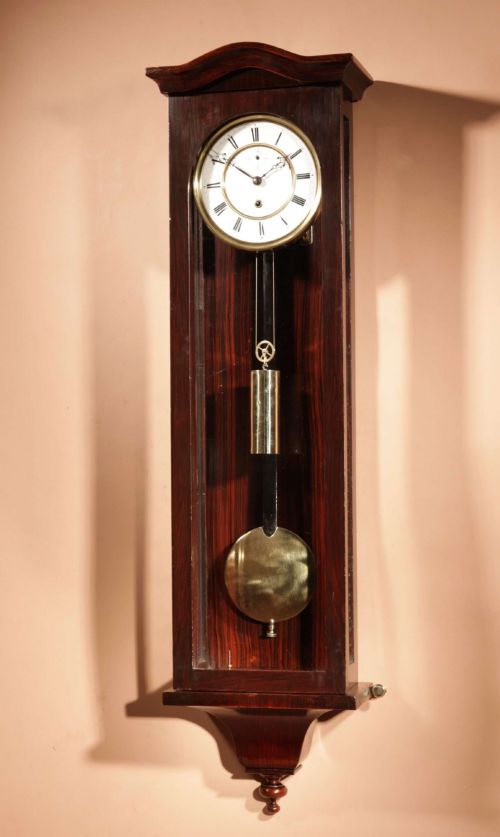
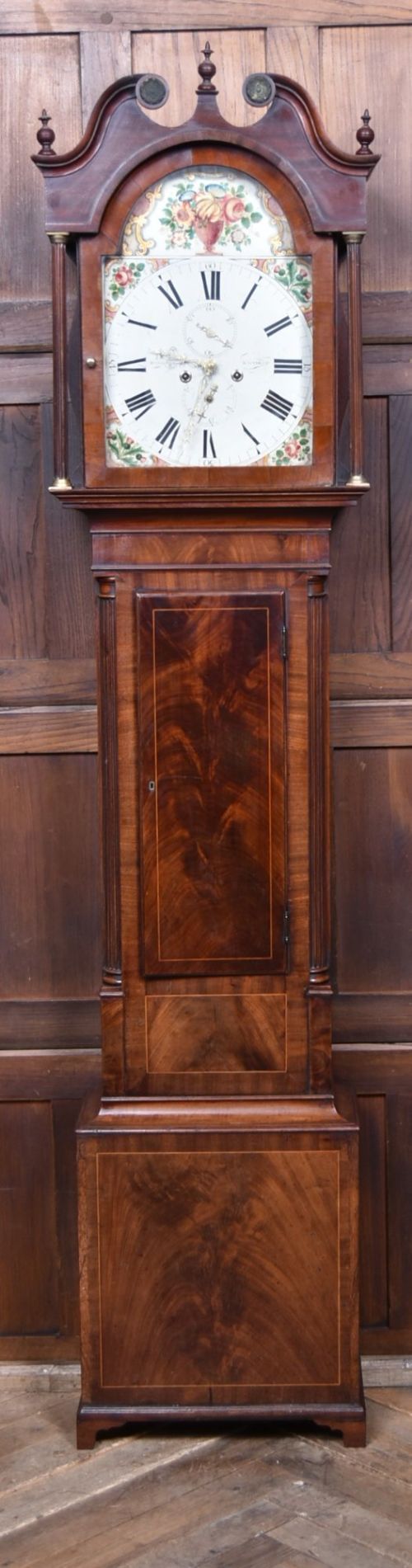
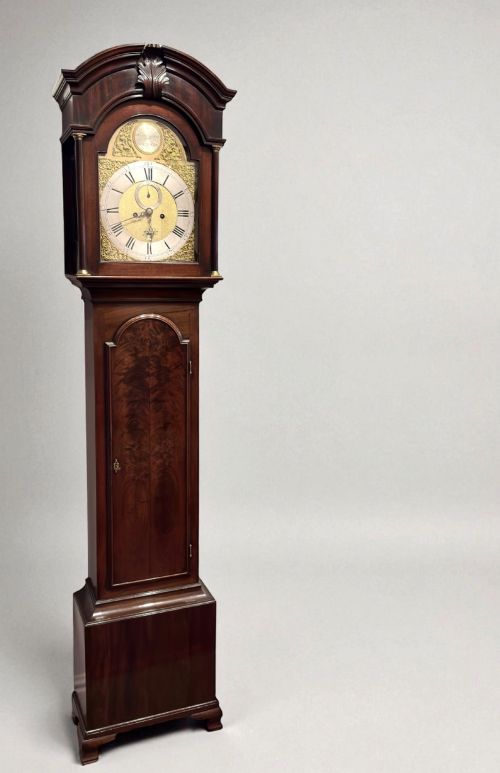
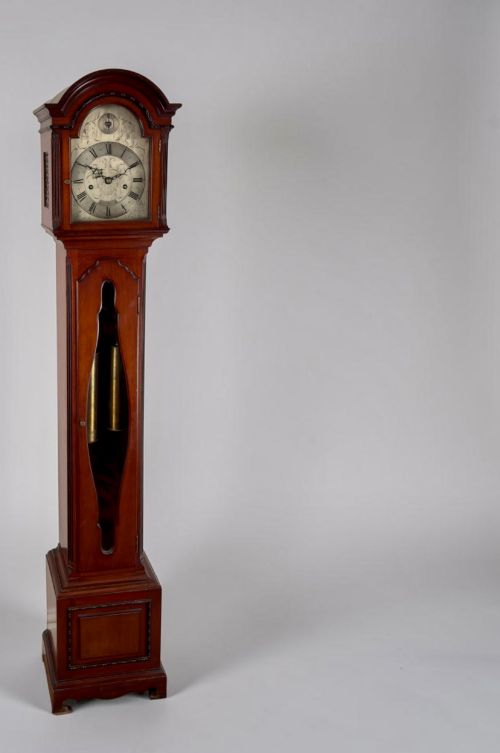
When searching for a mahogany cased clock, buyers typically encounter tall floor-standing longcase clocks, often known as grandfather or grandmother clocks, alongside wall-hung dial clocks and smaller mantel pieces. These horological items span several periods, with eighteenth-century George III examples and nineteenth-century Scottish regional pieces appearing frequently alongside later Edwardian iterations.
The tall variations dominate the selection, showing substantial timber hoods, trunks, and bases that house weight-driven movements. Wall-hung dial clocks utilise circular timber surrounds with glazed fronts, originally designed for offices, railway stations, and public spaces during the Victorian era. Mantel and bracket versions offer smaller desk or shelf formats, frequently incorporating fusee movements.
Regional makers from across England, Scotland, and Wales signed many of these dials, adding provenance to the structural woodwork. Whether tallcase or wall-mounted, the primary housing relies on rich brown timber, often displaying distinct grain patterns accumulated over centuries of age.
How They Were Made
Movements relied on heavy cast brass wheels, steel pinions, and pendulum regulation, sometimes driven by weights suspended on cords or gut lines. Fusee movements utilised conical pulleys and brass chains to maintain even tension as the mainspring wound down, ensuring accurate timekeeping across eight-day or shorter operational periods.
Some Welsh longcase clocks incorporate a rocking ship automaton that sogs rhythmically with every swing of the pendulum.
What Varies In Quality
The standard of a mahogany cased clock rests upon the crispness of the cabinetwork and the execution of the dial painting. Finer examples display well-figured timber selection, subtle moulding profiles, and hand-engraved brass dial work signed by established makers rather than mass-produced components.
Mechanical execution separates utilitarian timepieces from exceptional ones, particularly the finish on brass wheel trains and the precision of auxiliary functions like chiming mechanisms or moon rollers. Originality of the movement to the case also dictates desirability among collectors who value untouched historical integrity.
Charles Shuckburgh·Hendrie Ogg·Gordon of Aberdeen·Gillett and Johnston·D Straiton·James Field·James McCabe·Handley and Moore·Samuel Kellett·William Jourdain·George Hallifax·Andrew Thom·Henry Weedon·William McEwan·Joyce of Whitchurch·Henry Jenkins·F W Elliott·Hampton and Son·Negretti and Zambra·John Meredith·John Bates·W Lawrance·Thos Parkinson
The Mahogany Cased Clock Glossary
- Fusee
- A conical pulley used with a cord, chain, or wire in spring-driven clocks to equalize the decreasing power of the mainspring as it unwinds. This mechanism ensures consistent torque is delivered to the gear train for greater accuracy.
- Longcase clock
- A tall, weight-driven pendulum clock enclosed in a wooden case consisting of a trunk, a base, and a hood sheltering the dial. They are frequently referred to as grandfather clocks.
- Grandmother clock
- A scaled-down version of the traditional longcase clock, typically standing shorter and narrower. These models became popular during the early twentieth century for domestic spaces with lower ceilings.
- Dial clock
- A round-faced clock designed to hang on a wall, usually featuring a cast mahogany surround and a hinged wooden bezel with glass. These were standard fixtures in nineteenth-century offices and railway stations.
- Moon phase
- A dial mechanism that tracks the lunar cycle through a rotating disc showing the phases of the moon. It adds significant complexity and visual interest to the face of a tallcase clock.
Mahogany Cased Clock: Frequently Asked Questions
How do I wind an eight day clock?
Eight-day clocks require a key or crank inserted into winding holes on the dial face to pull the internal weights back to the top. Turning should be done smoothly and evenly until resistance indicates the weights have reached their limit.
Care must be taken not to overwind the movement, as this can strain the gut lines or chains. Most longcase and wall clocks follow this weekly routine to maintain continuous operation.
Where should I place a longcase clock?
Tallcase clocks need a stable, dry interior location away from direct sunlight and strong temperature fluctuations that can affect the timber and pendulum. Placing the unit against an interior wall prevents vibrations from floor traffic from interfering with the beat.
Levelling the case on its base is essential for the pendulum to swing evenly. Securing the tall trunk to the wall with a hidden bracket also prevents accidental tipping in busy hallways.
What is the difference between a grandfather and a grandmother clock?
Grandfather clocks are the standard full-size longcase variety, standing over six feet tall with substantial weights and long pendulums. Grandmother clocks are smaller, more slender iterations introduced later in the nineteenth and early twentieth centuries.
Despite their reduced proportions, grandmother clocks often house full mechanical movements. Their compact scale suits them to smaller rooms where a traditional tallcase would overwhelm the space.
How do fusee wall clocks work?
Fusee wall clocks are driven by a spring barrel connected via a chain or cord to a conical pulley. As the spring unwinds, the leverage shifts across the cone to compensate for the loss of tension.
This system delivers steady force to the escapement throughout the running period. Such movements were widely utilised in offices and transport hubs where reliable timekeeping was paramount.