

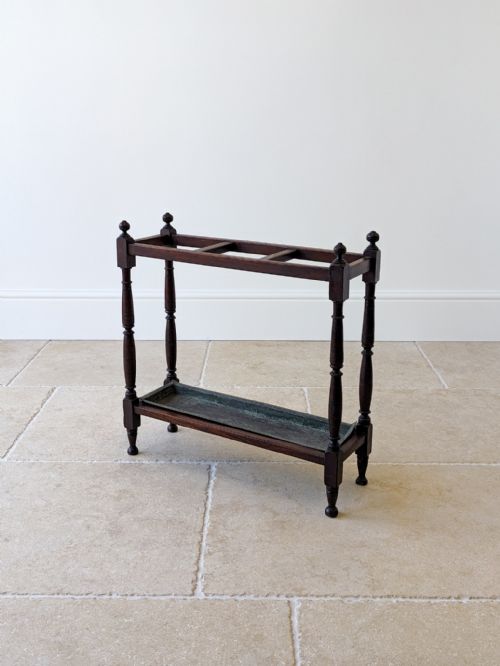
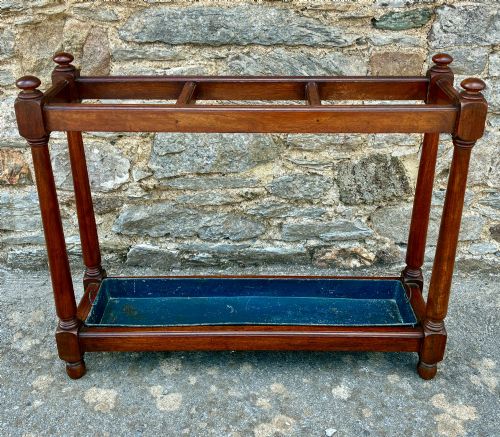


Mahogany Cane Rack
These mahogany cane rack items keep hallway sticks and umbrellas tidy with deep reddish timber and heavy metal fittings.
Mahogany Cane Rack
A mahogany cane rack holds walking sticks, canes and umbrellas in entrance halls and vestibules. The pieces found here take the form of stick stands, umbrella stands and combined hall stands.
Most examples date from the Victorian and Edwardian periods, running from the late nineteenth century into 1900. Country house designs and corner models appear alongside standard hall furnishings.
How they were made
These items rely on solid mahogany timber combined with metal components such as brass and cast iron. Metal trays and drip pans catch water from wet umbrellas at the base.
Mahogany Cane Rack Retail Price Guide 2026
Typical asking prices for mahogany cane rack among the pieces listed under this phrase on Sellingantiques today, from the lower quarter to the upper quarter. They describe what is for sale here now, not the wider market.
Country house pieces provide a grand resting place for muddy walking sticks after a long tramp through damp British fields.
What varies in quality
Quality rests on the depth of the mahogany timber and the robustness of the metal fittings. Heavier brass mounts and solid cast iron trays distinguish better examples from simpler pieces.
Design complexity also marks the division between standard stands and country house items or corner formats. Maker attribution, such as Shoolbred, separates standard workshop production from branded output.
Shoolbred
The Mahogany Cane Rack Glossary
- Mahogany
- A durable tropical hardwood known for its deep reddish brown grain. It forms the primary structure of these hall stands.
- Stick stand
- A piece of furniture designed to hold walking sticks and canes upright. These stands often incorporate umbrella storage as well.
- Brass mount
- A decorative or structural metal fitting attached to the wood. These secure joints and hold drip pans in place.
- Cast iron
- A heavy metal alloy used for the base reservoirs and drip trays. It provides stability to prevent the stand from tipping.
Mahogany Cane Rack: Frequently Asked Questions
Where should a cane rack go?
These stands belong in an entrance hall or porch where coats, hats, and walking aids are stored near the door. Their compact footprint allows them to sit neatly against a wall or in an unused corner.
Placing them near the entrance ensures wet umbrellas drop their water into the integrated metal tray rather than onto flooring.
How do I date a mahogany stand?
Dating relies on stylistic clues like turned columns, brass mounts, and the specific proportions typical of Victorian and Edwardian design. Pieces attributed to specific firms often carry maker stamps.
General periods span the nineteenth century through to the year nineteen hundred, encompassing late Victorian and Arts and Crafts movements.
What is the metal tray for?
The metal tray or liner at the bottom collects rainwater running off wet umbrellas and walking sticks. These pans are usually removable for easy emptying and cleaning.
Materials range from brass to painted sheet metal and cast iron, protecting the underlying wood from moisture damage.
Are corner stands common?
Corner stands are an unusual variation designed to fit directly into room angles to save floor space. They utilise otherwise empty corners in narrow hallways.
These pieces share the same mahogany construction and metal fittings as standard rectangular models.