



Mahogany Cane Back Chairs
Mahogany cane back chairs combine structural warmth with woven lightness, bringing enduring elegance to both dining rooms and libraries.
Mahogany Cane Back Chairs
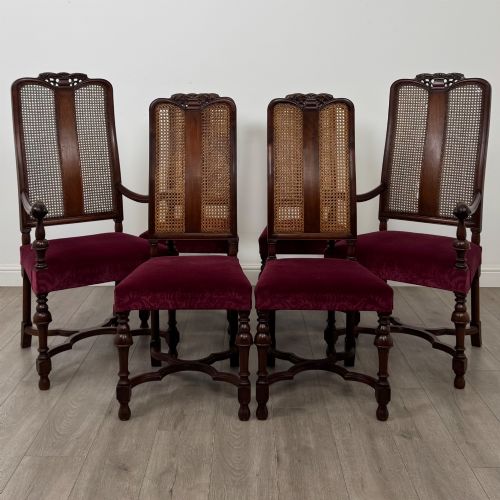
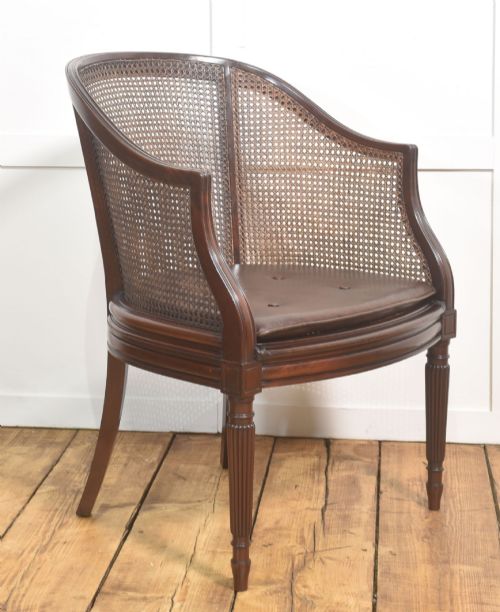
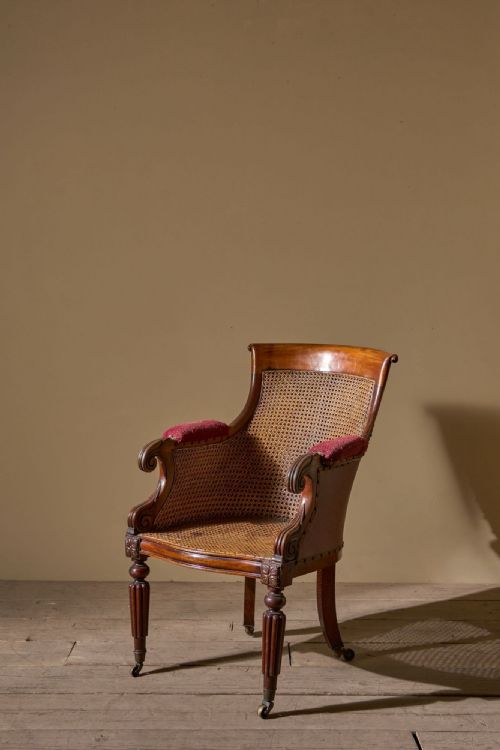
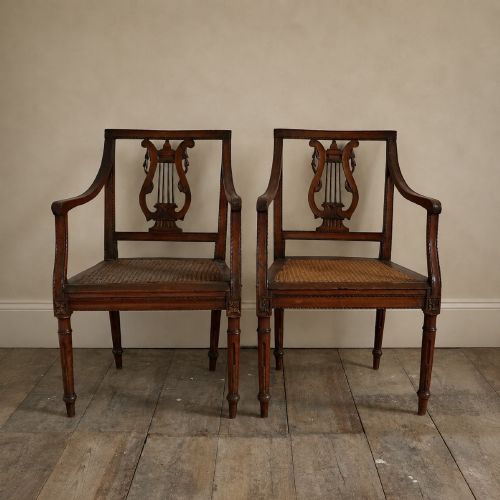
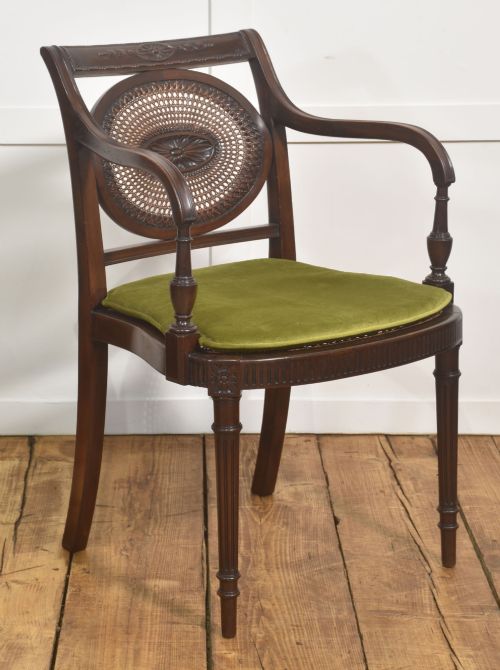
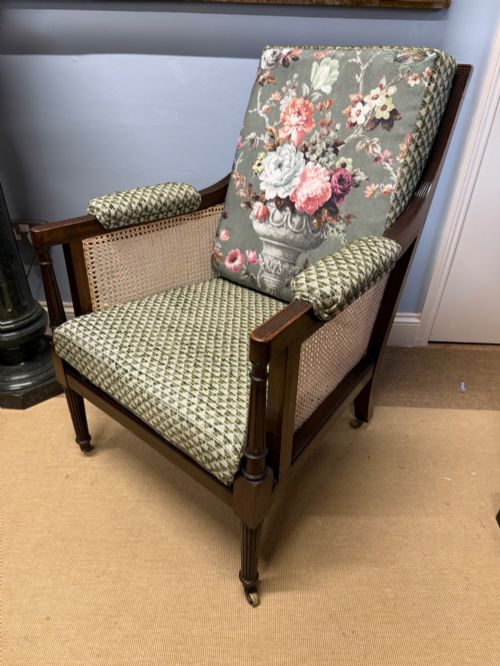
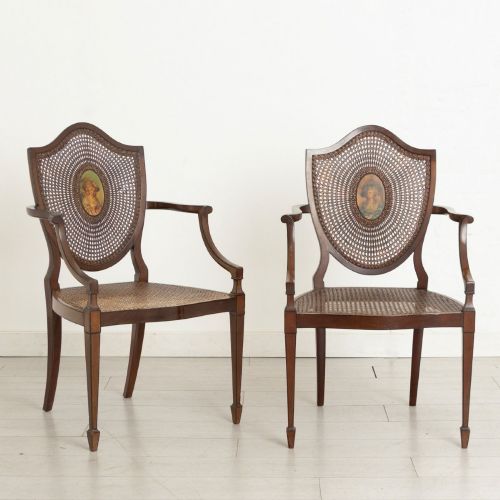
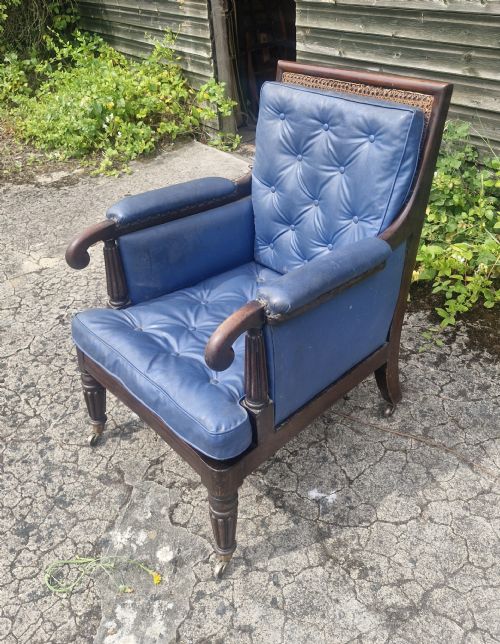
The selection includes specific regional and stylistic interpretations such as Sheraton Revival, William IV, French Neoclassical, and Carolean Revival pieces. Armchairs and bergere designs feature prominently alongside bedroom chairs, childs armchairs, and colonial reclining plantation chairs.
Materials and construction
Cabinetmakers utilised solid mahogany for the frames, shaping the wood into carved back rails, lyre backs, and medallion frames. Brass accents and leather or fabric upholstery frequently complement the timber structure.
The characteristic seating and back panels employ woven cane, rattan cane, or split cane. Artisans threaded these natural materials through drilled frame margins to create supportive, resilient mesh surfaces.
Object forms span dining chairs, library armchairs, bergere chairs, tub chairs, bedroom chairs, and metamorphic library steps.
Distinctions in quality
Quality rests in the precision of the timber carving and the tightness of the cane weaving. Superior pieces display crisp architectural details on the mahogany frame and uniform tension across the woven cane panels.
The integrity of the joinery and the selection of well-figured mahogany separate standard production from exceptional examples. Original matched sets and intact early cane work command particular attention from collectors.
Gillows
The Mahogany Cane Back Chairs Glossary
- Bergere
- An enclosed upholstered armchair with wooden framing, often featuring cane panels on the back and sides. This French-inspired form became popular in various English periods.
- Cane
- Woven material made from the outer bark of rattan palms. It provides a flexible yet durable surface for chair backs and seats.
- Metamorphic furniture
- Pieces designed to transform into alternative functional objects, such as a library armchair that converts into a set of steps. These ingenious designs required precise mechanical planning.
- Klismos
- An ancient Greek chair design characterised by curved, flaring legs and a concave backrest. Revival styles adopted these graceful, sweeping proportions.
- Split cane
- Cane sliced longitudinally to produce a flatter ribbon for weaving. It offers a distinct texture compared to round core cane.
Mahogany Cane Back Chairs: Frequently Asked Questions
How do I date a mahogany chair?
Dating relies on observing stylistic markers such as Regency curves, Victorian carving depth, or Edwardian proportions. Wood patination and construction methods also indicate the manufacturing era.
Comparing the specific turnings, leg shapes, and upholstery details against documented period examples helps confirm the age. Gillows and other makers often incorporated signature carving styles characteristic of their decade.
Are cane seats durable?
Cane seats utilise woven rattan fibres that flex under weight, providing a resilient and surprisingly strong surface. Proper maintenance ensures they withstand regular daily use.
Avoiding excessive dryness and protecting the weave from sharp impacts preserves the natural flexibility of the cane. Many historical chairs retain their original cane work after centuries of use.
Where were library chairs used?
Library chairs were designed for reading rooms, studies, and country house libraries where comfort and stability mattered. Armchairs and bergere forms provided support during extended periods of reading.
Some specialised library chairs included writing arms or transformed into steps for reaching high bookshelves. Their robust mahogany frames suited the heavy use found in traditional domestic studies.