


Mahogany Bowfront Corner Cupboard
A mahogany bowfront corner cupboard turns an awkward room junction into a display of figured timber and fine proportion.
Mahogany Bowfront Corner Cupboard
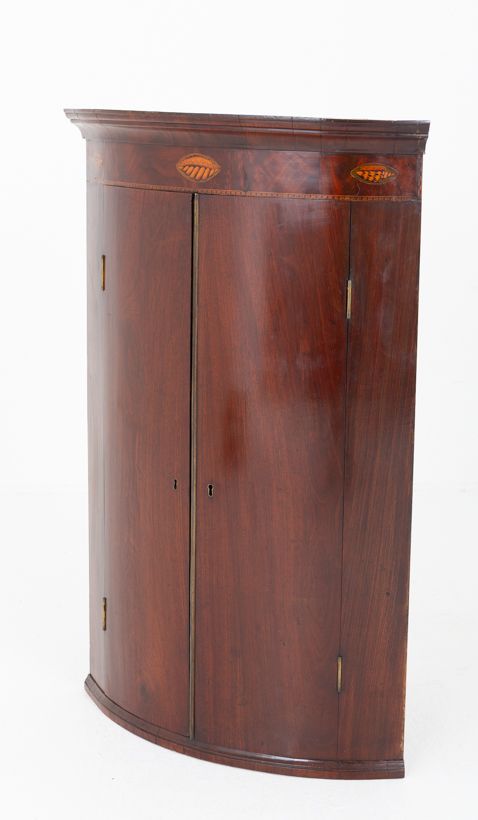
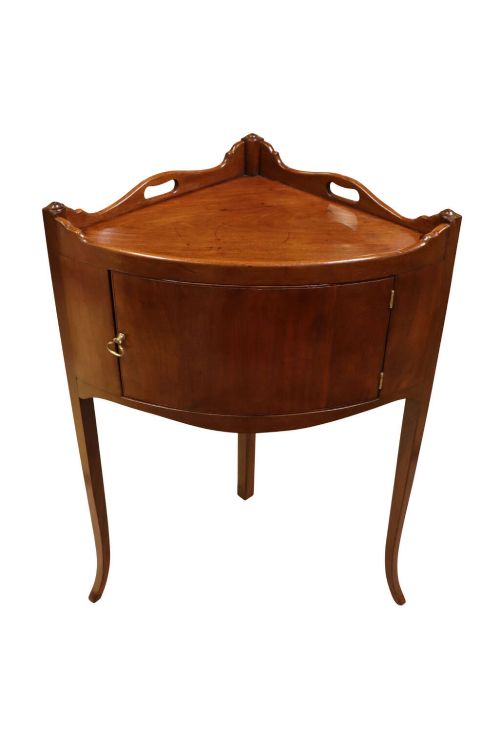
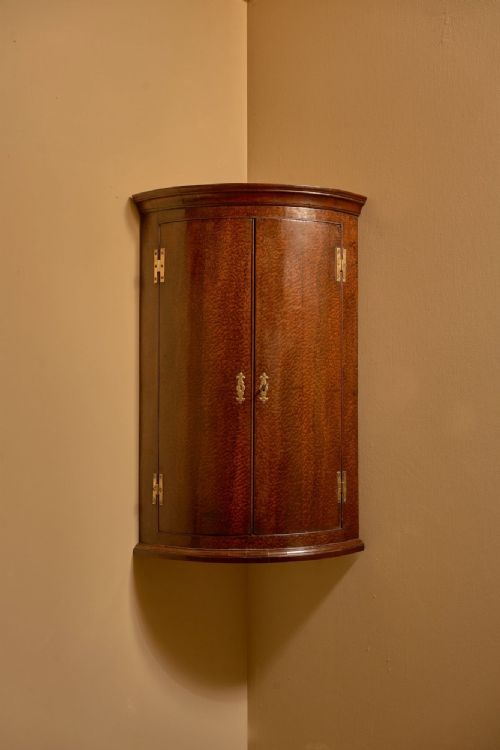
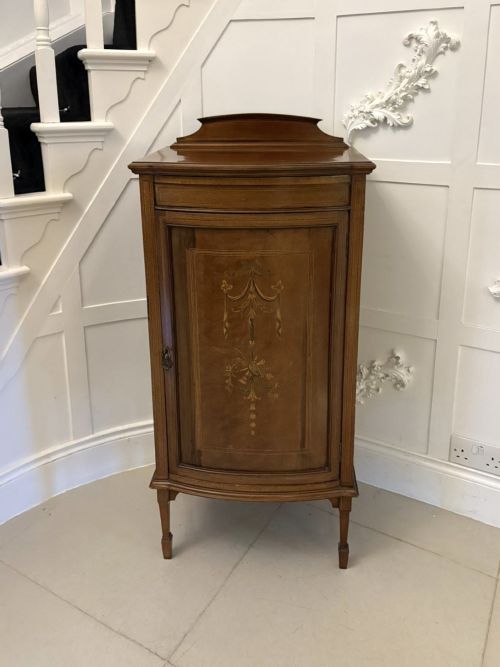
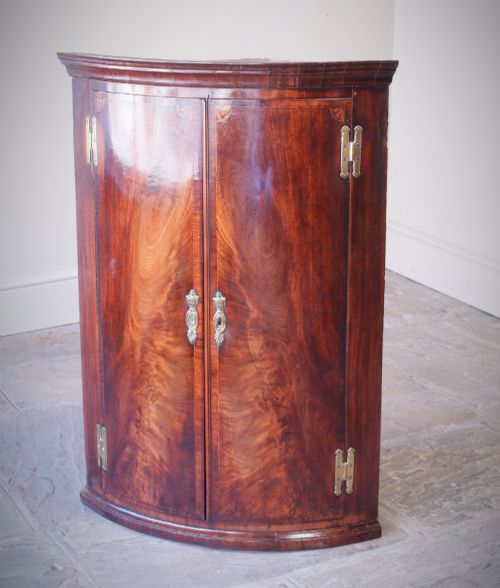
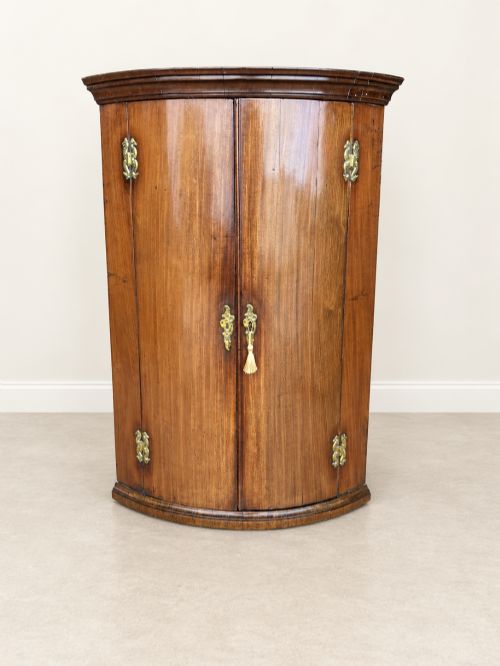
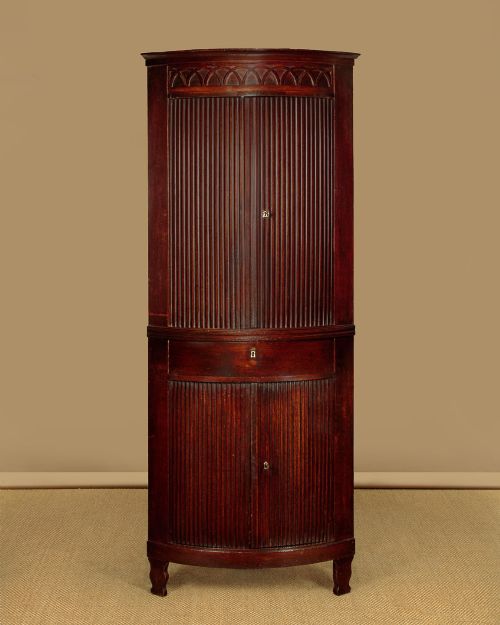
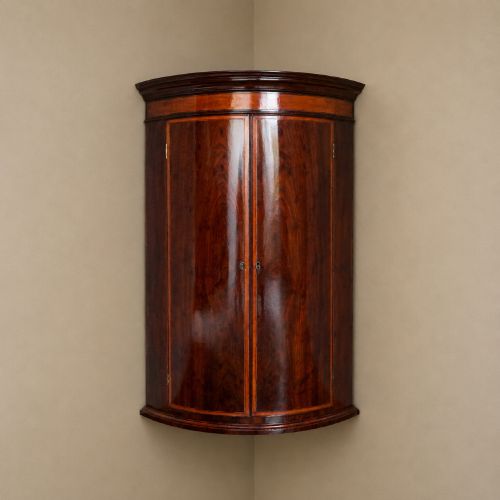
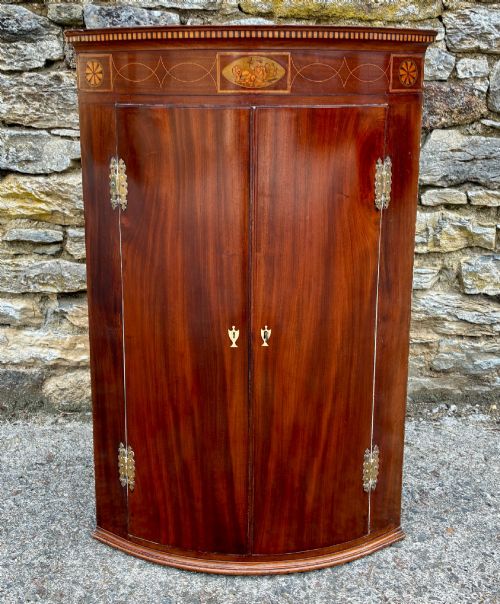
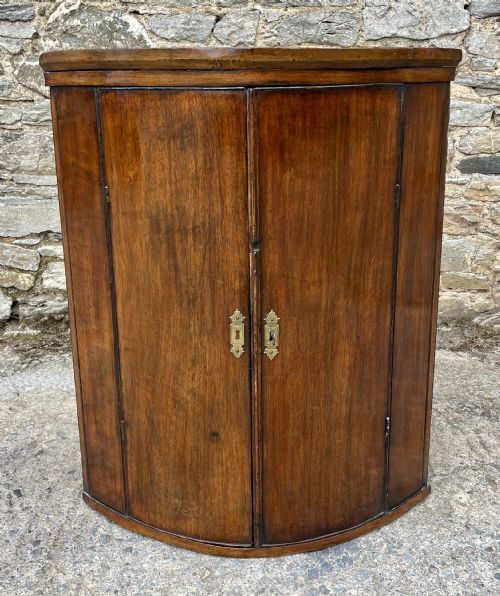
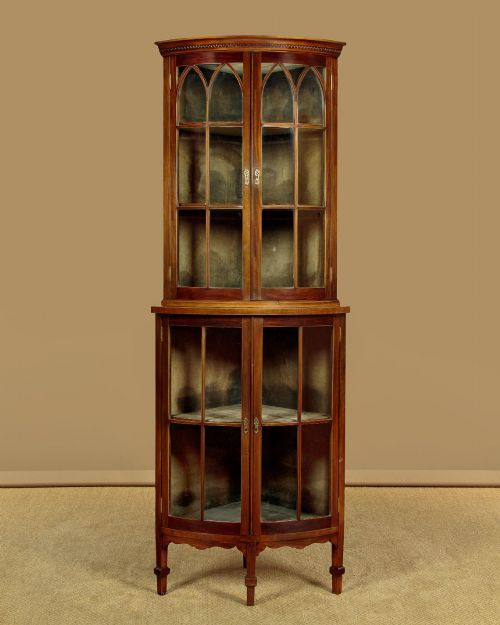
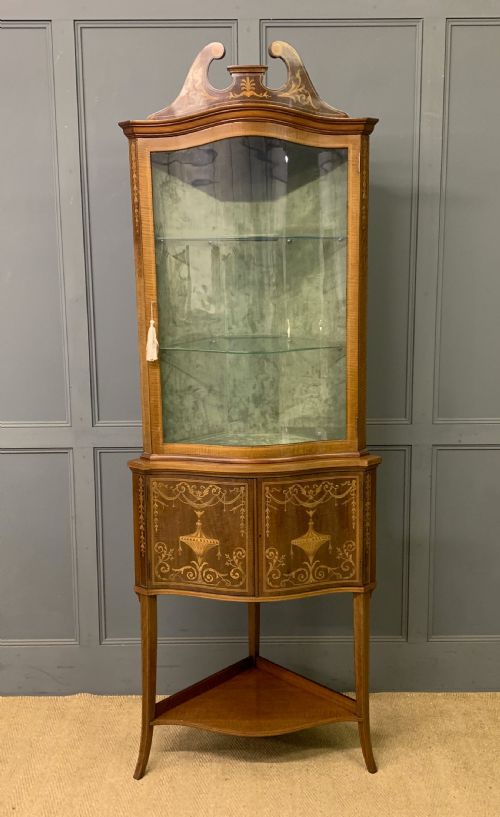
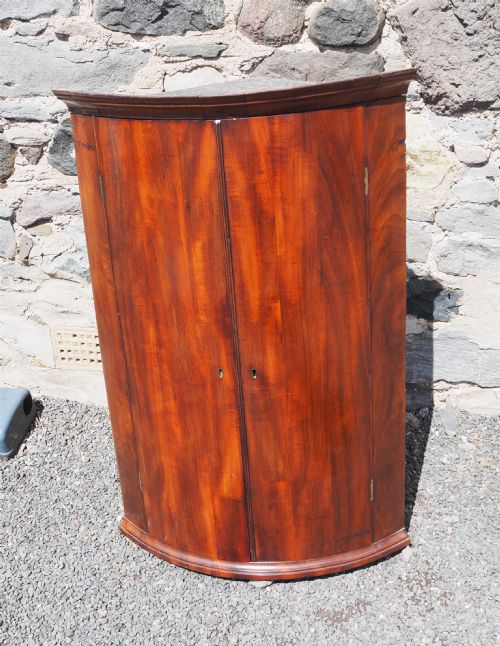
A mahogany bowfront corner cupboard is a specialised storage piece designed to fit neatly into the ninety-degree angle of a room while presenting a curved, convex front that softens the sharp lines of interior architecture. When you search for a mahogany bowfront corner cupboard, you encounter forms that range from wall-hanging units to tall standing cabinets and double-height architectural pieces.
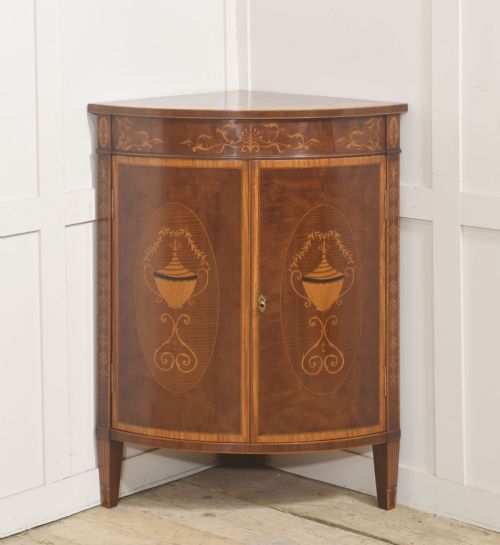
The pieces on this page are predominantly Georgian and George III creations, alongside later Edwardian and Sheraton Revival interpretations. The structural layout generally relies on solid mahogany or figured veneers over secondary timbers such as oak, enclosing tiered interior shelving intended for porcelain, glassware or documents.
Materials and construction
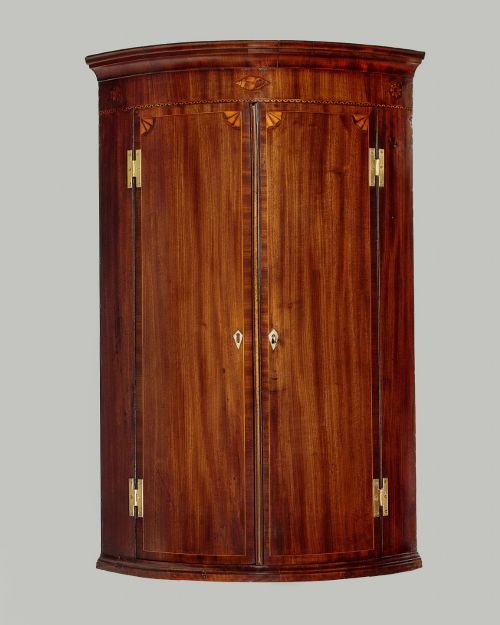
Cabinet makers utilised dense tropical mahogany, frequently selecting highly figured plum pudding or flame veneers for the curved doors to create dramatic visual movement. These primary surfaces were often framed with delicate contrasting stringing and banding in boxwood and satinwood.
Structural integrity in a curved door frame required precise joinery, with internal corner blocks and solid oak linings supporting the weight of heavy timber. Brass hardware, including butterfly hinges and working escutcheons, completed the construction.
Mahogany Bowfront Corner Cupboard Retail Price Guide 2026
Typical asking prices for mahogany bowfront corner cupboard among the pieces listed under this phrase on Sellingantiques today, from the lower quarter to the upper quarter. They describe what is for sale here now, not the wider market.
The listings on this page span from mid-eighteenth-century Georgian origins through the Edwardian era into the nineteen-thirties, dominated by mahogany, oak and inlaid satinwood.
Judging quality and execution
The distinction between standard utility pieces and exceptional examples rests upon the choice of timber and the subtlety of the inlay work. Premium cabinets exhibit book-matched flame mahogany or richly mottled plum pudding grain that wraps fluidly across the convex door sweep.
Proportion and execution of detail also separate the tiers of craftsmanship, visible in the sharpness of boxwood stringing, the weight of the original brasswork, and the interior joinery that keeps the heavy curved door true over centuries of shifting humidity.
The Mahogany Bowfront Corner Cupboard Glossary
- Bowfront
- A convex curved front profile that projects outward from the corners, characteristic of the best eighteenth and nineteenth-century case furniture. This shape requires skilled steaming and shaping of solid timber or precise veneer work.
- Stringing
- Thin lines of contrasting wood, often boxwood or satinwood, inlaid into channels on the cabinet face to create geometric borders. It defines the panels and highlights the curved geometry of the piece.
- Flame mahogany
- A veneer figure produced from wood harvested near the branch forks, displaying flickering flame-like patterns. Cabinet makers placed these veneers symmetrically to catch the light.
- Hanging corner cupboard
- A wall-mounted variation designed to be secured directly to room studs, freeing up floor space while providing secure display storage at eye level.
Mahogany Bowfront Corner Cupboard: Frequently Asked Questions
How do I hang a heavy corner cupboard safely?
These wall-mounted units require robust fixings secured directly into brickwork or heavy timber wall studs rather than plasterboard alone. The internal hanging brackets must bear the substantial weight of solid mahogany and interior contents.
Professional installation ensures the curved door swings freely without dropping on its hinges over time.
Were these cabinets meant for display or storage?
Most hanging and standing versions served a dual purpose, keeping prized ceramics and glassware visible behind glazed panels while concealing utilitarian items below. The curved glass doors on later Edwardian pieces specifically catered to the exhibition of porcelain.
Early Georgian iterations often utilised solid timber doors to keep contents secure and dust-free.
How do I tell an 18th-century piece from a revival copy?
Eighteenth-century examples show hand-cut dovetails, secondary timbers like oak inside carcases, and subtle signs of hand-planing on the backboards. Nail types, timber shrinkage, and the mellow patina of the mahogany develop distinct characteristics over long periods.
Sheraton Revival and Edwardian pieces from around nineteen hundred often feature machine-cut elements, lighter pine secondary woods, and brighter chemical finishes.
What is the best way to care for mahogany furniture?
Keep these cabinets away from direct sunlight and strong heat sources such as radiators to prevent the mahogany veneers from lifting or splitting. Regular dusting with a dry, soft cloth maintains the surface without the need for heavy silicone polishes.
Feed the dry timber occasionally with a traditional beeswax to nourish the grain and preserve the natural sheen.