
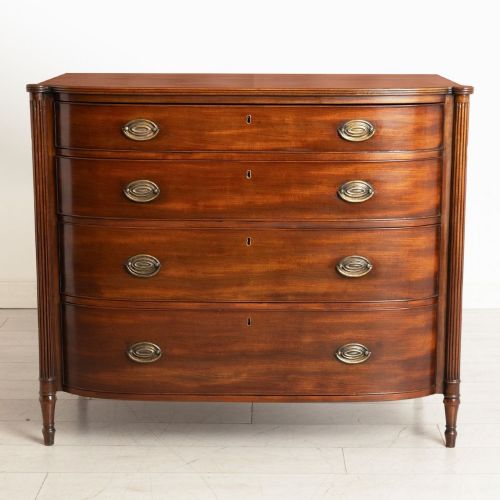
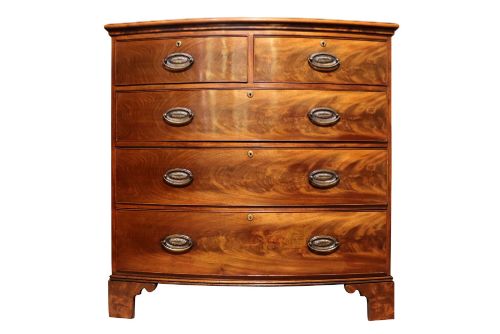
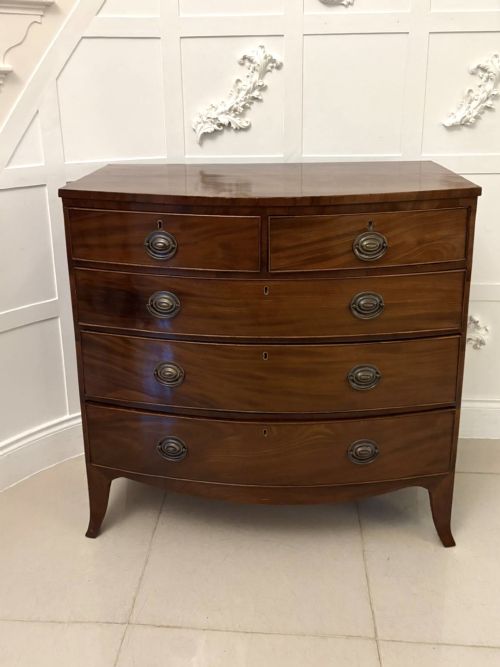
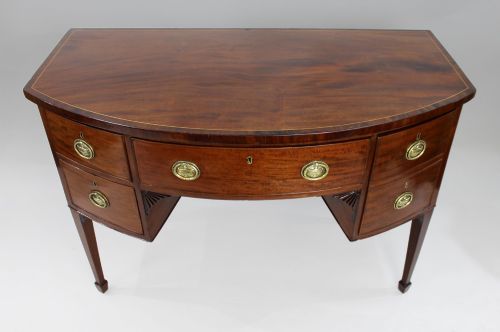
Mahogany Bow Fronted Drawers
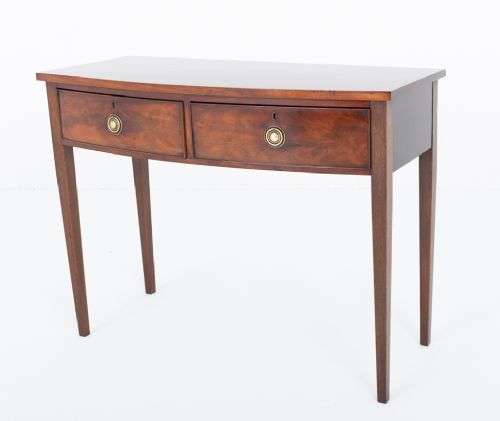
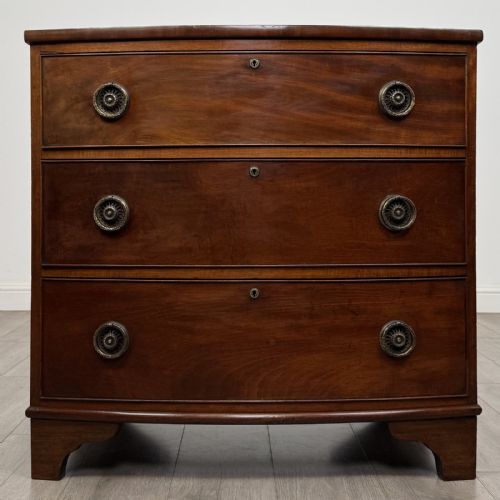
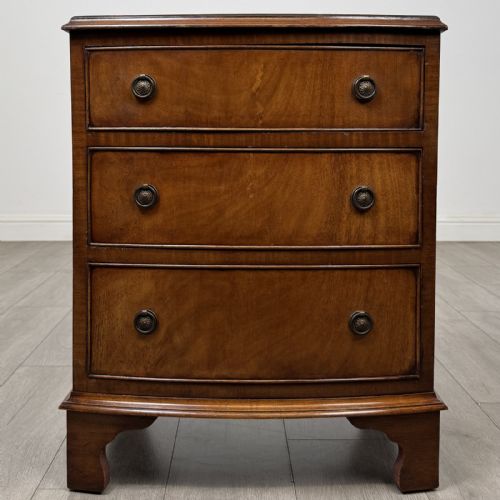
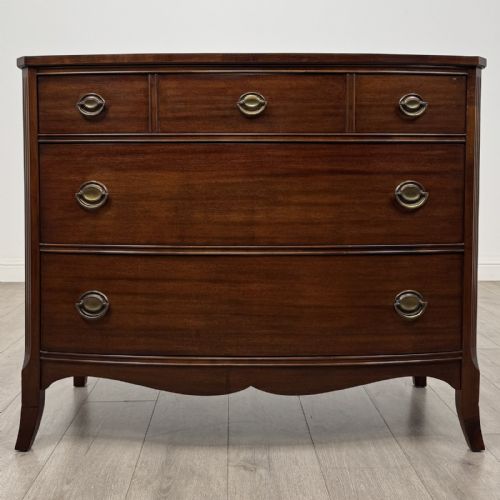
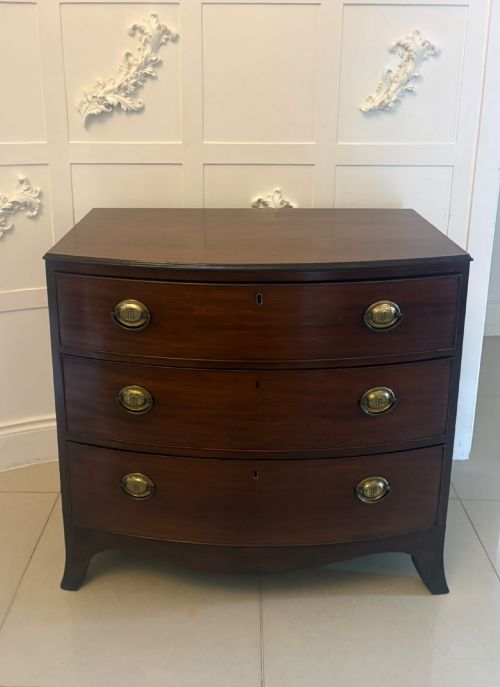
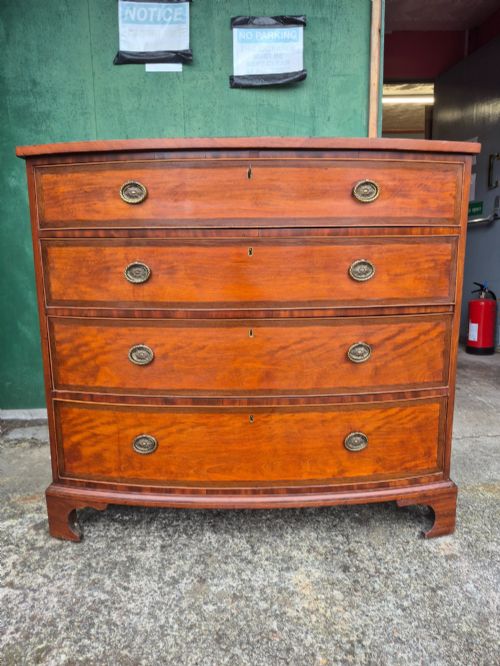
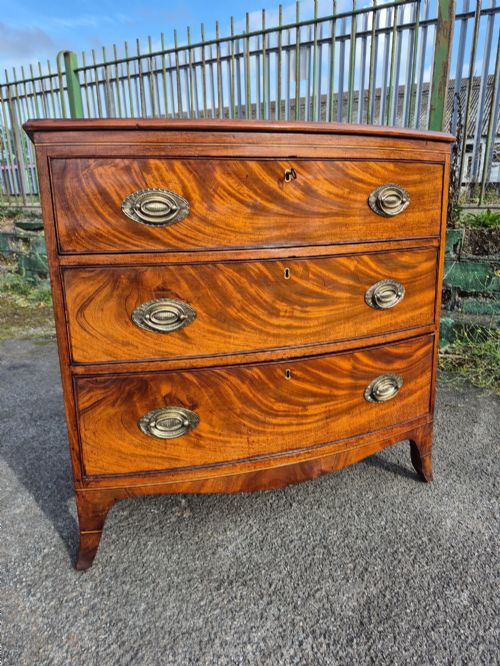
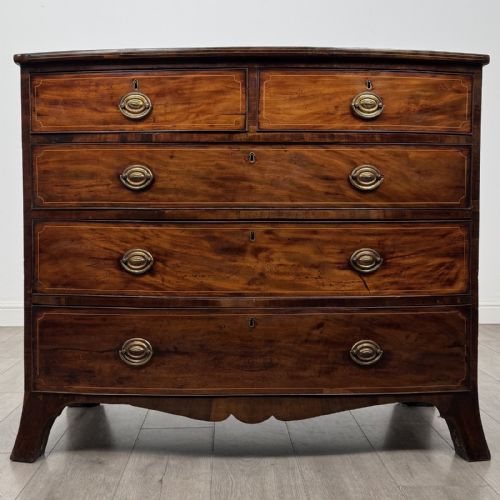
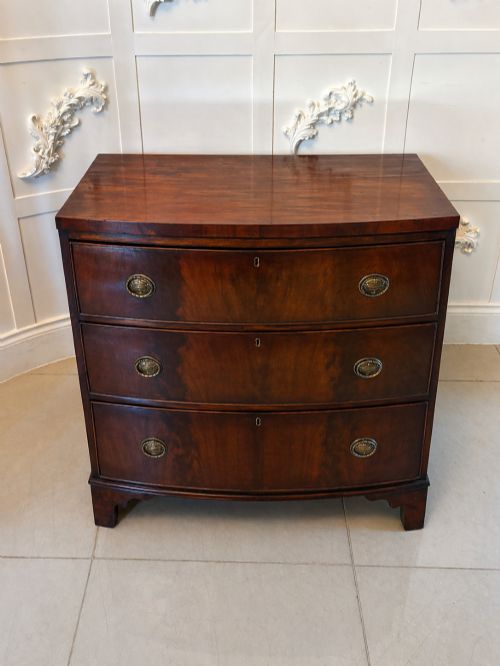
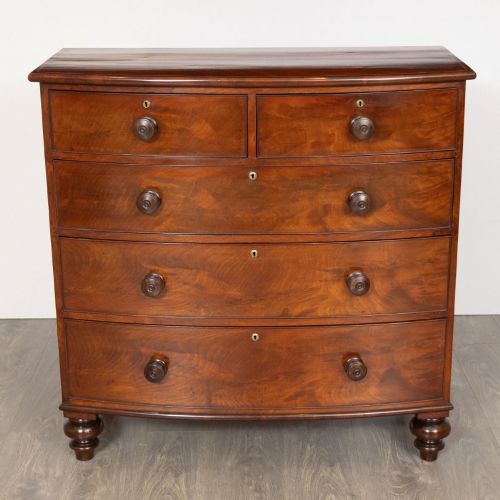
These mahogany bow fronted drawers present curved timber fronts that soften room corners while offering substantial storage.
Mahogany Bow Fronted Drawers
Mahogany bow fronted drawers form a distinct group of furniture defined by a convex curving facade that projects forward from the frame. The examples found here span the eighteenth century through the Edwardian period, incorporating Georgian, Regency, and Victorian designs.
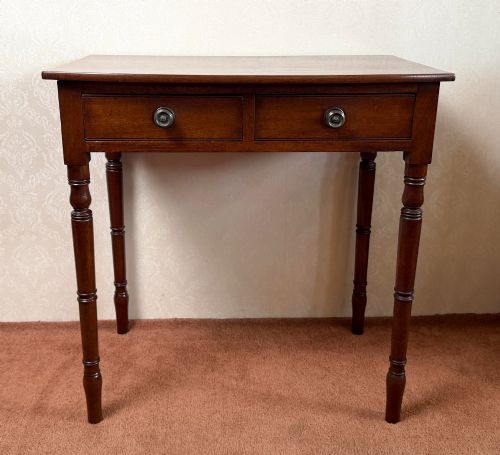
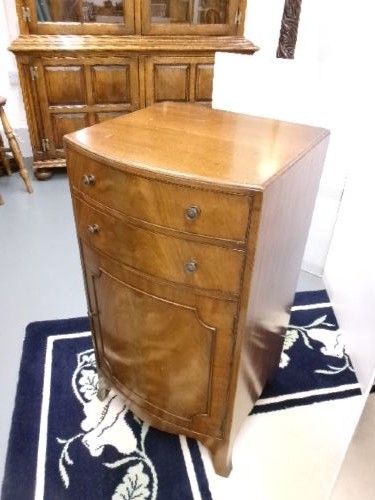
Most pieces appear as chests of drawers, though the selection also includes smaller bedside cabinets, dressing table mirrors, and side tables. These items originate from workshops across Britain, including Scottish and Welsh variations alongside standard English forms.
The prevailing form remains the chest of drawers with graduated horizontal drawers, frequently raised on bracket feet or short turned legs. Buyers encounter both full-sized bedroom pieces and smaller proportions intended for compact spaces.
Materials and Construction
Cabinet makers constructed the primary carcase using solid mahogany or secondary woods such as pine, applying finely figured mahogany veneers to the drawer fronts and top surfaces to create visual depth. Satinwood banding and crossbanding often frame these veneered panels, providing a contrasting border along the curved edges.
Makers shaped the curved fronts by building up solid timber or bending laminated sections, fitting brass pull handles or knobs to complete the drawer assemblies. Secondary construction details include hand-cut dovetails on the drawer sides and panelled backs secured with traditional joints.
The listings span multiple centuries, uniting Georgian, Regency, and Victorian examples alongside Edwardian interpretations.
Assessing Quality and Execution
Quality reveals itself in the selection of timber grain, particularly the choice of flame mahogany or figured veneers that wrap smoothly around the curved sweep of the front. Superior execution appears where the drawer sides show neat, uniform dovetailing and the drawers run smoothly within their individual runners.
Proportion and detail separate standard items from finer works, visible in delicate stringing, well-turned feet, and original brass hardware. The integration of secondary woods and the crispness of edge mouldings further distinguish the standard of cabinet work.
The Mahogany Bow Fronted Drawers Glossary
- Bow front
- A convex curved cabinet front that projects outward in a smooth arc. This shape gained widespread popularity during the Georgian and Regency periods to soften rigid room layouts.
- Flame mahogany
- A veneer cut from timber where the branch meets the trunk, producing a distinctive flickering flame pattern. Cabinet makers reserved this highly decorative wood for prominent drawer fronts.
- Crossbanding
- A border of veneer laid perpendicular to the grain of the surrounding panel. This technique frames the top surface or drawer edges with contrasting wood grain.
- Graduated drawers
- A stack of drawers decreasing in depth from bottom to top. This arrangement creates a balanced visual weight on tall chests and sideboards.
- Caddy top
- A table or chest top with a moulded edge resembling the lid of a tea caddy. It sits slightly raised above the main carcase frame.
Mahogany Bow Fronted Drawers: Frequently Asked Questions
How do I date a bow front chest?
Dating relies on stylistic clues, hardware types, and construction methods visible in the timber framing. Earlier pieces from the Georgian era often feature bracket feet and hand-cut dovetails.
Later Victorian and Edwardian examples tend to use heavier proportions, machine-cut elements, and different interior secondary woods. Comparing the foot style and veneer patterns helps narrow the period of manufacture.
Where were these chests placed originally?
Bedrooms served as the primary location for these chests, providing essential storage for linens and garments. Smaller proportions also suited dressing rooms and parlours.
Their finished backs and sides occasionally allowed placement in hallways or reception rooms where a curved silhouette softened sharp architectural corners.
Are all bow fronts made of solid mahogany?
Cabinet makers rarely built entire curved chests from solid high-grade mahogany due to the timber cost and the mechanics of curved construction. Most carcases combine a structural wood like pine with decorative mahogany veneers applied to the front and top.
Solid mahogany appears more frequently in structural framing, drawer dividers, and feet rather than the broad curved surfaces.
How do I care for mahogany veneer?
Maintaining antique veneer requires stable indoor humidity levels away from direct heat sources and strong sunlight. Sudden temperature shifts can cause the underlying glue to dry and the veneer to lift.
Routine dusting with a dry cloth and occasional application of appropriate furniture wax helps preserve the polished finish of the timber.