





Mahogany Birdcage Tilt Table
A mahogany birdcage tilt table is a clever 18th-century tripod piece that pivots and folds for easy storage, prized for its versatility.
Mahogany Birdcage Tilt Table
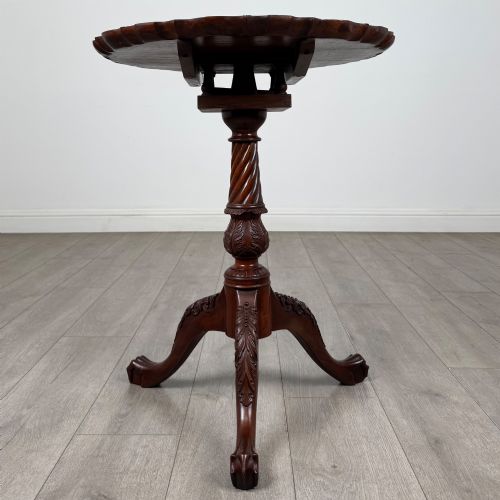
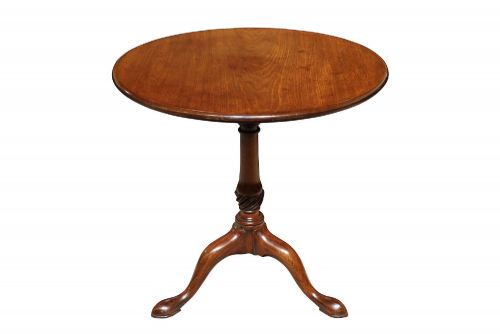
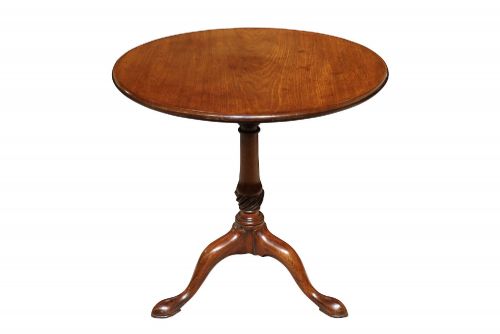
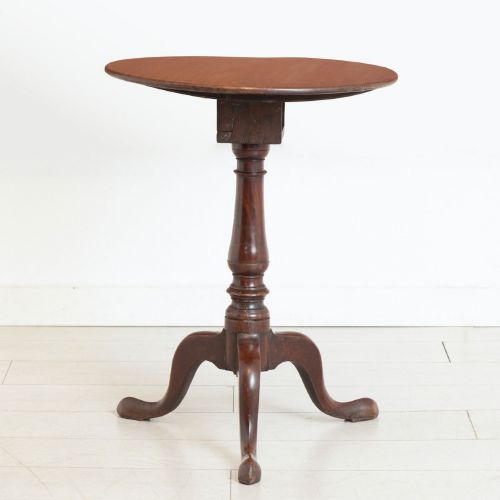
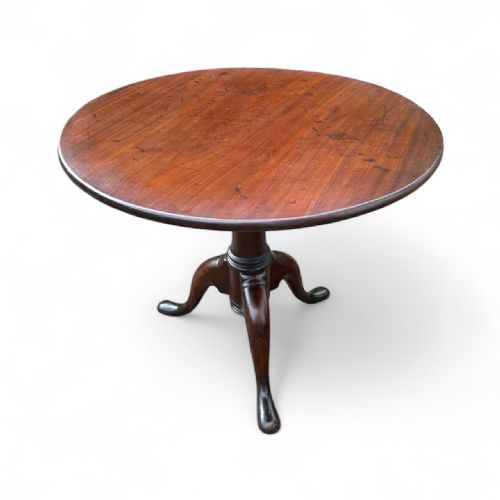
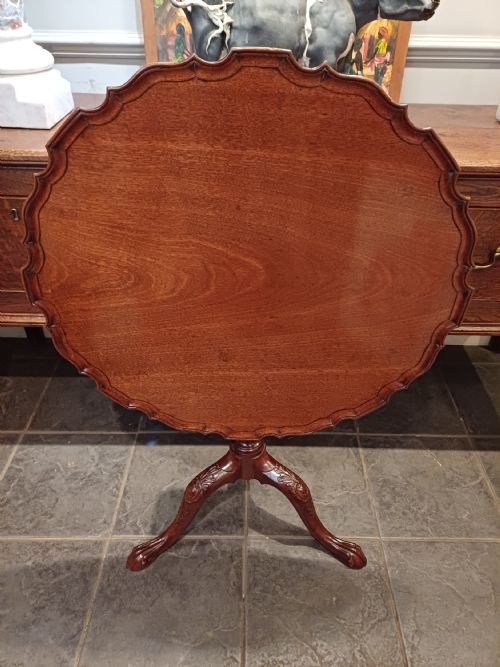
Most pieces you meet on this page take the form of round wine tables, occasional tables, or supper tables supported by three legs. You will regularly encounter single-piece timber tops and dish tops, alongside occasional variations such as octagonal tops with pierced galleries or piecrust edges.
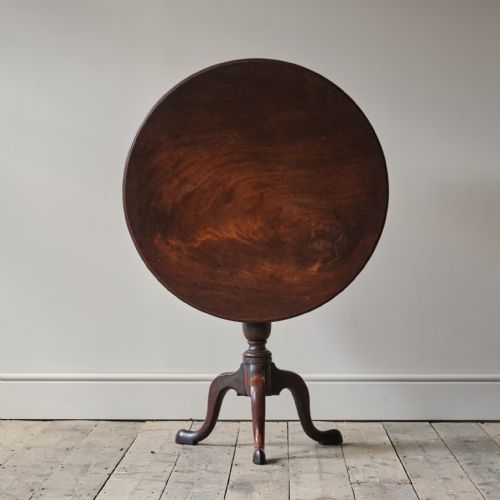
The form developed to save space in period dining and drawing rooms, where tables were tipped upright against walls between meals. Alongside standard circular tops, the selection includes occasional side tables and rectangular formats with birdcage supports.
How they were made
Cabinet makers constructed these tables predominantly from rich mahogany, sometimes specified as Cuban mahogany, paired with internal elements in brass and iron. The signature birdcage mechanism incorporates small wooden blocks and turning spindles that allow the top to revolve independently of the central pillar.
The upper surface often consists of a single wide mahogany plank attached to a tilting block, connected to a turned column and three curving tripod legs. Finer iterations showcase specialised edge treatments like carved piecrust mouldings or raised dish profiles worked directly into the solid timber.
Listings span the Georgian, George II, George III, William IV, and Edwardian periods, constructed primarily in mahogany with brass and iron fittings.
What varies in quality
Quality rests heavily on the selection of timber, particularly the presence of a single-piece top with deep figure and warm colour. Tables featuring dense Cuban mahogany or crisp hand-carving on the tripod knees and feet sit firmly at the upper end of the range.
The engineering of the birdcage mechanism dictates the mechanical success of the piece. Smooth rotation without excessive play in the pivoting axis, coupled with tight joinery where the pillar meets the tripod base, separates finer workshop production from simpler utilitarian examples.
John Bivins
The Mahogany Birdcage Tilt Table Glossary
- Birdcage
- A wooden framework of small spindles and blocks beneath the table top that enables the surface to both pivot and tilt.
- Tilt top
- A hinged table top that swings from horizontal to vertical, allowing the furniture to be stored compactly against a wall.
- Tripod base
- A pedestal support resting on three spreading legs, typical of 18th-century occasional and wine tables.
- Dish top
- A table surface with a raised solid rim carved directly from the edge of the solid timber board.
- Piecrust edge
- A decorative raised border shaped with undulating curves resembling pastry work, found on finer Georgian tables.
Mahogany Birdcage Tilt Table: Frequently Asked Questions
How were these tables used originally?
In 18th-century homes, these tables served flexibly as wine tables, supper tables, or lamp stands in drawing rooms and parlours. Because they could be folded flat, servants pushed them out of the way against walls to clear floor space.
When needed for tea or dining, the top tilted down and locked into position, offering a sturdy surface for entertaining guests.
How do I identify an 18th-century table?
Eighteenth-century examples rely on heavy solid mahogany, often utilising a single wide plank for the top and traditional joinery methods. Look for hand-turned pillars, pegged tenons, and authentic wear patterns on the tripod feet.
Later Georgian Revival or Edwardian pieces may use different secondary woods or display machine-tooled components inside the birdcage mechanism.
How do I live with a tilt top table?
These tables adapt well to modern living rooms as bedside stands, lamp tables, or display surfaces beside armchairs. Their compact tripod footprint takes up very little floor space.
You can keep the top tilted against a wall as a decorative panel when floor space is tight, or leave it flat for everyday use.