

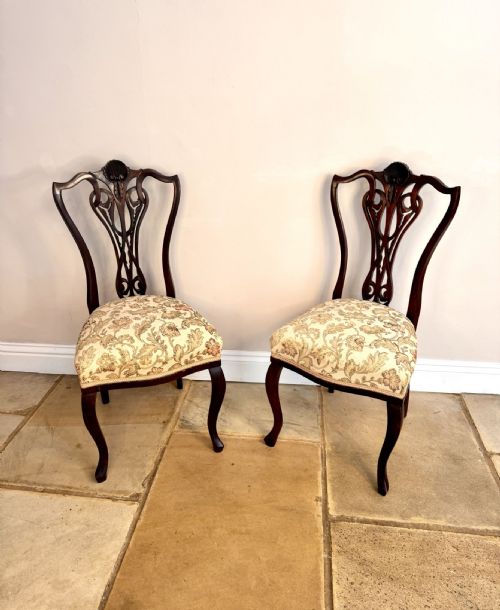
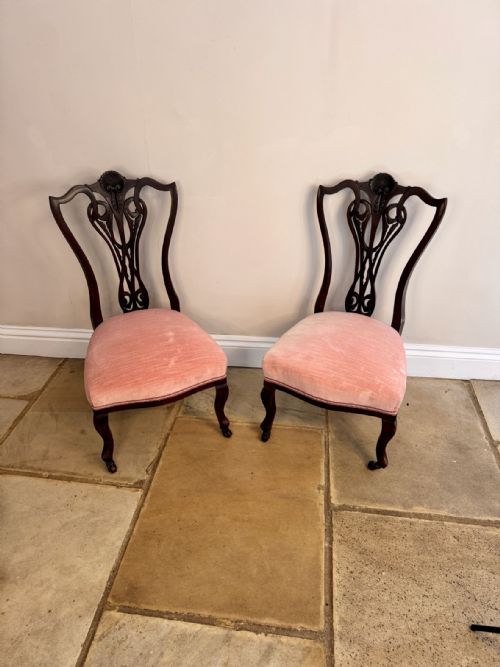
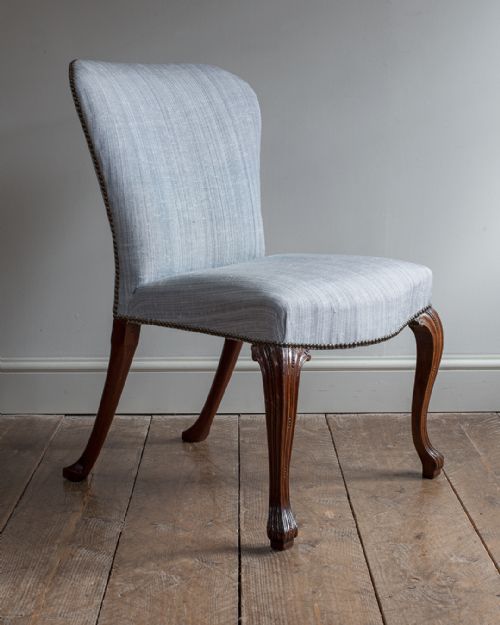
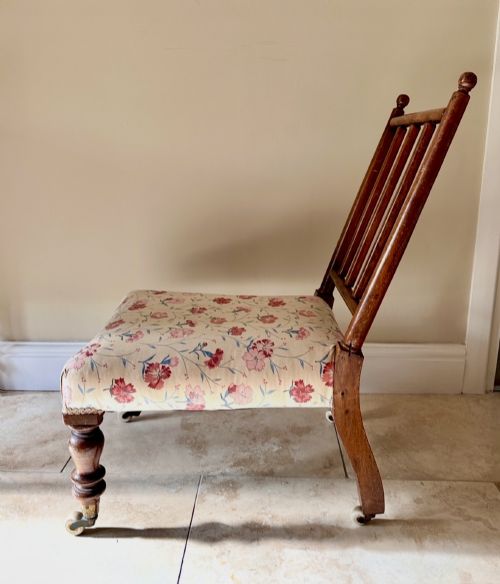
Mahogany Bedroom Side Chair
A mahogany bedroom side chair offers compact elegance, joining practical seating with refined timber and upholstery from the Victorian and Edwardian periods.
How they were made
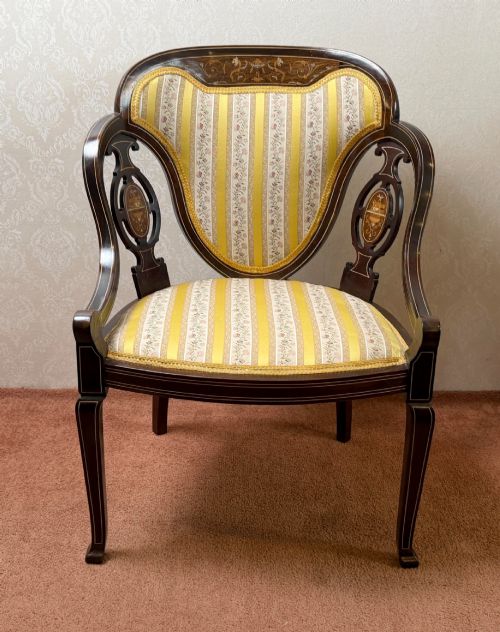
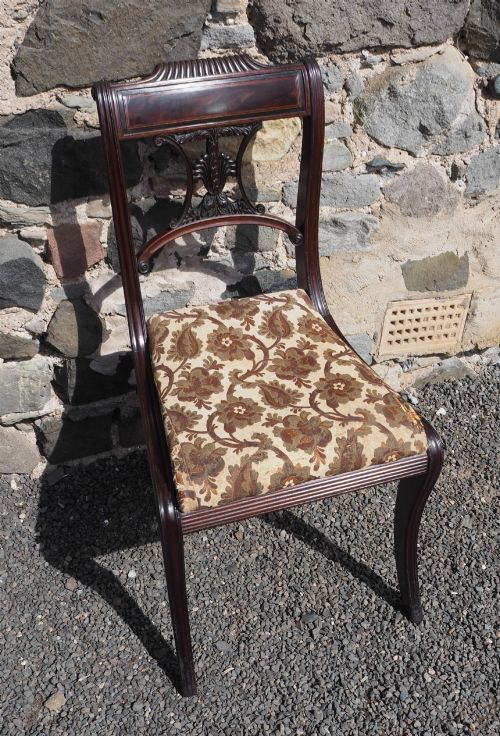
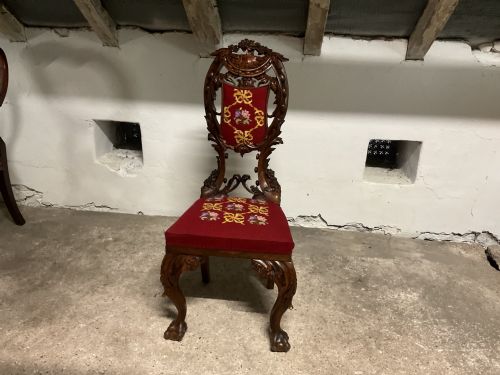
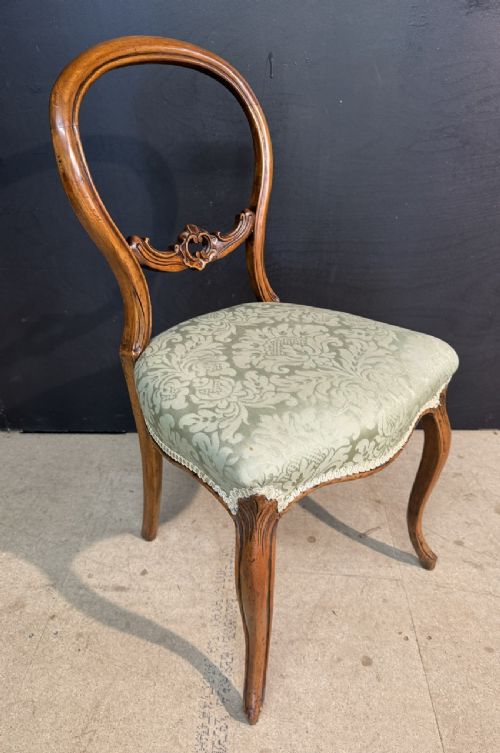
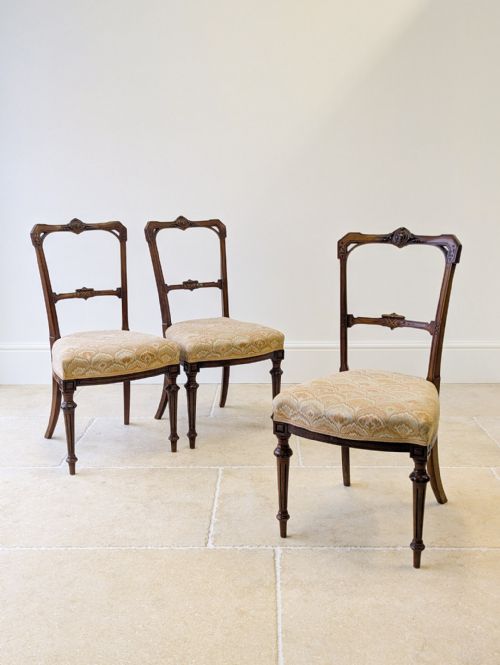
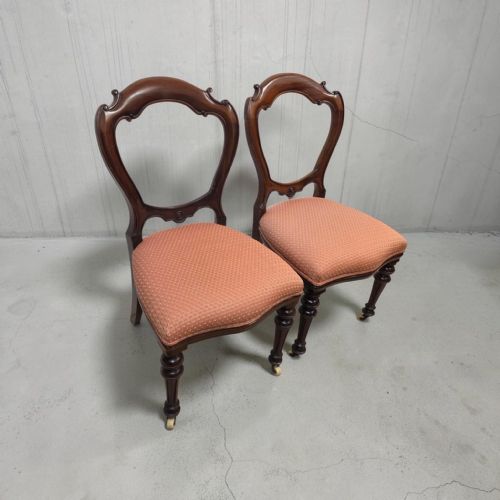
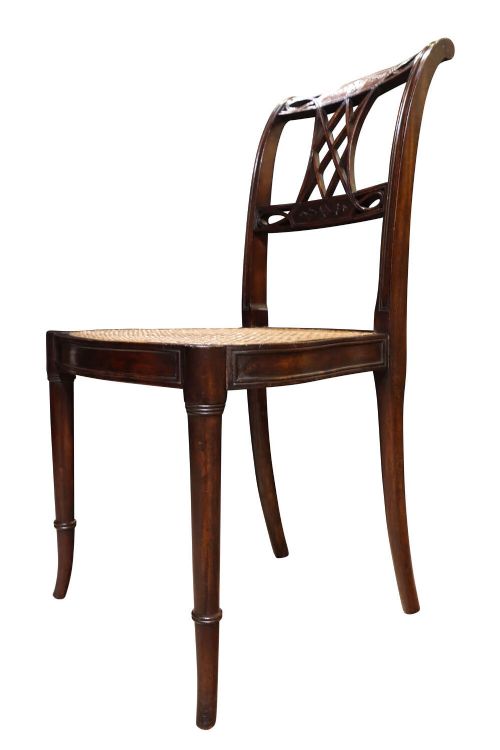
Cabinet makers utilised solid mahogany and Cuban mahogany for the structural frames, taking advantage of the timber's strength to form slender legs, curved backs, and supportive rails. This dense wood allowed for intricate carving, such as scroll details and balloon back shapes, without compromising structural integrity.
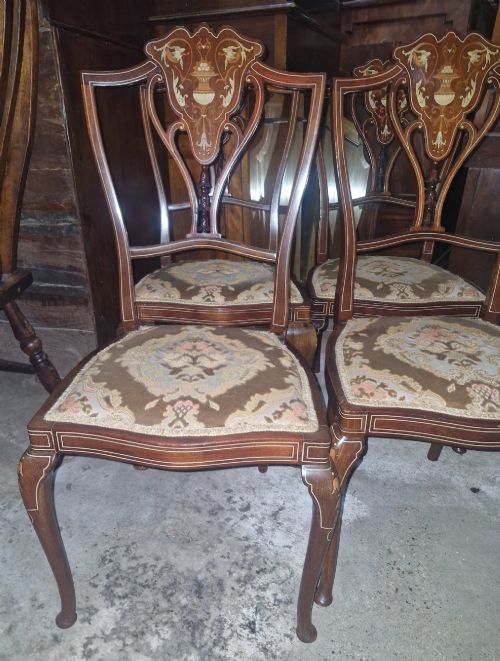
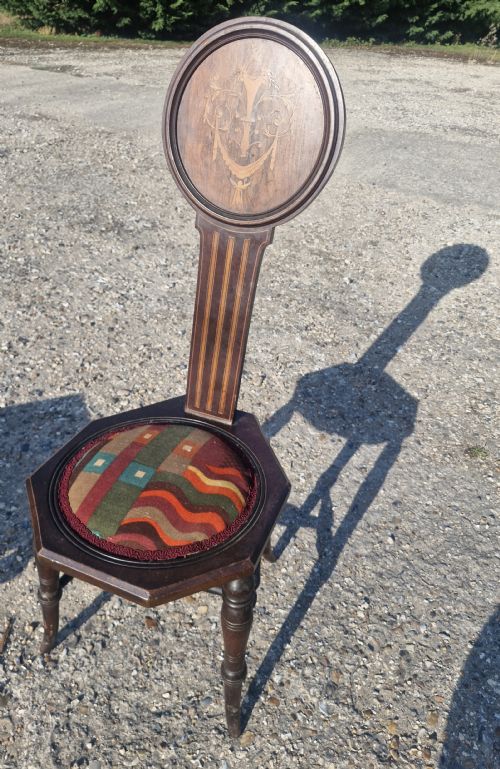
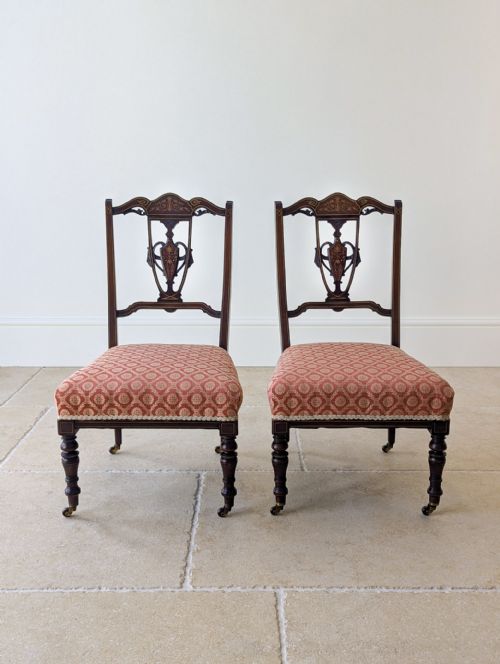
Decorative surfaces frequently incorporated wood inlay and string inlay to introduce contrasting pale lines or geometric patterns into the dark mahogany ground. In some pieces, brass fittings, ormolu mounts, or turned wooden components added further textural detail.
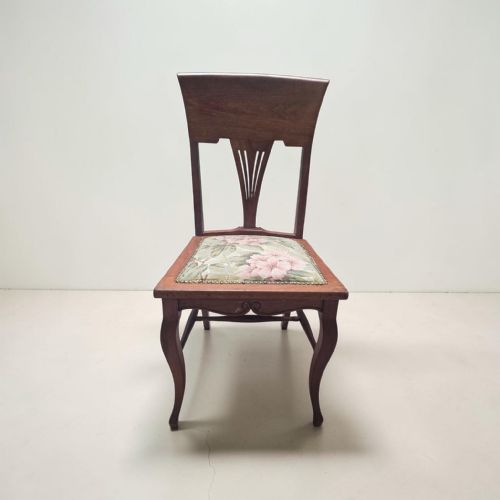
Upholstery completed the construction, utilising fabrics ranging from contemporary textile and damask to velvet, fabric, or woven cane seats. Hand-stitched tapestry and modern striped cloths also appear on surviving examples.
What varies in quality
The standard of timber selection and joinery marks the primary division across these chairs, separating robust construction from simpler output. Dense, finely figured Cuban mahogany and crisp, deep hand-carving indicate superior workshop standards.
Detailing in the decorative elements also distinguishes the range. Precisely executed wood inlay and well-mounted brass or ormolu accents demonstrate a higher level of craftsmanship than plain or mechanically stamped alternatives.
Mahogany Bedroom Side Chair Retail Price Guide 2026
Typical asking prices for mahogany bedroom side chair among the pieces listed under this phrase on Sellingantiques today, from the lower quarter to the upper quarter. They describe what is for sale here now, not the wider market.
Listings span the Georgian, Regency, Victorian, and Edwardian periods, utilising mahogany alongside fabric, brass, velvet, wood inlay, cane, and damask.
The Mahogany Bedroom Side Chair Glossary
- Balloon back
- A rounded, oval-shaped wooden chair back popular during the Victorian period. It curves outward to provide ergonomic support while presenting a continuous timber outline.
- Cane
- Woven rattan material used for chair seats and backs. This technique creates a light, porous surface that adds textural contrast to the solid mahogany frame.
- Wood inlay
- The technique of embedding contrasting strips or pieces of lighter wood into the mahogany surface. It creates geometric patterns or floral motifs.
- Cuban mahogany
- A dense, dark variety of Swietenia mahagoni highly prized for its rich grain and weight. It was frequently used in eighteenth and nineteenth-century furniture.
- Bar back
- A chair back featuring a horizontal wooden slat or rail shaped like a curved bar. This form is frequently seen on Regency and nineteenth-century seating.
Mahogany Bedroom Side Chair: Frequently Asked Questions
How do I date a mahogany bedroom side chair?
Dating relies on observing stylistic markers, timber characteristics, and construction methods. Victorian pieces often feature heavy scroll carving or balloon backs, whereas Edwardian examples frequently display delicate string inlay and lighter proportions.
Reference points include documented periods such as the Regency era or the early twentieth century. Examining the upholstery type and secondary woods can also provide clues to the approximate decade of manufacture.
Were these chairs only used in bedrooms?
While designated as bedroom chairs, these versatile pieces served multiple domestic functions across the home. Their compact size made them suitable for dressing rooms, parlours, halls, and small salons.
Owners frequently moved them between rooms as household needs changed or as social spaces required additional flexible seating.
What is the difference between a side chair and a nursing chair?
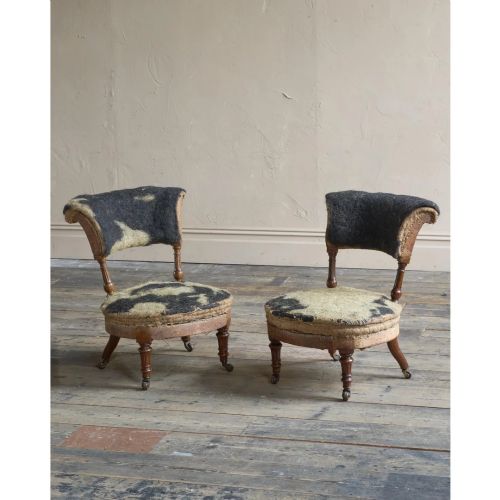
A side chair is typically upright, straight-legged, and designed to sit against a wall or complement a desk. A nursing chair sits lower to the floor with a padded seat, originally built to provide comfort during child-rearing.
Nursing chairs also tend to feature more expansive upholstered areas and decorative woodwork suited for private quarters.
How should I care for antique mahogany furniture?
Maintaining mahogany requires keeping the timber away from direct sunlight and extreme temperature fluctuations. Regular dusting with a soft, dry cloth preserves the finish without building up chemical residues.
Conditioning the wood occasionally with appropriate wax helps maintain the natural moisture and sheen of the vintage surface.