
Mahogany Armoire Cupboard
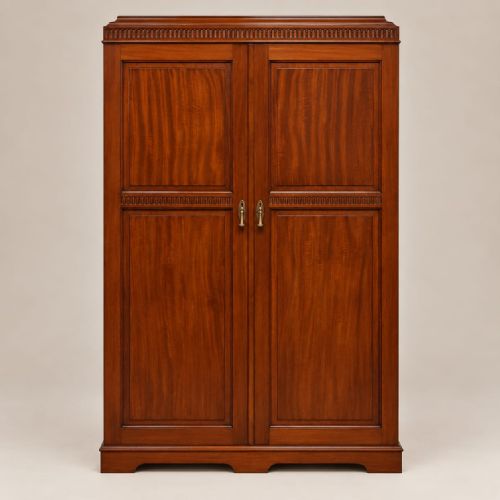
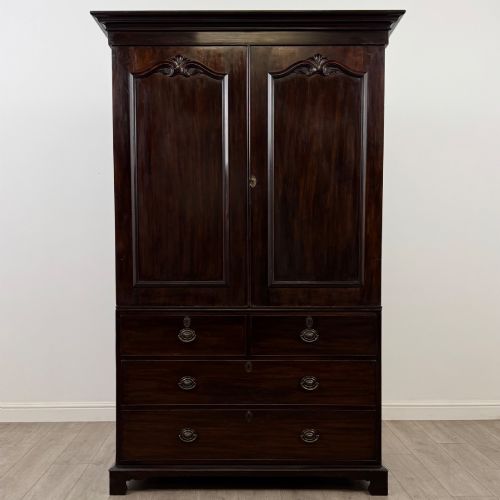
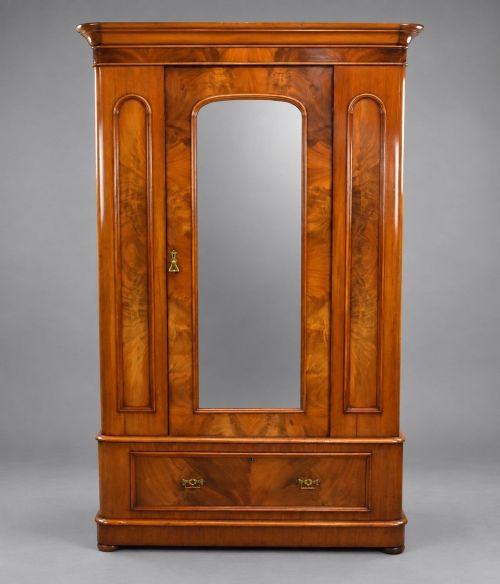
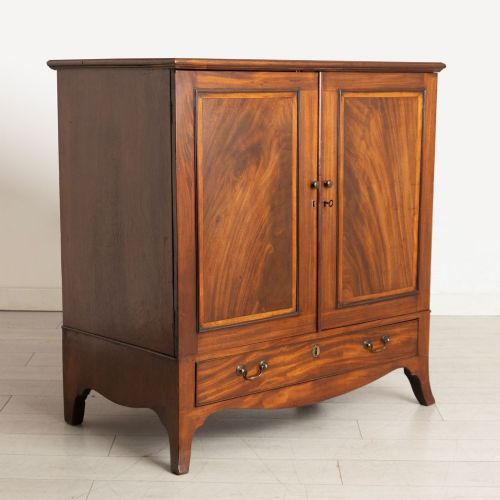
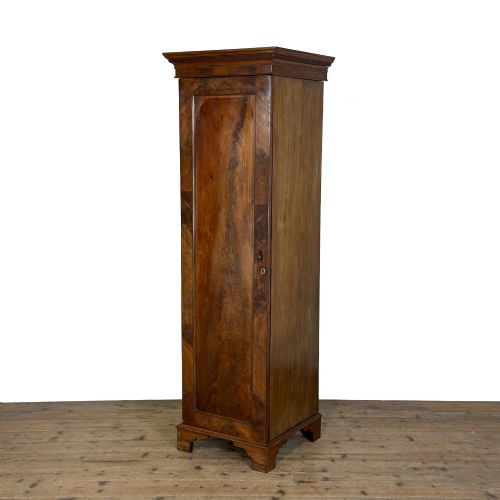
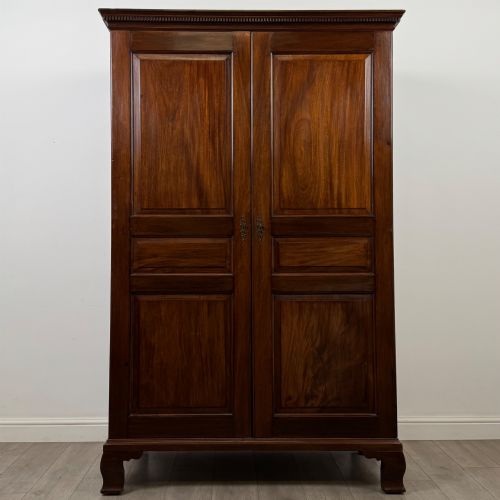
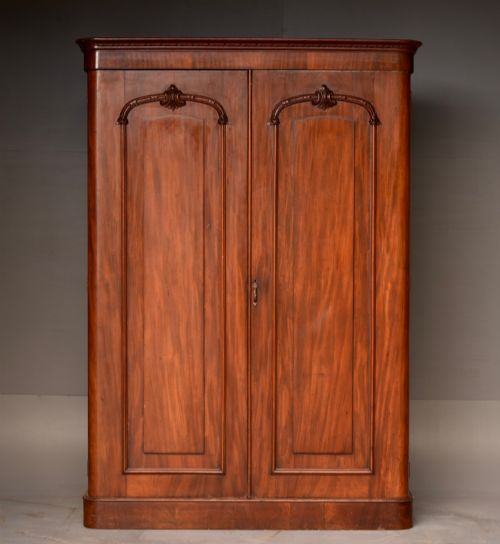
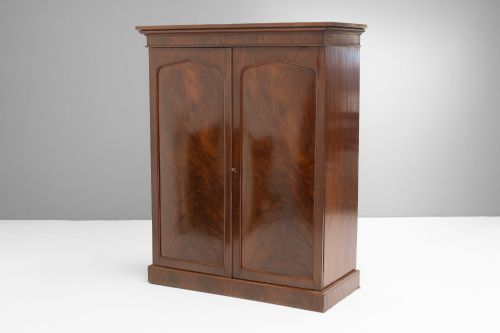
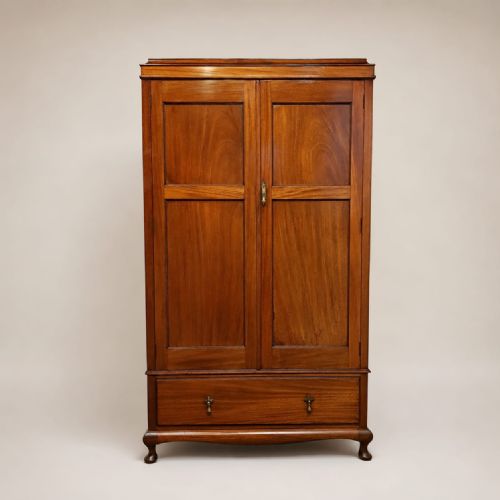
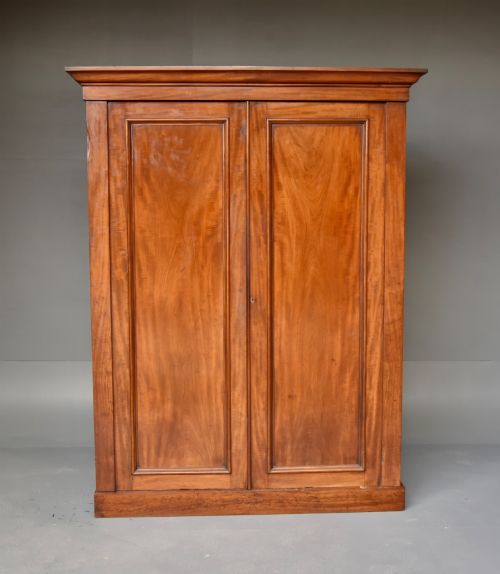
A mahogany armoire cupboard provides substantial storage while anchoring a room with the rich tones of figured timber.
Mahogany Armoire Cupboard
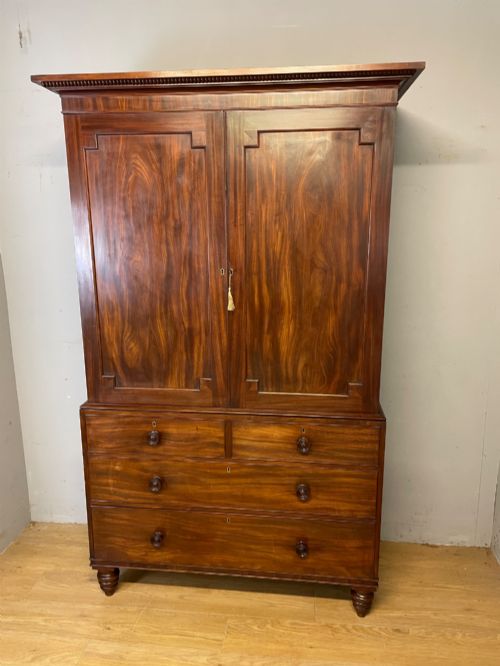
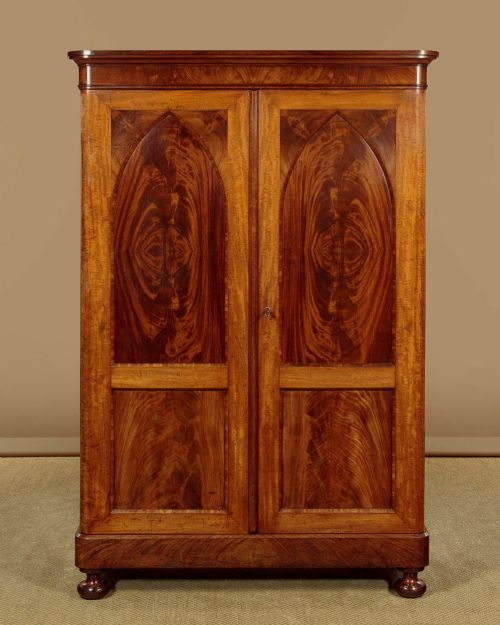
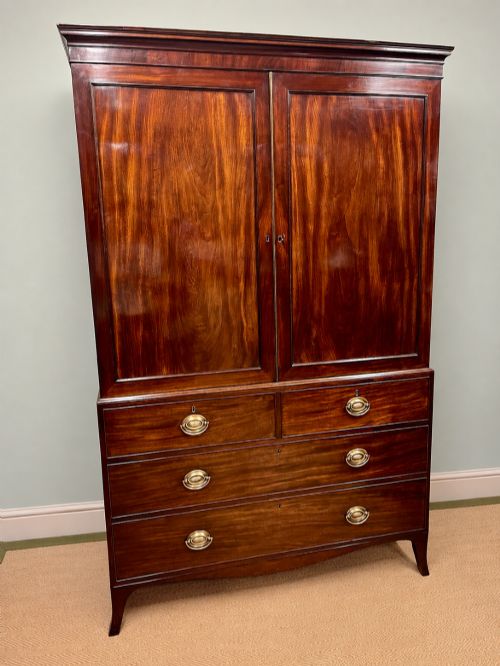
A mahogany armoire cupboard is a large storage piece designed for garments, linen or household supplies, appearing across periods from the eighteenth century into the twentieth. When exploring this selection, buyers encounter everything from Georgian linen presses and compactums to Victorian double wardrobes and French armoires.
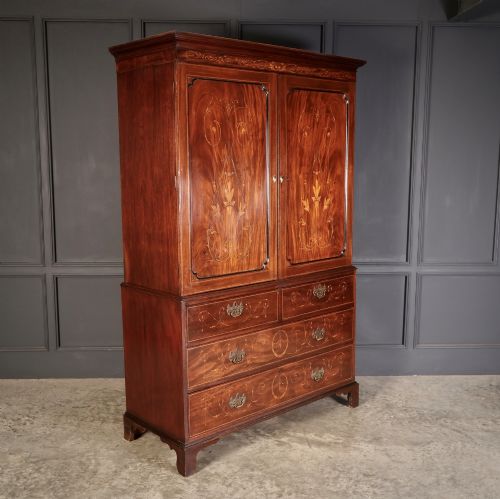
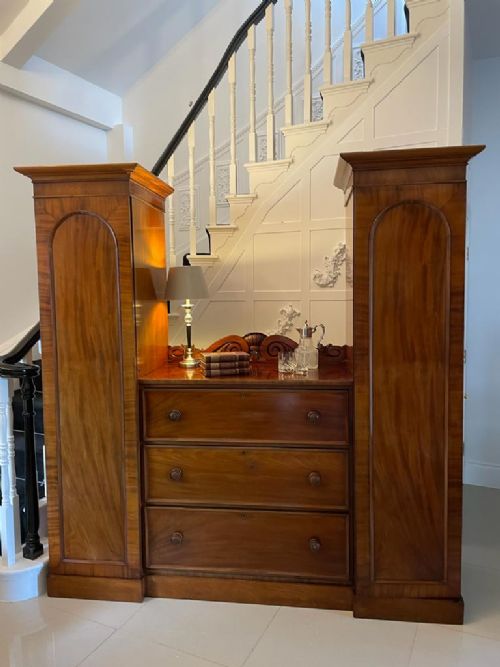
The form bridges practical utility and architectural presence, frequently combining hanging space with sliding trays or internal drawers. Pieces range from formal George III breakfront presses to Edwardian inlaid wardrobes and simpler nineteenth century cupboards.
Origin and period dictate the structural proportions, with eighteenth-century pieces often showing deeper cornices and panelled doors, whilst later Victorian and Edwardian examples lean towards glazed panels or mirrored doors.
How they were made
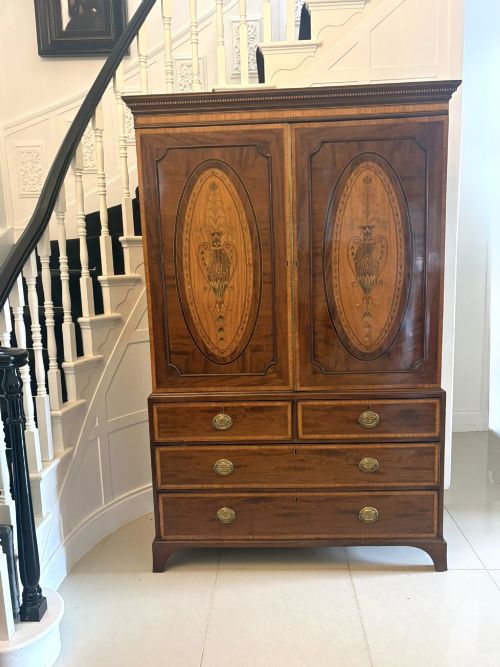
Construction relies heavily on solid mahogany and flame mahogany veneers applied to secondary woods such as oak, often enriched with satinwood, boxwood, or amboyna inlay. Cabinetmakers utilised fine dovetailing for internal drawers and constructed heavy cornices using dental mouldings or blind fretwork.
Surface ornament includes marquetry panels, brass hardware, and occasionally gilt bronze ormolu mounts on continental pieces. French armoires and English presses alike depend on the grain pattern of the timber for visual depth, enhanced through traditional hand-polishing techniques.
Materials appearing across the inventory include solid mahogany, flame mahogany veneer, oak, satinwood, boxwood, and occasional glass or brass.
What varies in quality
Quality separates ordinary utility pieces from exceptional cabinet work through the selection of timber veneers, such as richly figured flame mahogany matched symmetrically across doors. The crispness of inlay work, the thickness of drawer linings, and the survival of original brass handles or locks also mark the grade.
Construction depth dictates value, seen in the architectural elaboration of the cornice, the presence of blind fretwork, and whether internal linen slides remain intact alongside hanging sections.
maples & co·Druce & Co.
The Mahogany Armoire Cupboard Glossary
- Linen Press
- A tall storage piece featuring upper sliding trays or shelves above a chest of base drawers, originally intended for folded textiles. These items frequently double as gentlemen's wardrobes in Georgian and Victorian households.
- Compactum
- A multi-compartment wardrobe designed to maximise storage by combining hanging sections, shelves, and internal drawers within a single carcass. This form emerges strongly during the nineteenth century.
- Blind Fretwork
- Carved ornamentation applied to a solid background in a geometric or interlaced lattice pattern rather than pierced right through. It is commonly found along the cornices of better Georgian case furniture.
- Breakfront
- A piece of furniture where the central section projects forward from the flanking wings. This architectural arrangement creates depth and shadow on larger wardrobes and linen presses.
- Ormolu
- Cast bronze mounted objects finished in high-gilt, utilised as decorative hardware on nineteenth-century French armoires. The term derives from French phrasing for ground gold.
Mahogany Armoire Cupboard: Frequently Asked Questions
How do I fit a large armoire cupboard into a modern bedroom?
Most large wardrobes and armoires are designed to dismantle into a cornice, base, and main side panels to facilitate transport and installation in rooms with low or standard ceiling heights.
Checking the internal depth is essential, as older pieces built for folded linens or bulky garments sometimes require specific modern hanging solutions or shallower coat hangers.
How can I tell a Georgian piece from a Victorian one?
Georgian pieces typically exhibit architectural proportions, subtle boxwood or satinwood stringing, and solid timber construction with hand-cut dovetails. Victorian examples frequently introduce wider mirrored doors, heavier mouldings, and machine-sawn elements.
Looking at the backboards and drawer linings provides clear clues regarding the period of construction and whether secondary woods like oak or deal were utilised.
What maintenance does a mahogany wardrobe require?
Mahogany benefits from occasional feeding with a quality beeswax to preserve the depth of the polish and prevent the timber from drying out in centrally heated rooms. Avoiding direct sunlight is crucial to protect flame veneers from fading over the years.