
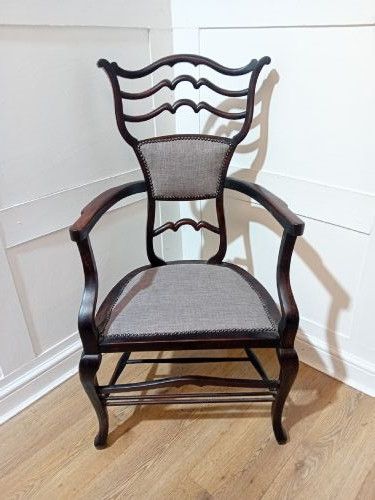
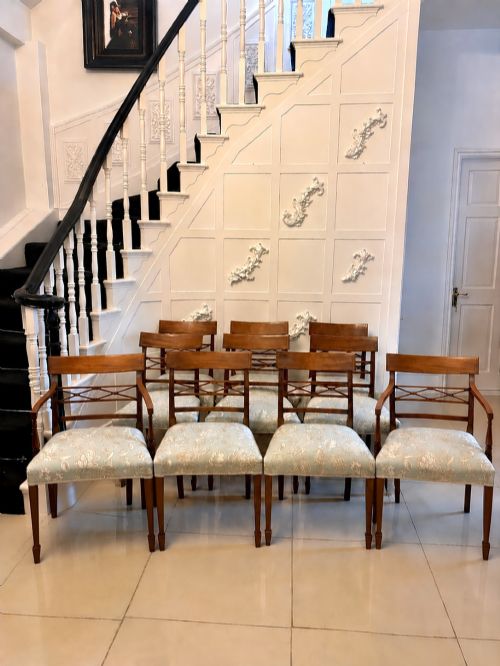
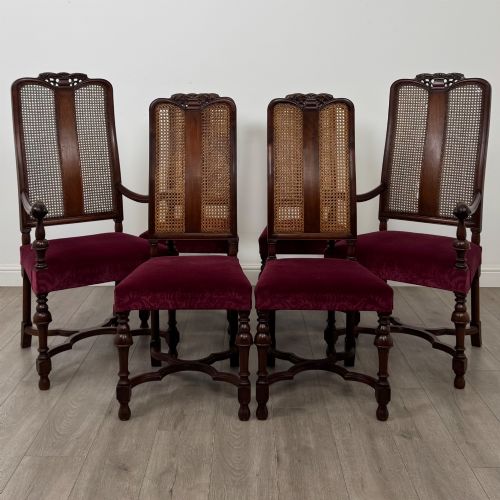
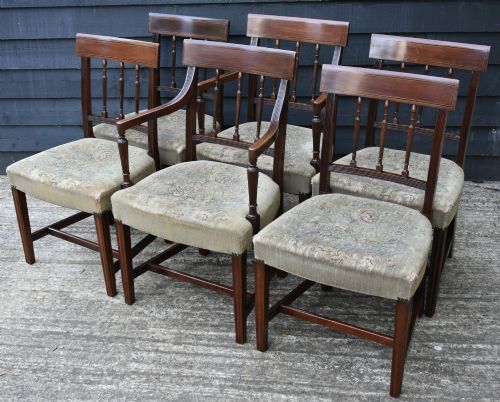
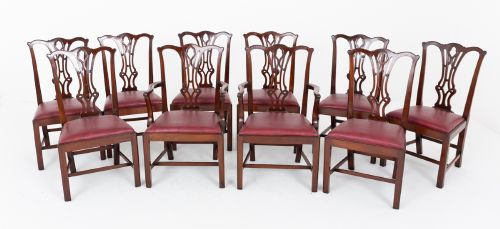
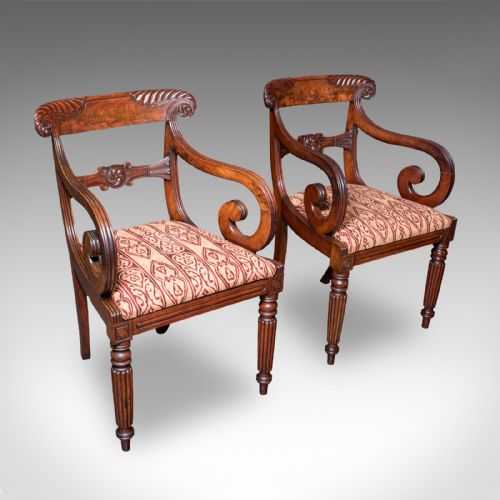
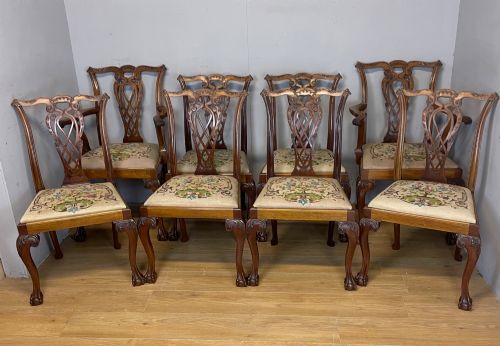
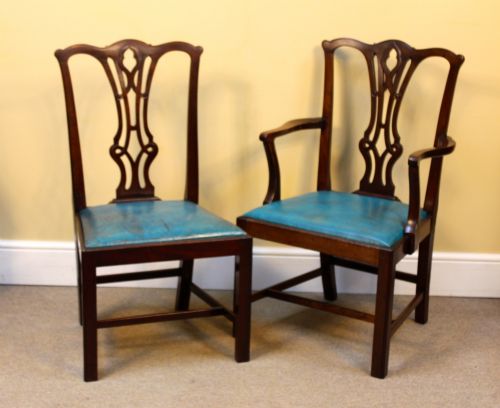
Mahogany Armchairs and Side Chairs
Mahogany armchairs and side chairs anchor the dining room and library, offering solid timber construction paired with upholstered or caned seats.
Mahogany Armchairs and Side Chairs
When searching for mahogany armchairs and side chairs, buyers encounter seating designed for dining rooms, desks, and libraries across several centuries. The selections span George III, Regency, and Victorian eras alongside later Edwardian and revival interpretations.
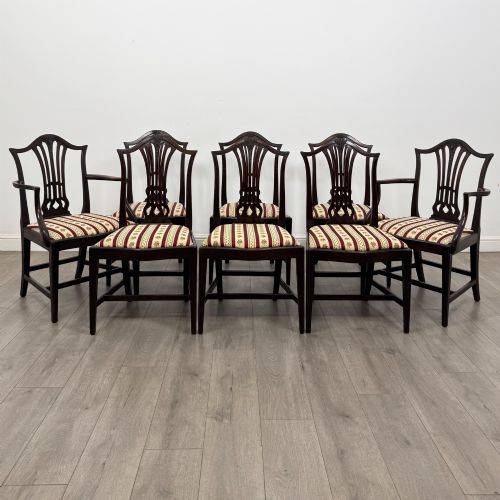
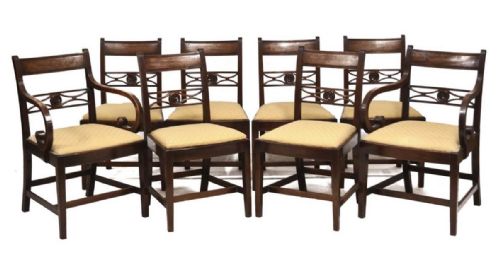
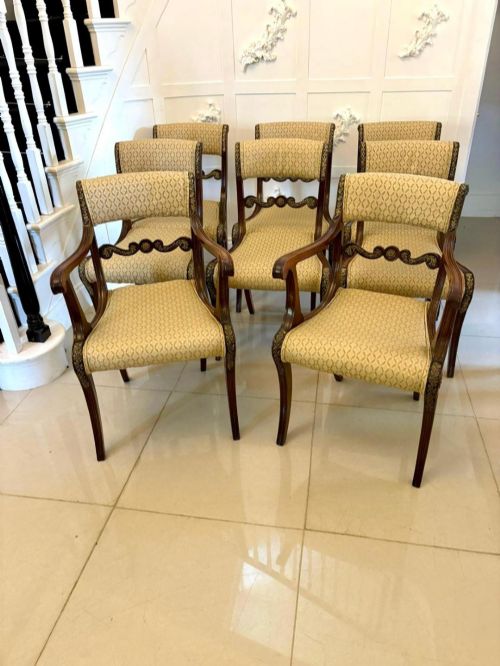
Dining sets appear frequently, often comprising larger groupings of single chairs accompanied by matching carver armchairs. Single side chairs and standalone library armchairs also populate the inventory for occasional seating.
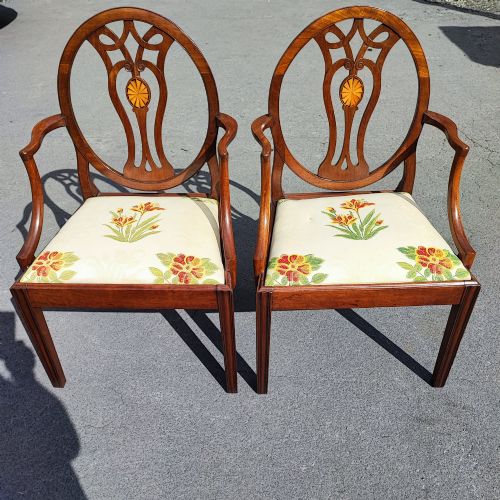
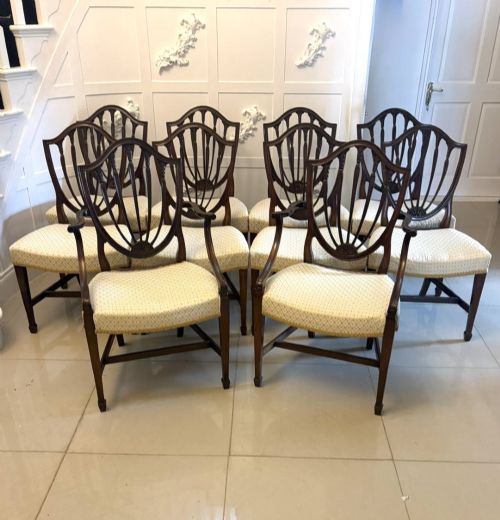
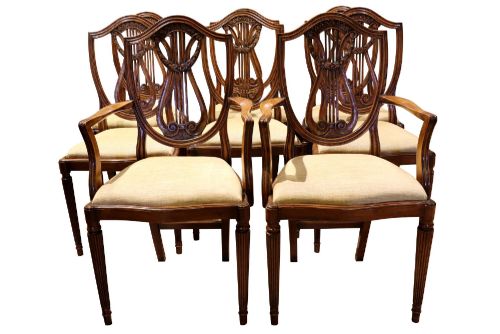
Design vocabulary draws heavily on established historical patterns, including shield backs, lyre backs, and bar backs. Makers frequently referenced Chippendale, Sheraton, and Hepplewhite aesthetics in both original production and subsequent revival periods.
Materials and Construction
Construction relies primarily on dense mahogany, chosen for its structural stability and deep grain. Cabinetmakers shaped the timber into carved splats, curved arm supports, and tapered or reeded legs.
Seats incorporate varied supporting materials depending on the period and function, utilising leather, cane, brass accents, and fabric upholstery. Drop-in frames and stuffed foundations provide the base for velvet, patterned textiles, and leather coverings.
Listings span the eighteenth, nineteenth, and twentieth centuries, featuring mahogany paired with leather, cane, and brass.
Execution and Integrity
Quality separates along the crispness of timber carving and the retention of original surfaces. Finer examples display deep, deliberate hand-carving on the back splats and crest rails rather than soft or shallow moulding.
Structural cohesion and the preservation of matched sets define the upper tiers. The proportion of timber thickness to load-bearing joints determines long-term stability during daily use.
Warings·Maple and Co
The Mahogany Armchairs and Side Chairs Glossary
- Carver
- An armchair designed <i>for</i> the head of a dining table, featuring supportive side arms. These pieces match the smaller side chairs in a dining set.
- Shield Back
- A chair back shaped in the outline of a heraldic shield, popularised during the late eighteenth century. This design often incorporates carved drapery, feathers, or central splats.
- Bergère
- An enclosed upholstered armchair with wooden framing and cane panels along the sides and back. These seats originated in France and appeared frequently in nineteenth-century libraries.
- Bar Back
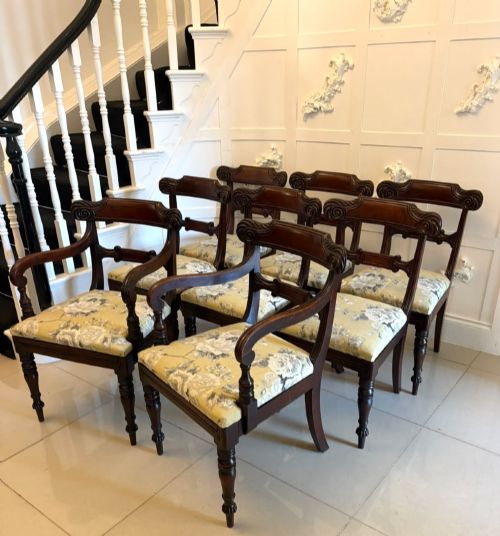
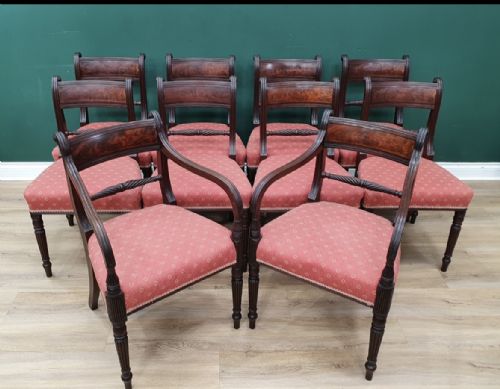
- A horizontal cross-rail design set into the back of a chair, common in Regency dining seats. This motif provides lower back support while maintaining an open silhouette.
- Splat
- The vertical wooden strip positioned down the centre of a chair back between the top rail and the seat. Carved splats define the stylistic lineage of Georgian and revival pieces.
Mahogany Armchairs and Side Chairs: Frequently Asked Questions
How do I mix armchairs and side chairs?
Place the armed carver chairs at the opposing heads of a dining table to establish balance and hierarchy. Position the matching side chairs along the remaining lengths.
Ensure the wood tone and leg style correspond so the ensemble maintains a unified appearance despite the difference in armrests.
What is the difference between George III and Regency chairs?
George III seating generally displays classical proportions with carved ribbon, wheat, or splat back designs rooted in Chippendale or Sheraton traditions. The timbers often exhibit rich, dark patination.
Regency examples tend toward bolder neoclassical influences, incorporating sabre legs, brass inlay, and bar backs inspired by Roman and Greek forms.
How do I care for leather and mahogany?
Maintain mahogany surfaces by dusting with a dry cloth and applying natural wax periodically to nourish the grain. Avoid placing timber near direct heat sources.
Treat upholstered leather inserts with specialised conditioner to prevent cracking while keeping them away from direct sunlight.
Are revival chairs as collectible as original pieces?
Revival chairs from the Victorian and Edwardian eras represent skilled cabinetmaking that honoured earlier Georgian proportions and joinery techniques. They offer robust construction suitable for daily domestic use.
While eighteenth-century originals command distinct historical interest, high-quality revival sets remain sought after for their complete numbers and craftsmanship.