



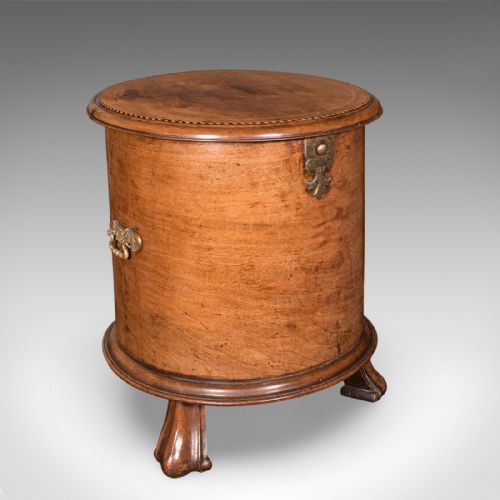

Mahogany and Walnut Cabinet
A mahogany and walnut cabinet brings rich timber tones and practical storage to a room, spanning styles from Georgian to Art Deco.
Mahogany and Walnut Cabinet
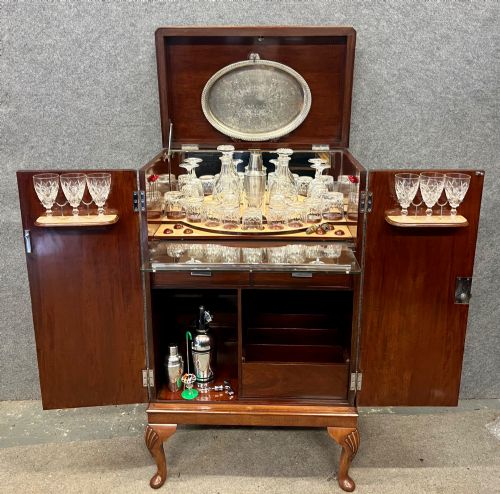
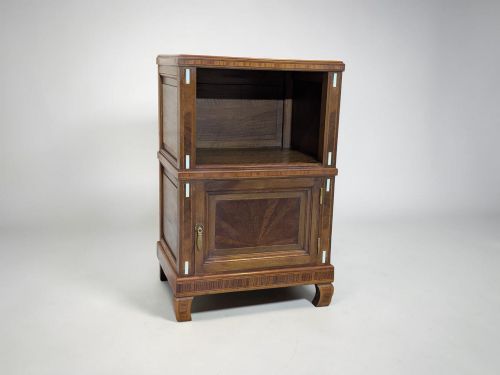
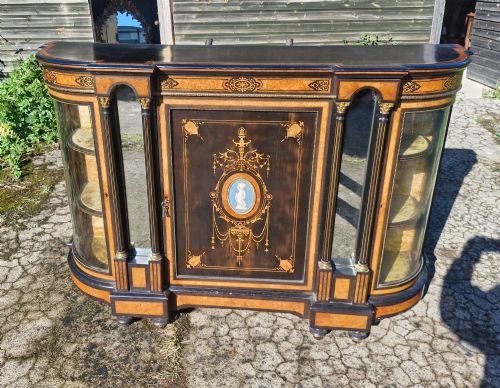
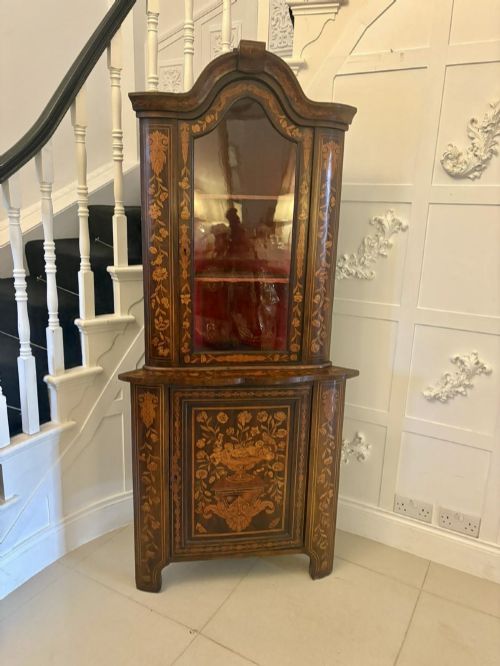
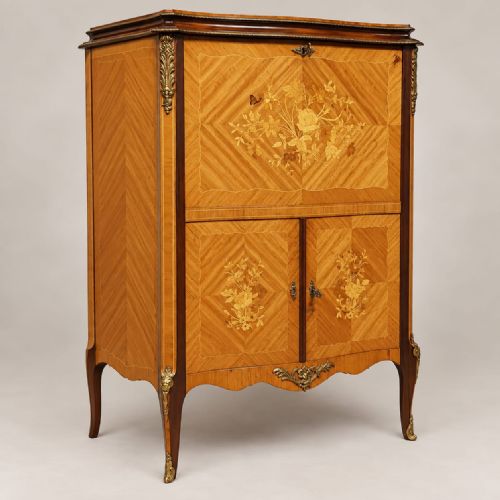
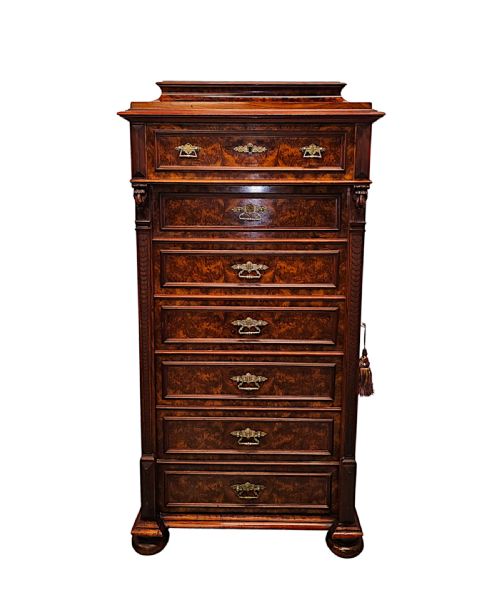
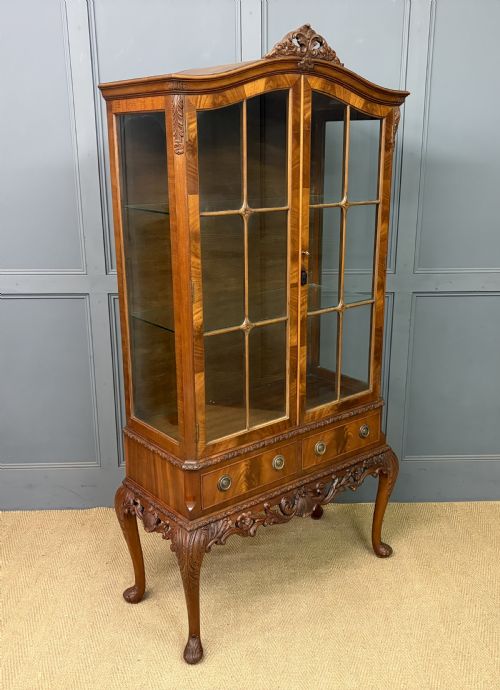
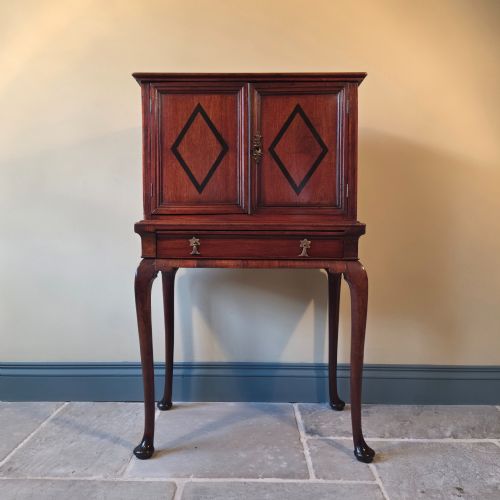
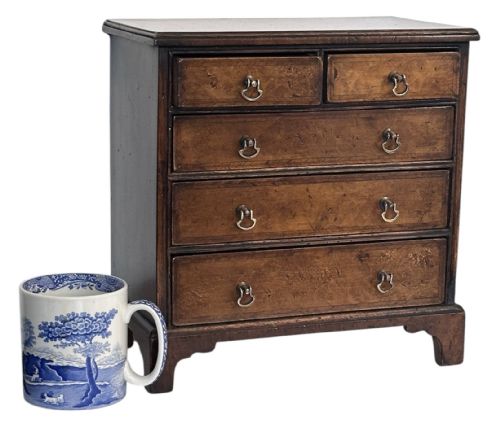
A mahogany and walnut cabinet search uncovers a diverse range of domestic storage and display furniture spanning the eighteenth, nineteenth, and early twentieth centuries. Buyers encounter forms such as side cabinets, display cases, cocktail cabinets, corner units, and bedside tables reflecting Georgian, Victorian, Regency, and Art Deco design traditions.
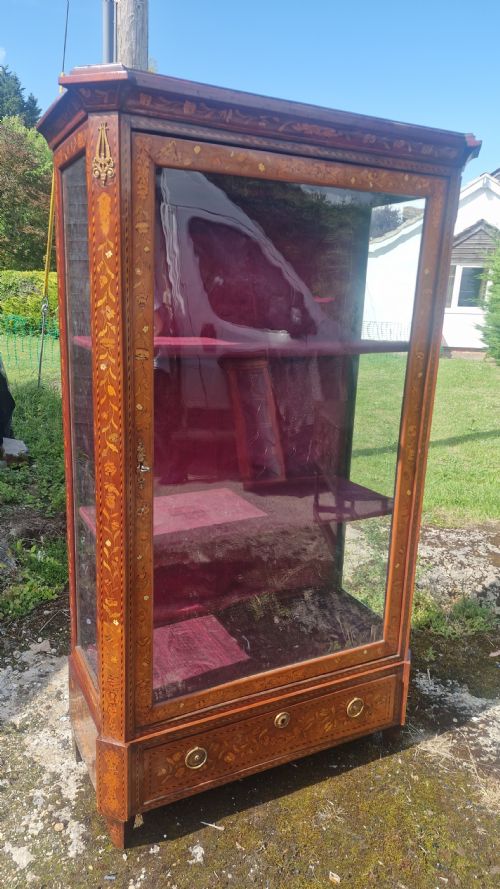
The materials specified in the phrase lead directly to pieces utilising contrasting timber veneers, frequently enhanced by marquetry inlay or mounts in brass, marble, and glass. Originating from British, French, Dutch, and Danish workshops, these pieces range from compact bedside companions to monumental commodes and bookcases.
Materials and technique
Cabinet makers utilised solid mahogany and walnut alongside burr walnut veneers, applying them over secondary woods with careful attention to grain direction. Marquetry panels incorporate floral and geometric motifs, while structural elements frequently integrate brass hardware, glass doors, and inset marble tops.
Construction techniques span traditional dovetail joinery in drawers, hand-carved mouldings, and serpentine shaping of the timber carcass. French polishing and wax finishes seal the wood while accentuating the natural figure of the mahogany and walnut surfaces.
Mahogany and Walnut Cabinet Retail Price Guide 2026
Typical asking prices for mahogany and walnut cabinet among the pieces listed under this phrase on Sellingantiques today, from the lower quarter to the upper quarter. They describe what is for sale here now, not the wider market.
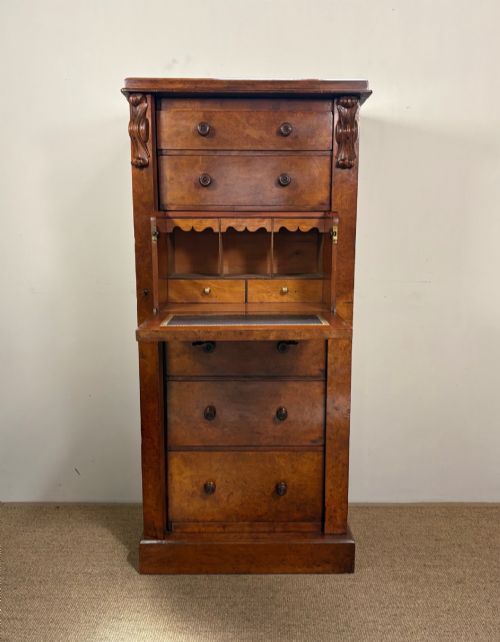
Some nineteenth-century chests conceal secret compartments behind false drawer fronts, designed to keep family valuables safe from inquisitive guests.
Craftsmanship and design
Quality separates through the precision of the timber matching and the execution of intricate marquetry inlay across the mahogany and walnut surfaces. Superior examples demonstrate harmonious proportions, crisply carved details, and integrated structural integrity without reliance on heavy restoration.
The refinement of internal fittings, original brass hardware, and the choice of supplementary materials such as figured burr veneers or marble tops elevate finer workshop productions above standard commercial output.
Maple & Co.·Heal's·Whytock & Reid of Edinburgh·Bowman Brothers·Gregory & Co. of London
The Mahogany and Walnut Cabinet Glossary
- Marquetry
- Decorative veneer work forming pictures or patterns by assembling thin pieces of wood, shell, or ivory. This technique frequently defines the facades of Dutch and French cabinets.
- Burr walnut
- A figured wood grain obtained from the excrescence on a walnut tree, highly prized for its swirling patterns. It is often used as a primary decorative veneer on cabinet doors.
- Serpentine front
- A furniture front curving outward in the centre and inward at the sides, creating a gentle wave shape. This contour requires advanced woodworking skill to execute properly.
- Vitrine
- A glass-displayed cabinet designed primarily for the exhibition of curiosities and porcelain. These pieces often feature glazed sides and doors to maximise light penetration.
- Cellarette
- A lockable container or cabinet used for holding bottles of wine and spirits, typically positioned near a dining table. Regency examples often stand on dedicated frames or pedestals.
Mahogany and Walnut Cabinet: Frequently Asked Questions
How do I care for a walnut surface?
Maintain walnut and mahogany timber by dusting with a soft dry cloth and applying natural beeswax periodically to nourish the grain. Keep the cabinet away from direct sunlight and radiators to prevent timber shrinkage and veneer lifting.
Avoid using silicone-based sprays or harsh chemical cleaners, as these can degrade the traditional polish finish over time.
Where should I place a corner cabinet?
A corner cabinet fits neatly into unused room junctions, making it an efficient choice for rooms with limited floor space. These units draw the eye upward and utilise vertical angles effectively.
Position them away from damp exterior walls to protect the timber structure and any applied marquetry work.
What is a cocktail cabinet used for?
Cocktail cabinets serve as dedicated home bars, typically featuring a drop-down surface for mixing drinks, glass-lined interior compartments, and storage for glassware and bottles. They gained popularity during the interwar period.
Place them in living rooms or dining spaces to function as both a practical hosting station and a decorative focal point.
How do I identify an Art Deco piece?
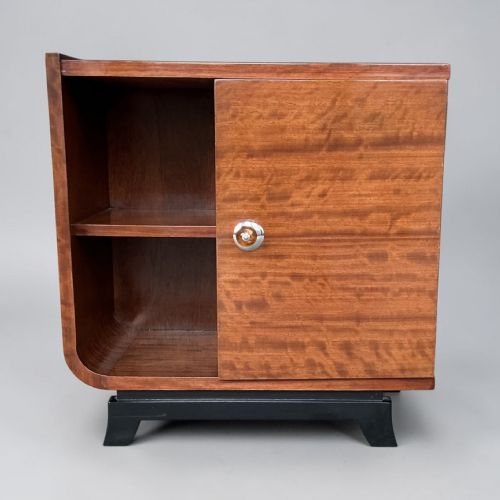
Art Deco cabinets display streamlined geometric forms, symmetrical designs, and contrasting veneer combinations such as walnut, mahogany, and maple. They often eschew traditional carving in favour of sleek, clean silhouettes.
Look for hardware made from chrome or bakelite, alongside curved serpentine fronts that emphasise modern luxury.