

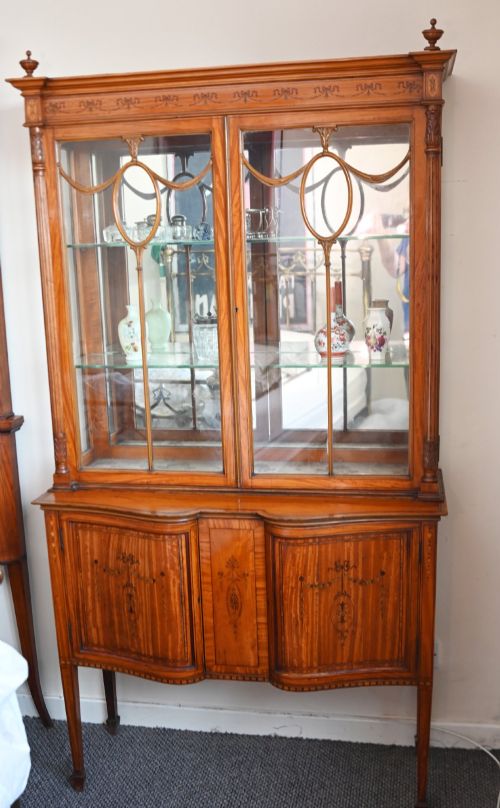
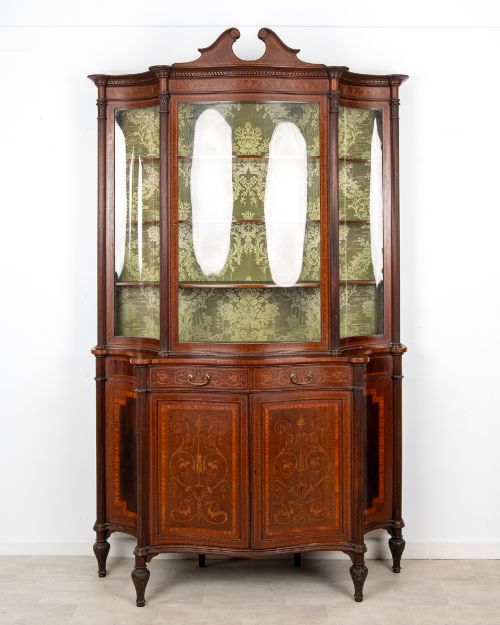
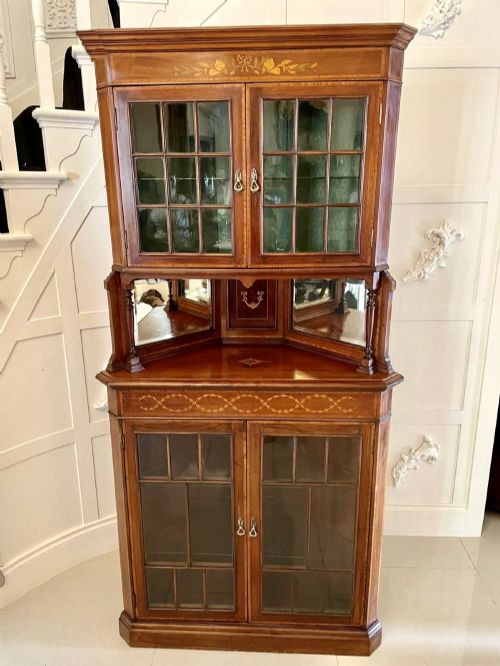

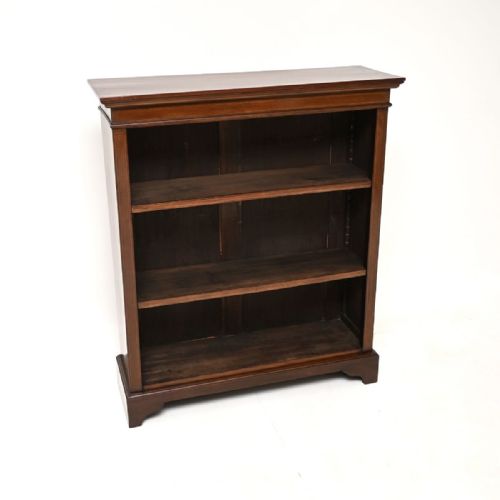
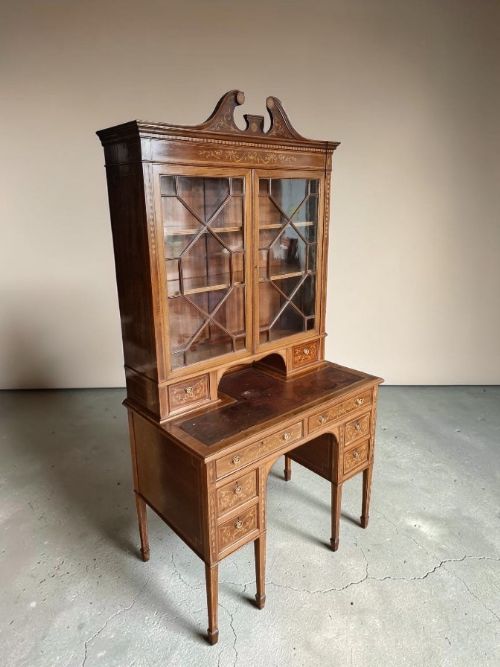
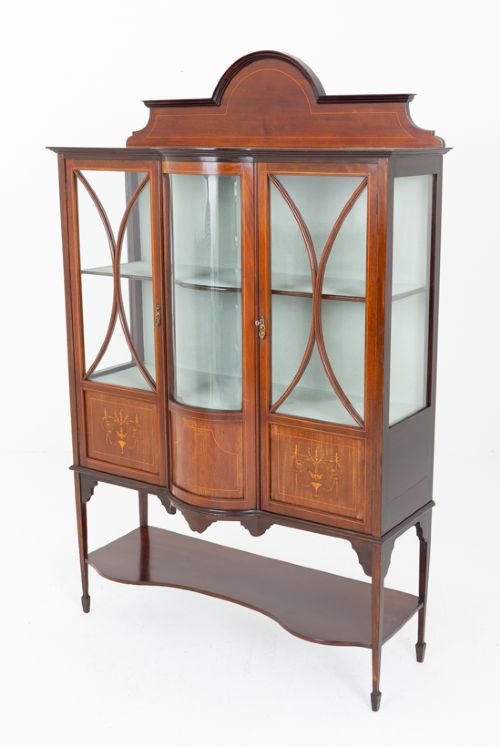
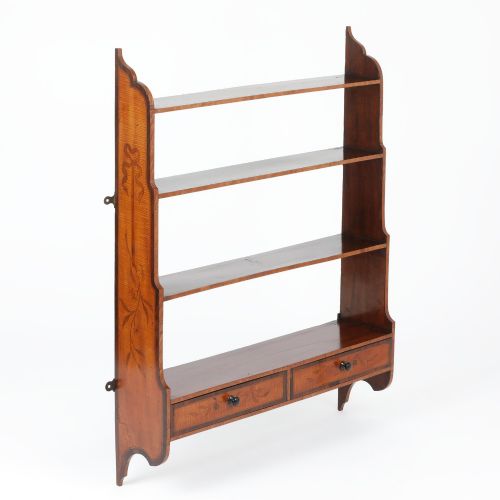
Mahogany and Satinwood Bookcase
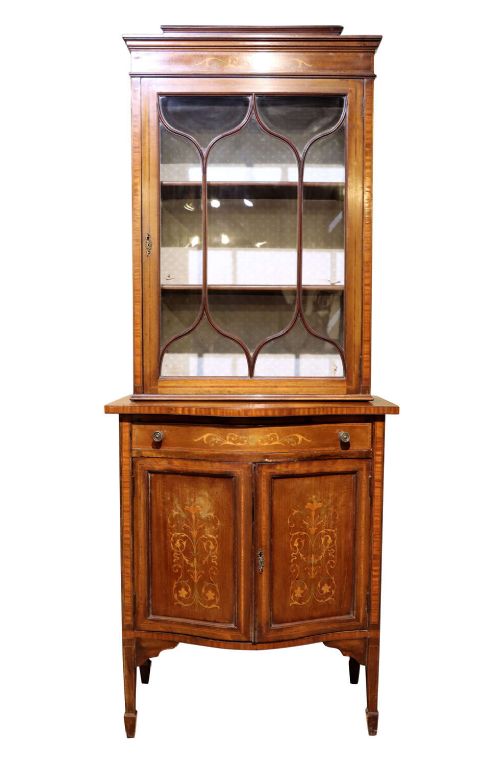
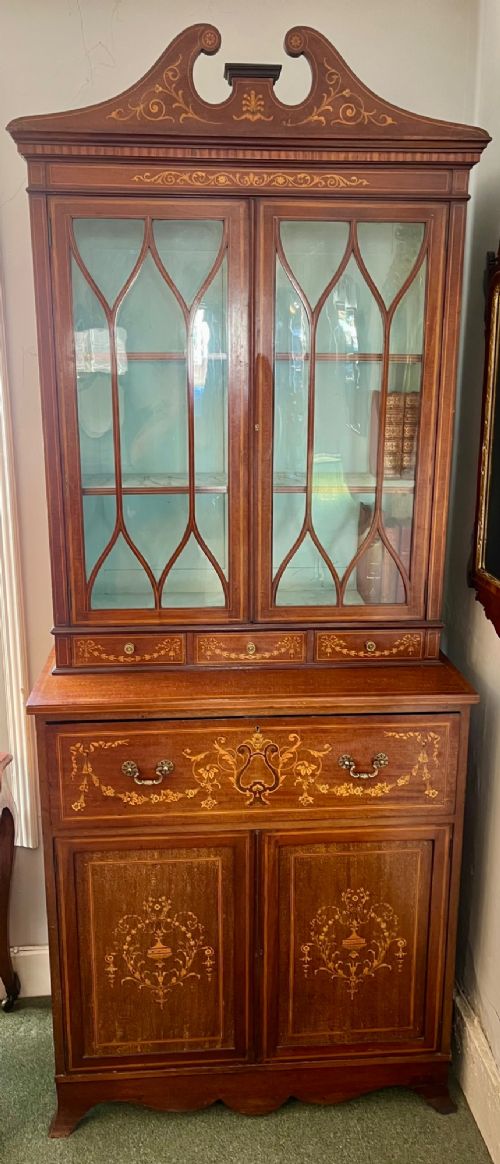
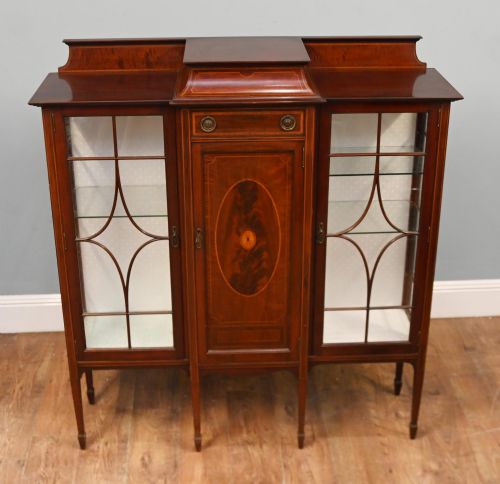
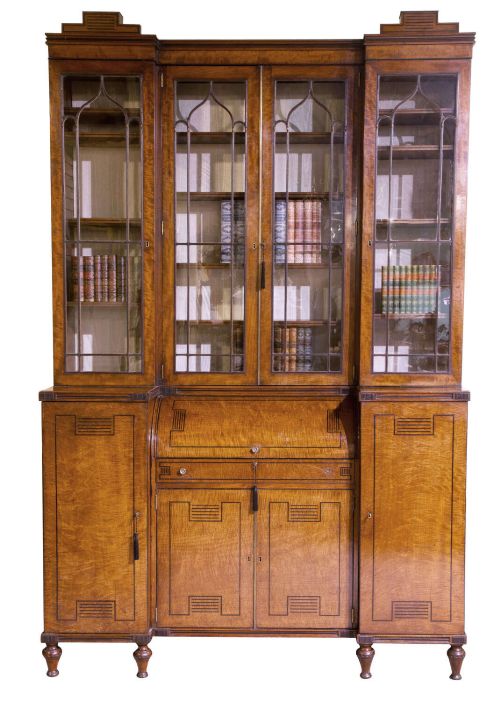
A mahogany and satinwood bookcase brings together rich timber and pale contrasting inlay to hold a library in style.
Mahogany and Satinwood Bookcase
A mahogany and satinwood bookcase combines dense dark timber with luminous pale banding, creating a striking visual contrast that defines the form. Buyers encounter these pieces primarily in Edwardian interpretations and Sheraton Revival designs, alongside earlier examples dating back to the eighteenth century.
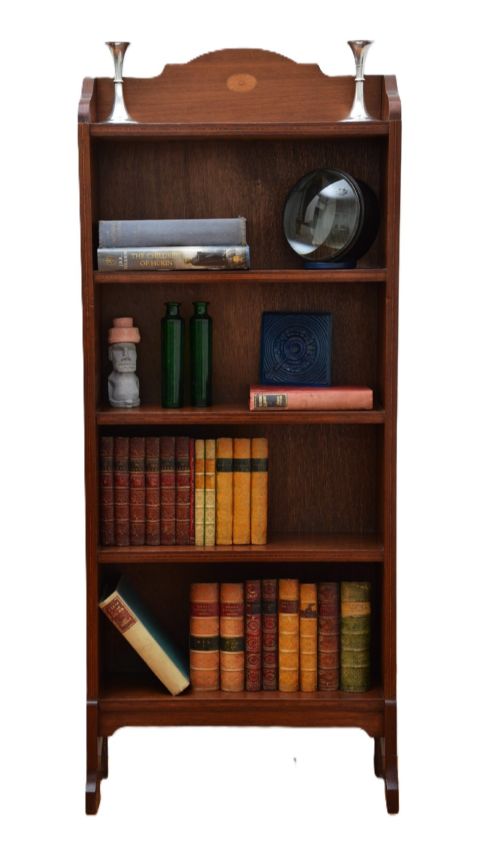
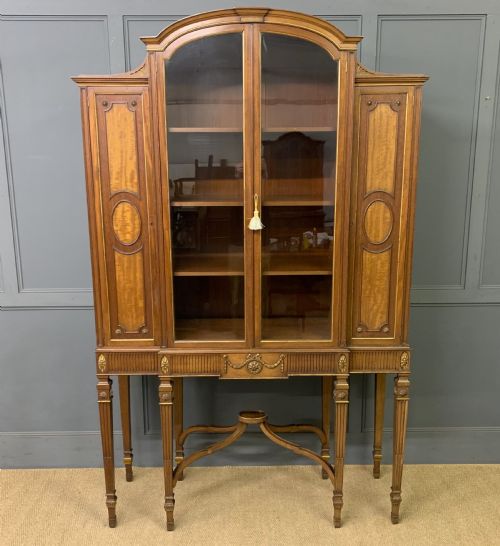
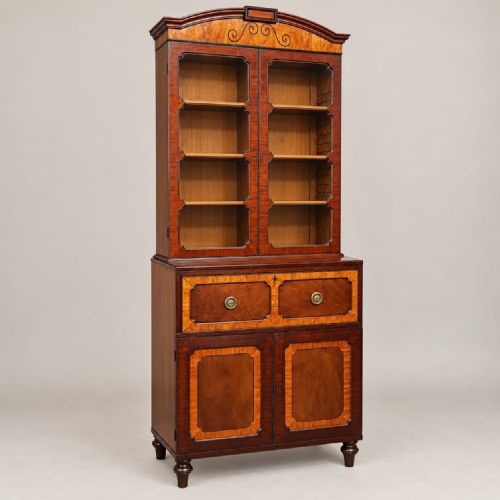
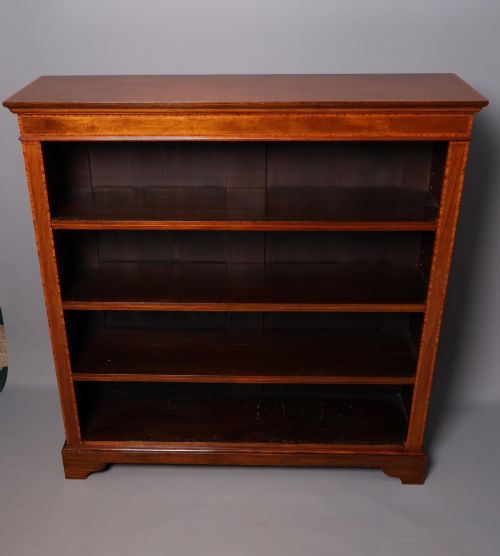
The selection spans tall breakfront bookcases, open shelving, revolving desk models, and display cabinets with glazed doors. Many incorporate satinwood inlay, boxwood lines, or painted neoclassical details that reflect eighteenth-century revival tastes.
Originating largely from the nineteenth and early twentieth centuries, these items serve as working libraries or display furniture for refined interiors. The integration of mahogany carcases with satinwood stringing remains the defining characteristic across the group.
How they were made
Cabinet makers constructed the primary carcases from solid mahogany and flame mahogany veneers, selected for deep grain patterns and warm reddish-brown tones. Satinwood and boxwood provided the contrasting timber for intricate bandings, scrolls, and neoclassical husks.
Glazing bars divided large glass panels into geometric panes, while brass fittings secured doors and supported adjustable shelving. Interior components often featured mirrored backs, fabric linings, or fitted writing drawers with drop fronts.
Mahogany and Satinwood Bookcase Retail Price Guide 2026
Typical asking prices for mahogany and satinwood bookcase among the pieces listed under this phrase on Sellingantiques today, from the lower quarter to the upper quarter. They describe what is for sale here now, not the wider market.
Listings feature mahogany, satinwood, and boxwood across Edwardian and nineteenth-century periods.
What varies in quality
The precision of the timber matching and the intricacy of the inlay set the baseline for quality. Crisp boxwood and satinwood stringing set into dense mahogany distinguish finer workshops from simpler production pieces.
Proportion and architectural detail govern the overall success of the design, from the weight of the cornice to the delicacy of the glazing bars. Maker attribution, through stamps or known workshop styles, further separates standard production from exceptional cabinet work.
Waring and Gillow·Maple and Co·Jewell of Holborn
The Mahogany and Satinwood Bookcase Glossary
- Breakfront
- A cabinet design where the central section projects forward from the flanking wings. This architectural arrangement creates depth and shadow across the facade.
- Satinwood Inlay
- The technique of embedding contrasting pale satinwood into recesses cut into the darker mahogany ground. It forms decorative borders, fans, and floral motifs.
- Secretaire Bookcase
- A tall piece combining a upper library section with a fitted pull-out writing drawer that drops down. It conceals small drawers and pigeonholes behind a fall-front.
- Sheraton Revival
- A late nineteenth and early twentieth century style copying the light, neoclassical furniture of Thomas Sheraton. It relies on satinwood, painted details, and symmetrical geometry.
- Revolving Bookcase
- A compact tabletop or floor-standing bookcase mounted on a hidden rotating pivot. This allows easy access to books from any seated angle.
Mahogany and Satinwood Bookcase: Frequently Asked Questions
How do I date a mahogany and satinwood bookcase?
Dating relies on timber selection, construction methods, and stylistic revival cues. Edwardian pieces often feature lighter mahogany and machine-cut veneers, while eighteenth and early nineteenth century examples show hand-cut dovetails and deeper patination.
Hardware, mirror glass characteristics, and the style of the satinwood inlay also point to specific decades. Comparing the carcass construction against known period benchmarks clarifies the exact era.
Where should I place a revolving bookcase?
A revolving bookcase suits small spaces, corners, or beside an armchair where active reading materials need to stay close at hand. The rotating base requires clearance on all sides to function smoothly without obstruction.
Keeping the unit away from direct heat sources protects the mahogany veneer and prevents the satinwood inlay from lifting. Proper placement ensures both mechanical longevity and daily convenience.
How do I care for satinwood inlay?
Satinwood inlay requires stable indoor humidity and protection from direct sunlight to prevent the pale wood from darkening or drying out. Regular dusting with a soft, dry cloth maintains the timber without building up heavy wax residues.
Harsh chemical polishes damage the delicate contrast between the dark mahogany and the light stringing. Gentle treatment preserves the crisp definition of the decorative banding.