




Lyre Pedestal Table
A lyre pedestal table brings sculptural grace to a room through curved supports, uniting form and utility in timber.
Lyre Pedestal Table
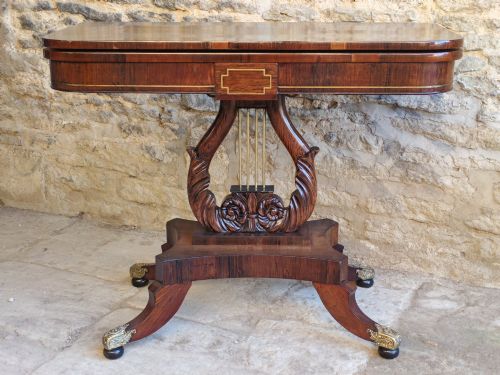
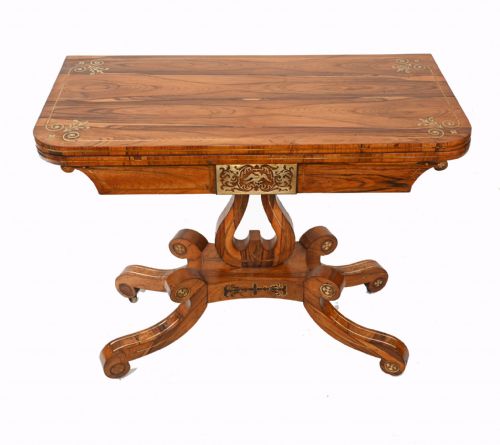
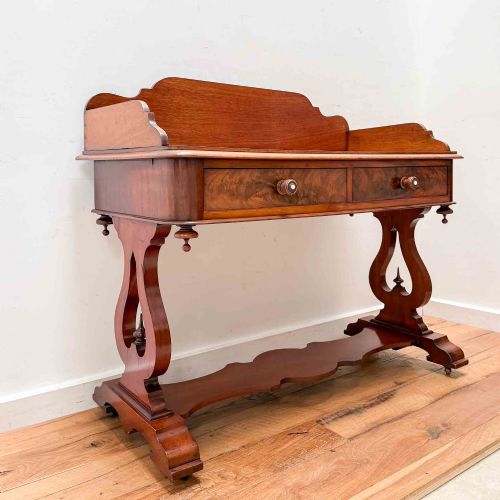
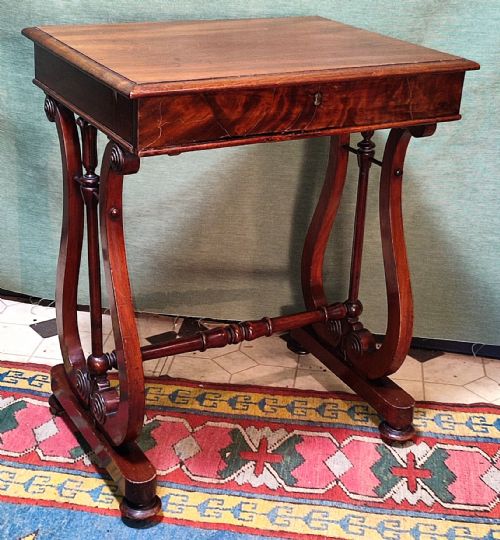
A lyre pedestal table is a distinctive form defined by lyre-shaped supports beneath the surface, emerging across Georgian, Regency, and Victorian periods. These pieces serve multiple domestic purposes, appearing as tea tables, card tables, writing tables, and occasional tables.
The version most commonly encountered on this page is the Regency or Regency style sofa table and games table, typically constructed from mahogany or rosewood. Makers of these periods often incorporated brass inlay and flame mahogany veneer to enhance the visual impact of the lyre ends.
Materials and construction
Cabinet makers utilised dense hardwoods such as mahogany and rosewood, often applying flame mahogany veneer over secondary timbers to achieve rich figuring on tabletop surfaces. Birch and ebonised wood also appear, providing contrasting tones for specific stylistic requirements.
Some nineteenth-century sewing tables arrive complete with their original contents, offering a preserved snapshot of past domestic craft.
Distinctions in quality
Quality rests upon the choice of timber and the precision of the veneer work, where superior examples display symmetrical flame patterns and meticulous grain matching across the entire surface. Inferior pieces rely on simpler timbers without the depth of figuring seen in higher-grade work.
The refinement of the carved lyre supports dictates the overall merit of the piece, separating standard production from exceptional craftsmanship. Sculpted details and crisp brass inlay demonstrate the hand of a more accomplished workshop.
The Lyre Pedestal Table Glossary
- Lyre pedestal table
- A freestanding table supported by vertical pillars shaped like the ancient musical instrument. This design became particularly prominent during the Regency period.
- Sofa table
- A rectangular occasional table traditionally designed to stand in front of a sofa. These pieces frequently feature drop leaves and double pedestals.
- Flame mahogany veneer
- A thin slice of mahogany timber cut from the point where a branch joins the trunk, producing a distinctive flickering flame pattern. Cabinet makers used this to adorn prominent surfaces.
- Teapoy
- A small box or table on a pedestal designed for storing tea. These containers often include internal compartments for loose leaves.
- Ebonised wood
- Timber treated with a dark finish to imitate ebony. This technique provided sharp visual contrast in nineteenth-century furniture.
Lyre Pedestal Table: Frequently Asked Questions
What is a lyre pedestal table?
A lyre pedestal table is a piece of furniture featuring structural supports carved in the shape of a lyre. These designs gained popularity during the Georgian and Regency eras for domestic use.
They appear in various forms, including games tables, sofa tables, and tea tables. The lyre motif provides both artistic flourish and structural support beneath the tabletop.
How were these tables used originally?
These tables served specific social functions in period homes, such as holding tea service or providing a surface for card games. Sofa tables stood in drawing rooms for writing or needlework.
Their versatility made them central pieces in reception rooms. Many included drawers or compartments for specialised items like cards or sewing supplies.
How do I identify a Regency piece?
Regency pieces often feature classical motifs, dark exotic timbers like rosewood, and precise brass inlay work. The proportions tend to reflect ancient Greek and Roman architecture.
Looking beneath the surface reveals construction methods and timber choices typical of the early nineteenth century. Stylistic cues such as bold grain patterns help distinguish this period from later revivals.
Where should I place one at home?
A sofa table fits naturally behind a sofa or along a hallway wall where the detailed pedestal remains visible. Smaller occasional tables work well beside seating or as lamp tables.
Allowing space around the piece highlights the lyre supports and timber grain. Their classic proportions suit both traditional interiors and modern rooms.