

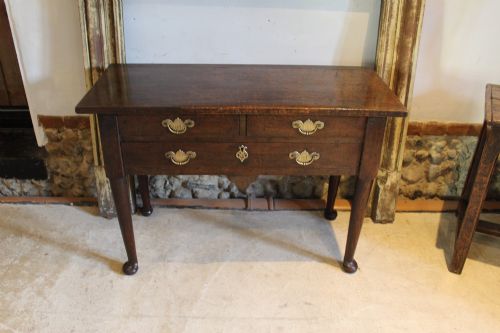
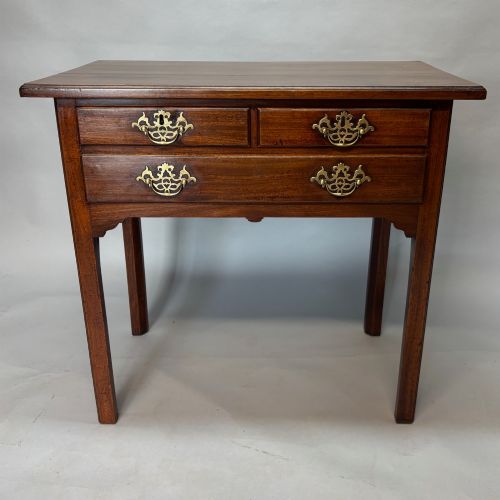
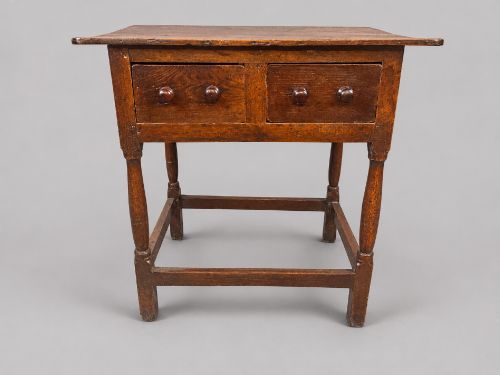
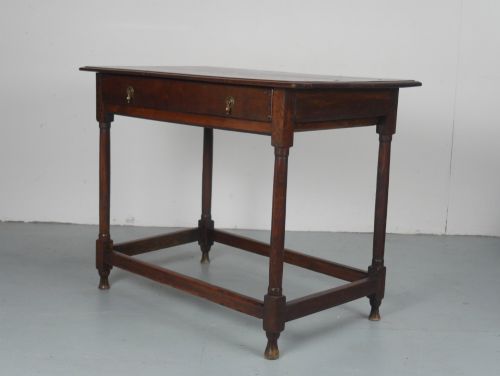
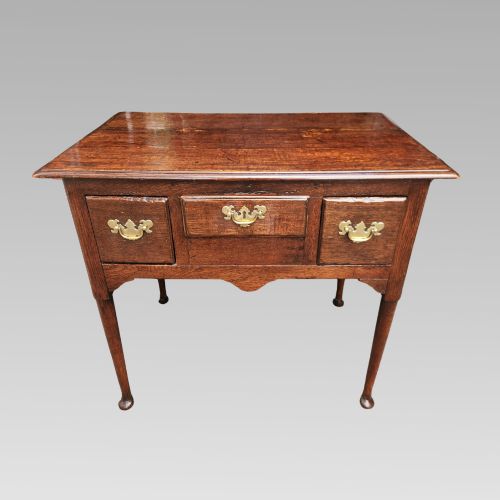
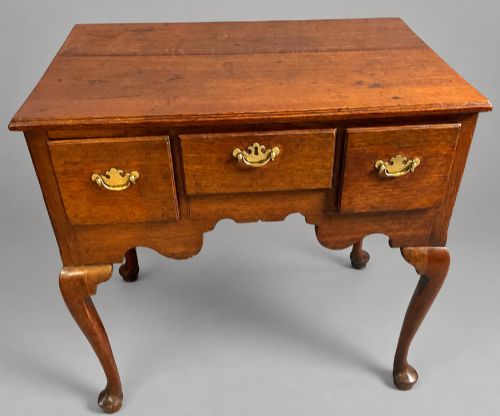
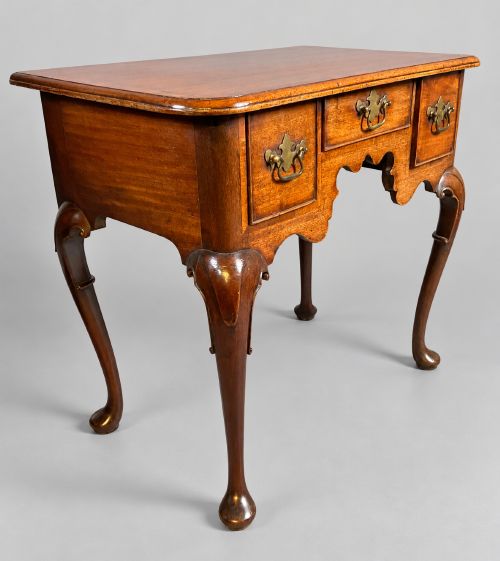
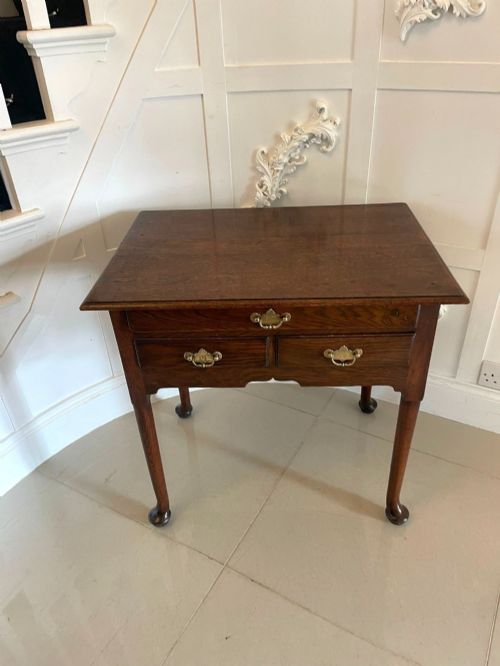
Lowboy Writing Table
A lowboy writing table is a compact domestic table with drawers, chosen for its small scale and elegant proportions.
Lowboy Writing Table
A lowboy writing table combines the tidy tabletop of a side table with the utility of under-tier drawers, designed to sit comfortably in a hall, bedroom or parlour. When you search for a lowboy writing table, you encounter compact timber tables that served for correspondence and personal administration before the heavy desk dominated the interior.
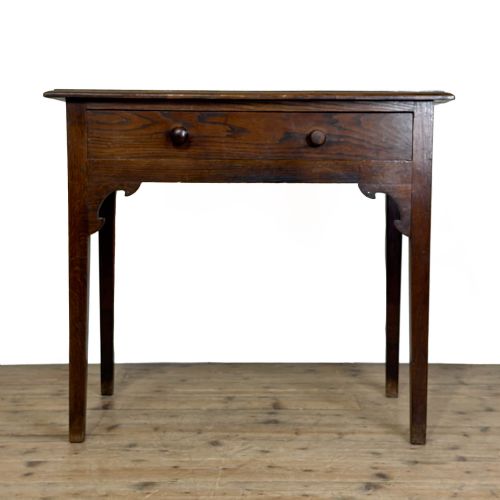
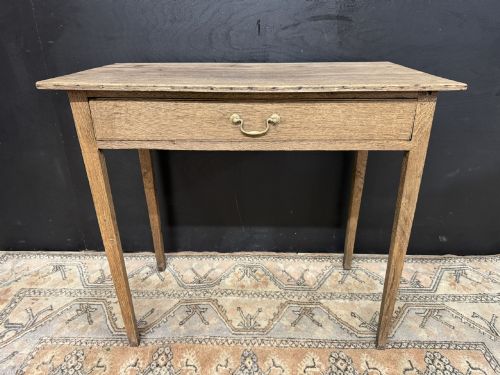
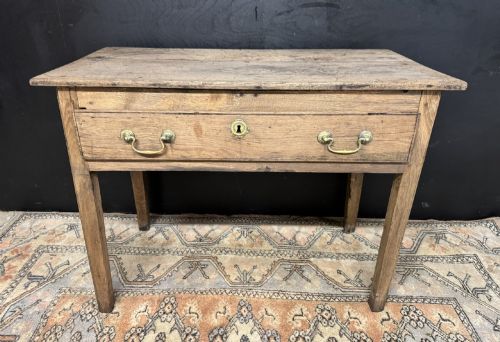
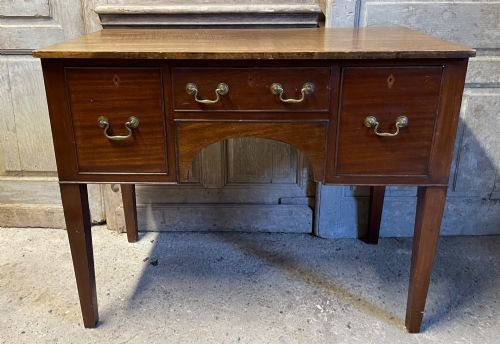
The pieces appearing on this page span the seventeenth, eighteenth and nineteenth centuries, alongside revival interpretations from the early twentieth century. You will most frequently meet oak and mahogany examples from the Georgian period, often fitted with a single central drawer or a row of small drawers beneath the top.
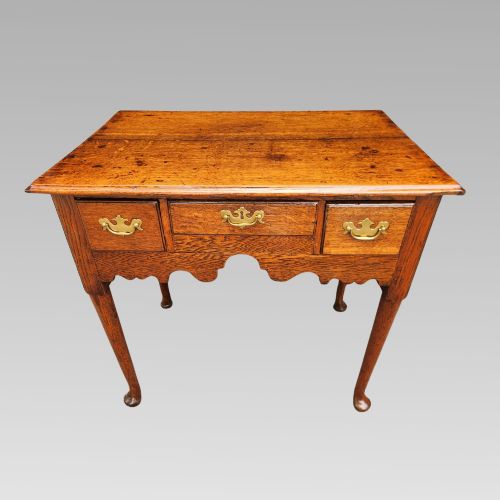
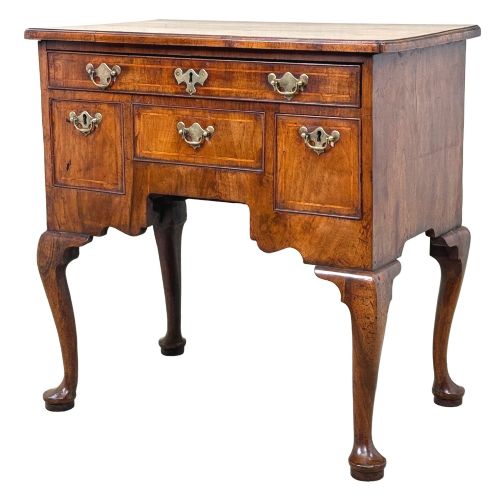
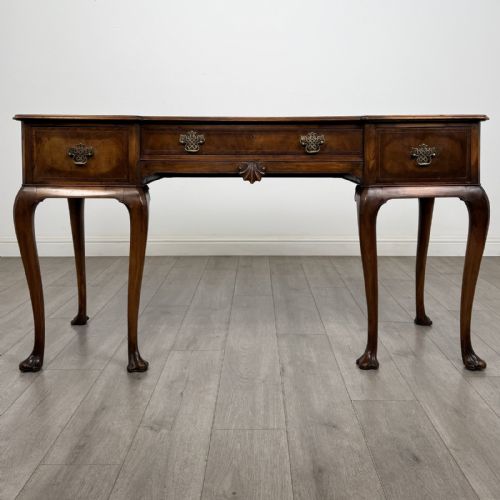
Forms cross between dedicated lowboys, side tables and small desks, reflecting a time when domestic furniture possessed versatile functions. Surviving examples range from austere William and Mary oak boards to figured walnut and mahogany versions with shaped aprons and pad feet.
Distinguishing quality
Quality rests upon the choice of timber figure, the crispness of the drawer dovetails and the integrity of the surface skin. Tables fashioned from well-figured burr walnut or rich mahogany command attention through the natural decorative movement of the wood.
Proportion and leg form dictate the architectural success of the piece, distinguishing restrained vernacular carpentry from more sophisticated metropolitan cabinet work. Original brass hardware, dry untouched timber surfaces and harmonious drawer depths elevate an ordinary utility table into a balanced object of study.
Lowboy Writing Table Retail Price Guide 2026
Typical asking prices for lowboy writing table among the pieces listed under this phrase on Sellingantiques today, from the lower quarter to the upper quarter. They describe what is for sale here now, not the wider market.
Listings feature oak, mahogany, walnut, burr walnut, yew and elm across Georgian, Edwardian and revival periods.
The Lowboy Writing Table Glossary
- Lowboy
- A small pedestal-free dressing or writing table on legs, typically fitted with one or more drawers beneath the waist. It emerged in the late seventeenth century and remained popular through the Georgian era.
- Pad foot
- A compact, rounded foot found at the base of cabriole legs, characteristic of Queen Anne and early Georgian furniture. It rests flat on the floor without a separate shoe.
- Herringbone inlay
- A decorative border made of small wood veneers cut at angles to resemble the backbone of a fish. Craftsmen used this technique to frame drawer fronts on walnut furniture.
- Cabriole leg
- A furniture leg that bends outward in a convex curve and tapers inward in a concave curve, mimicking animal limbs. It gained widespread favour during the Queen Anne and George II periods.
- William and Mary
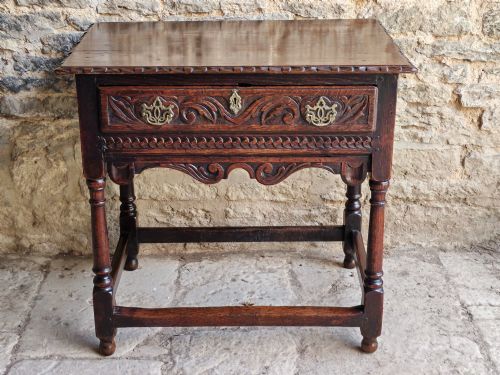
- The design period spanning the late seventeenth and early turn of the eighteenth century, known for geometric mouldings and sturdy turned supports. Furniture from this era often utilises dense English oak.
Lowboy Writing Table: Frequently Asked Questions
What is a lowboy writing table used for?
These compact tables served historically for letter writing, grooming or general household administration in private chambers. Today they function as hall tables, slim desks or decorative side tables in compact spaces.
Their shallow depth allows them to fit into narrow corridors and alcoves where a standard desk would block movement.
How do I date an 18th century lowboy?
Dating relies on observing timber choices, leg styles, handle fixings and construction methods inside the drawers. Oak pieces with square legs and pegged frames generally point to earlier vernacular or provincial cabinet work.
Mahogany versions with cabriole legs, pad feet or shaped aprons usually align with the reigns of George II and George III.
Are walnut lowboys rare?
Walnut was widely used during the late seventeenth and early eighteenth centuries before mahogany dominated British cabinet making. Figured walnut and burr walnut examples appear less frequently than plain oak versions.
Revival pieces produced around nineteen-twenty also recreate the walnut aesthetic of the early seventeen-hundreds.
What is the difference between a lowboy and a side table?
A lowboy is specifically built with one or more working drawers beneath the top surface, designed at a height suitable for sitting at or working upon. A side table may simply consist of a top supported by legs without any drawer compartments.
Many antique examples overlap in classification because makers incorporated drawers into standard domestic side tables.