
Low Wooden Display Cabinet
A low wooden display cabinet brings architectural order to a room while keeping cherished volumes and objects visible.
Low Wooden Display Cabinet
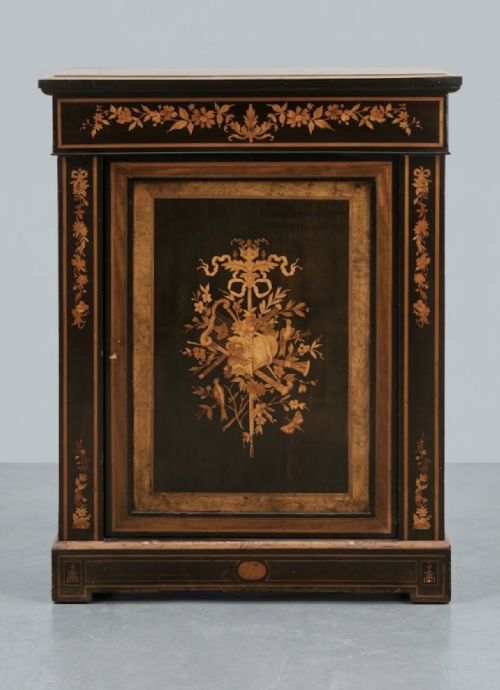
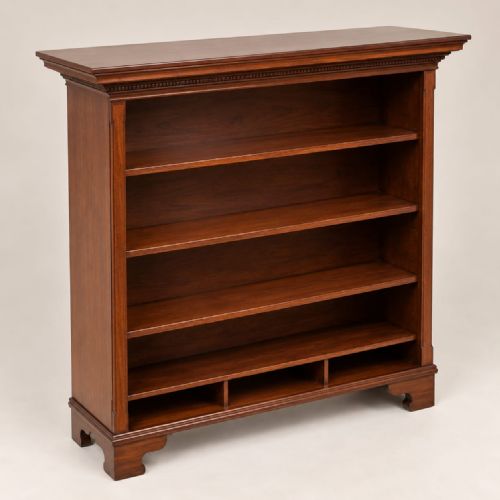
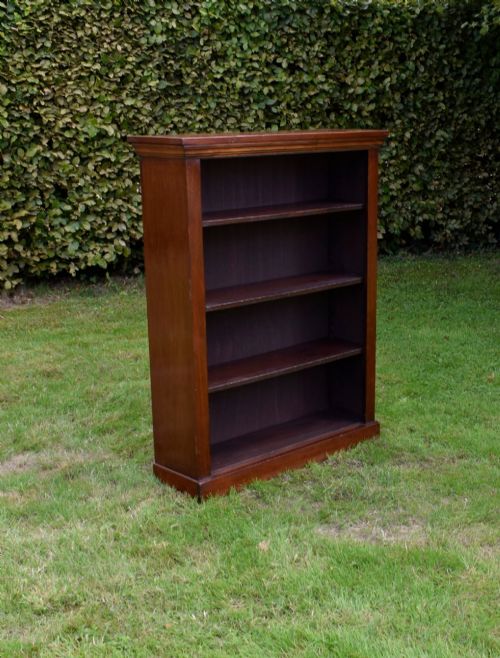
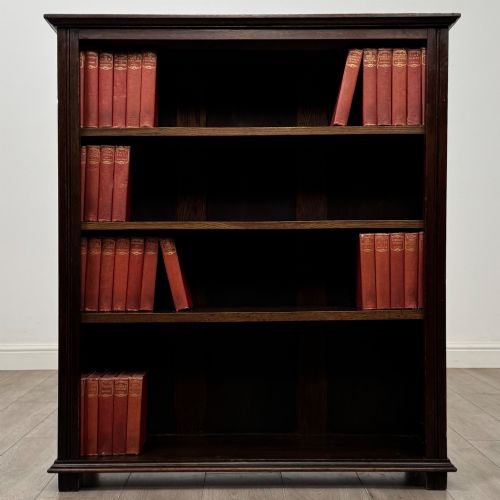
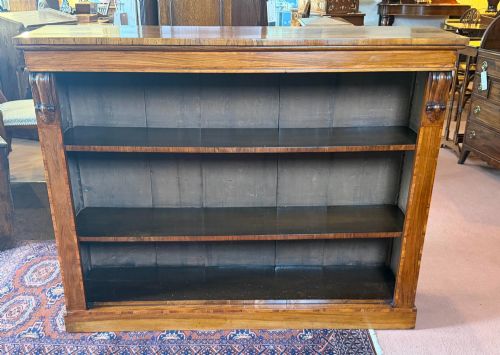
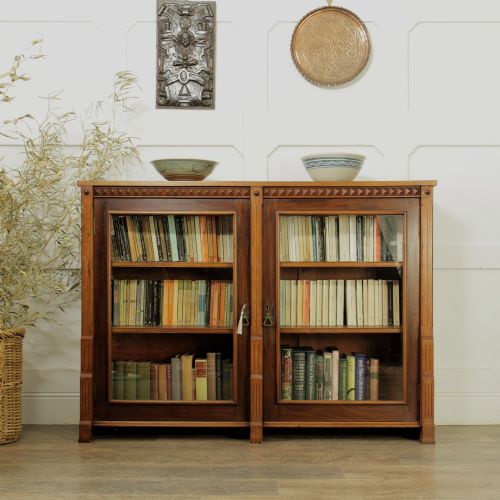
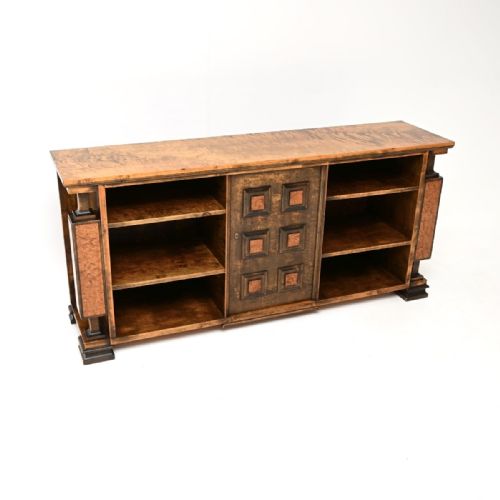
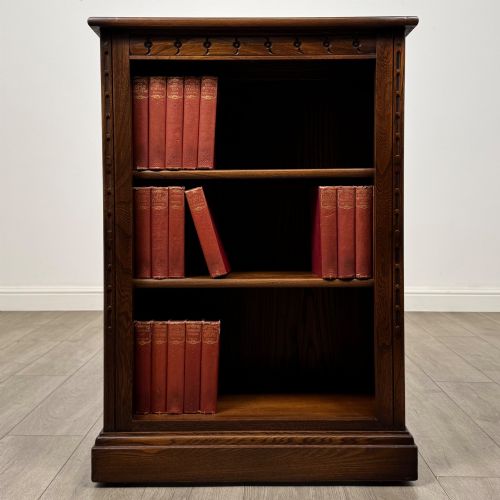
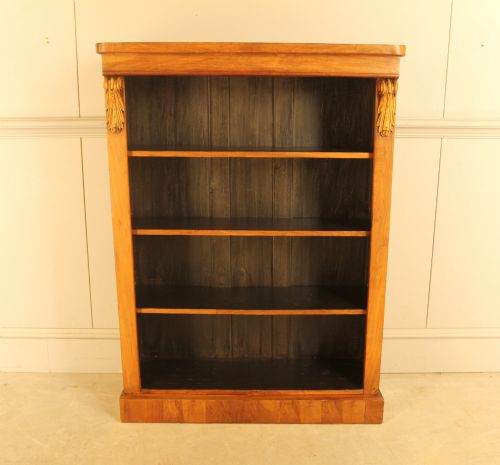
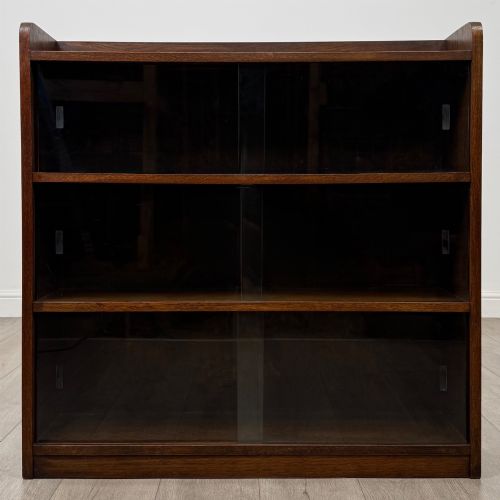
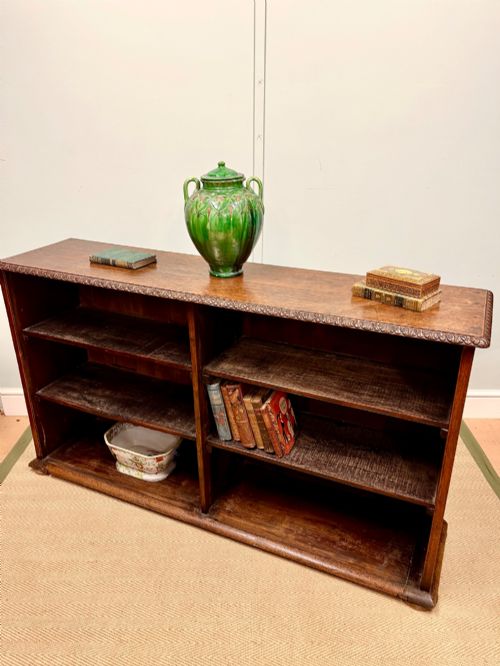
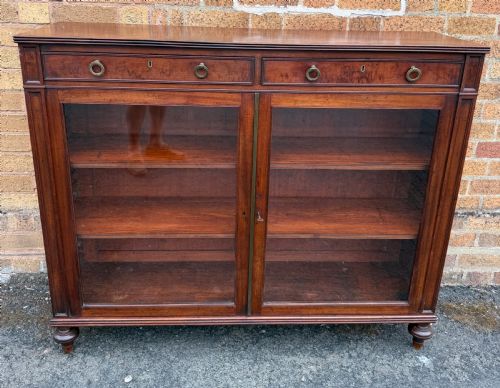
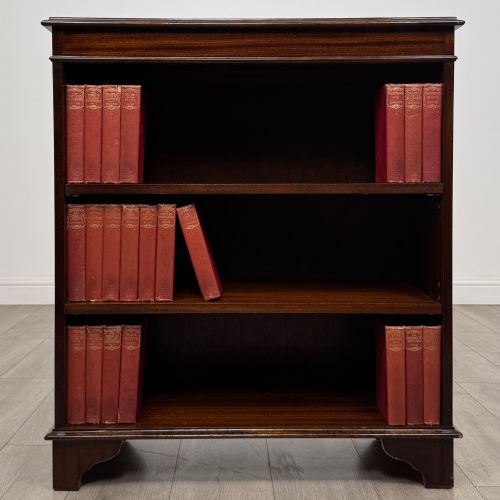
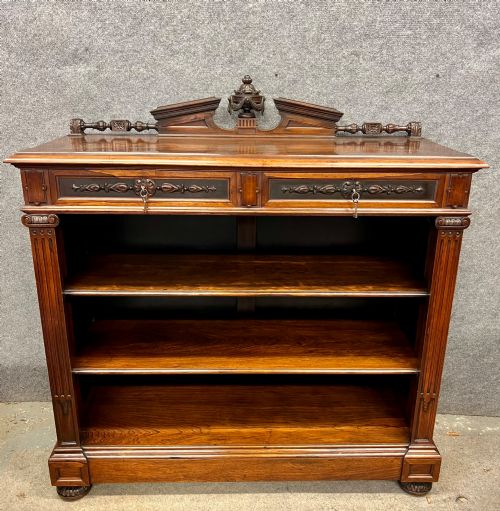
A low wooden display cabinet serves to organise books and decorative objects at a convenient height, bridging the function of a bookcase and a side cabinet. These pieces appear frequently in forms such as open shelving, glazed double doors, and breakfront layouts.
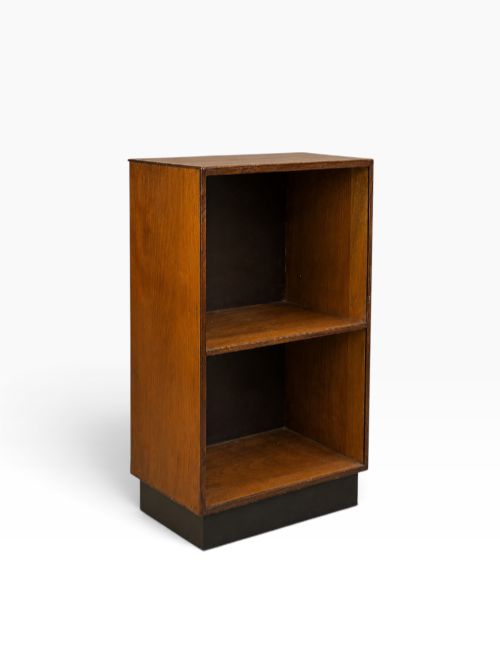
The selection ranges from Georgian and Victorian eras through to Edwardian and Art Deco periods. Buyers encounter mahogany, walnut, oak, and satin birch constructions spanning the nineteenth and twentieth centuries.
How they were made
Cabinet makers utilised dense hardwoods including mahogany, walnut, and oak, often mounting glass panels into timber doors or framing open shelves for display. Inlays of contrasting timbers and brass fittings added ornamental detail to the structured carcasses.
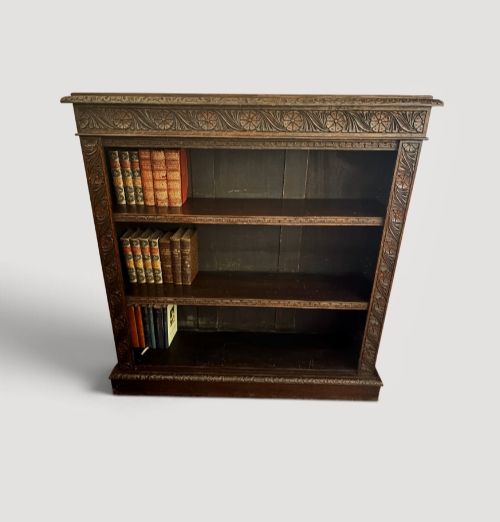
Carving and ebonising techniques surface across Victorian and Edwardian examples, while Art Deco pieces employ satin birch and ash with streamlined geometry.
Some nineteenth-century cabinets feature mirror backs designed to reflect candlelight across the room.
What varies in quality
The standard of timber selection and the precision of joinery determine the calibre of a piece, distinguishing robust cabinet work from simpler carpentry. Grain matching on breakfront facades and the finesse of carved ornamentation indicate higher atelier output.
Original glazing, intact brass hardware, and well-fitted adjustable shelving elevate the integrity of a cabinet over replacements or later alterations.
Maurice Adams
The Low Wooden Display Cabinet Glossary
- Breakfront
- A piece of furniture where the central section projects forward from the flanking outer sections. This layout creates depth and architectural presence.
- Ebonised
- Wood treated to imitate ebony, giving a deep black finish popular in nineteenth-century decorative arts. It provides a striking contrast to gilt mounts.
- Ormolu
- Gilded bronze applied as decorative mounts to furniture during the eighteenth and nineteenth centuries. This technique adds metallic highlights to timber surfaces.
Low Wooden Display Cabinet: Frequently Asked Questions
How do I style a low wooden display cabinet?
Position the cabinet against a principal wall where its height allows lamps or decorative objects to sit on the top surface without crowding artwork. Balance the interior shelves with a mix of upright volumes and small framed items.
Allow negative space around objects so the timber grain and glass panels remain visible as part of the room composition.
Are these cabinets suitable for small rooms?
Low proportions prevent these cabinets from blocking light or dominating vertical wall space, making them practical for compact interiors. They provide surface display area and storage without overwhelming the floor plan.
Open shelf versions offer an especially light visual footprint compared to heavy enclosed wardrobes.
How do I identify a Victorian bookcase?
Victorian examples typically feature dark timbers such as mahogany or walnut, often accompanied by deep mouldings, carved corbels, or glazed doors. Construction methods rely on solid timber carcasses with hand-cut dovetails on internal drawers.
Look for period locks and heavy brass hinges that match nineteenth-century manufacturing standards.
What is the difference between an open bookcase and a glazed cabinet?
Open bookcases provide immediate access to volumes and showcase book spines directly against the timber backing. They suit everyday reading rooms where ventilation and visibility matter.
Glazed cabinets protect delicate bindings and porcelain collections from dust behind glass doors, often incorporating lockable latches.