


Low Window Bench
These low window bench selections bring useful seating below sills, drawing on centuries of cabinet-making traditions to fit compact spaces.
Low Window Bench
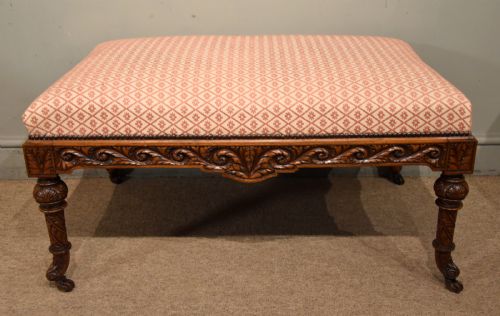
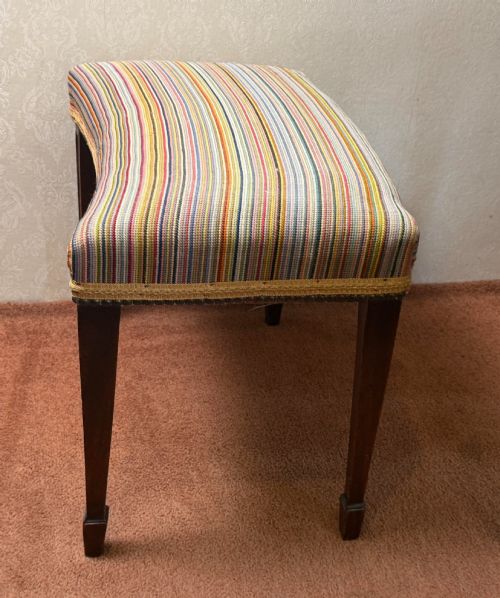
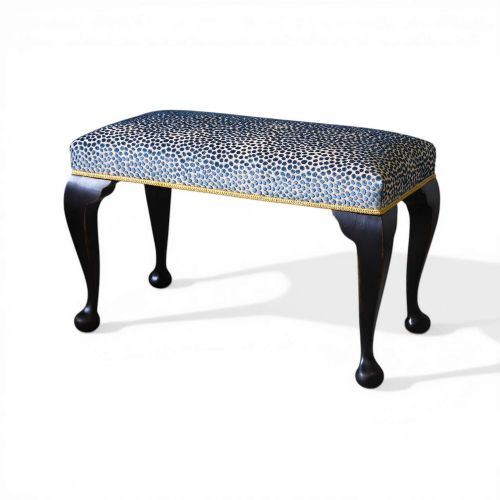
A low window bench serves as a compact seating option positioned beneath low sills, combining the form of a stool, bench, or footstool. These pieces appear across Victorian, Regency, Edwardian, and 18th century periods, offering functional low seating for rooms with restricted vertical clearances.
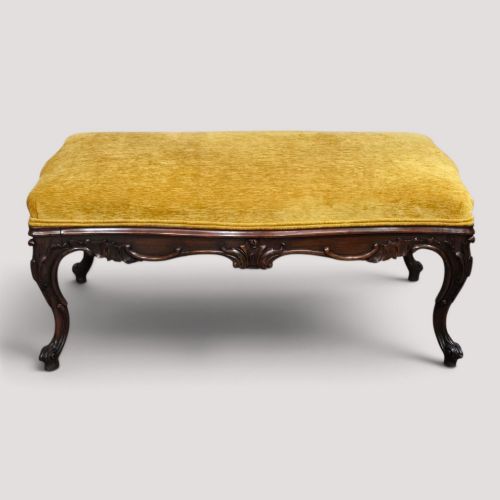
The objects take various structural forms including dressing stools, hall benches, altar benches, and long chest bases adapted for sitting. Most examples on offer date from the 19th century, featuring upholstered or cane seats supported by turned, tapering, or cabriole legs.
How they were made
Carpenters constructed these frames using dense timbers such as mahogany, rosewood, oak, walnut, and hardwood, often shaping the wood with hand-carved ornamentation. Giltwood, ebonised finishes, and brass details appear alongside exposed wood surfaces.
Seating areas rely on textile, fabric, and cane upholstery stretched or woven over wooden frames to provide support. Construction techniques range from simple pegged joints in oak pieces to intricate carved mouldings on French and Venetian items.
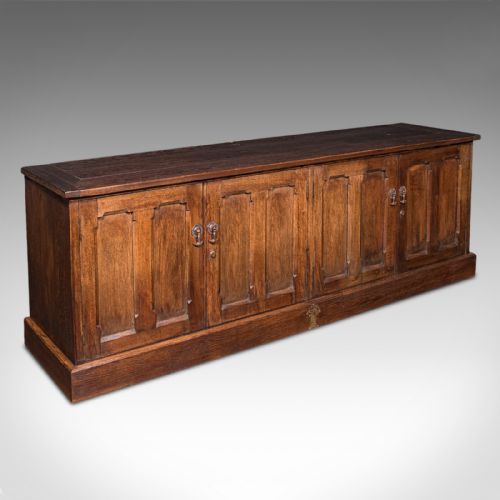
One repurposed oak coffer chest doubles happily as a long window seat and a hiding spot for winter blankets.
What varies in quality
Quality depends upon the precision of the joinery and the depth of the carving work executed on the timber frame. Pieces shaped by named carvers or attributed to specific design traditions display superior execution in proportions and decorative relief.
The choice of primary timber also influences the standard of the piece, with dense hardwoods like rosewood and mahogany representing finer cabinet-making than utilitarian softwoods. Original upholstery materials and intact cane work retain higher levels of historical integrity.
Gillows
The Low Window Bench Glossary
- Cabriole leg
- A furniture leg that curves out and then in, resembling the leg of an animal. This form appears frequently on Victorian seating pieces.
- Giltwood
- Wood that has been coated with a thin layer of gold leaf or gold paint. Early 19th century examples utilise this finish for decorative effect.
- Cane seated
- A seat woven from peeled rattan or cane strips to form a breathable mesh pattern. Several 19th century stools incorporate this technique.
- Dressing stool
- A low seat traditionally used in front of a dressing table or mirror. Many of these share dimensions suited for placement under windows.
- Altar bench
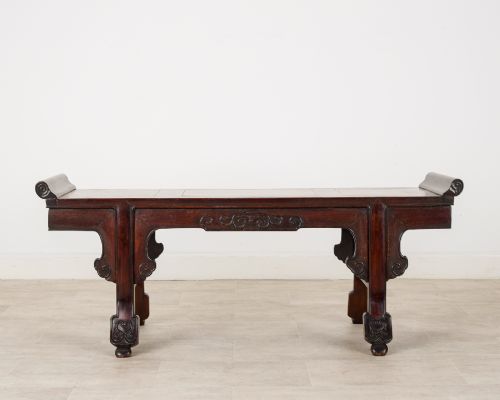
- A long, low wooden bench originating from religious or domestic contexts in China. These pieces utilise hardwoods like huali.
Low Window Bench: Frequently Asked Questions
Where should I place a low window bench?
These benches fit naturally beneath low window sills where standard chairs obstruct the view or block natural light. They also function effectively at the foot of a bed or along a narrow hallway.
The compact height makes them useful as casual seating or temporary surface areas without overwhelming small rooms.
How do I identify a Victorian piece?
Victorian examples often feature dense timbers like rosewood or mahogany combined with heavy carved details or cabriole legs. Construction methods from this era frequently employ machine assistance alongside traditional hand joinery.
Upholstery styles and turned leg designs also help distinguish mid to late 19th century production from earlier Georgian or Regency work.
Are these benches comfortable for sitting?
Many versions include upholstered tops covered in fabric or textile, while others utilise woven cane or plain wood surfaces. Padding levels vary depending on whether the item was intended as a dressing stool or a hall bench.
Adding a loose cushion can adjust the seating comfort of firm wooden or cane platforms.
How do Chinese altar benches differ?
Chinese hardwood benches from the 19th century utilise traditional Asian joinery without metal fasteners, constructed from dense timbers such as huali. Their proportions tend to be long and low, designed originally for temples or domestic display.
These contrast with European styles through linear frames and restrained carving rather than upholstered cushions.