

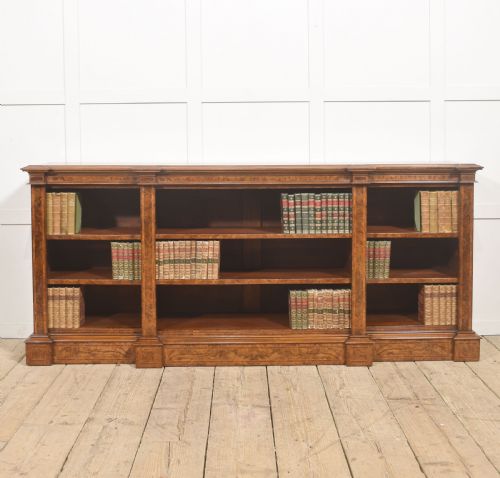


Low Wide Bookcase
A low wide bookcase brings proportion to low ceilings and long walls, offering accessible open shelving without towering over a room.
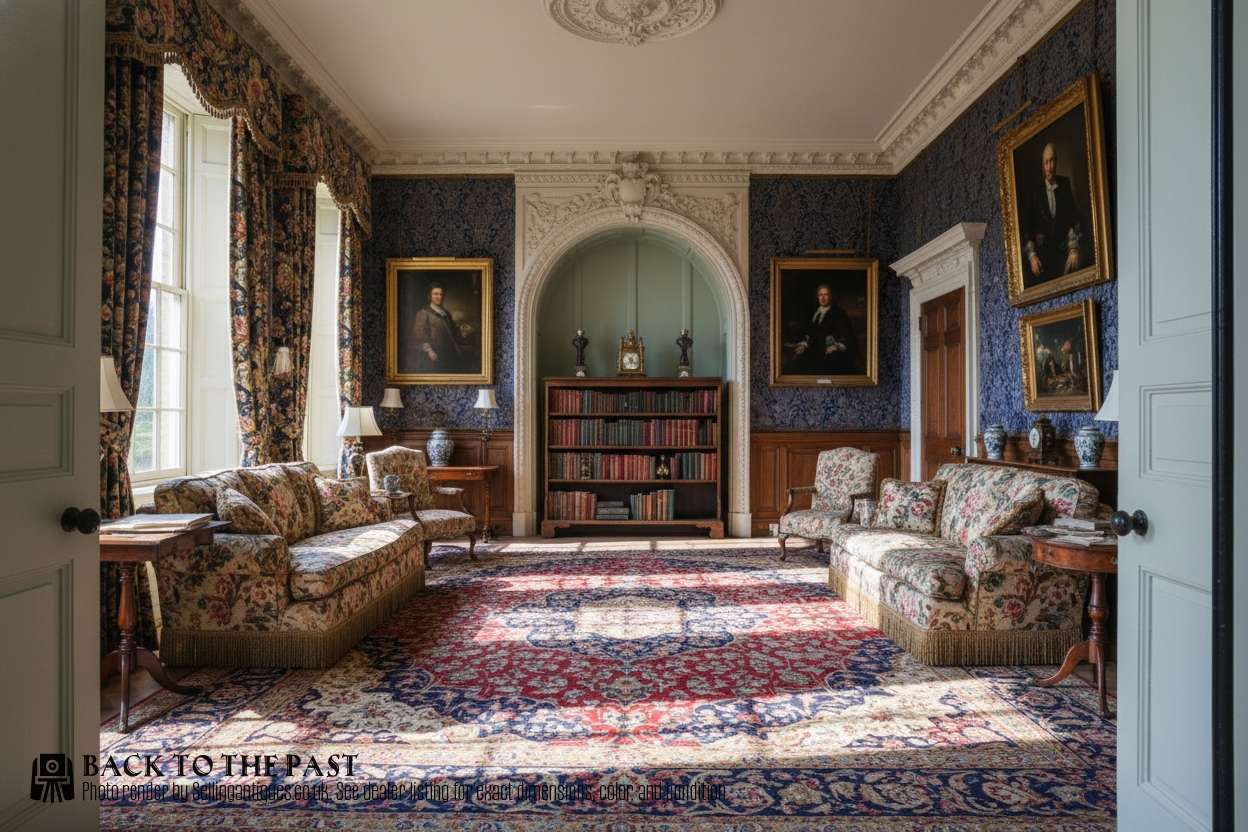
Low Wide Bookcase
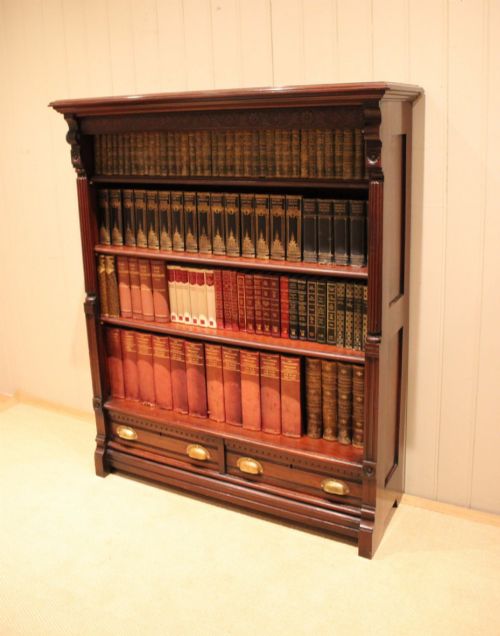
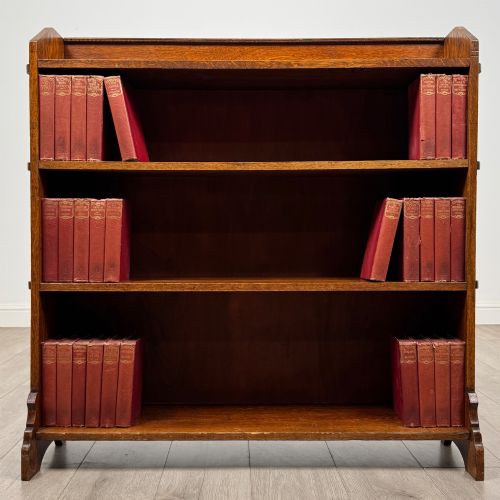
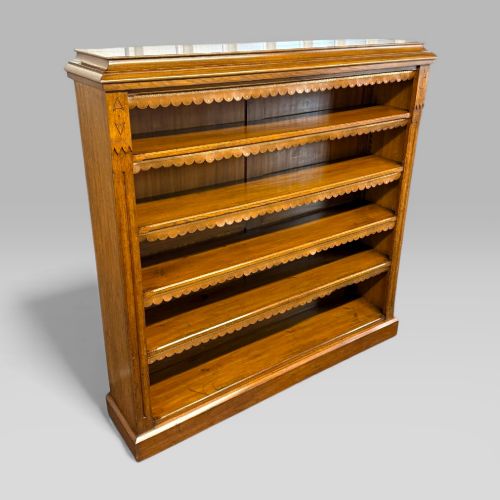
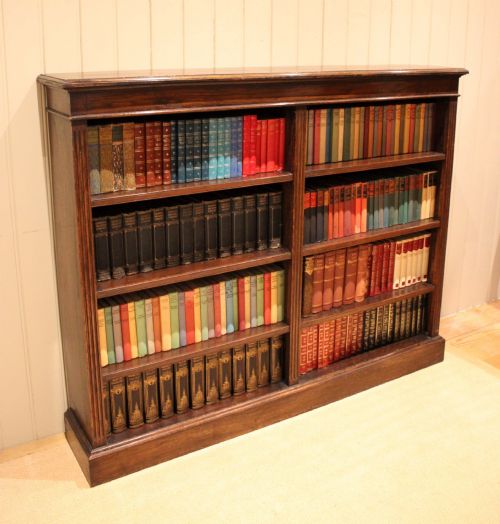
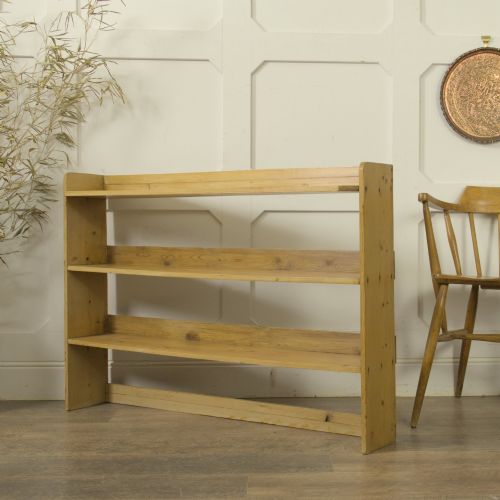
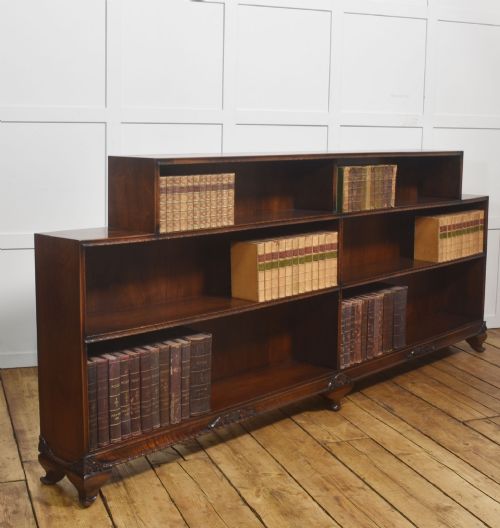
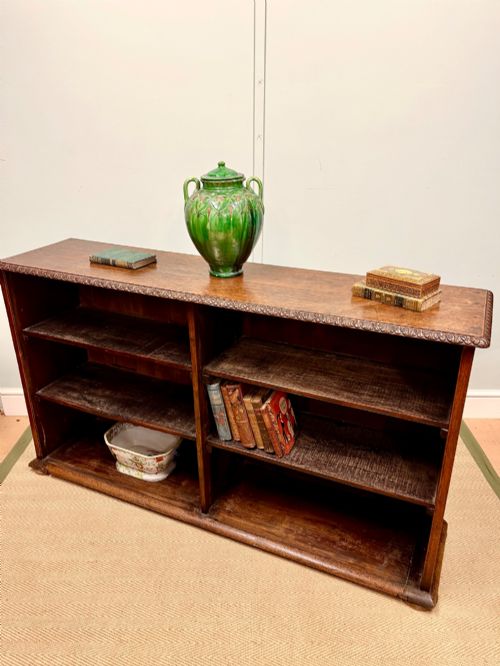
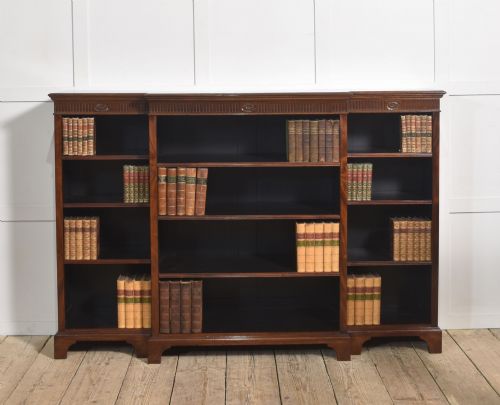
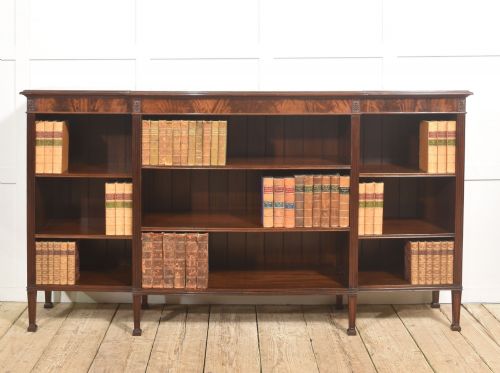
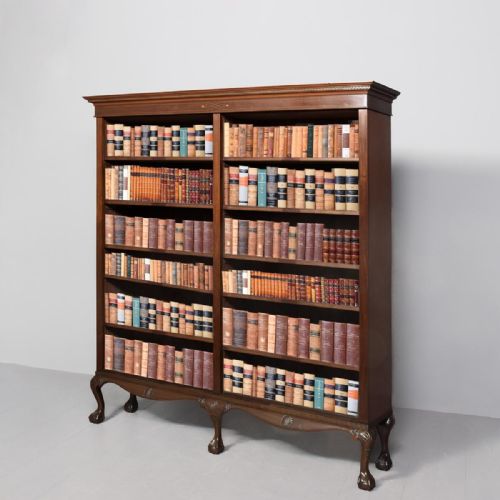
A low wide bookcase combines an extended horizontal span with a reduced height, designed to sit comfortably beneath picture rails or windows. These pieces surface frequently in Victorian and Edwardian iterations, spanning formats from simple pine and oak shelving units to grand breakfront library designs.
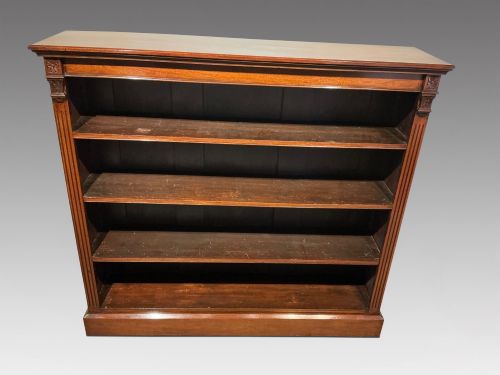
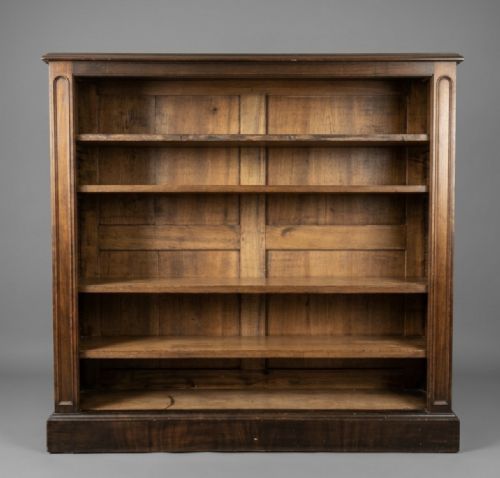
The horizontal orientation allows books to remain within easy reach while keeping upper wall space clear for art or mirrors. Buyers encounter open front configurations most often, though glazed door examples also appear in the archive.
The structural footprint favours stability, often presenting with adjustable shelves housed within mahogany, walnut, or oak carcases. This form suits rooms where traditional tall bookcases would overwhelm the architectural balance.
Materials and construction methods
Makers utilised dense hardwoods such as mahogany, walnut, and oak to construct the main carcase and support heavy volumes without sagging over the wide span. Pine and elm appear in vernacular pieces, while ebonised wood and brass mounts provide decorative contrast in more formal commissions.
Cabinetmakers constructed these bookcases with traditional joined or dovetailed frames, incorporating adjustable shelf mechanisms using wooden ratchets or brass strip supports. Breakfront sections and stepped profiles required precise timber selection, notably figured flame mahogany and burr walnut veneers applied to stable secondary woods.
Low Wide Bookcase Retail Price Guide 2026
Typical asking prices for low wide bookcase among the pieces listed under this phrase on Sellingantiques today, from the lower quarter to the upper quarter. They describe what is for sale here now, not the wider market.
Listings feature woods spanning mahogany, oak, walnut, pine, teak, rosewood, elm, and ebonised finishes across the nineteenth and early twentieth centuries.
Assessing quality and craftsmanship
Quality rests upon the selection of timber veneers and the integrity of the shelf support system over a wide span. Finer examples display carefully matched flame mahogany or burr walnut grain across the front, alongside solid brass hardware and crisp architectural mouldings.
Simpler vernacular pieces in pine or oak rely on honest joinery and practical utility rather than elaborate decorative veneers. The presence of fully adjustable shelving mechanisms indicates a higher grade of manufacture intended for serious libraries.
Lamb of Manchester
The Low Wide Bookcase Glossary
- Breakfront
- A cabinet design where the central section projects forward from the flanking wings. This configuration breaks the horizontal monotony of wide bookcases.
- Open bookcase
- A shelving unit without doors, designed for immediate access to books. These pieces dominate the available low wide formats.
- Adjustable shelves
- Shelving that can be moved to different heights using internal vertical tracks or pin supports. This feature accommodates books of varying sizes.
- Ebonised wood
- Timber treated to imitate ebony through staining and polishing. This dark finish appears frequently on nineteenth-century aesthetic movement furniture.
- Waterfall bookshelves
- Shelving units where each tier steps back progressively from the bottom to the top. The Edwardian period favoured this specific profile for small collections.
Low Wide Bookcase: Frequently Asked Questions
Where should I place a low wide bookcase?
These pieces suit positions beneath windows, along long hallways, or acting as low room dividers where maintaining sightlines matters. Their horizontal proportions prevent them from dominating smaller reception rooms.
Positioning them away from direct heat sources protects the timber carcase and prevents veneered surfaces from splitting over time.
Can the shelves hold heavy books?
Most examples utilise sturdy hardwoods like oak and mahogany, constructed specifically to bear the weight of dense library collections across wide spans. Adjustable wooden or brass supports distribute the load safely.
Heavier volumes sit best on the deeper lower shelves, maintaining stability across the entire unit.
How do I date a Victorian piece?
Victorian bookcases often display distinct stylistic clues such as Gothic revival tracery, heavy proportions, or rich mahogany grain. Construction methods like hand-cut dovetails and timber backboards offer further chronological markers.
Comparing the decorative mouldings against documented nineteenth-century cabinetmaking patterns helps narrow the manufacturing decade.
Are these bookcases difficult to maintain?
Routine upkeep involves simple dusting with a dry cloth and occasional application of appropriate beeswax to nourish the polished timber surface. Avoiding synthetic polishes preserves the original patina.
Maintaining stable room humidity prevents the solid woods and delicate veneers from warping or shrinking.