


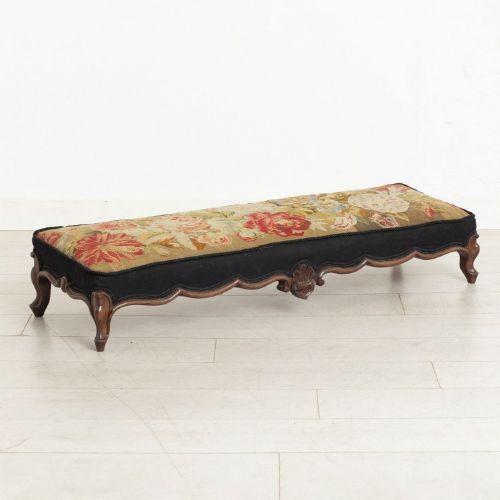

Low Walnut Footstool
A low walnut footstool brings warmth and sturdy comfort to a fireside or dressing room, grounding a room with rich timber grain.
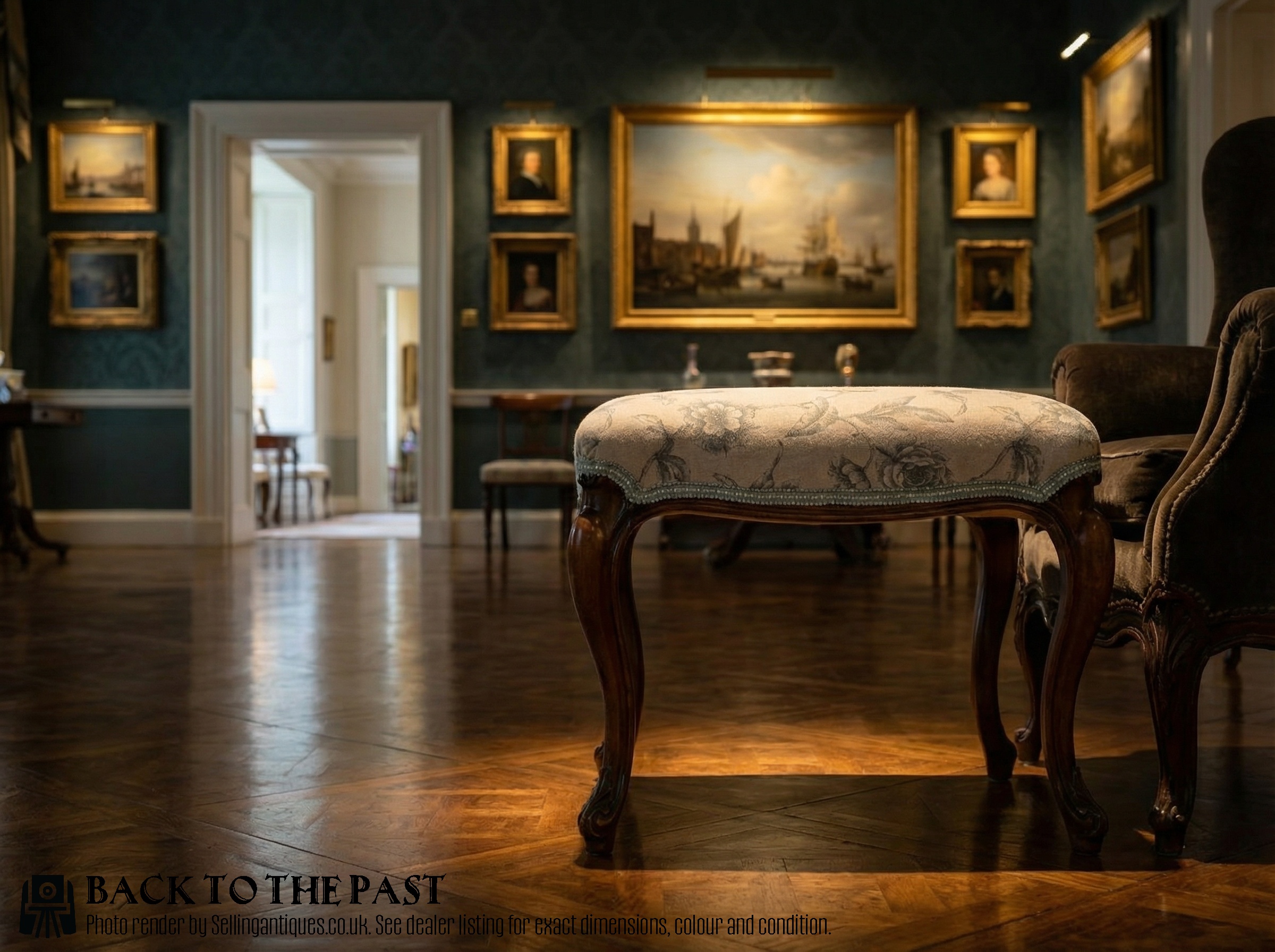
Low Walnut Footstool
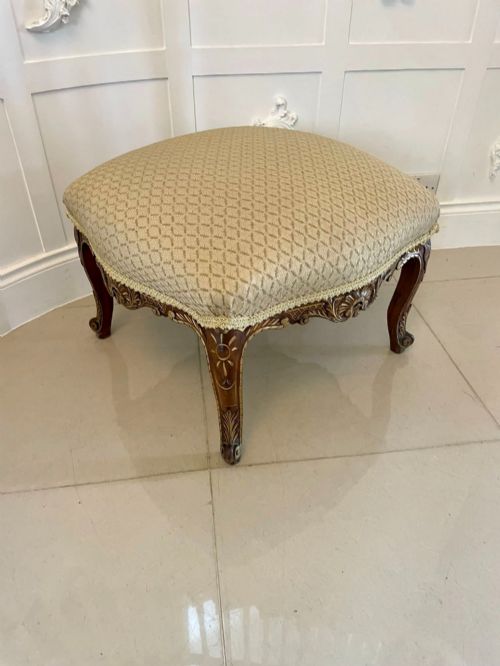
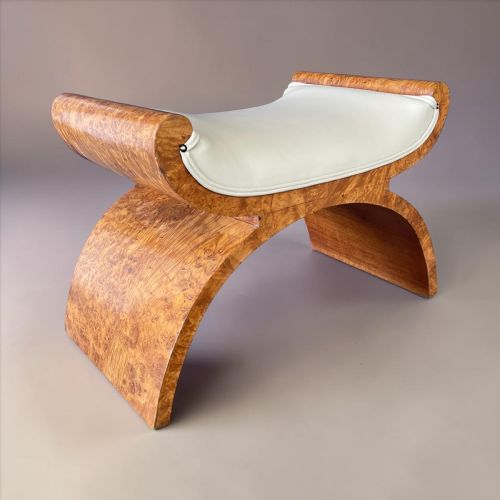
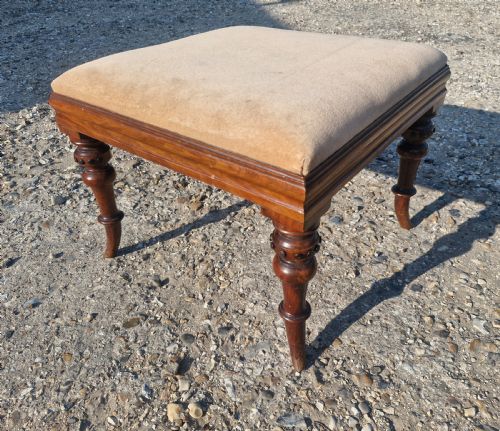
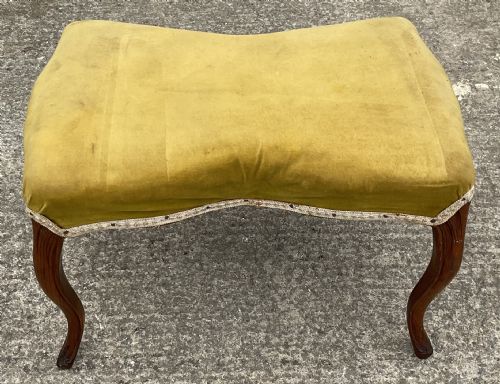
A low walnut footstool is a compact seating piece designed to elevate the feet or serve as a low seat by a hearth, dressing table, or salon. The selection here leans heavily towards Victorian and nineteenth-century examples alongside early twentieth-century and Art Deco interpretations.
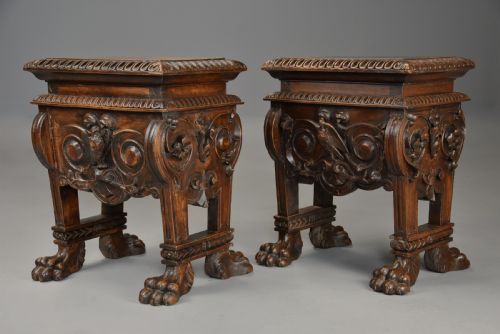
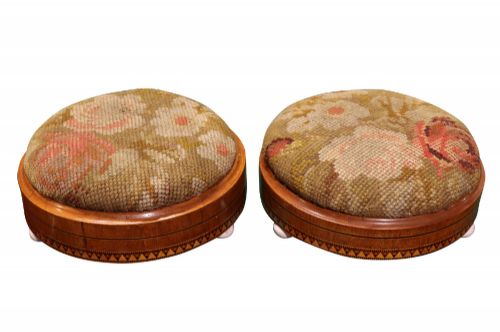
Most pieces you meet on this page take the form of small circular, rectangular, or fender stools built with low wooden frames. They frequently appear in revived historical modes such as Queen Anne style, French revival, and Scottish Baronial alongside cleaner modernist lines.
Makers and craftsmen utilised dense, figured timber to construct frames that supported varied domestic uses. Whether intended as a low fireside footrest, a long stool, or a dressing table seat, each piece showcases the versatility of walnut in traditional furniture design.
How they were made
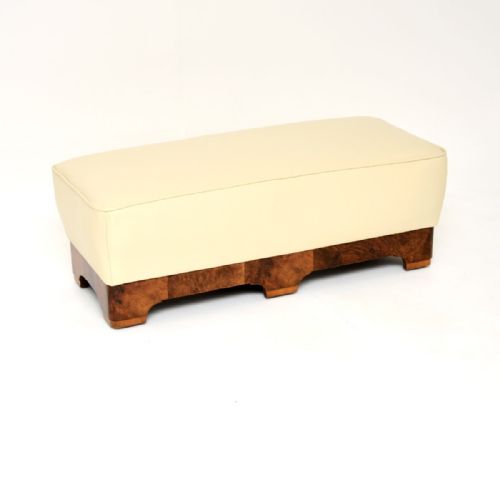
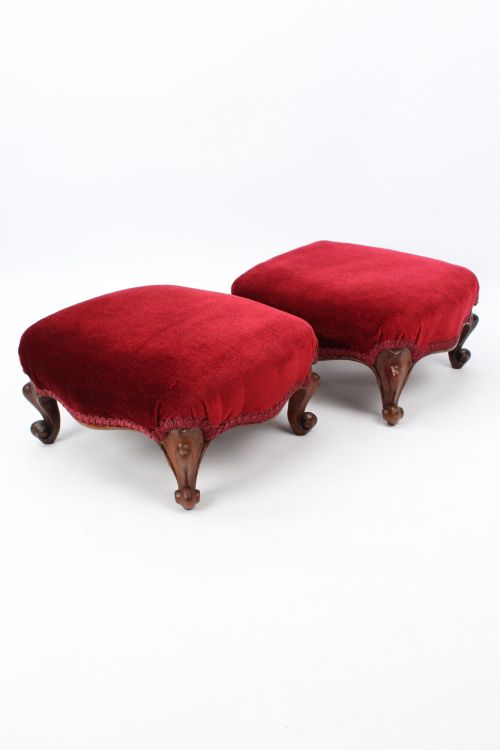
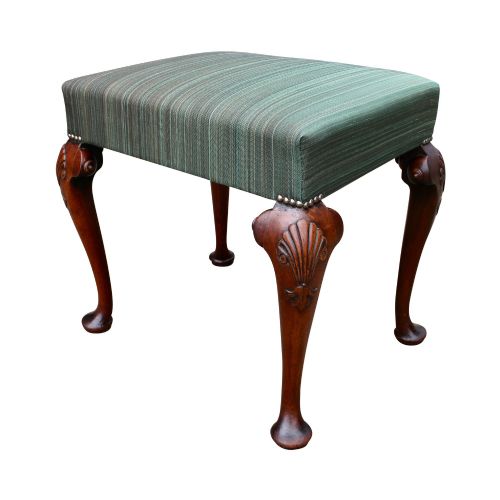
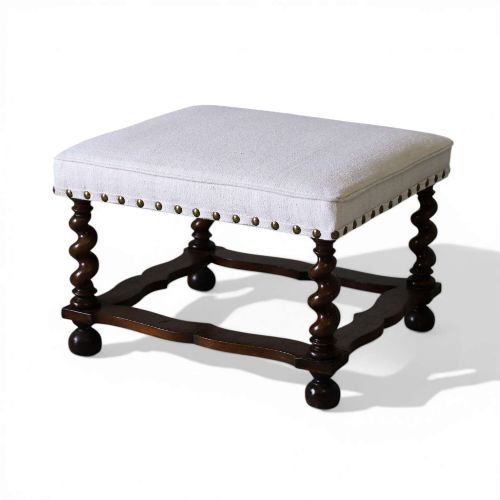
Cabinet makers built these frames primarily from solid and veneered walnut, incorporating burr walnut for decorative grain patterns on top surfaces. Structural elements often rely on turned, carved, or cabriole legs that provide sturdy support beneath the seat frame.
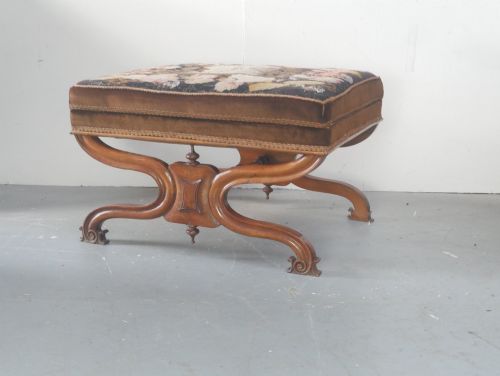
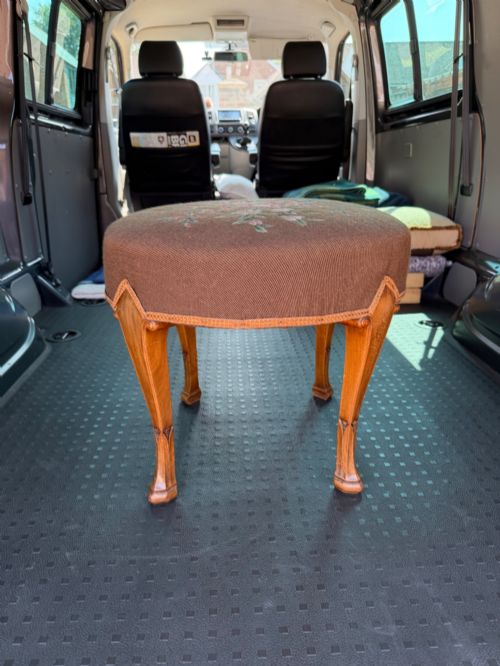
Upholstery techniques varied widely across the periods, employing durable textiles such as leather, velvet, wool, tapestry, and needlepoint. Details like buttoning, brass tacks, and geometric Kilim tapestries finish the padded tops, while specialised elements like oyster veneers and barley-sugar twists appear on select frames.
Listings span from the mid-nineteenth century through the Art Deco era of the 1930s, featuring walnut frames paired with textiles, leather, and tapestry.
What varies in quality
The distinction between ordinary production and finer work lies in the handling of the timber and the depth of the carving. Crisp execution on cabriole legs, finely turned stretchers, and carefully matched burr walnut veneers separate more ambitious pieces from simpler workshop outputs.
Upholstery execution and the preservation of original textile surfaces heavily influence the character of each piece. Retaining period needlework, tapestry, or buttoned leather in sound condition demonstrates careful preservation of the original design intent.
Harry and Lou Epstein
The Low Walnut Footstool Glossary
- Cabriole leg
- A furniture leg that curves outward in a convex arch and then bends inward in a concave arch, typically ending in a pad or scroll foot. This shape derives from ancient animal leg forms and gained wide popularity in eighteenth-century and revival designs.
- Fender stool
- A long, narrow footstool designed to sit immediately in front of a hearth fender to keep feet elevated above cold stone floors. These often measure greater in length to accommodate multiple users by the fire.
- Burr walnut
- A specialised timber veneer harvested from the irregular growths on walnut trees, prized for its swirling, highly figured grain patterns. Cabinet makers utilised it on prominent surfaces to create decorative visual contrast.
- Oyster veneer
- Thin circular slices cut across branches or small trunks of walnut, arranged to resemble the appearance of oyster shells. This decorative technique appears on seventeenth and eighteenth-century inspired pieces.
- Tunbridge ware
- A type of intricate decorative woodwork involving small mosaic pieces of naturally coloured woods assembled to form geometric or pictorial mosaics. It occasionally adorns the wooden borders of Victorian table and foot stools.
Low Walnut Footstool: Frequently Asked Questions
What is a low walnut footstool?
A low walnut footstool is a compact domestic seating piece built with a timber frame of walnut and designed for resting feet or low sitting.
These pieces typically sit close to the floor, serving functional roles near firesides, dressing tables, and salons across various nineteenth and twentieth-century periods.
How were these stools used?
Historically, people placed these low stools by hearths to keep their feet away from cold drafts near the floor, or paired them with dressing tables.
Longer variants functioned as fender stools, stretching along the base of a fireplace to provide shared footrests for family members.
How do I live with a walnut footstool?
Living with a walnut footstool involves placing it as a movable accent piece where extra seating or a low prop is useful. Their compact size allows them to tuck easily beneath tables or beside armchairs when not in active use.
Maintenance requires standard care for antique timber and textile upholstery, keeping them away from direct heat sources and excessive moisture to protect the wood grain and fabric.