
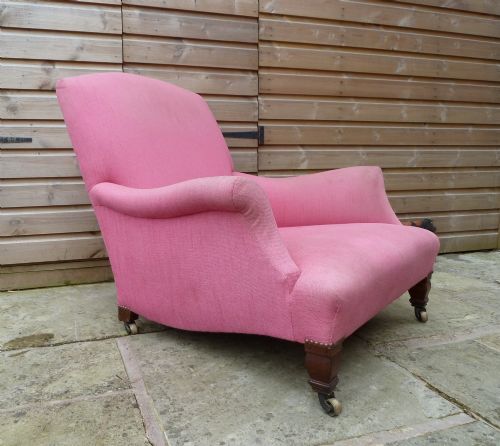
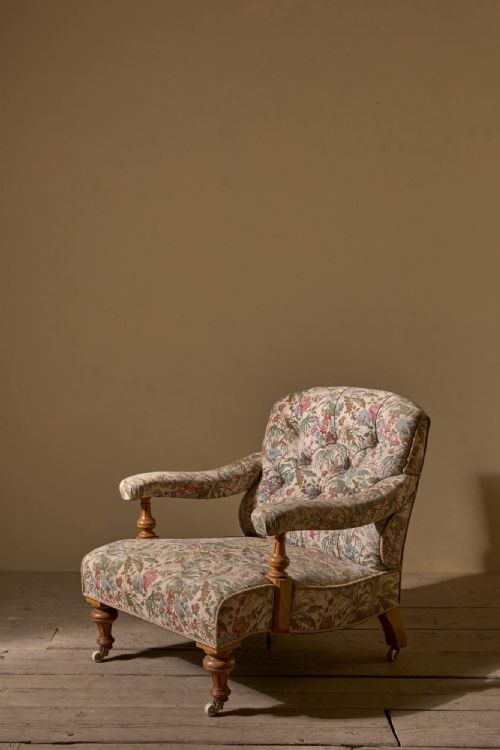
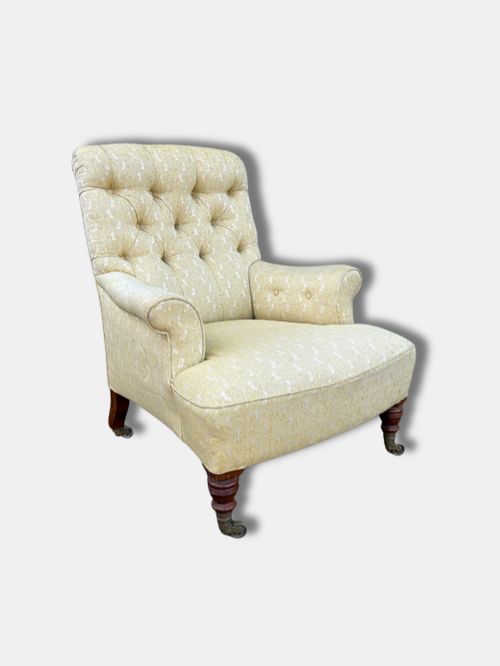
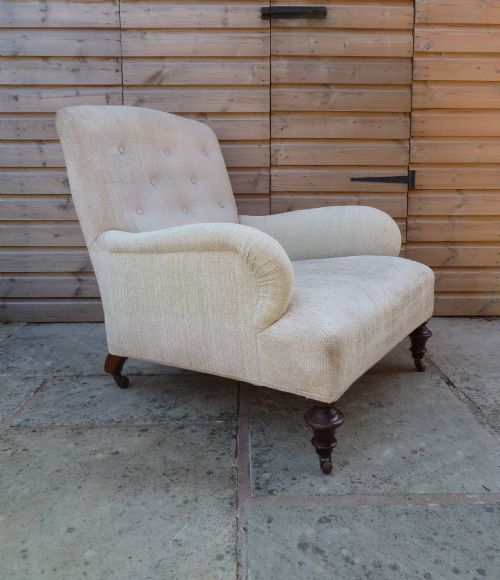
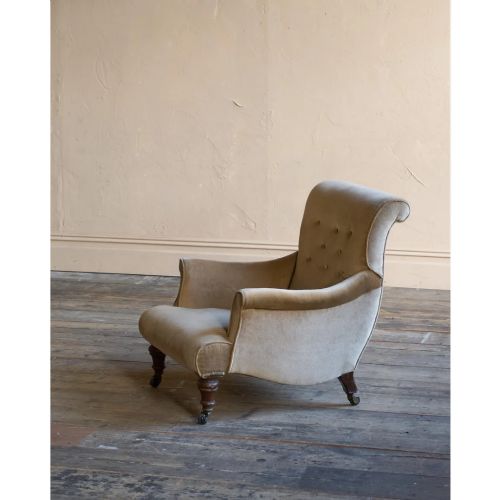
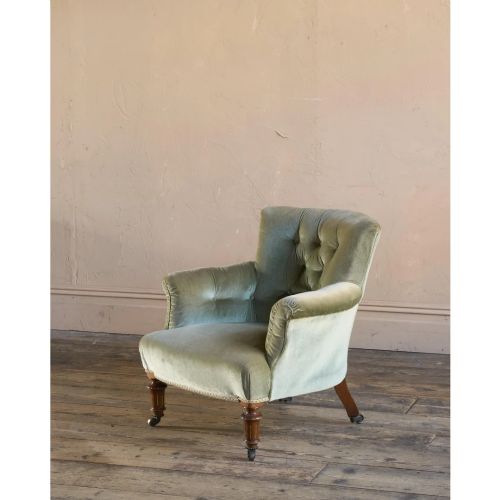
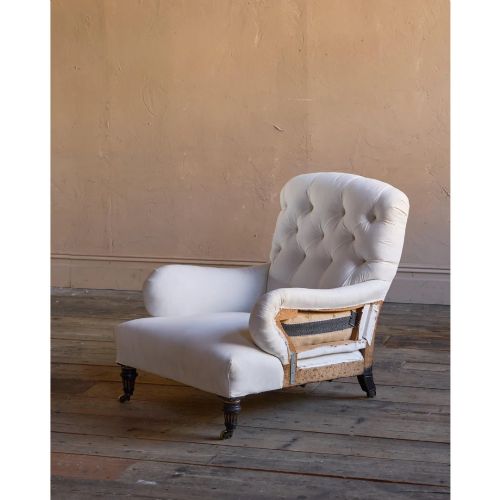
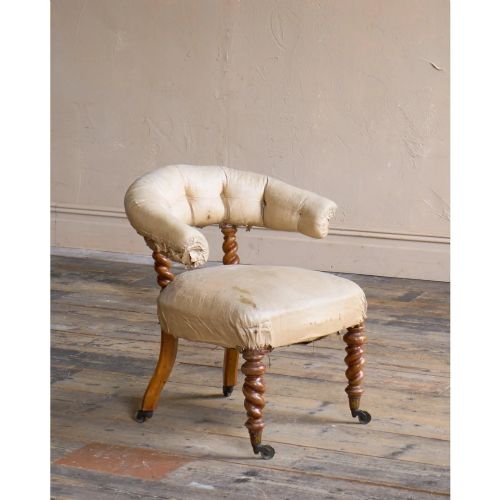

Low Upholstered Reading Armchair
A low upholstered reading armchair offers deep-seated comfort paired with low-slung proportions, perfect for long hours of quiet study or repose.
Low Upholstered Reading Armchair
A low upholstered reading armchair represents a specific seating form designed for relaxation, frequently encountered here from the Victorian and Edwardian periods. These chairs appear in various regional British interpretations, including Scottish country house models and English traditional styles.
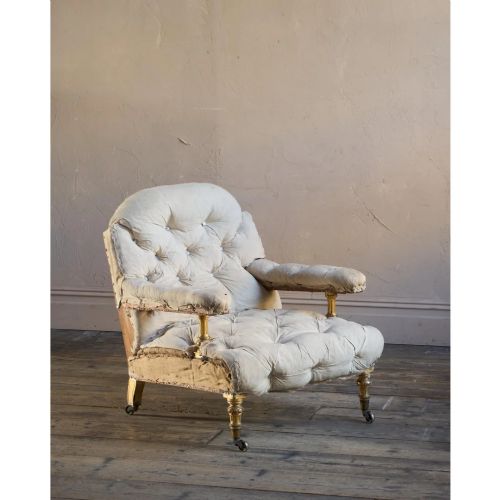
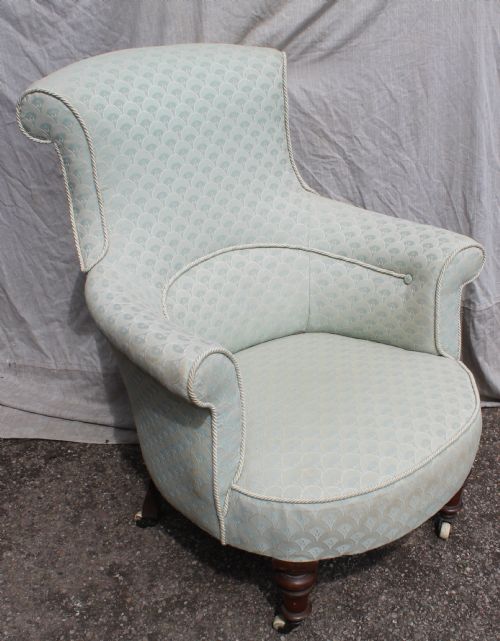
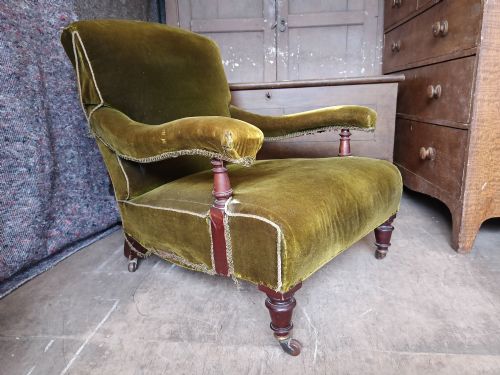
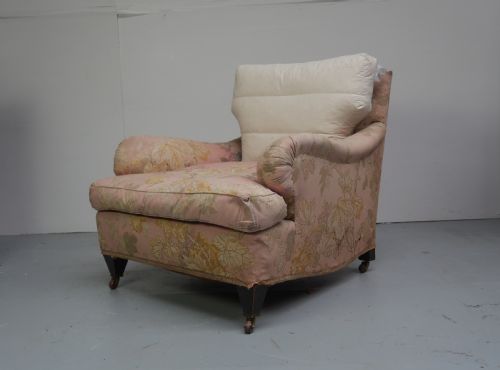
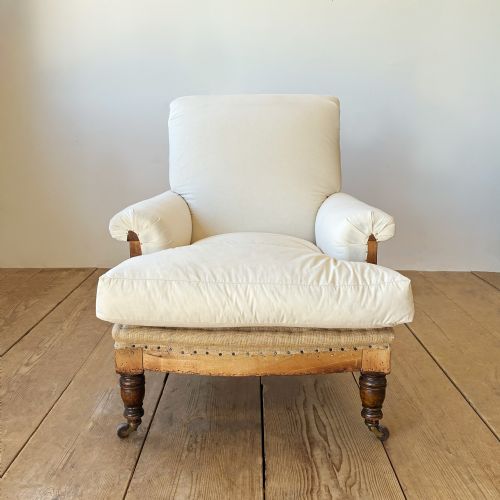
The selection ranges from deep-seated club chairs and compact spoon back variants to open armchairs influenced by makers such as Howard and Sons. Buyers frequently find pieces featuring low profiles intended specifically for reading and leisure in domestic interiors.
Materials and Construction
Frames rely on sturdy timbers including mahogany, walnut, and assorted hardwoods, providing a solid foundation for the upholstered body. Brass fittings frequently appear on castors or structural accents.
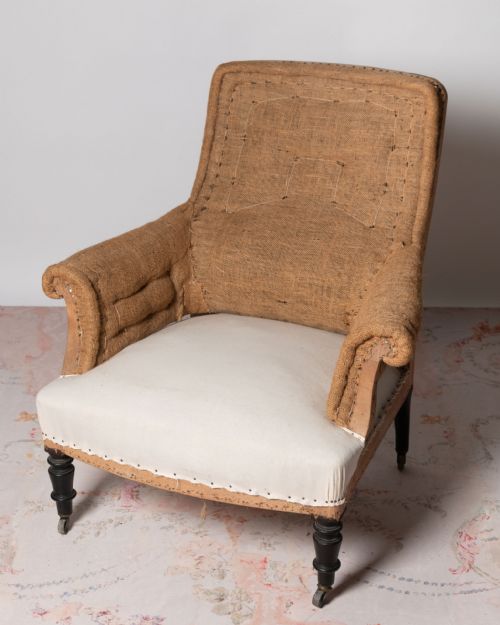
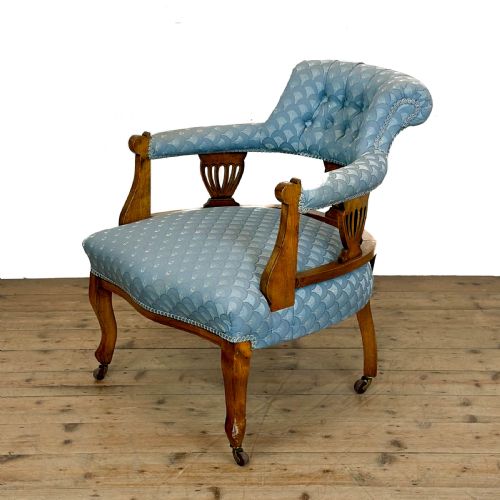
Upholstery materials span from velvet and fabric to calico and traditional ticking, complemented by button-back detailing and exposed ebonised or carved wooden legs.
Materials documented across the inventory include mahogany, walnut, brass, velvet, calico, and traditional ticking.
Judging Quality in Low Upholstered Reading Armchairs
Distinction across the range lies in the integrity of the wooden frame, whether constructed in solid mahogany or walnut, and the precision of the joinery. Finer examples show careful attention to proportions, such as well-balanced low centres of gravity and cleanly carved or ebonised legs.
The quality of the piece also rests on the upholstery execution, visible in the handling of traditional coverings like ticking, calico, or velvet, and the retention of maker stamps or attributed design traits.
Howard and Sons·C. Hindley and Sons·Gillows
The Low Upholstered Reading Armchair Glossary
- Club armchair
- A generously padded, deep-seated armchair designed for maximal comfort. These pieces usually feature low backs and upholstered arms.
- Ticking
- A tightly woven, durable cotton or linen fabric traditionally used as a base or outer cover for stuffed furniture. Grey ticking frequently appears on country house seating.
- Spoon back
- An upholstered chair back shaped in a concave oval resembling the bowl of a spoon. This design supports the sitter's spine.
- Ebonised
- Wood treated with a dark stain or finish to imitate ebony. This finish is common on nineteenth-century chair legs.
- Claw and ball
- A furniture foot motif depicting a bird's talon grasping a ball. It appears frequently on Edwardian mahogany frames.
Low Upholstered Reading Armchair: Frequently Asked Questions
What defines a low upholstered reading armchair?
These seats combine a low-slung frame with generous padding and upholstered armrests, designed specifically for comfort during extended periods of reading.
They appear primarily in nineteenth-century and early twentieth-century British domestic contexts, often reflecting country house or aesthetic movement design influences.
How do I identify a Howard style armchair?
Howard style chairs typically exhibit deep seating proportions, low wooden or brass-castor legs, and comfortable upholstered frames. Many examples feature signature ticking or velvet coverings.
Attributions often rely on overall build quality, low profiles, and stylistic similarities to pieces produced by Howard and Sons.
Where were these armchairs used historically?
They belonged in libraries, studies, and drawing rooms of large British country houses and town residences. Their low proportions suited private spaces dedicated to quiet contemplation.
Today, they transition easily into modern living rooms and studies as statement seating.
What wood types should I expect to find?
Frames are constructed from sturdy hardwoods, with mahogany and walnut appearing regularly in the structural framework and exposed legs. Some pieces feature ebonised finishes.
Brass hardware frequently supports the feet or castors, adding functional detail to the wooden base.