




Low Open Bookstand
A low open bookstand brings manageable storage and accessible shelves to a room, keeping daily volumes close at hand.
Low Open Bookstand
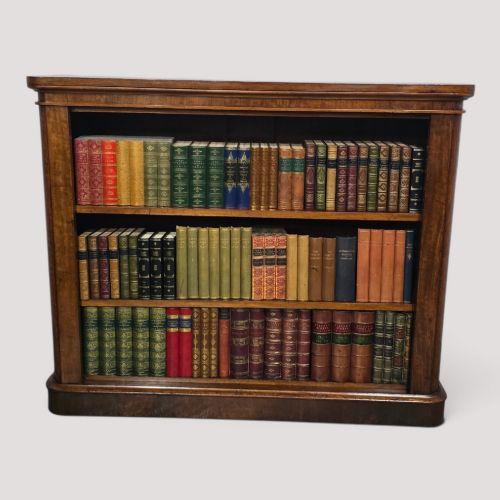
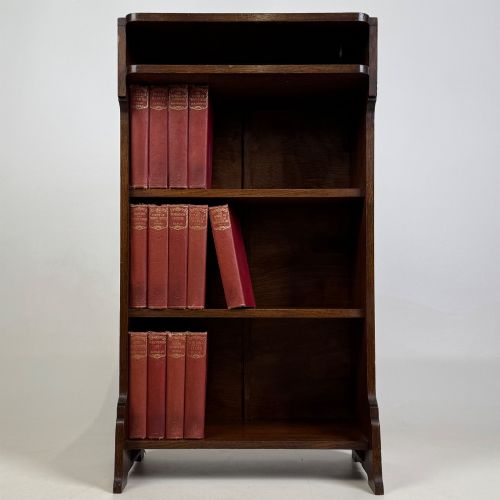
A low open bookstand sits comfortably below standard window heights, offering a practical surface for display while keeping books within arm's reach. These pieces appear across the nineteenth century and into the early twentieth century, spanning Edwardian and Regency eras.
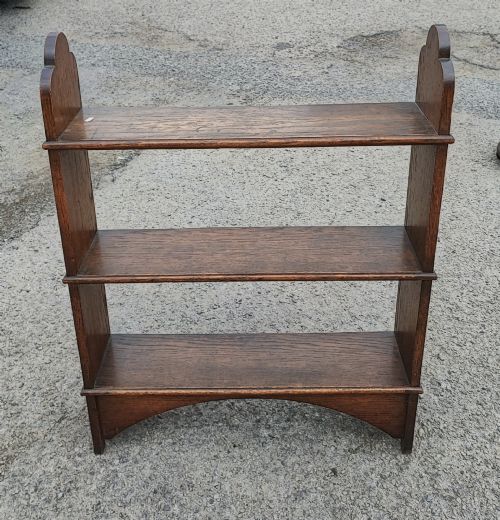
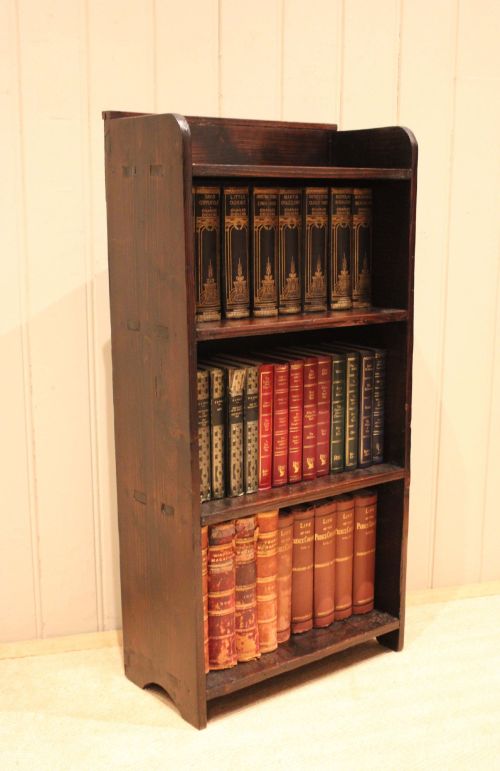
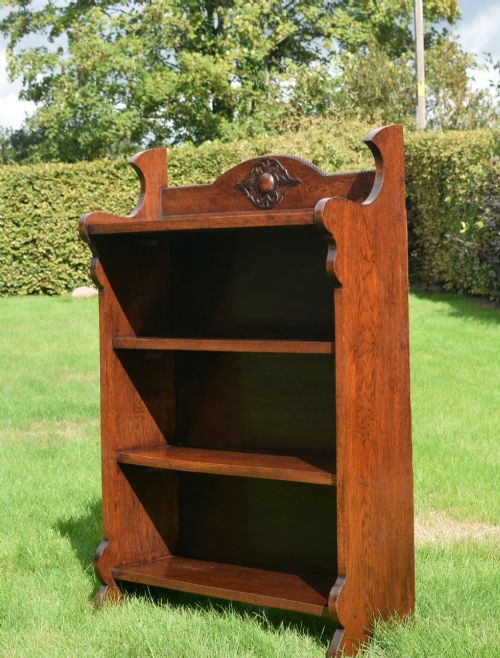
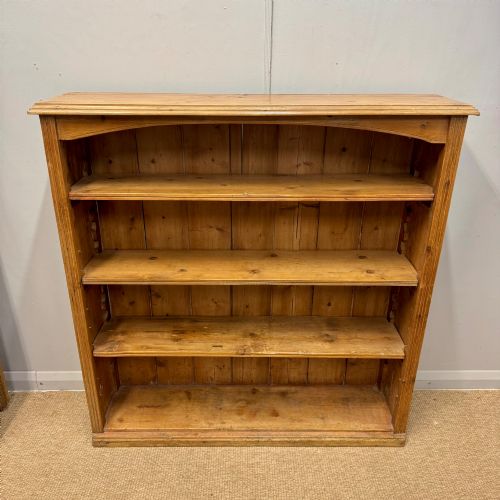
The format is dominated by low profiles and accessible open shelving, occasionally featuring adjustable boards or tiered waterfall designs. Oak, rosewood, walnut, mahogany and pine form the backbone of these constructions, often shaped by Victorian or Arts and Crafts traditions.
How they were made
Cabinet makers utilised dense hardwoods such as mahogany, walnut and rosewood for formal pieces, alongside sturdy oak and pine for vernacular or Arts and Crafts examples. Timber selection dictated the weight and presence of the furniture, ranging from dark figured grain to simpler rustic boards.
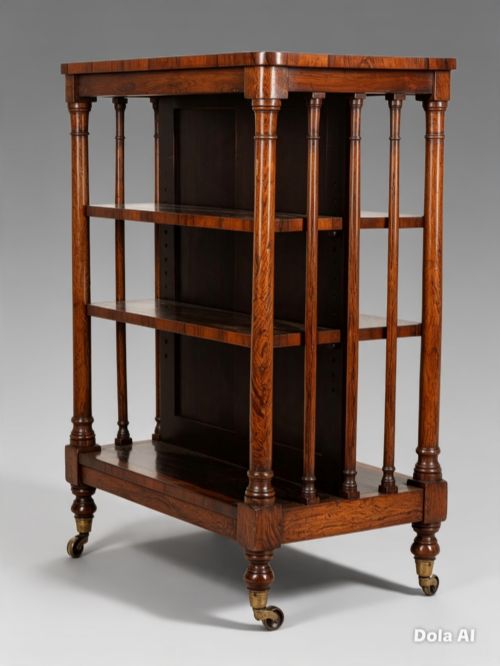
Joinery relied on solid construction methods to support heavy rows of books without sagging shelves. Brass fittings occasionally appear as structural or decorative elements, particularly on adjustable shelving systems.
Some nineteenth-century readers clearly accumulated mismatched heights, requiring adjustable shelves to rescue their libraries from chaos.
What varies in quality
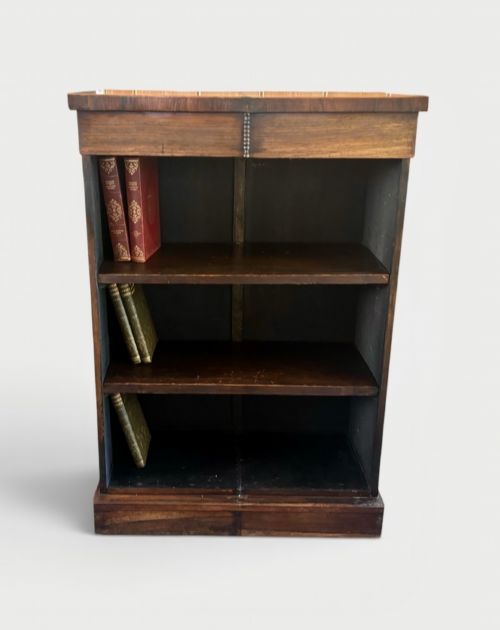
The distinction between standard utility furniture and finer examples lies in the choice of timber and the restraint of the proportions. Selected rosewood veneers and well-figured mahogany elevate a piece beyond simple utilitarian storage.
Refinement in edge moulding, the integration of adjustable shelf mechanisms and balanced joinery separate workshop production from simpler country items. The integrity of the open frame and the neatness of the corners dictate the overall visual weight.
Heal s
The Low Open Bookstand Glossary
- Waterfall bookcase
- A set of open shelves that step back progressively from bottom to top, creating a terraced profile.
- Open bookcase
- A piece of furniture designed for book storage featuring unobstructed front access without doors.
- Adjustable bookcase
- Shelving fitted with internal mechanisms that allow the vertical spacing between shelves to be altered.
- Double sided bookcase
- A freestanding piece finished on both sides, allowing placement away from a wall in the middle of a room.
Low Open Bookstand: Frequently Asked Questions
Where should I place a low open bookstand?
These low pieces sit well beneath windows or against empty wall spaces where taller cabinetry would overwhelm the room. Their height allows the top surface to hold lamps or decorative objects.
Because the shelves are open, keeping the stand away from direct, harsh sunlight protects older paper bindings from fading.
How do I spot an Edwardian bookstand?
Edwardian examples often feature lighter oak or mahogany frames, reflecting the shift away from heavier Victorian aesthetics towards simpler domestic interiors. They frequently incorporate straightforward lines and practical proportions.
Makers working in this period often favoured exposed grain and functional detailing over excessive carved ornament.
Are adjustable shelves common on these stands?
Adjustable shelving appears on several examples, usually managed through traditional wooden rackwork or brass pins. This feature allows the internal height to adapt to varied book sizes.
Fixed shelves remain standard on many simpler or rustic country pieces where durability took precedence over flexibility.
What is the difference between rosewood and oak stands?
Rosewood stands typically belong to formal Regency or nineteenth-century settings, displaying rich dark grain and polished surfaces. They suit formal sitting rooms and parlours.
Oak stands often lean towards Arts and Crafts, Edwardian or rustic country traditions, emphasising robust utility and visible natural timber texture.