
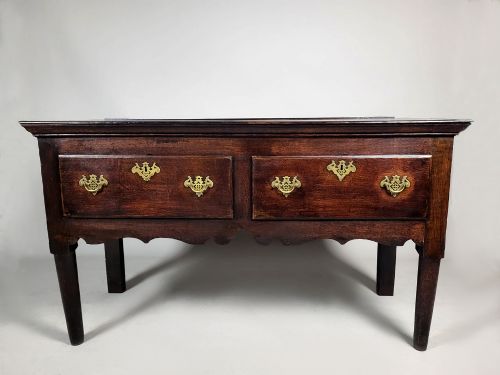
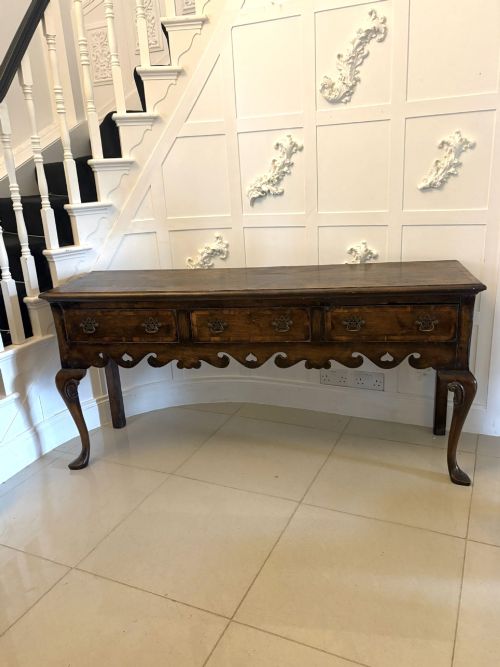
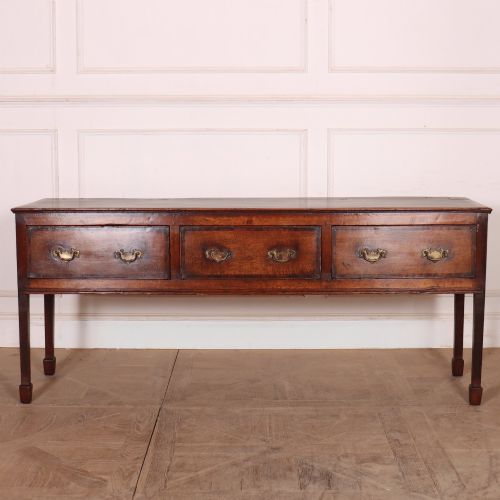

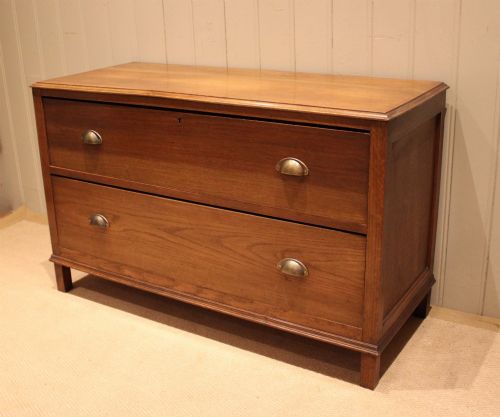
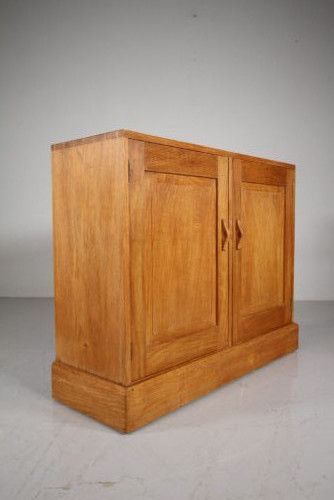
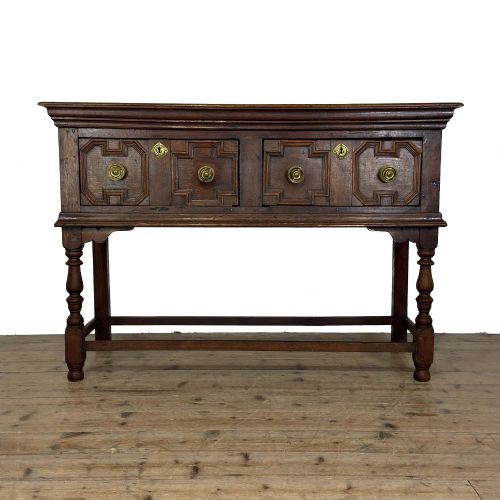
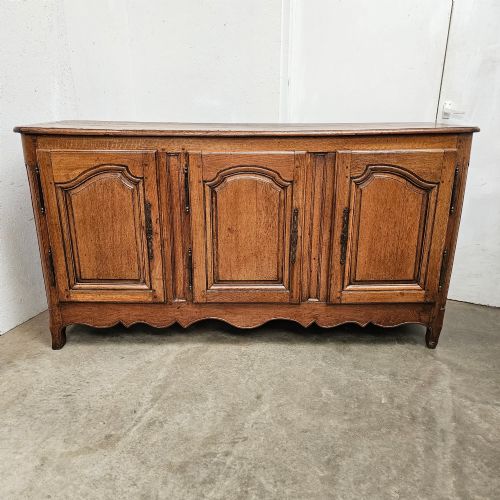
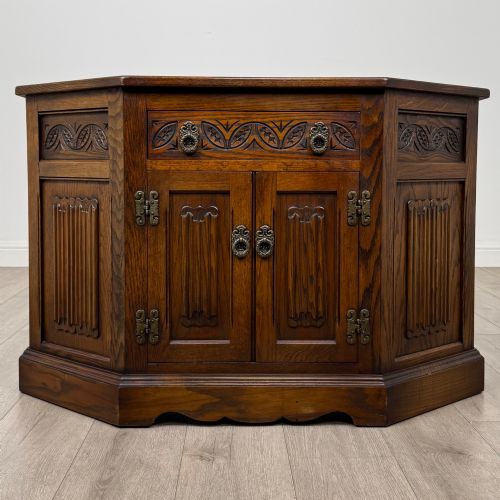
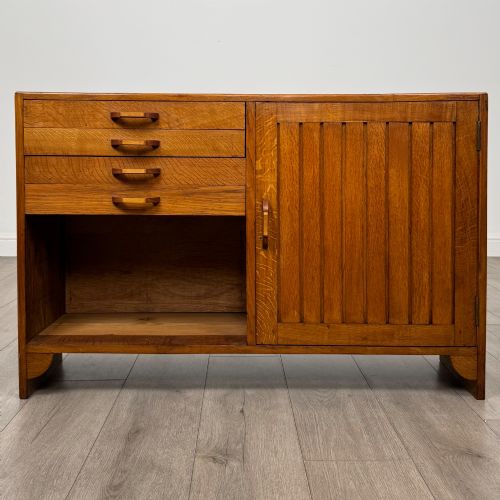
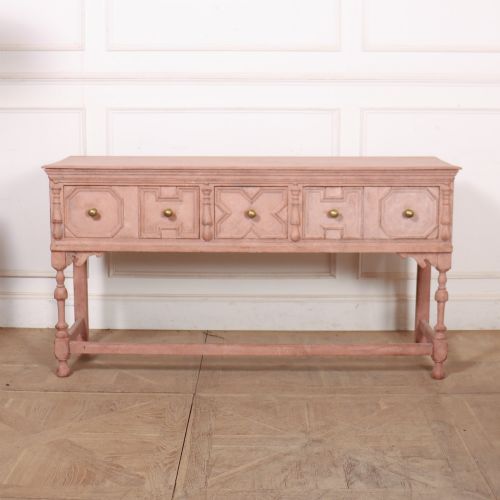
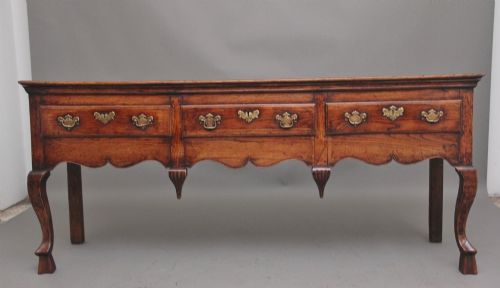
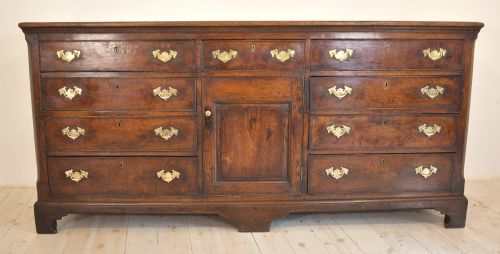
Low Oak Dresser Sideboard
A low oak dresser sideboard combines deep utilitarian roots with a low profile suited to modern rooms, offering surface space and concealed storage.
Low Oak Dresser Sideboard
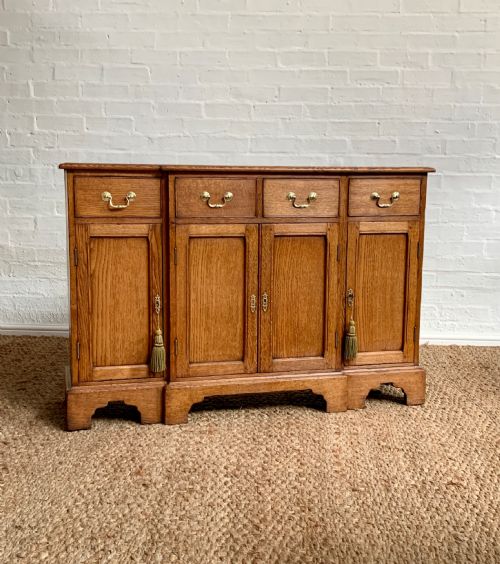
When you search for a low oak dresser sideboard, you encounter low-slung utility furniture originally designed for country houses and rural kitchens. These pieces present a sturdy timber top above rows of drawers, cupboards, or open potboards.
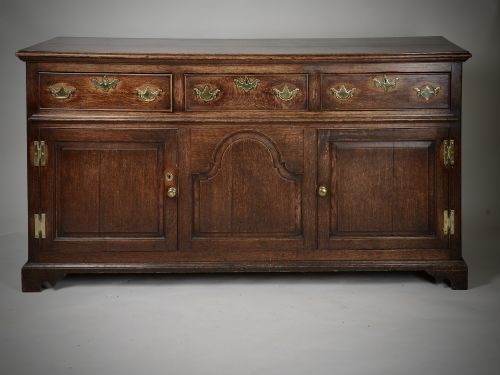
The version you are most likely to meet on this page is an 18th-century or Georgian dresser base, often originating from regional English counties like Shropshire or Cheshire, or from Wales. They range from compact three-drawer formats to longer four-drawer variants.
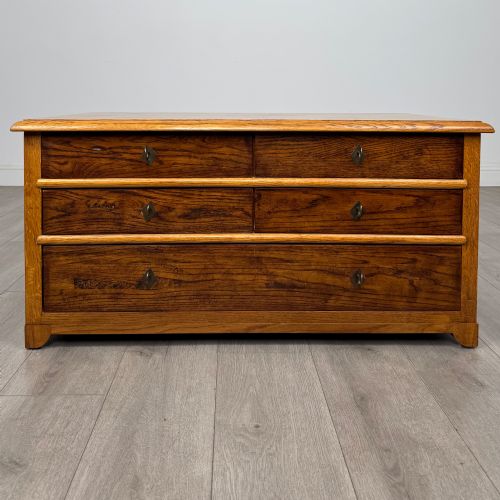
Alongside authentic period examples, the selection includes revival pieces from later eras, such as Jacobean and Arts and Crafts interpretations. These later versions adapt traditional proportions for Edwardian and twentieth-century interiors.
Materials and Construction
English and regional oak forms the primary structural material across the vast majority of these pieces, occasionally supplemented by secondary timbers like elm, fruitwood, or mahogany. Carpenters selected these hardwoods for their density and resistance to heavy daily use in busy domestic spaces.
Traditional construction relies heavily on joined framework and pegged mortise and tenon joints rather than metal fixings. Many examples feature hand-cut dovetails within the drawer construction and retain original brass hardware or iron fittings.
Listings feature regional English oak pieces spanning the seventeenth, eighteenth, and nineteenth centuries, alongside twentieth-century revival formats.
Assessing Quality and Character
Quality in these low forms rests primarily on timber selection and the integrity of the original surface patina. Pieces exhibiting rich, uncompromised grain development and deep colour distinguish themselves from later, heavily stripped alternatives.
Proportion and regional carpentry traits also dictate standing. Well-balanced George III formats or joined regional bases with intact potboards and unreplaced brasses demonstrate the high skill of provincial cabinet makers.
Waring and Gillows
The Low Oak Dresser Sideboard Glossary
- Dresser Base
- The lower portion of a traditional kitchen dresser, functioning independently as a sideboard with drawers and cupboards. It provides a flat serving surface above lower storage.
- Potboard
- An open slatted lower shelf incorporated into the base of a dresser. Originally intended for storing heavy ceramic pots and metalware.
- Enfilade
- A long sideboard or cabinet featuring a series of adjacent doors, most commonly associated with French provincial furniture. It offers extensive low-level interior storage.
- Joined
- A term describing furniture constructed with rigid mortise and tenon framing pegged together by hand. This method predates widespread use of modern adhesives.
- Linenfold
- A carved wood panel motif resembling folded cloth or parchment, popular in Gothic and later revival joinery. It adds subtle texture to cabinet doors.
Low Oak Dresser Sideboard: Frequently Asked Questions
How do I style a low oak sideboard?
You can use a low oak sideboard as a focal point in a dining room, hallway, or living area. The wide top surface accommodates lamps, ceramics, or artwork while keeping everyday items concealed below.
Pairing the warm timber tones with neutral walls or contrasting textures highlights the natural grain of the wood. Their modest height also allows them to sit comfortably beneath wall-mounted mirrors or large paintings.
How do I spot a Georgian dresser?
Georgian dressers often feature clean, balanced proportions, fielded drawer fronts, and traditional bracket or cabriole feet. Regional variations from counties like Shropshire or Wales display distinct local drawer arrangements and construction methods.
Examining the interior drawer construction helps confirm the period, as hand-cut dovetails and oak linings are typical of eighteenth-century craftsmanship.
What is a potboard dresser?
A potboard dresser includes an open lower shelf positioned just above the floor, known as a potboard. This shelf was originally built to hold heavy pots, pans, and serving dishes off damp flagstone floors.
In contemporary settings, the open shelf provides useful space for stacking large books, baskets, or decorative ceramics.