

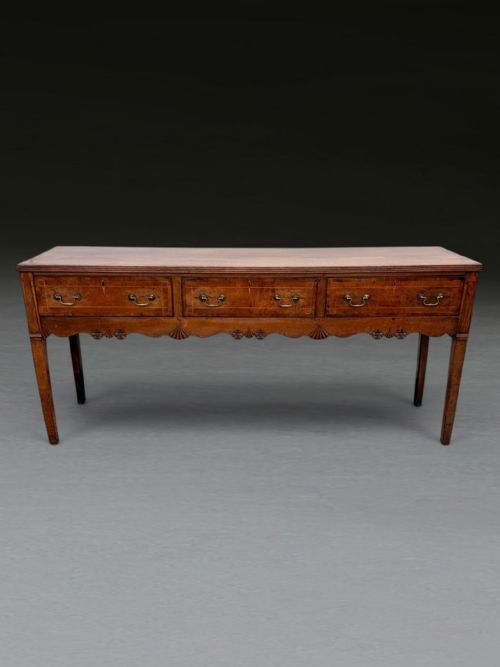
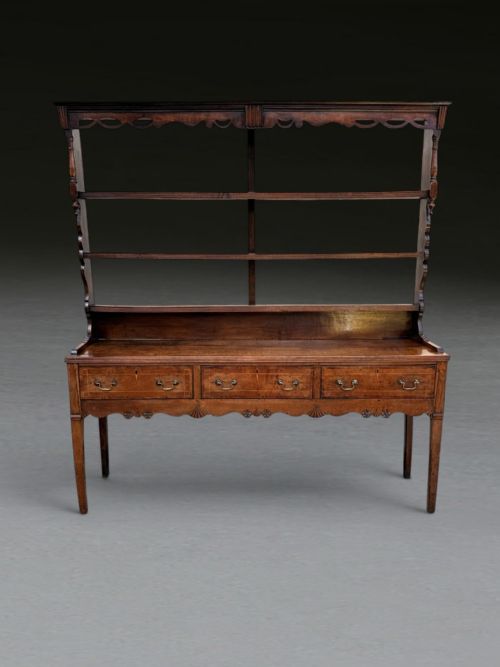
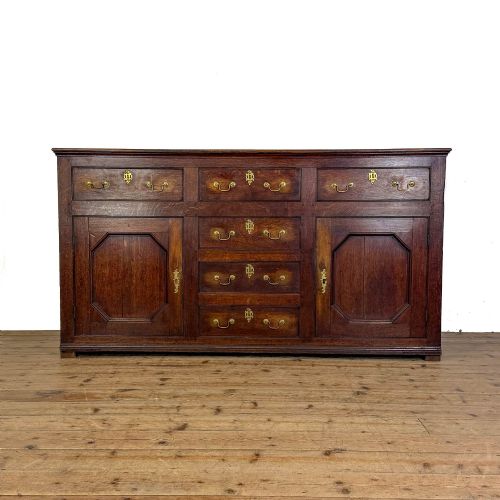
Country Oak Sideboard Table
These country oak sideboard table pieces combine sturdy utility with timeless regional character, offering practical surface space and deep historic charm for modern interiors.
Country Oak Sideboard Table
When searching for a country oak sideboard table, buyers encounter a robust category of low boards, serving tables, and dresser bases designed for domestic storage and food preparation. These items originate predominantly from the eighteenth and nineteenth centuries, alongside later revival pieces.
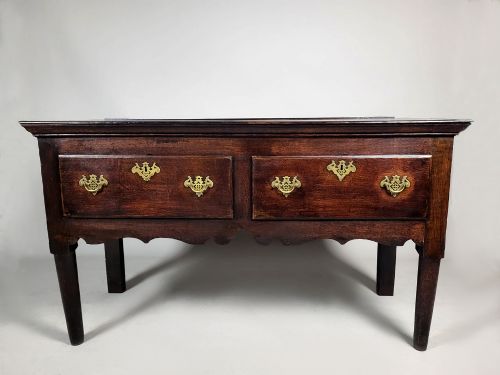
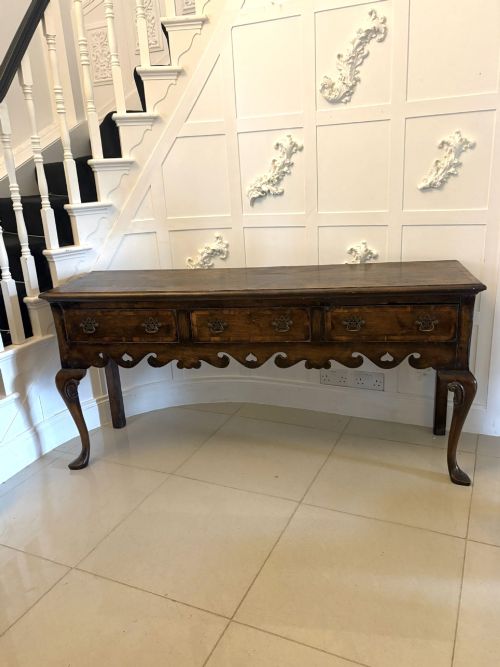
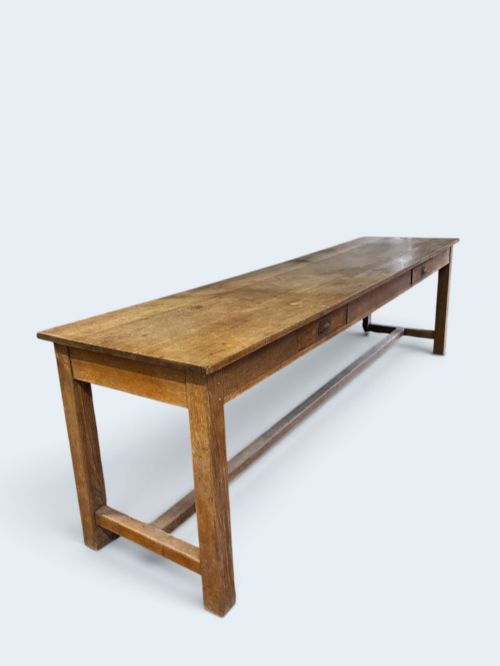
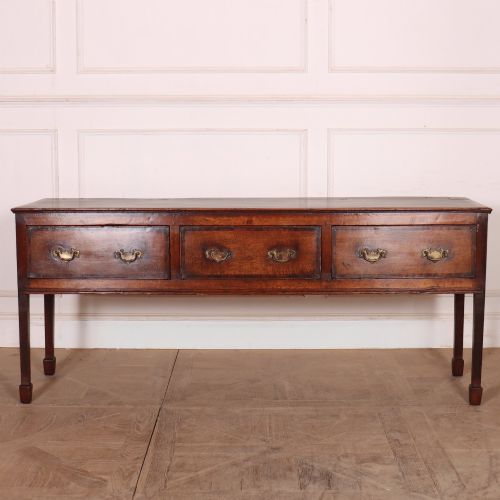
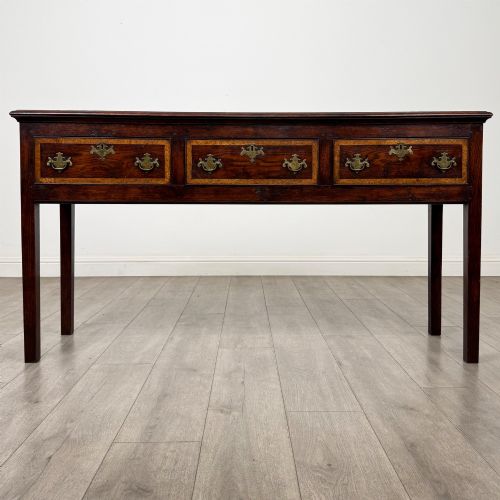
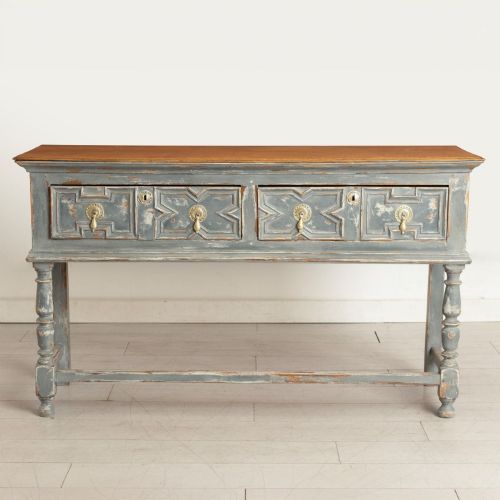
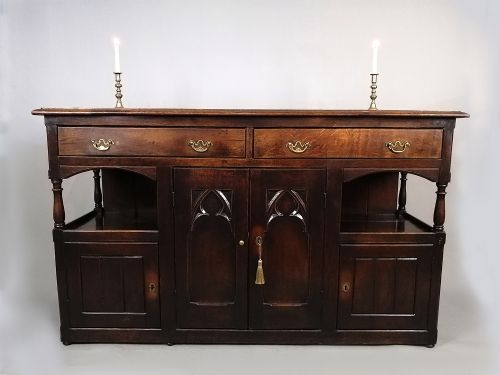
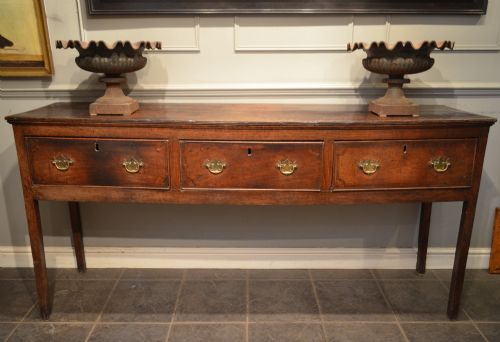
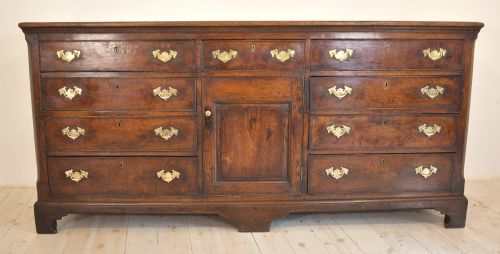
The version most commonly met on this page is the English or Welsh dresser base, often constructed with a lower potboard shelf and multiple drawers. Alongside these sit console tables and serving tables spanning Georgian, Jacobean Revival, and provincial styles.
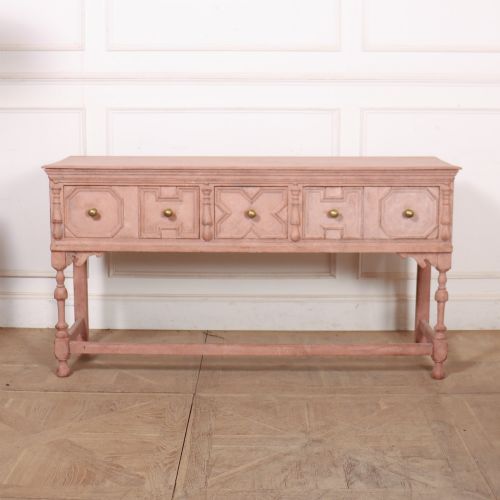
Regional variations appear frequently, including Lancashire and Scottish examples, as well as French provincial forms. Materials extend beyond standard timber to incorporate elm and painted finishes, offering distinct textures and regional aesthetics.
How they were made
Construction relies heavily on solid oak and elm, timber chosen for its durability and resistance to heavy domestic use. Master joiners utilised traditional framing methods, pin joints, and hand-cut drawer construction to build pieces intended to last generations.
Metalwork played a functional role, with brass handles, escutcheons, and iron hardware securing doors and drawers. Surface finishes varied from natural waxed wood to painted treatments and detailed carving.
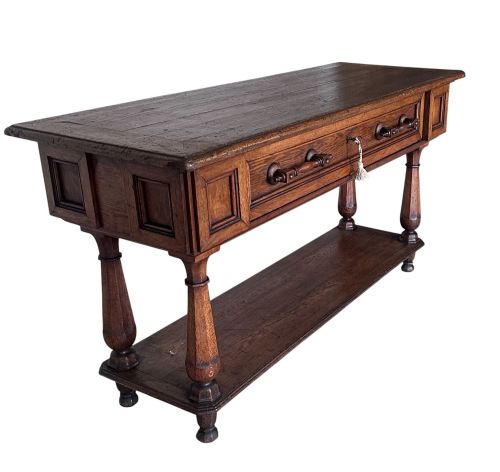
Potboard bases incorporated lower shelves supported by sturdy uprights, providing stable platforms for heavy crockery and household provisions. Selected pieces also integrated marble tops or intricate geometric inlay work.
Listings span multiple eras from the 17th century through to the 1920s, featuring oak, elm, brass, and painted finishes.
What varies in quality
Quality rests significantly in the integrity of the timber and the honesty of the construction, distinguishing workshop-made vernacular furniture from later decorative imitations. Original brasses and untouched surface patination elevate a piece above those with replaced hardware or stripped finishes.
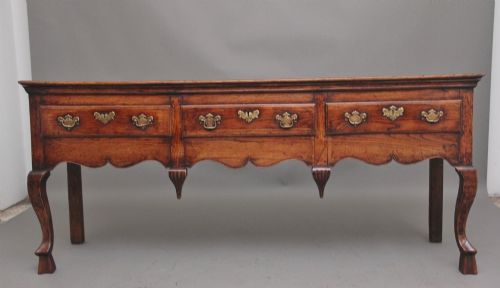
Proportion and regional detailing dictate desirability, with well-balanced cabriole legs, crisp drawer mouldings, and well-proportioned potboards showing superior craftsmanship. Later twentieth-century revival pieces exhibit different standardisation compared to eighteenth-century originals formed by hand.
The Country Oak Sideboard Table Glossary
- Potboard
- A lower open shelf built into the base of a dresser to store pots and pans. This platform sits just above the floor on sturdy stretchers.
- Cabriole leg
- A furniture leg that curves outward at the knee and tapers inward at the ankle, ending in a simple foot. This design appears frequently on eighteenth-century regional furniture.
- Vernacular
- Everyday furniture built by local craftsmen using regional materials rather than following formal metropolitan design books. These pieces reflect the specific traditions of areas such as Wales or Lancashire.
- Escutcheon
- A protective metal plate surrounding a keyhole on a drawer or door. Original brass examples add authenticity to period furniture.
Country Oak Sideboard Table: Frequently Asked Questions
How do I use a sideboard table today?
These tables adapt easily to modern dining rooms, kitchens, or hallways as serving stations and storage consoles. Their deep drawers accommodate tableware, linens, and everyday household items.
The surface provides ample space for lamps, books, or food displays during gatherings. Placing one against a dining room wall offers traditional charm combined with practical utility.
Are these tables solid oak?
Most listings feature solid oak construction, though secondary woods like elm appear in regional pieces. Cabinetmakers selected these dense hardwoods for their strength and longevity.
Individual pieces may display centuries of natural wear, adding depth to the grain and colour. Inspecting the drawer linings and interior boards reveals the traditional construction methods used.
How do I tell an 18th century piece apart?
Eighteenth-century examples display hand-cut joinery, pegged joints, and drawer construction utilising side-hung runners rather than modern metal tracks. The timber develops a deep, warm patina over centuries of polishing and handling.
Revival pieces from the early twentieth century often show more uniform machine-sawn timber and standardised fixings. Comparing hardware, drawer dovetails, and wear patterns clarifies the age of the item.