


Low Oak Accent Table
Low oak accent table describes compact wooden furnishings built for practical utility and decorative presence.
Low Oak Accent Table
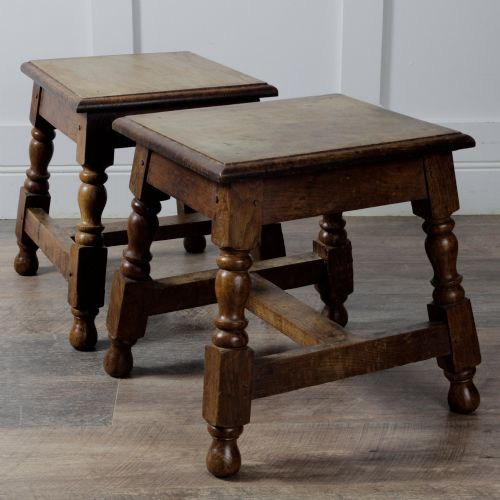
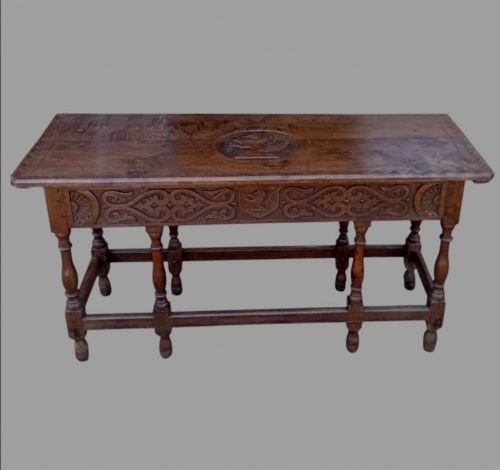
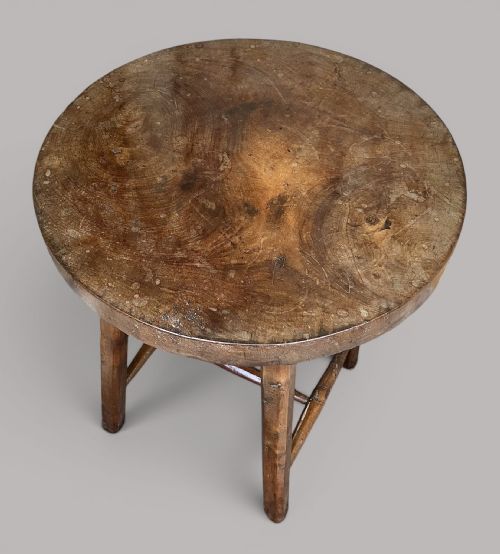
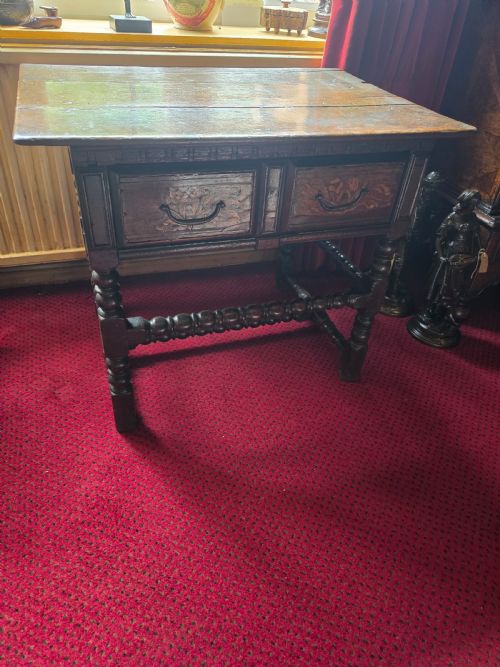
When you search for a low oak accent table, you encounter a selection of side tables, coffee tables, stools, and console tables spanning multiple centuries. These pieces encompass 17th-century joint stools, 18th-century side tables, and later 19th-century and 20th-century coffee tables.
The most common formats you will meet on this page are sturdy joint stools, low side tables, and compact coffee tables. They draw on styles including Jacobean Revival, Georgian Vernacular, Art Deco, and Gothic Revival, reflecting diverse domestic uses over time.
Materials and construction methods
These items rely principally on solid oak, frequently paired with secondary timbers such as elm and walnut, alongside occasional contrasting inlays and ebonised wood. Metal elements like iron and brass appear in structural joints or decorative details.
Joinery methods range from traditional pegged joints used in early joint stools to the clean lines of 1930s Art Deco coffee tables. Carving, turning, and surface finishing vary from rustic country execution to refined cabinet-making.
Listings feature oak alongside elm, walnut, brass, iron, and onyx, spanning the seventeenth to the twentieth century.
Factors of quality and execution
The distinction between standard examples and superior pieces rests on timber selection, structural integrity, and the crispness of any carved decoration. Early items with original surfaces and sound joinery hold a different character from later revival pieces.
Proportion and execution dictate distinction, whether in the turned legs of a Georgian vernacular table or the geometric simplicity of a blonde oak coffee table from the 1930s.
Heal And Son
The Low Oak Accent Table Glossary
- Joint stool
- A sturdy wooden stool constructed with mortise and tenon joints, often utilised as a low table or stand in early interiors.
- Low boy
- A small eighteenth-century dressing table or side table featuring drawers beneath a flat top.
- Ebonised wood
- Timber treated with a dark finish to imitate ebony, frequently utilised for contrast or decorative accenting.
- Gothic Revival
- A nineteenth-century design movement drawing inspiration from medieval architectural motifs such as pointed arches and tracery.
- Vernacular
- Everyday furniture made by local craftsmen using regional traditions rather than high-style metropolitan designs.
Low Oak Accent Table: Frequently Asked Questions
What is a low oak accent table used for?
These pieces serve as compact surfaces for lamps, books, or decorative objects within living spaces and hallways. Their modest scale allows them to fit easily beside seating or beneath windows.
Historically, many started life as stools or utilitarian stands before finding roles as low coffee or side tables in modern rooms.
How do I date an oak table?
Dating relies on observing construction methods, tool marks, timber characteristics, and stylistic details. Seventeenth-century examples display hand-split timber and pegged joints, while later pieces show machine-sawn components and different fastener types.
Comparing the proportions and decorative vocabulary to known period styles helps narrow down the decade of manufacture.
Can I use a joint stool as a table?
Yes, joint stools share a similar height and flat top surface with small side tables, making them suitable for holding drinks or small objects. Their sturdy frame ensures they handle daily use reliably.
Many period examples perform this dual function naturally in contemporary interiors.
How do I care for antique oak?
Maintain the timber by keeping it away from direct heat sources and sudden humidity changes that cause wood to split. Regular dusting with a dry cloth preserves the surface without buildup.
Applying a traditional wax polish occasionally helps nourish the grain and protect the finish.