
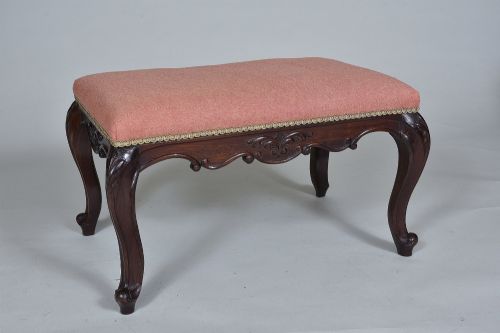
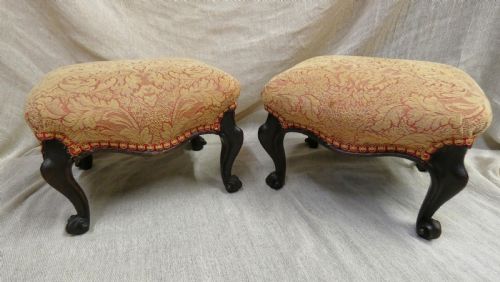
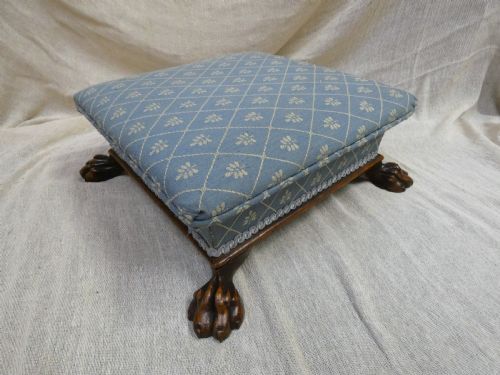


Low Mahogany Ottomans
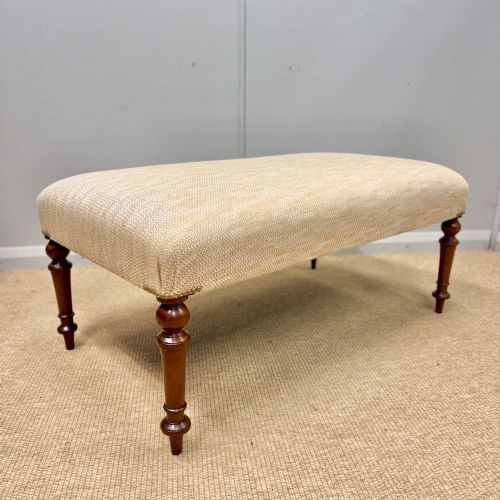
Low mahogany ottomans are solid timber seats upholstered in fabric, wool, or leather, built low for resting feet or casual seating.
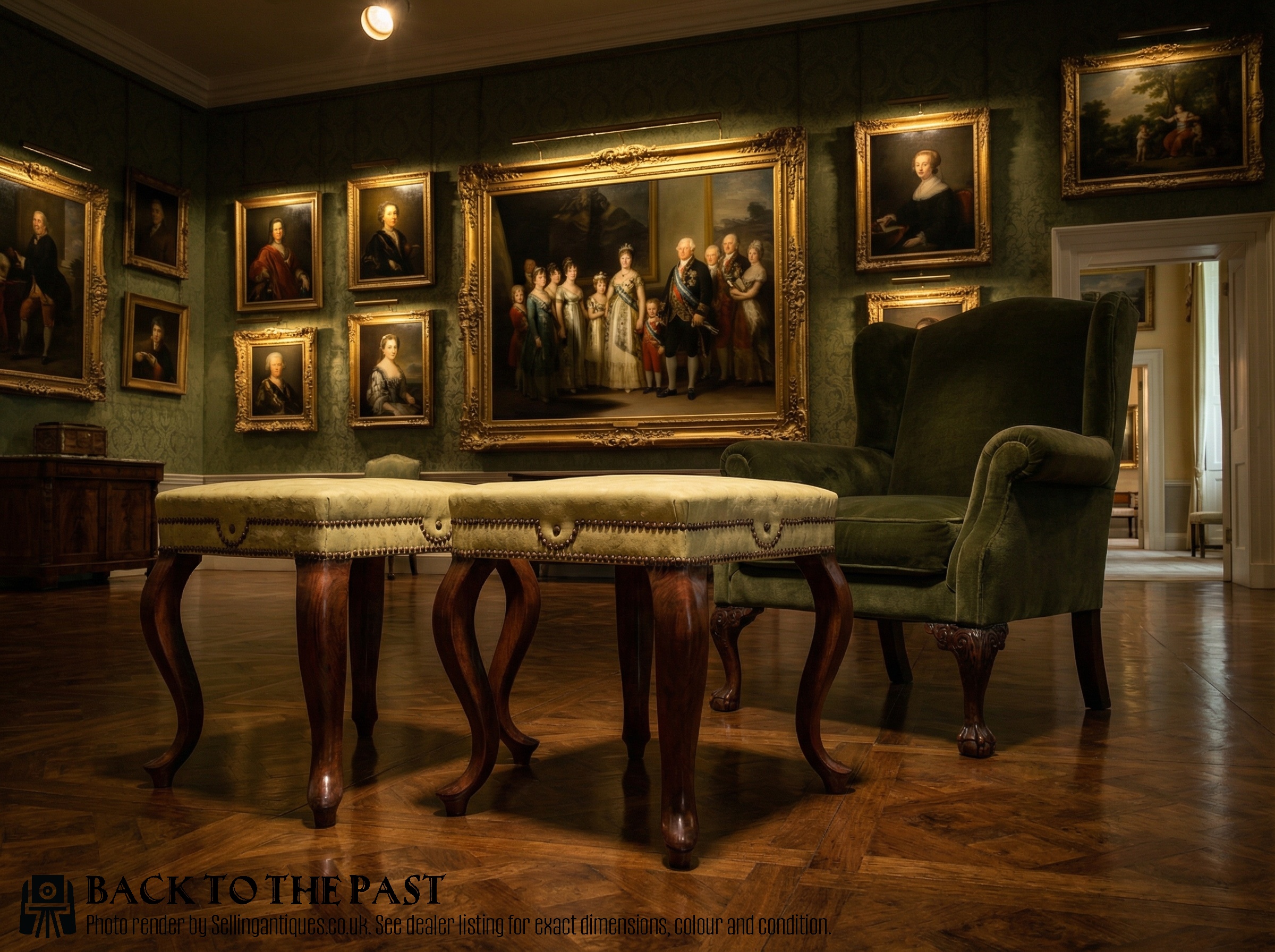
Low Mahogany Ottomans
Low mahogany ottomans and footstools are solid timber seating options designed for comfort and utility in reception rooms or dressing areas. When you search for low mahogany ottomans, you encounter pieces spanning the nineteenth century, the Victorian era, and early twentieth-century revivals.
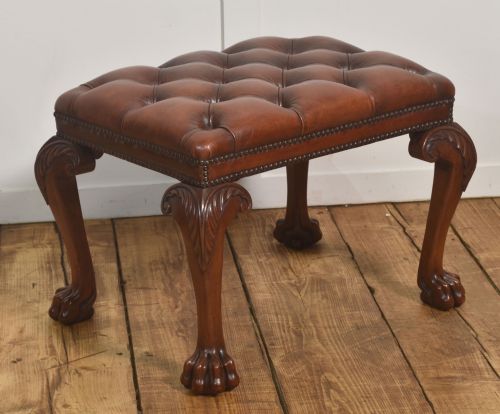
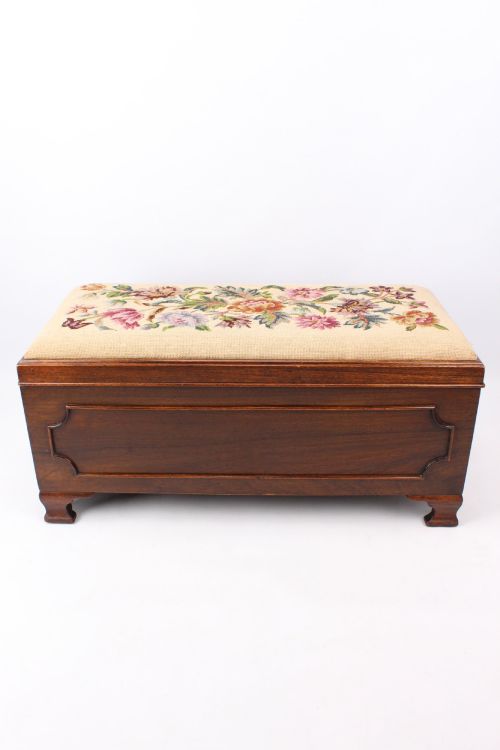
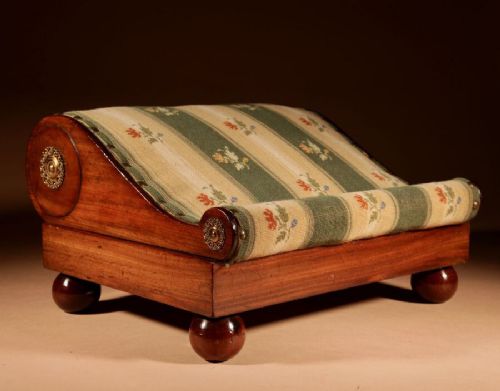
The selections on this page include styles such as Regency, Victorian Rococo Revival, and Queen Anne style. Most examples function as footstools, dressing stools, or large ottomans with upholstered seats.
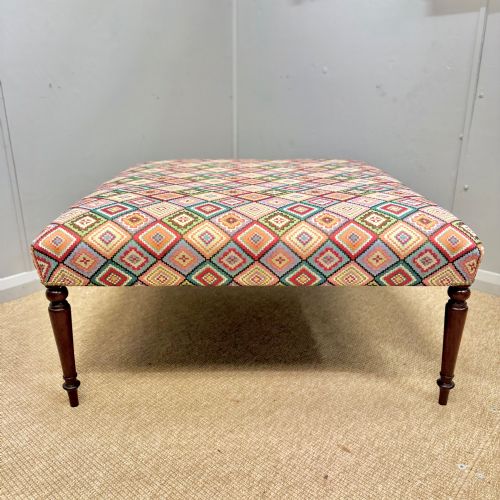
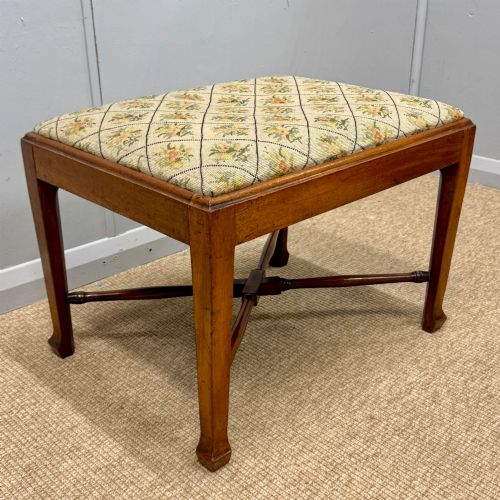
Makers and craftsmen constructed these items in various forms, from simple oblong frames to large country house ottomans and scroll-top footstools. You frequently find pieces supported on brass castors or featuring cross stretchers.
How they were made
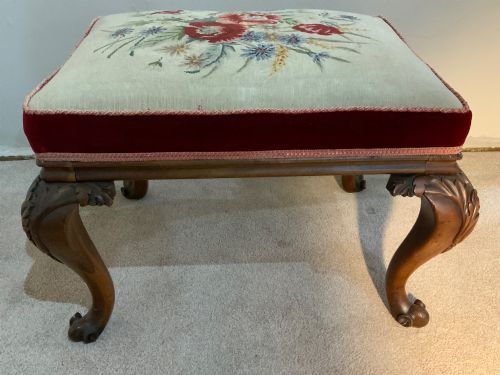
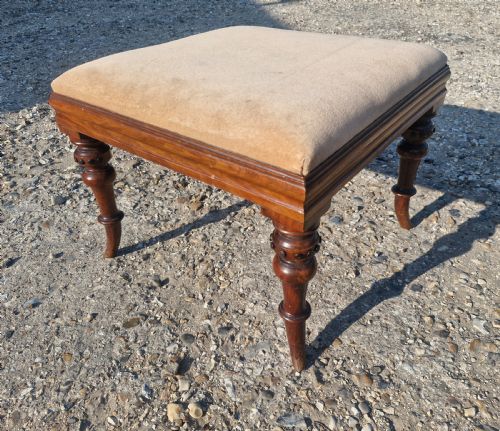
Carpenters utilised dense mahogany timber to build the structural frames, often incorporating carved details, cabriole legs, or geometric forms. Artisans then applied traditional joinery methods to ensure stability across stools and long footstools.
Upholstery techniques involved securing fabric, velvet, leather, wool, tapestry, or needlepoint over padding. Many nineteenth-century examples incorporated deep buttoning or original needlework, whilst others utilised caned tops or chenille upholstery.
Materials recorded on this page include mahogany, brass, fabric, wool, velvet, textile, tapestry, and leather.
What varies in quality
The standard of a low mahogany ottoman depends on the execution of the timber frame and the refinement of any carved ornaments. Finer examples display carefully proportioned cabriole legs, scroll tops, or cross stretchers rather than plain structural supports.
The grade of the upholstery materials also dictates the overall distinction of the piece. Original needlepoint, antique tapestry, or quality leather distinguishes higher-tier items from standard utility stools.
Howard and Sons·Mathew Gregson
The Low Mahogany Ottomans Glossary
- Mahogany
- A durable tropical hardwood with a reddish-brown tone utilised extensively for furniture framing throughout the nineteenth century.
- Ottoman
- A low upholstered seat or footstool lacking a back or arms, often built on a timber frame.
- Cabriole leg
- A furniture leg that curves outward and then tapers inward, commonly found on period seating.
- Needlepoint
- Hand-stitched textile work utilised for decorative seat coverings and upholstery on historical stools.
- Castor
- A small wheel fitted to the base of a furniture leg to assist with movement across flooring.
Low Mahogany Ottomans: Frequently Asked Questions
What is a low mahogany ottoman?
A low mahogany ottoman is a compact, timber-framed seat designed for resting feet or sitting at a dressing table. These pieces combine a solid mahogany base with upholstered padding.
They appear in various historic styles, from simple nineteenth-century footstools to decorative Victorian buttoned designs. Many sit low to the ground and occasionally feature brass castors.
How do I date a mahogany footstool?
Dating a footstool requires examining the timber characteristics, construction methods, and the upholstery style. Pieces from the Regency period often feature specific scroll tops or carved elements.
Victorian examples frequently display deep buttoning, rococo revival details, or turned mahogany legs. Later twentieth-century revivals often adopt earlier Queen Anne or Georgian proportions.
What fabrics were used on antique ottomans?
Historical ottomans featured a range of durable textiles suited for frequent daily use. Needlepoint, tapestry, and wool were common choices for decorative seat tops.
More formal or luxurious pieces utilised velvet, chenille, or leather. Many surviving examples retain their original needlework or later replacement upholstery.
Where should I place an ottoman?
These versatile pieces fit comfortably in living rooms as companion seating to armchairs and sofas. Their low profile makes them ideal for placing in front of a fireplace.
Smaller variants also serve well in bedrooms as dressing table stools. Larger country house models can function as central coffee tables or spacious footrests.