
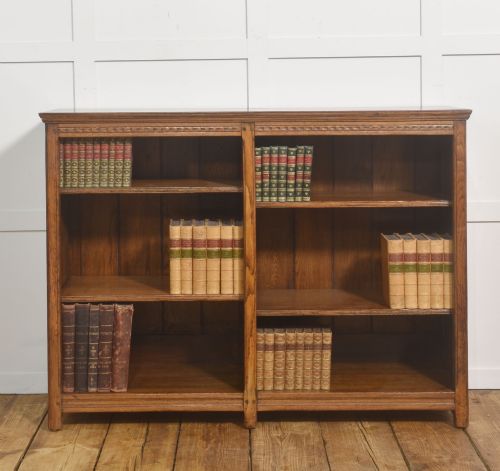
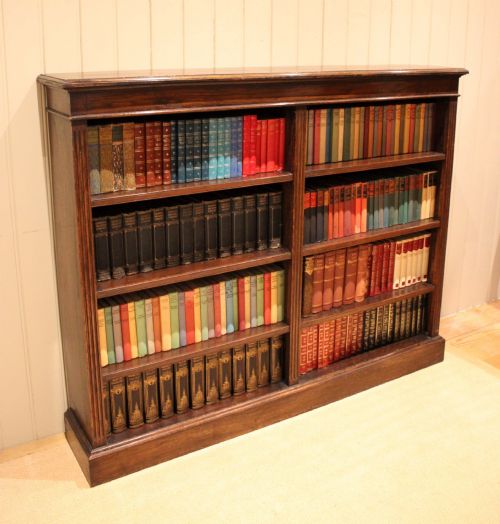
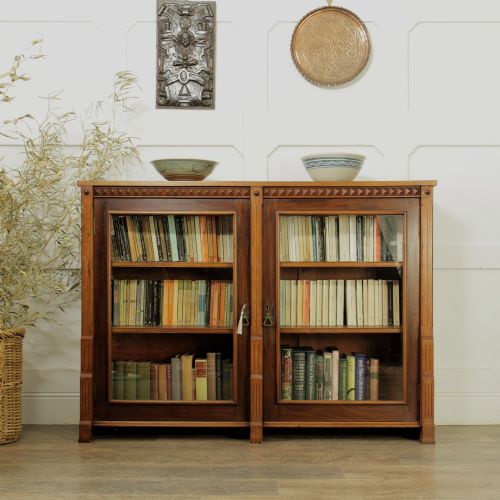
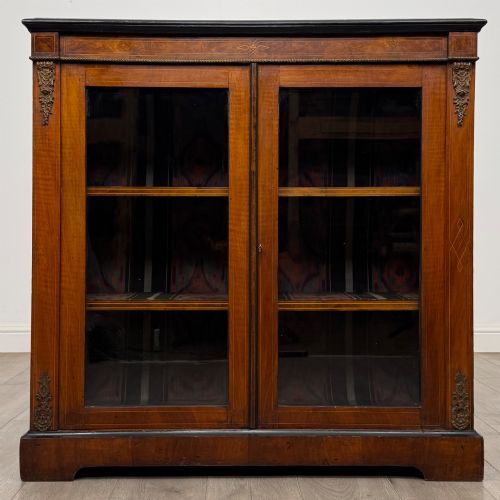
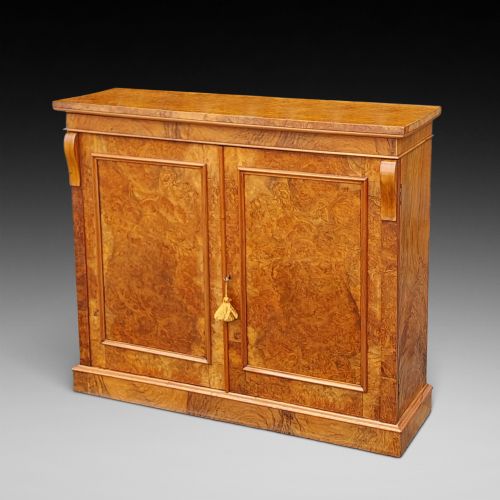
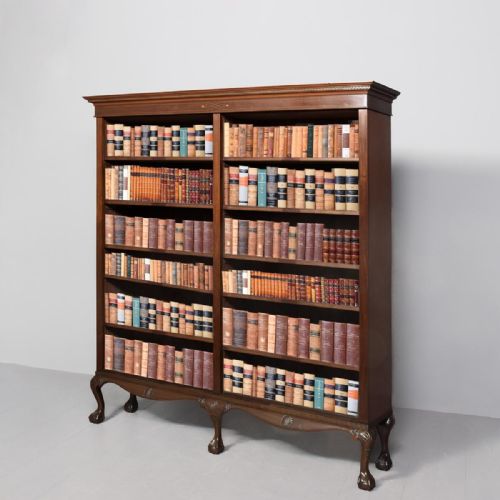

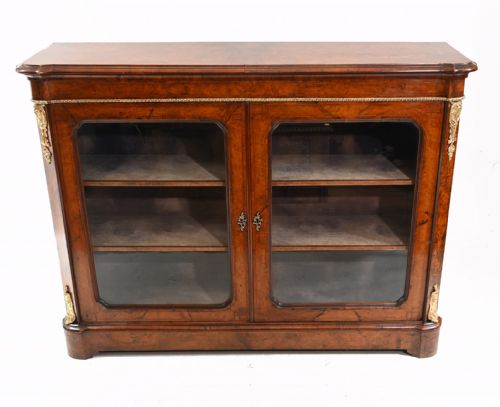


Low Double Bookcase
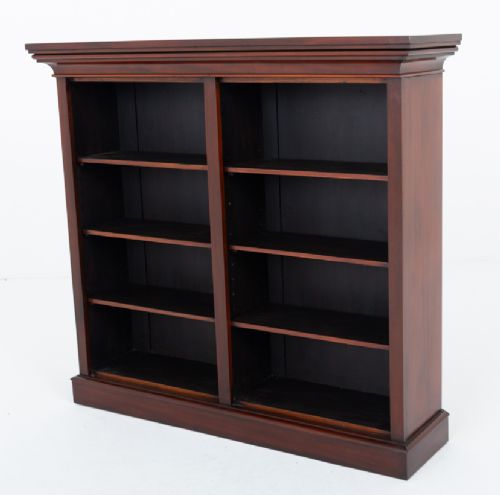
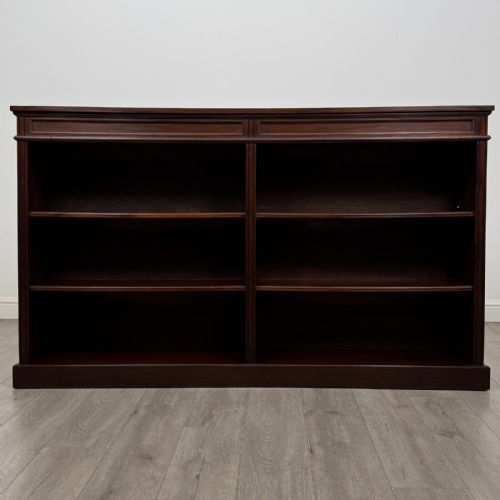
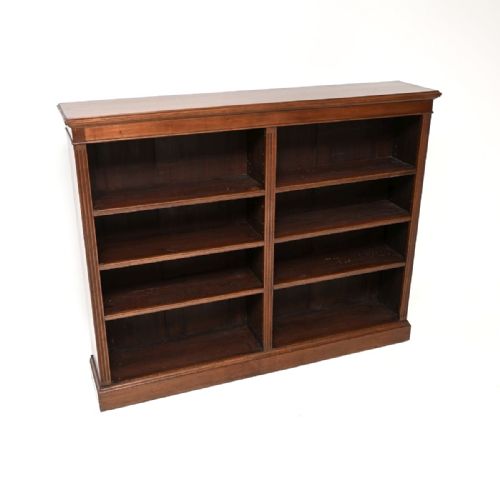
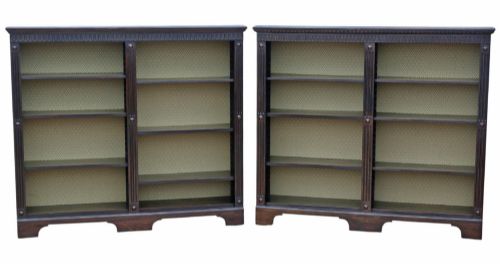
These low double bookcase designs offer accessible shelving and display space, bringing proportion and practicality to period rooms.
Low Double Bookcase
A low double bookcase provides practical shelving at a manageable height, typically sitting below eye level to keep rooms feeling open and uncluttered. These pieces bridge the gap between large library furniture and compact display cabinets, offering double the width of single-bay versions.
The selections here span the nineteenth century and the Edwardian era, featuring Victorian and Edwardian examples alongside pieces executed in Regency, Georgian, and French provincial styles. Many incorporate adjustable shelves, while others combine open shelving with enclosed storage behind glazed or solid doors.
Makers utilised various formats, ranging from open-fronted libraries to pier cabinets and double-sided freestanding pieces. Walnut, mahogany, and oak dominate the selection, often finished with detailed carvings or contrasting crossbanding.
Materials and construction methods
Cabinet makers relied on timbers such as mahogany, oak, and walnut, frequently selecting burr walnut and figured grains for visible surfaces. These solid foundations and veneered panels were joined using traditional methods to ensure stability across the wide double format.
Decorative enhancements include brass hardware, ormolu mounts, and fine inlay work that accentuates the architectural lines of the cabinet. Glazed doors feature individual panes held in wooden framing, while open versions utilise sturdy side panels to support heavy rows of books.
Listings feature woods including rosewood, satinwood, and ormolu mounts alongside traditional mahogany and oak.
Assessing quality and execution
Superior examples demonstrate meticulous timber selection, using figured veneers and matching grains across the double width rather than mismatched planks. The crispness of carved details and the integration of fine inlay work indicate the maker's skill level.
Functional hardware and smooth operation distinguish better pieces, particularly where adjustable shelving mechanisms or door hinges are concerned. Robust carcase construction ensures the weight of a full library is supported without sagging over time.
Gillows·Waring and Gillows
The Low Double Bookcase Glossary
- Adjustable shelves
- Shelving that can be moved to different heights using wooden ratchets, metal studs, or traditional tracks. This system allows the interior configuration to adapt to volumes of varying sizes.
- Pier cabinet
- A low cabinet designed to fit against the narrow wall space between windows. These pieces often feature glazed doors and decorative mounts.
- Burr walnut
- Timber taken from the warted growths of walnut trees, yielding intricate, swirling grain patterns. It was sliced into thin veneers for high-status furniture fronts.
- Crossbanding
- A decorative border of veneer laid around the perimeter of a panel, with the grain running perpendicular to the central field. It frames the primary timber visually.
Low Double Bookcase: Frequently Asked Questions
How do I use a low double bookcase?
These cabinets suit living rooms and studies where full-height shelving would overwhelm the space. The top surface provides an ideal platform for lamps, clocks, or decorative objects.
Lower shelving keeps frequently read volumes within easy reach. Glass-fronted variants protect delicate bindings from dust while keeping them visible.
Are the shelves usually adjustable?
Many period examples feature adjustable shelving systems, allowing you to alter the interior layout for different book sizes. Some earlier or simpler models retain fixed wooden shelves.
Checking the interior mechanisms reveals whether the adjustability is original to the piece. This versatility makes them practical for modern libraries.
What is the difference between open and glazed?
Open versions provide immediate access to books and present a lighter visual weight in smaller rooms. They suit everyday reading collections and decorative displays.
Glazed doors protect valuable or leather-bound volumes from environmental dust and sunlight. Solid lower doors, where present, hide clutter out of sight.
How do I distinguish Victorian from Edwardian?
Victorian pieces often employ heavier timbers like dark mahogany and figured walnut, frequently featuring rich carving or polished finishes. Proportions tend to be substantial and formal.
Edwardian examples often embrace lighter oak or walnut, reflecting a shift towards brighter interiors. Their detailing tends to be more restrained and linear.