


Louis XVI Style Shelves
Louis xvi style shelves bring classical French proportion and gilded detail to an interior, offering display space with architectural refinement.
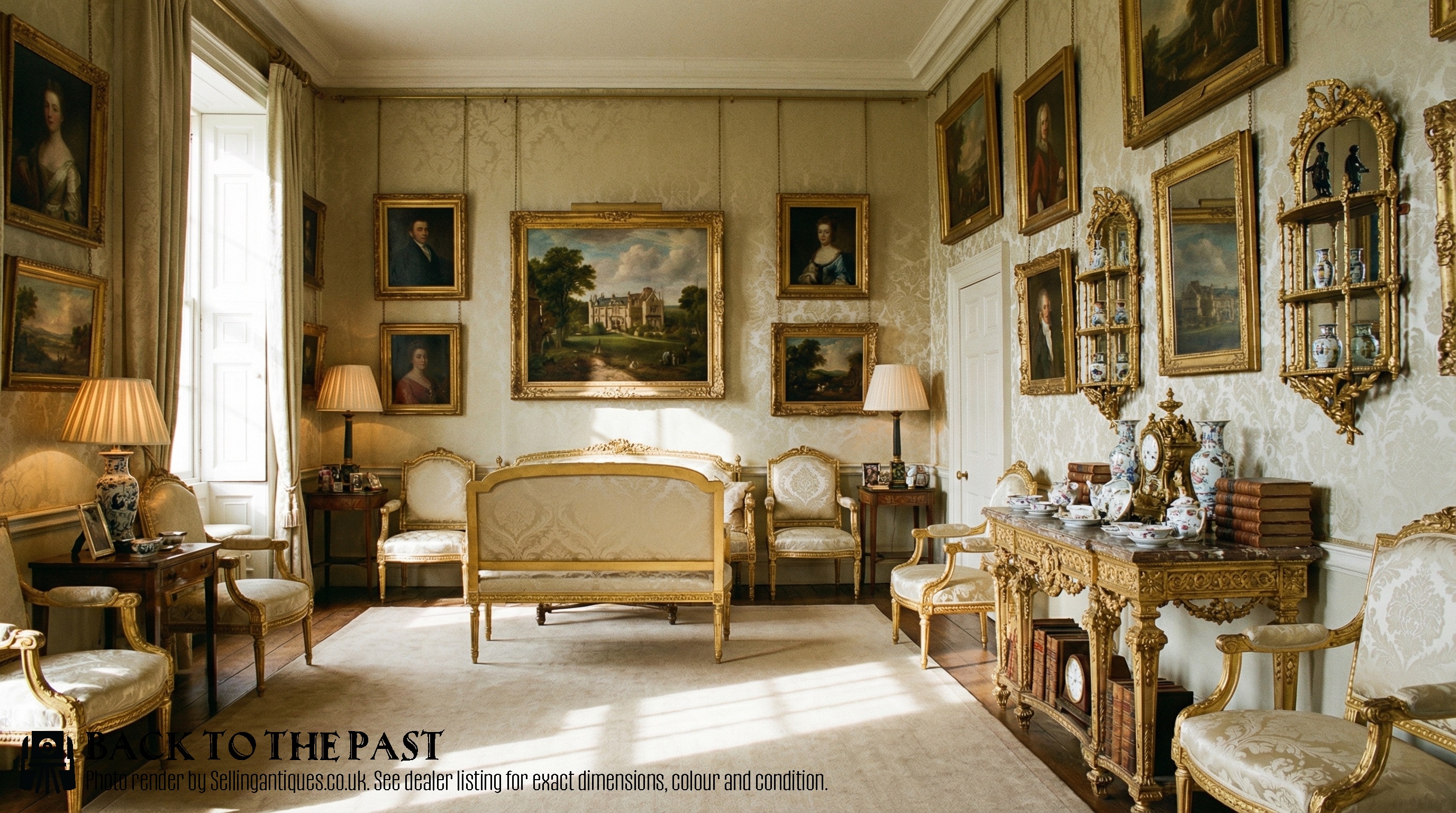
Louis XVI Style Shelves
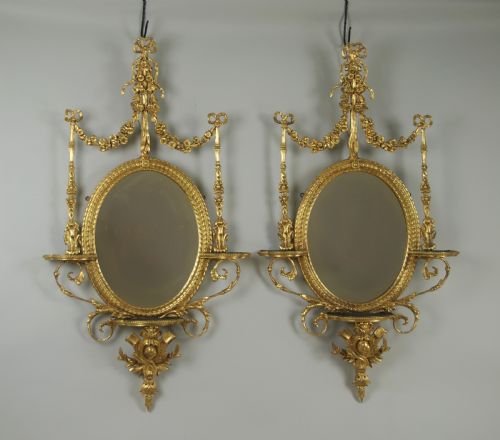
When seeking louis xvi style shelves, buyers encounter a selection dominated by nineteenth-century wall mirrors with display brackets and mirrored wall display shelves from the Victorian era. These pieces appropriate the neoclassical vocabulary of eighteenth-century France, translating symmetrical restraint into nineteenth-century domestic interiors.
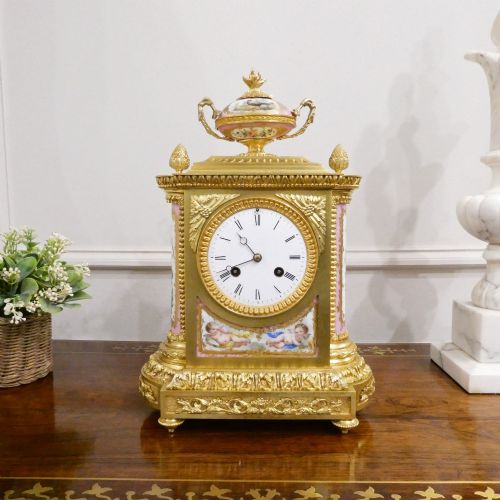
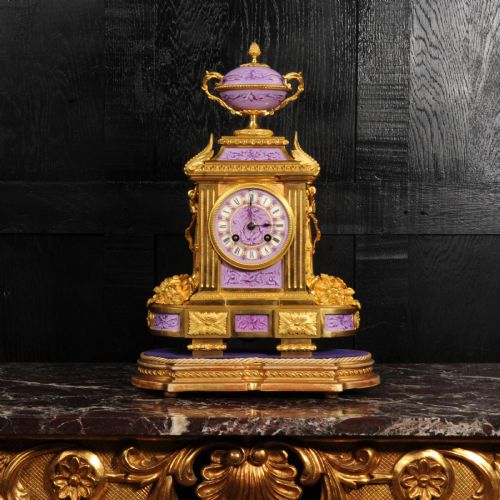
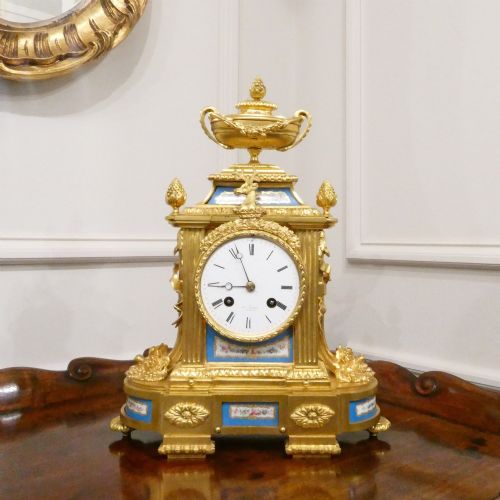
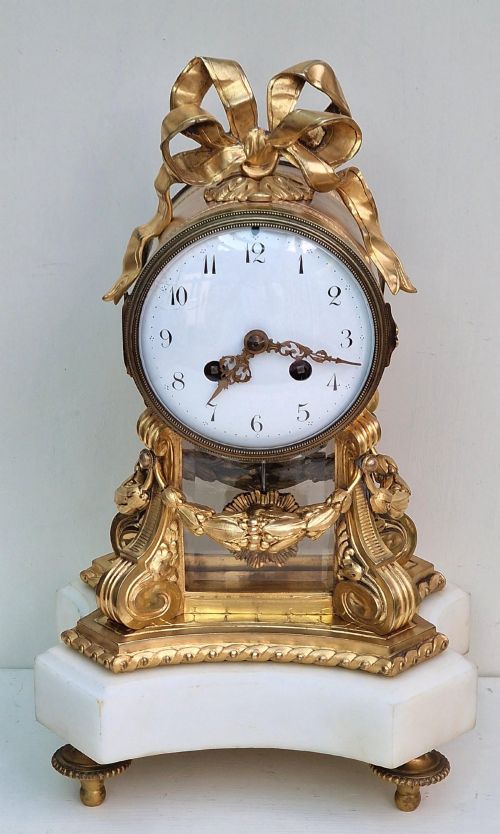
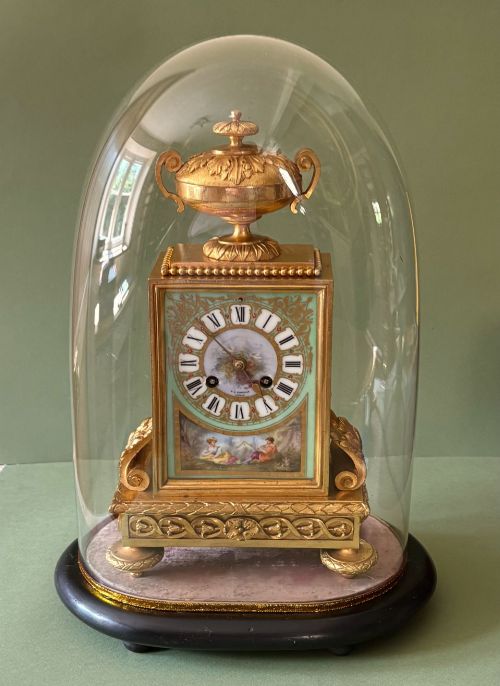
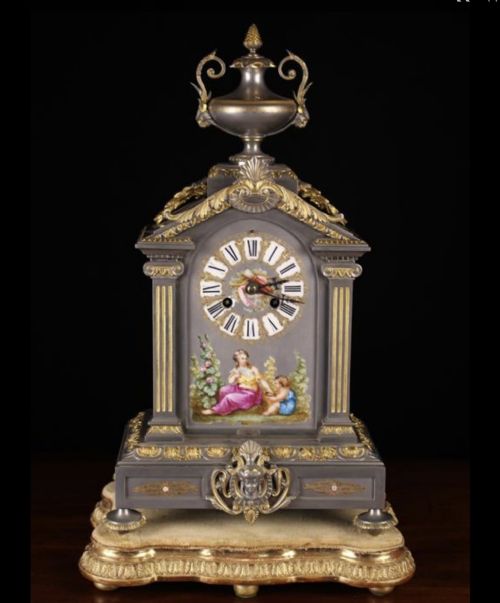
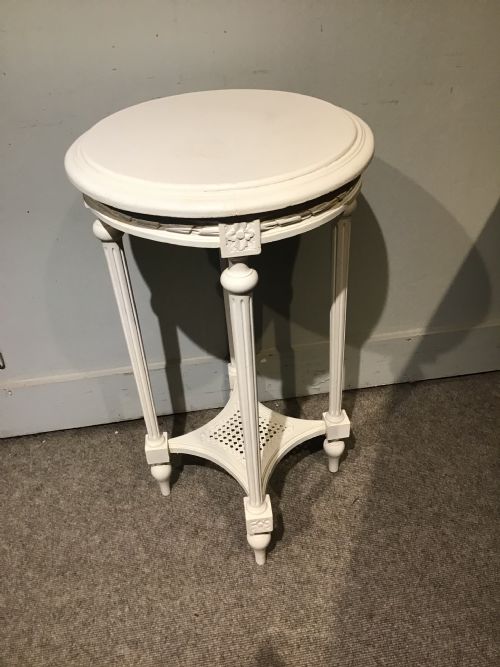
The material evidence on this page also encompasses side cabinets, bedside tables, and tables in rosewood, satinwood, and kingwood marquetry, demonstrating how the neoclassical taste permeated domestic furniture beyond simple hanging brackets. Mantel clocks in ormolu and porcelain frequently accompany these shelf forms within the recorded listings.
Originating primarily from nineteenth-century French workshops and English Victorian adaptations, these items reflect the revivalist enthusiasm for Louis XVI aesthetics during the 1860s through to the early twentieth century. Buyers select them to introduce classical symmetry and display surfaces into period or contemporary rooms.
Materials and construction methods
The construction relies on timber carcases veneered in exotic woods such as rosewood, satinwood, and kingwood, often enhanced by marquetry. Metal components are cast in bronze or brass and subsequently fire-gilded to produce ormolu mounts that define the neoclassical silhouette.
Surface ornamentation integrates porcelain plaques, frequently associated with Sèvres, alongside carved and gilded wood or white marble. These elements demonstrate nineteenth-century aptitude for combining metalwork, ceramics, and cabinetmaking within a single decorative object.
Several clocks on this page keep company with a pair of cast bronze doves, silently reminding every viewer of nineteenth-century romantic sentiment.
Standards of execution and design
Quality separates through the crispness of the bronze or ormolu chasing and the precision of the marquetry work in woods like kingwood and satinwood. Finer examples display deeper hand-finishing on metal mounts and more complex integration of porcelain plaques.
The structural integrity of the wall brackets and the depth of the gilding determine the visual permanence of the piece. Superior items maintain sharper architectural lines and more coherent adherence to Louis XVI proportions.
Jean-Baptiste Delettrez·Achille Brocot·Henry Marc·Japy Freres·Japy Fils
The Louis XVI Style Shelves Glossary
- Ormolu
- Gilded bronze, usually mercury-gilded, applied to furniture and clock mounts. This technique creates a rich golden finish characteristic of French decorative arts.
- Marquetry
- Inlaid patterns of wood veneers applied to a carcase. Craftsmen utilise contrasting timbers like rosewood and satinwood to form geometric or floral designs.
- Sèvres
- Porcelain produced by the royal French manufactory. These painted ceramic panels frequently decorate the faces and bodies of nineteenth-century clocks and cabinets.
- Giltwood
- Timber that has been coated with fine gold leaf or powder. It provides reflective brilliance on mirrors, brackets, and frames.
Louis XVI Style Shelves: Frequently Asked Questions
What defines Louis XVI style shelves?
Louis XVI style shelves incorporate neoclassical elements such as straight lines, symmetry, and classical motifs derived from eighteenth-century French design. They often appear as mirrored wall display brackets from the nineteenth century.
These pieces use ormolu mounts, giltwood, and porcelain elements to create a decorative surface for small objects. Their design contrasts with the flowing curves of earlier Rococo work by favouring architectural restraint.
Where were these pieces made?
The items originate primarily from nineteenth-century French workshops, alongside Victorian adaptations produced in Britain. Parisian clockmakers and cabinetmakers drove much of this revival taste.
French makers utilised regional hardwoods and specialised bronze-foundry techniques to supply an international market. This cross-channel aesthetic exchange defined upper-middle-class interiors of the Victorian period.
How do I date these items?
Dating relies on material construction, mechanical components where applicable, and stylistic markers recorded between the 1850s and the early twentieth century. Victorian manifestations often blend French taste with British domestic utility.
Makers' stamps on clock movements or cabinet carcases provide precise chronological indicators. Stylistic shifts from heavy ormolu casting to lighter Edwardian interpretations further clarify the timeline.
How should I hang wall shelves safely?
Wall display shelves and mirrored brackets require secure fixings suited to the weight of the timber and metal mounts. Professional installation ensures the structural integrity of the wall supports.
Given the presence of delicate ormolu and porcelain elements, placement should avoid areas prone to heavy vibration or moisture. Distributing weight evenly across the display surfaces protects both the antique and the wall.