




Gilt Mirrored Display Shelves
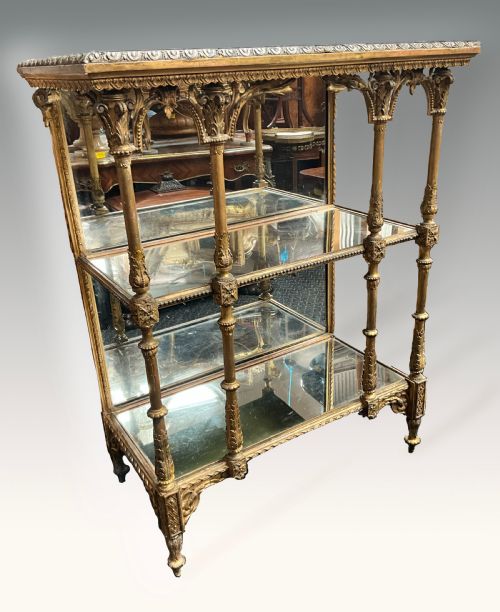
Gilt mirrored display shelves bring reflective depth and tiered display space to a wall, combining carved woodwork with functional glass surfaces.
Gilt Mirrored Display Shelves
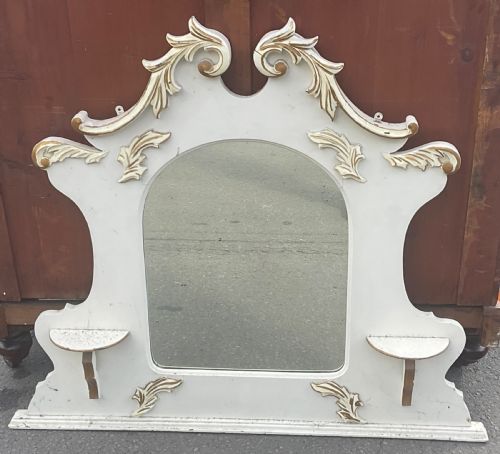
When you search for gilt mirrored display shelves, you encounter wall-mounted brackets, étagères, and overmantel mirrors fitted with ledges from the Victorian and Edwardian eras. These pieces combine reflective glass backplates with small wooden platforms designed to hold ornaments or small objects.
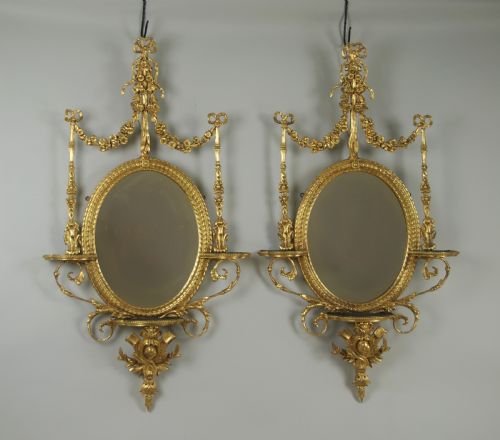
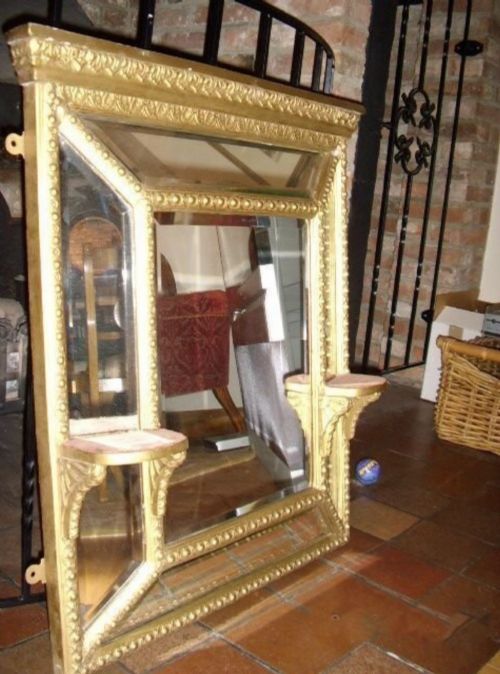
The Victorian examples on this page frequently appear as giltwood brackets or ornamented wall shelves, often originating from the 1860s through to the 1880s. Alongside these, French Rococo Revival influences emerge in painted and gilt wall étagères dating towards 1920.
Makers integrated mirrors directly behind the display surfaces to catch the light and multiply the visual impact of whatever sits upon the shelves. This arrangement turns flat wall space into a layered stage for decorative objects.
How they were made
Carvers shaped wooden frames from walnut, burr walnut, and pine before applying layers of gesso to build up intricate relief ornaments. Artisans then finished these surfaces with gold leaf or parcel gilt highlights to achieve the characteristic metallic sheen.
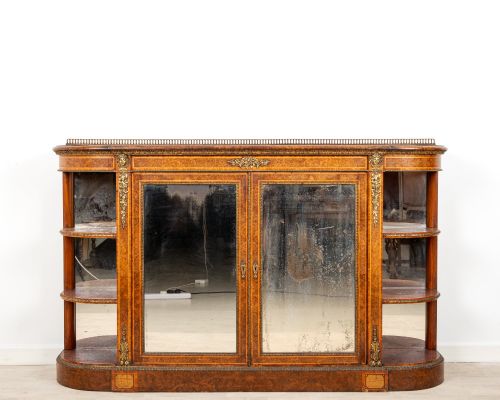
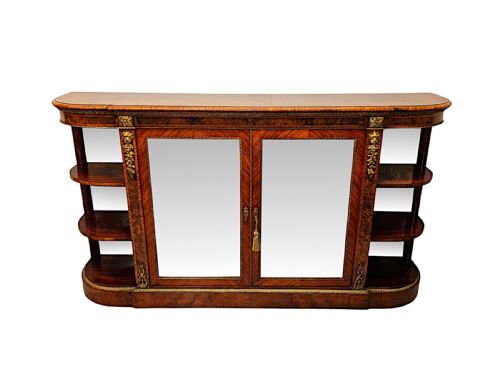
Mirrored glass panels, sometimes bevel-cut, were fitted securely into the back frames to provide reflection behind the display brackets. Ormolu mounts and porcelain plaques occasionally supplemented the woodwork, particularly on larger credenza forms and cabinet hybrids.
These shelves were built so your tiny porcelain knick-knacks could admire themselves in the mirror all day long.
What varies in quality
The depth of carving and the crispness of the gesso work separate standard production from finer craftsmanship. Pieces featuring hand-carved giltwood and substantial gold leaf display a tactile richness that moulded compositions lack.
The integration of the mirror plate within the display structure also defines the standard of the piece. High-quality examples use heavy bevel-cut glass securely housed within tight joinery, maintaining structural balance despite the protruding weight of the display shelves.
Gillows·Town and Emanuel
The Gilt Mirrored Display Shelves Glossary
- Giltwood
- Timber coated with gold leaf or gold paint. This finish creates a luminous metallic surface that catches interior candlelight or daylight.
- Gesso
- A plaster mixture applied to wood frames to create a smooth surface for carving and gilding. It allows for crisp relief ornamentation.
- Ormolu
- Gilded bronze mounts applied to furniture for decoration. This technique adds metallic contrast to wood and mirrored surfaces.
- Étagère
- A piece of furniture consisting of open shelves for displaying small objects. These tiered structures often incorporate mirrors on the back panel.
- Credenza
- A cabinet or sideboard form, sometimes adapted with mirrored doors or display shelves. 19th-century examples frequently feature burr walnut veneers and ormolu mounts.
Gilt Mirrored Display Shelves: Frequently Asked Questions
How do I hang heavy mirrored shelves?
Wall-mounted display shelves require secure fixings into wall studs or appropriate masonry anchors to support the combined weight of timber, glass, and displayed items.
Because mirrors add considerable heft, professional installation ensures the hanging brackets take the load safely without pulling away from the plaster.
What objects go on display shelves?
Small porcelain figurines, miniature framed portraits, and decorative glassware sit comfortably on these shallow ledges. The mirrored backing reflects the backs of these objects, creating a sense of completeness.
Keep the items lightweight to preserve the balance and safety of antique brackets.
How do I clean antique giltwood?
Dust giltwood surfaces gently with a dry, soft artist's brush or a feather duster. Moisture and abrasive cloths damage delicate gold leaf and gesso.
Avoid chemical cleaning sprays entirely, as they strip the historic finish from the wood.
How do I date a Victorian mirror?
Examine the construction of the wooden frame, the thickness of the glass, and the backboards. 19th-century pieces often show hand-beveled edges and older joinery techniques.
Stylistic cues like Rococo Revival curves or Aesthetic Movement ebonising also point directly to specific decades within the Victorian era.