
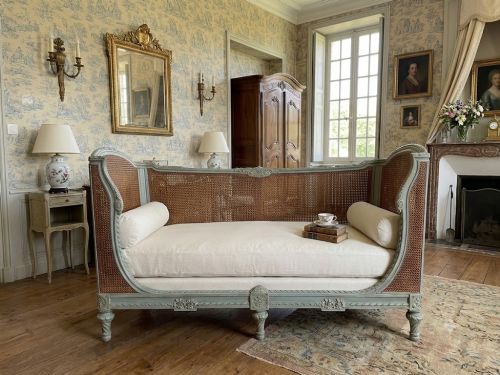


Louis XVI Style Couch
A louis xvi style couch brings neoclassical restraint and French elegance into a room through clean lines and carved timber frames.
Louis XVI Style Couch
A louis xvi style couch typically presents as a sofa, settee, daybed, or chaise longue originating from various periods including the eighteenth and nineteenth centuries, alongside early twentieth century revivals. Buyers seeking these seating options encounter pieces shaped by French taste, Swedish Gustavian design, and Regency aesthetics.
The selections available range from large giltwood sofas and painted wooden frames to pieces featuring cane panelling and upholstered linen or fabric surfaces. Many examples date from the nineteenth century or around nineteen hundred, capturing the enduring appeal of neoclassical forms.
The form functions as both a decorative centrepiece and a practical seat, appearing in formats from large three seater settees to intimate day beds. Each piece demonstrates the enduring influence of French chateau style and Louis XVI revival movements on domestic interiors.
Materials and construction methods
Frames are constructed from solid timbers such as beech and other woods, providing structural integrity for large sofas and daybeds. Artisans shaped these wooden skeletons to create the characteristic straight lines and architectural details associated with the style.
Surface treatments rely heavily on giltwood, painted finishes, and gilt decoration to enhance the visual weight of the timber. Cane panels are also utilised in specific day bed designs, offering lighter textural contrast alongside upholstered fabric and linen seating.
The selection includes various forms such as daybeds, chaise longues, and large three seater settees created in French and Swedish styles.
Assessing quality in period seating
Quality reveals itself in the crispness of the wood carving and the proportional balance of the frame, where skilled handwork distinguishes finer pieces from simpler workshop output. The application of giltwood or painted finishes demonstrates the maker's attention to surface preparation and layering.
The choice of primary materials, from robust beech timbers to delicate cane work and substantial gilt frames, dictates the physical presence and durability of the sofa. Integration of upholstery materials like linen and fabric further reflects the original commission's tier of craftsmanship.
The Louis XVI Style Couch Glossary
- Giltwood
- Wood that has been covered with a thin layer of gold leaf or gilt decoration. This finish creates a luminous surface that catches the light in formal reception rooms.
- Canapé
- The French term for a sofa or settee designed for multiple occupants. These pieces often feature exposed wooden frames with upholstered seats and backs.
- Daybed
- An elongated piece of furniture intended for reclining and resting during the day. Examples often combine seating support with architectural head or foot boards.
- Neoclassical
- A style inspired by the classical art and architecture of ancient Greece and Rome. It prioritises symmetry, straight lines, and classical motifs over baroque curves.
Louis XVI Style Couch: Frequently Asked Questions
Where should I place a louis xvi style couch?
These pieces suit formal living rooms, reception hallways, or spacious bedrooms where their architectural frames can be viewed from multiple angles. They work effectively as focal seating arrangements alongside complementary period furniture.
Because many examples feature finished backs and decorative carvings, they also function well when positioned away from walls in open plan spaces.
How do I care for giltwood and painted frames?
Giltwood and painted wooden surfaces require gentle dusting with a soft, dry cloth to prevent the accumulation of abrasive particles. Avoid liquid cleaners and harsh chemical polishes that can lift or dull the historic surface finish.
Keep the furniture away from direct sunlight and strong heat sources to protect both the wooden structure and any applied surface gilding.
What is the difference between a settee and a daybed?
A settee is designed primarily for upright seating, accommodating multiple people on an upholstered bench format with a defined backrest and arms. These pieces function as conventional sofas in domestic settings.
A daybed incorporates an elongated platform for reclining, often featuring raised ends or asymmetric back supports. They bridge the purpose of a bed and a lounge seat.
How do I distinguish between an 18th century piece and a later revival?
Distinguishing periods involves examining the tool marks, timber ageing, and construction joins hidden beneath the upholstery or within the frame. Eighteenth century examples carry the specific wear patterns and hand tool signatures of period workshops.
Nineteenth and twentieth century revivals often utilise machine assistance or standardised joinery techniques while closely copying the original neoclassical proportions and decorative vocabulary.