





Louis XVI Style Bookcase
A louis xvi style bookcase brings neoclassical elegance and disciplined symmetry to a room, offering refined storage for a serious collection.
Louis XVI Style Bookcase
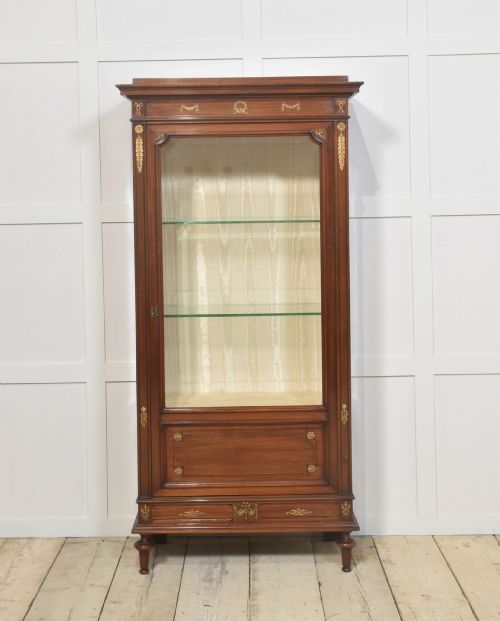
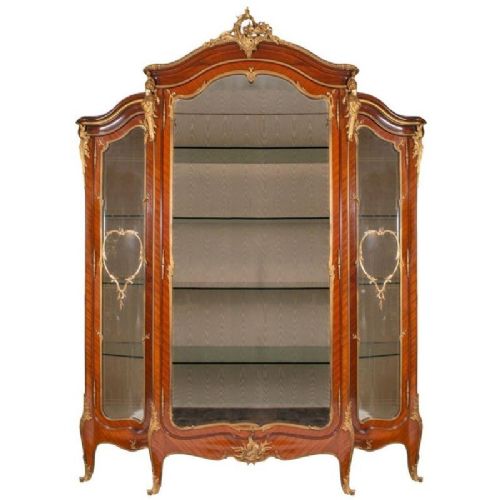
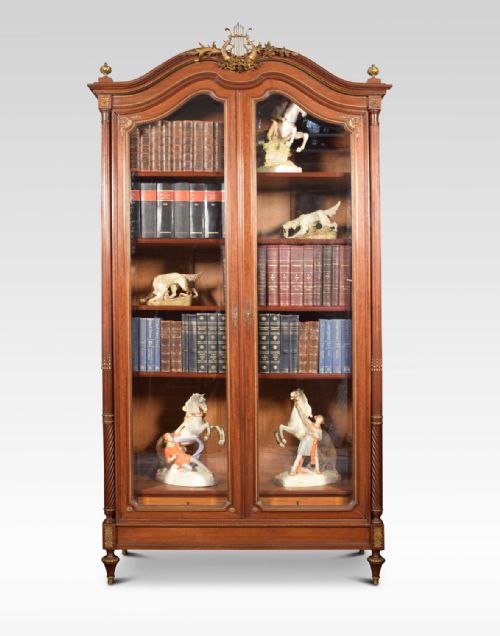
A louis xvi style bookcase takes its design cues from the late eighteenth century, prioritising straight lines, rectilinear geometry and classical restraint over the curves of earlier French phases. You will most frequently encounter nineteenth-century revival pieces alongside Edwardian examples, spanning vitrines, display cabinets and bookcases fitted with glass doors.
These items originate largely from French and English workshops, often manifesting as breakfront cabinets, pier cabinets or tall bookcases mounted with gilt bronze. The form serves to display books and porcelain behind glazed panels while maintaining a formal architectural presence.
How they were made
Cabinetmakers built these pieces using solid timber carcases faced with choice veneers such as mahogany, kingwood and satinwood, often enhanced with marquetry inlay. The construction relied on traditional joinery to support heavy glass doors and substantial shelving.
Ormolu and gilt brass mounts were cast, chased and applied to corners, friezes and uprights to highlight the structural lines. Marble tops frequently finished the upper surface of lower cabinets and pier pieces, adding weight and a cool tactile contrast to the timber.
Louis XVI Style Bookcase Retail Price Guide 2026
Typical asking prices for louis xvi style bookcase among the pieces listed under this phrase on Sellingantiques today, from the lower quarter to the upper quarter. They describe what is for sale here now, not the wider market.
Some cabinet doors shut with such precise eighteenth-century physics that the displaced air gently clicks the key in its lock.
What varies in quality
The distinction between standard production and exceptional work lies in the crispness of the gilt mounts and the depth of the cabinetmaker's bronze chasing. Finer pieces demonstrate hand-chiselled details on the ormolu rather than uniform cast surfaces, reflecting the standard associated with workshops like Linke or Maison Krieger.
Timber selection and veneer matching also dictate the grade of the piece, with book-matched figuring and subtle string inlay separating ambitious cabinetwork from simpler commercial items. The weight and integration of the marble tops and the fidelity of the classical proportions further separate the ordinary from the remarkable.
Paul Somani·Maison Krieger·Linke
The Louis XVI Style Bookcase Glossary
- Ormolu
- Gilt bronze mounts applied to furniture. The technique involves applying a gold amalgam to cast bronze before heating to drive off the mercury.
- Vitrine
- A glass-fronted cabinet designed for the display of porcelain or curiosities. These pieces rely on clear glazing to maximise internal visibility.
- Marquetry
- Decorative patterns formed by fitting together contrasting veneers into wooden surfaces. Craftsmen used various tinted woods to build up floral or geometric motifs.
- Pier cabinet
- A low cabinet designed specifically to fit against the wall space between windows. They often feature a single glass door and a marble top.
- Kingwood
- A dense, heavily figured timber prized for fine cabinetmaking during the revival periods. Its rich dark grain makes it distinct from standard mahogany.
Louis XVI Style Bookcase: Frequently Asked Questions
How do I identify a revival piece?
Nineteenth-century revival pieces often reveal their age through secondary timbers inside the carcase, machine-cut screws alongside hand-cut dovetails, and the specific chemical composition of the gilt bronze or ormolu mounts.
Examining the backboards and interior linings provides a clear indication of workshop methods that differ from eighteenth-century originals.
Can these hold heavy books?
Most of these cabinets feature adjustable wooden shelving supported on traditional brass rack plates or wooden bearers, designed to bear standard library loads.
However, fragile glazed doors and delicate interior veneers mean one should load the shelves with care to avoid twisting the main carcase.
Where should I place this cabinet?
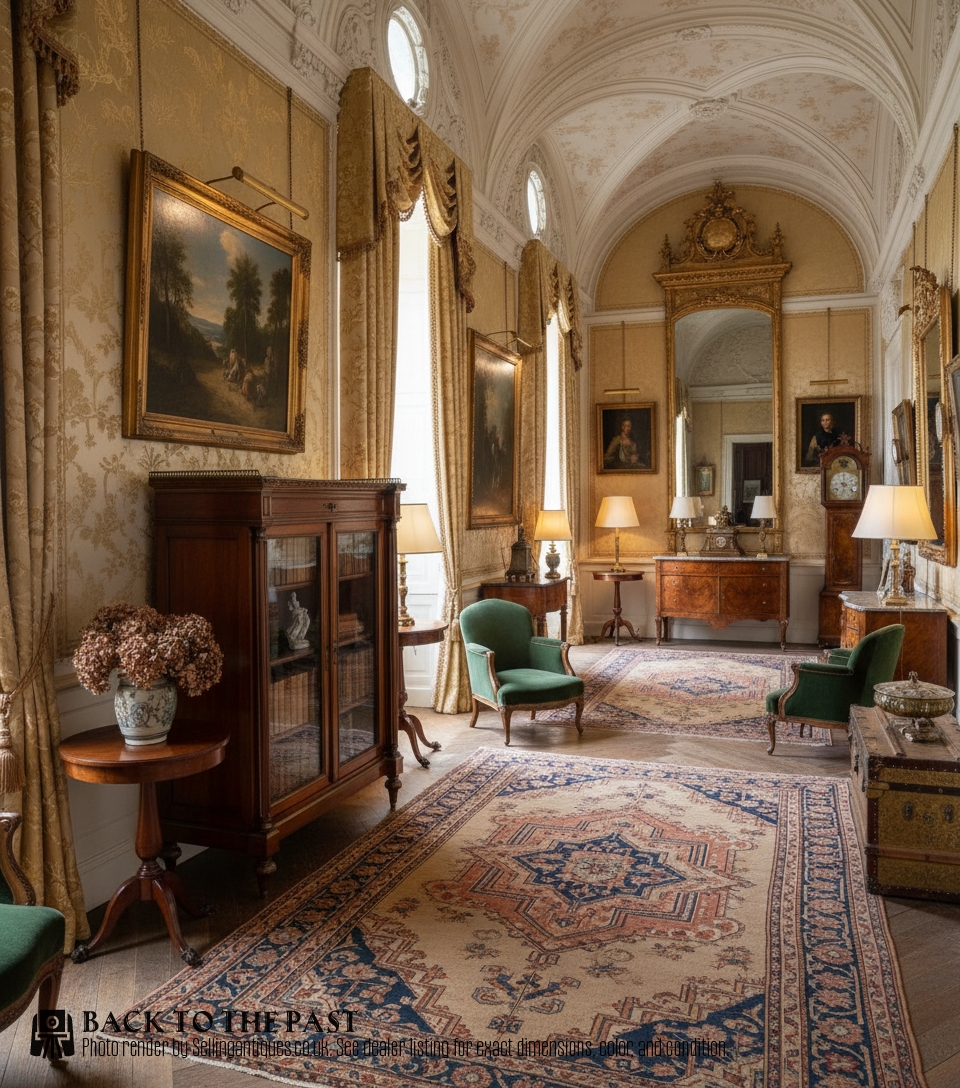
These pieces suit formal reception rooms, libraries or hallways where their classical symmetry and reflective glass panels can interact with natural light.
Keep them away from direct sunlight and strong heat sources to protect sensitive veneers, polished surfaces, and antique fabric linings.
What is the difference between a vitrine and a bookcase?
A vitrine is primarily built with extensive glass panels on the front and sides to showcase decorative objects, porcelain and small artefacts.
A bookcase traditionally emphasises wooden shelving for bound volumes, though many nineteenth-century examples combine both functions behind large glass doors.