


Louis XVI Side Cabinet
A louis xvi side cabinet brings neoclassical restraint and fine marquetry to a room, offering both practical surface space and elegant storage.
Louis XVI Side Cabinet
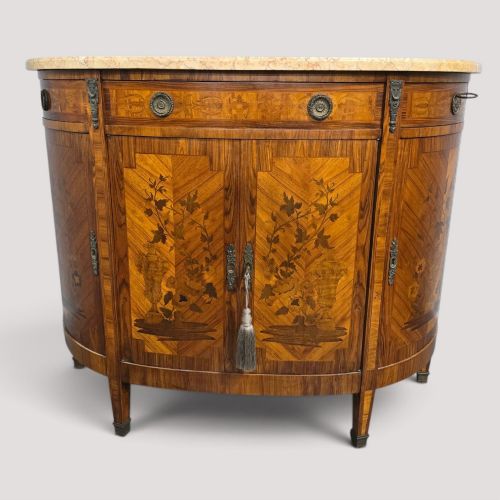
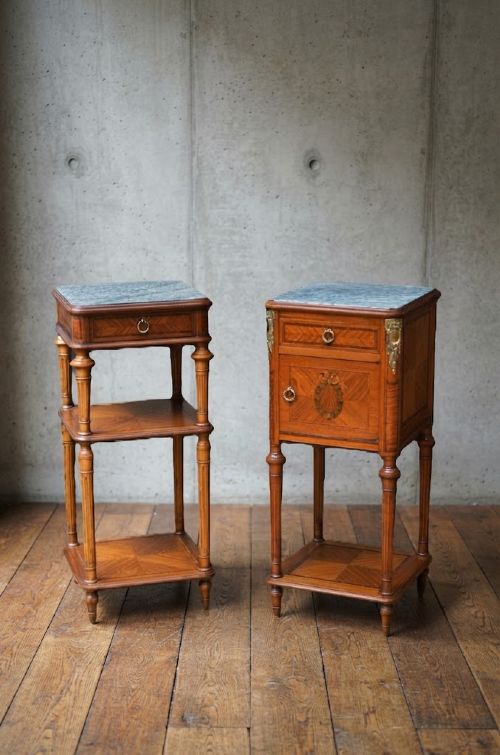
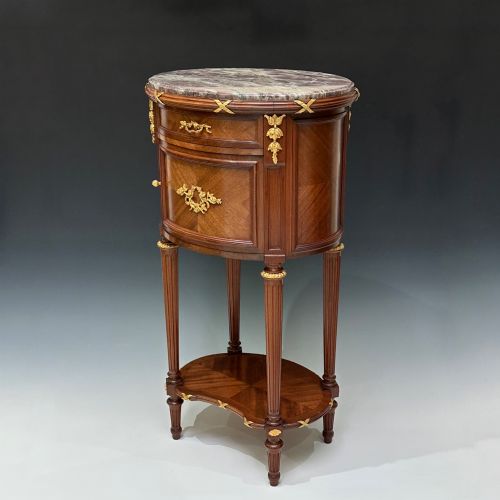
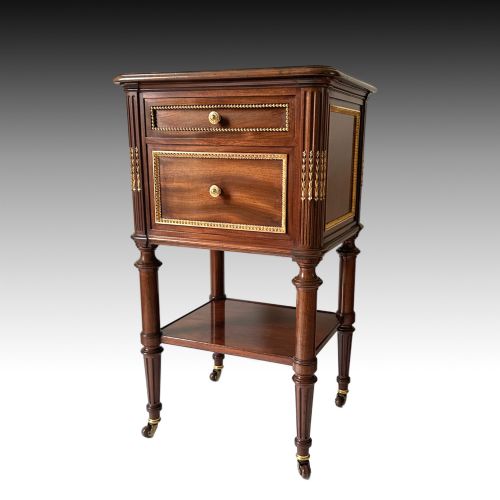
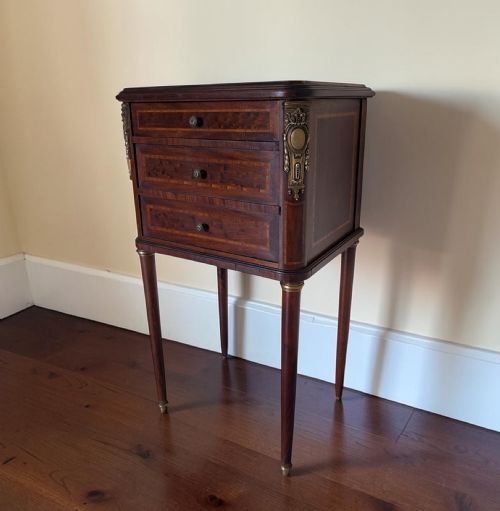
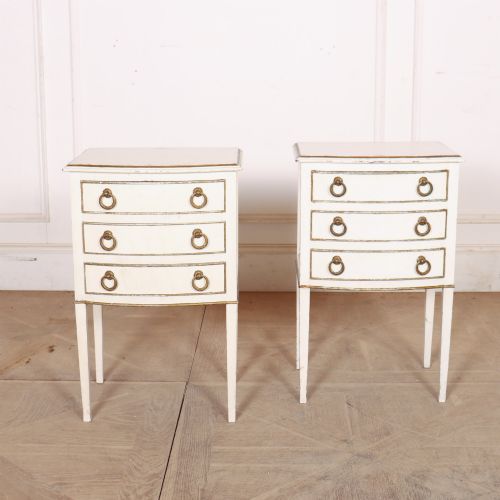
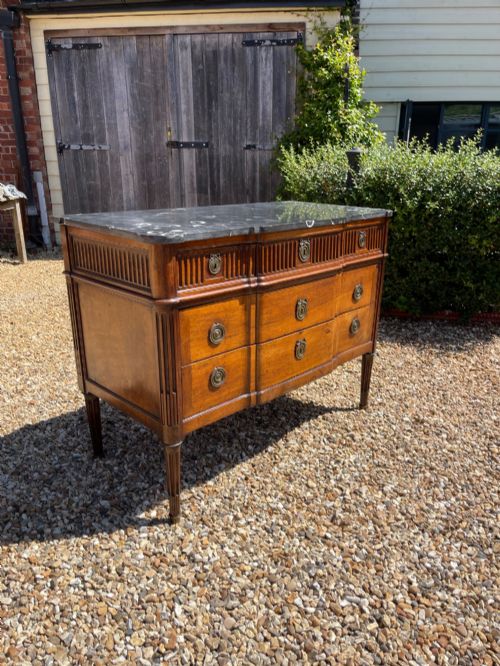
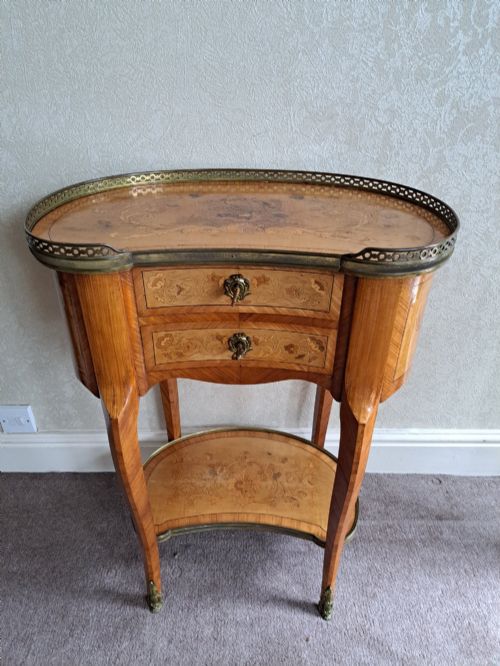
A louis xvi side cabinet follows the neoclassical design vocabulary established in eighteenth-century France, defined by straight lines, symmetrical geometry, and restrained ornamentation. The pieces seen here encompass full-sized side cabinets, credenzas, meubles d'appui, and smaller bedside cabinets.
Most examples found on this page date from the nineteenth century, including revivals from the 1860s, 1880s, and 1900, alongside Victorian interpretations. Makers drew heavily on the original court aesthetic, producing pieces intended for refined drawing rooms and private chambers alike.
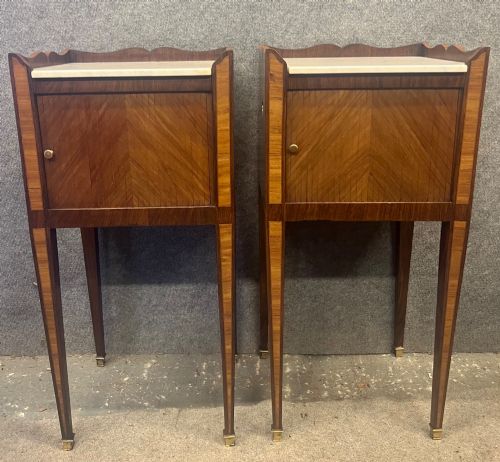
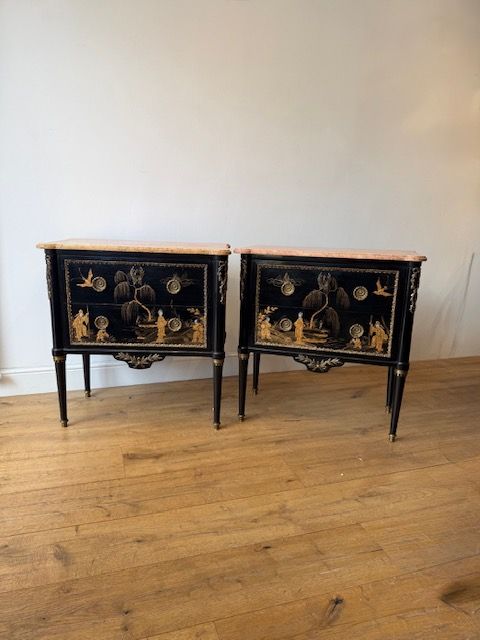
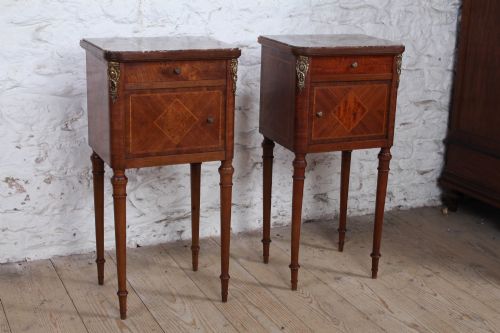
The format ranges from compact bedside chests to grander marquetry-inlaid cupboards and marble-topped display pieces. Buyers frequently encounter matched pairs, particularly among the smaller bedside and night stand variants.
Materials and Construction
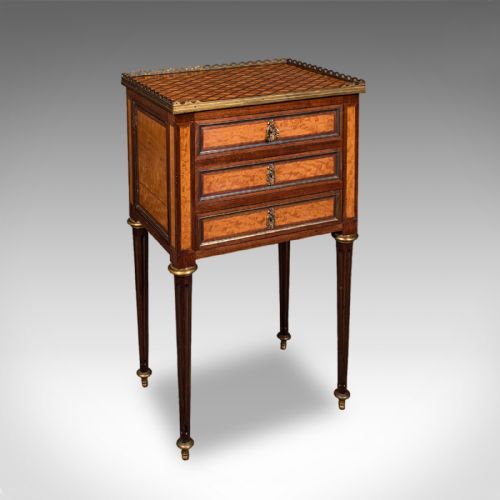
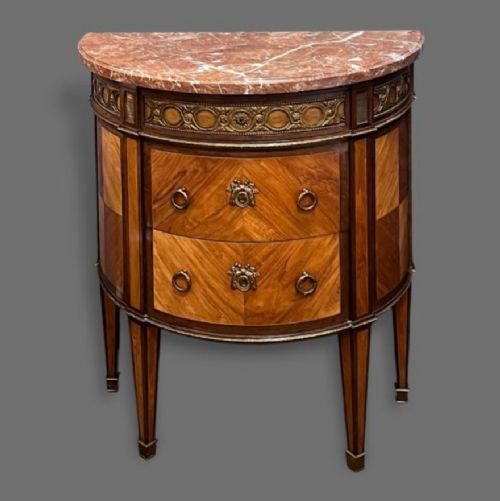
Cabinetmakers utilised a rich palette of timbers, combining structural woods like mahogany and walnut with decorativeveneers such as kingwood, tulipwood, rosewood, and satinwood. Parquetry and marquetry arrangements create geometric patterns and pictorial inlay across the doors and drawer fronts.
Mounts of ormolu, gilt bronze, and brass accent the corners, legs, and friezes, providing metallic contrast to the warm timber grains. Insets of porcelain plaques, notably from Sevres, appear alongside polished marble tops in white and variegated tones.
Louis XVI Side Cabinet Retail Price Guide 2026
Typical asking prices for louis xvi side cabinet among the pieces listed under this phrase on Sellingantiques today, from the lower quarter to the upper quarter. They describe what is for sale here now, not the wider market.
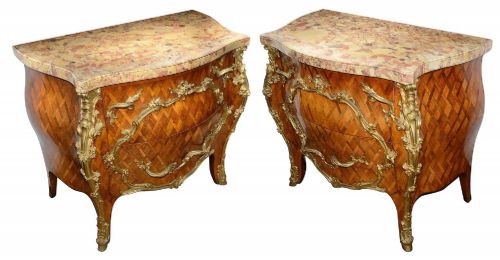
Several listings describe serpentine bombes, proving that even formal neoclassical furniture occasionally embraced a gentle, swelling curve.
Evaluating the Pieces
Quality rests upon the precision of the cabinetwork and the crispness of the bronze or ormolu mounts. Finer examples display seamless timber matching in their parquetry and meticulous hand-chased detail on the metalwork.
The integration of secondary materials defines the tier of a piece. Thick, polished marble slabs and genuine hand-painted porcelain plaques elevate the status of a side cabinet above simpler veneered carcases.
The Louis XVI Side Cabinet Glossary
- Meuble d'appui
- A low side cabinet designed to stand against a wall, frequently fitted with doors and a flat top for display. The term translates literally as a supporting piece of furniture.
- Ormolu
- Gilt bronze mounts applied to furniture for decorative effect. The technique involves treating brass or bronze with a gold amalgam.
- Marquetry
- The art of applying small pieces of veneer to a structure to form decorative patterns or pictures. Craftsmen cut contrasting timbers to fit precisely together.
- Parquetry
- Geometric wood inlay forming repetitive patterns such as cubes or squares. This technique showcases the natural grain variations of timbers like kingwood and tulipwood.
- Satinwood
- A durable, lustrous timber with a yellowish sheen used extensively for fine cabinet veneers. It provides a bright contrast in multi-wood marquetry designs.
Louis XVI Side Cabinet: Frequently Asked Questions
What is a louis xvi side cabinet used for?
These cabinets serve as decorative storage units in reception rooms, hallways, and bedrooms. Their flat tops provide space for lamps and ornaments while enclosed cupboards conceal household items.
Smaller bedside variants function as night stands, holding lighting and personal items beside a bed while maintaining a formal aesthetic.
How do I identify a louis xvi style cabinet?
Look for straight tapered legs, fluted columns, and symmetrical neoclassical ornamentation rather than the curved lines of earlier rococo pieces. Ormolu mounts often trace the structural corners and apron.
Timbers like kingwood, tulipwood, and mahogany frequently appear alongside marble tops and inlaid parquetry patterns.
Are these cabinets original eighteenth-century pieces?
Most pieces available date from the nineteenth century, reflecting revival movements during the Victorian era and the decades around eighteen-eighty to nineteen-hundred. French workshops produced faithful interpretations of the original court style.
Nineteenth-century makers employed the same meticulous marquetry and bronze-mounting techniques as their eighteenth-century predecessors.