


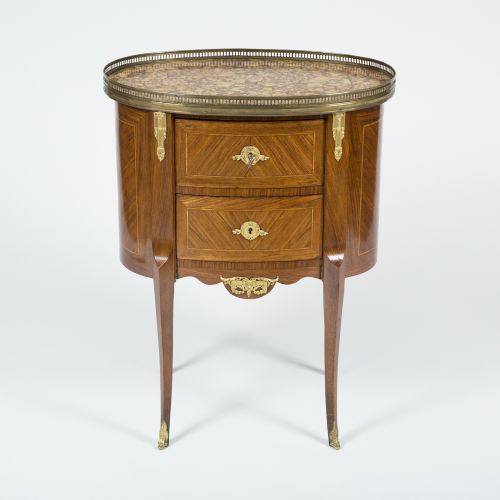

Louis XVI Kingwood Chest
These pieces of louis xvi kingwood chest bring unmistakable French elegance into a room through rich timber veneers and refined neoclassical proportion.
Louis XVI Kingwood Chest
When you search for a louis xvi kingwood chest, you encounter items designed for storage that double as sculptural furniture. These pieces primarily manifest as commodes, chests of drawers, and occasional writing desks or bedside cabinets.
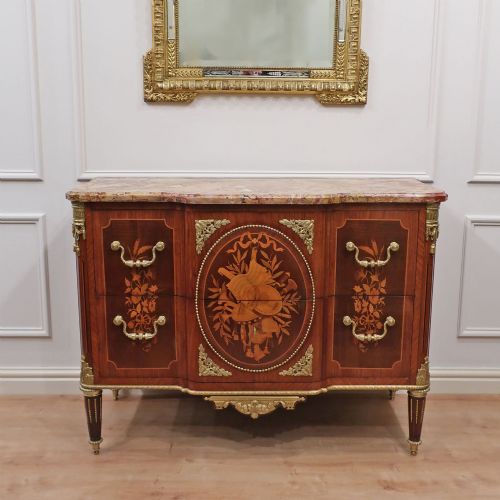
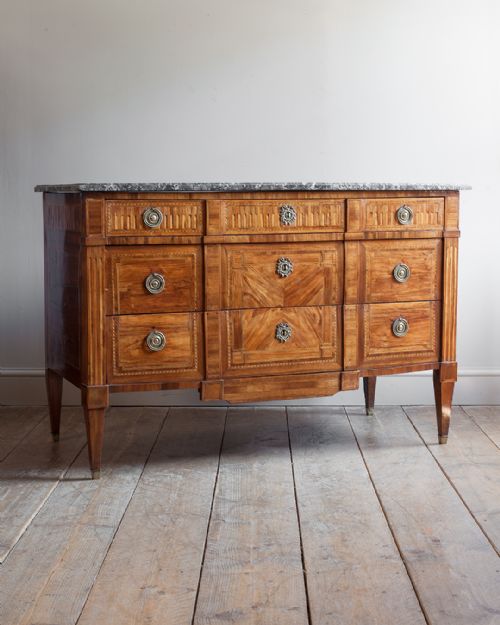
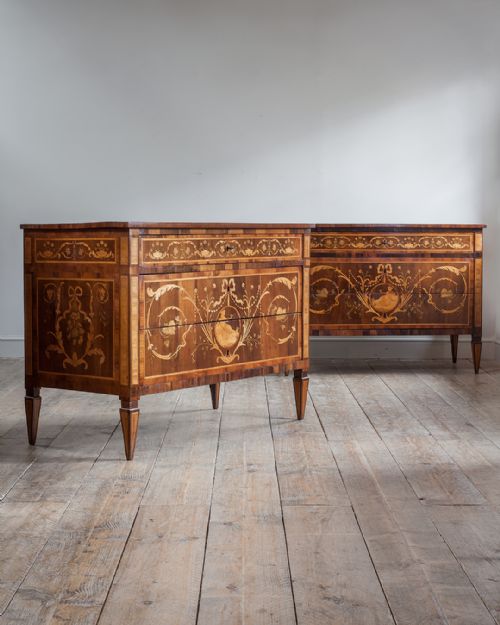
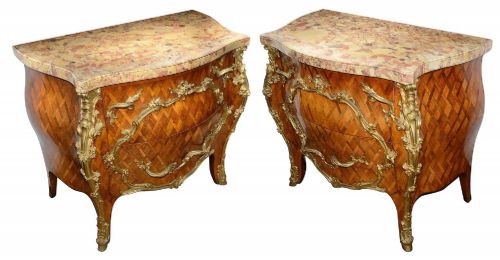
You are most likely to meet nineteenth-century revival examples alongside authentic eighteenth-century originals. The forms range from rectilinear neoclassical shapes to serpentine and bombe silhouettes finished with detailed marquetry.
How they were made
Cabinetmakers built these carcases using native and exotic timbers, laying kingwood veneers across the surfaces often accompanied by walnut, tulipwood, rosewood, and satinwood. Marquetry patterns utilise contrasting grains and tones to create geometric or floral imagery across the drawers and sides.
The exteriors are fitted with cast or chased gilt bronze and ormolu mounts that accent the structural lines and protect vulnerable corners. Many items are completed with heavy marble tops, particularly varieties such as breche d'alep, fitted precisely to the stone profile.
Listings feature items spanning the eighteenth century through the early twentieth century, incorporating marble, ormolu, and multiple exotic timber veneers.
What varies in quality
The distinction between tiers rests upon the crispness of the bronze mounts and the precision of the timber matching. Superior items display fluid hand-chiselled detailing in the metalwork and seamless veneer placement that respects the underlying carcase.
Construction methods also dictate worth, visible in the hand-cut dovetailing of the internal drawer construction and the weight of the stone slab chosen for the top. Earlier eighteenth-century originals and high-end nineteenth-century revival pieces exhibit a greater refinement in these structural assemblies.
The Louis XVI Kingwood Chest Glossary
- Kingwood
- A dense, richly grained Brazilian timber prized for its deep violet-brown tones and distinct figure. Cabinetmakers utilised it extensively for high-status eighteenth-century and revival furniture.
- Ormolu
- Gilded bronze used for decorative mounts and handles on fine furniture. The technique involves applying a gold amalgam to cast brass or bronze before firing.
- Marquetry
- The art of applying decorative veneer pieces to a structure to form intricate patterns or pictures. Craftsmen cut various coloured woods to fit together precisely.
- Bombe
- A swelling, outward-curved contour found on the front and sides of certain case furniture. This undulating form requires advanced woodworking skill to veneer successfully.
- Secretaire abattant
- A tall upright desk featuring a drop-front writing flap that conceals internal pigeonholes and small drawers. It combines the storage capacity of a chest with a dedicated writing surface.
Louis XVI Kingwood Chest: Frequently Asked Questions
How do I tell an original apart from a revival piece?
Examination of the timber shrinkage, secondary woods inside the carcase, and the wear patterns on the drawer runners usually reveals the true age of the piece. Eighteenth-century items show distinct hand-tool marks and timber ageing that later nineteenth-century revival workshops did not replicate.
Furthermore, the style of the ormolu mounts and the construction of the dovetails offer clear chronological indicators. Revival pieces often employ standardised mechanical components that differ from hand-forged or early cast elements.
What is a commode in this context?
A commode is a low chest of drawers designed specifically for domestic reception rooms or bedrooms rather than utilitarian storage. They typically stand on slender legs and feature decorative marble slabs on the upper surface.
These pieces served both a functional purpose for linen storage and an aesthetic role as a surface for displaying decorative objects.
How should I care for marble-topped chests?
Marble surfaces require regular cleaning with a damp cloth and mild soap, avoiding acidic substances like lemon or vinegar that etch the stone. Placing felt pads under objects set upon the top prevents scratching.
For the wood body, maintaining a stable indoor humidity prevents the kingwood veneer from lifting or cracking over time.
Where were these pieces originally made?
The primary workshops were located in France, particularly Paris, where master cabinetmakers produced luxurious furniture for the royal court and aristocracy. Later revival pieces were also manufactured across France and neighbouring European countries like Italy during the nineteenth century.
This widespread production explains the variety of regional interpretations seen in revival pieces today.