

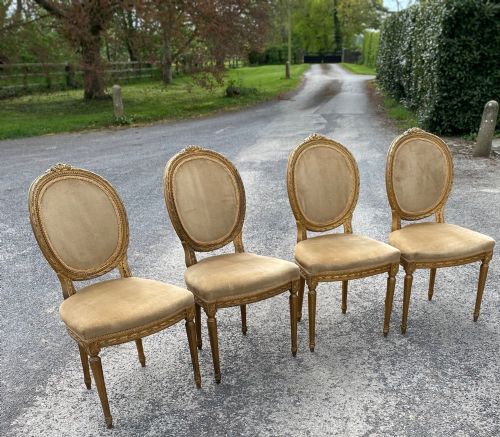


Louis XVI Giltwood Chairs
Louis xvi giltwood chairs bring neoclassical symmetry and gilded warmth into a room, offering enduring French elegance through carved timber frames and upholstered seats.
Louis XVI Giltwood Chairs
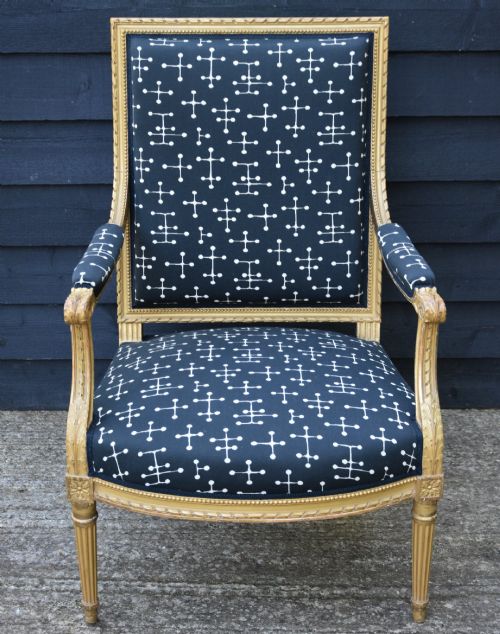
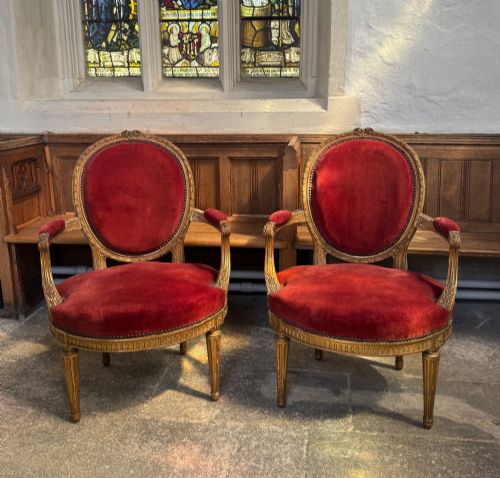
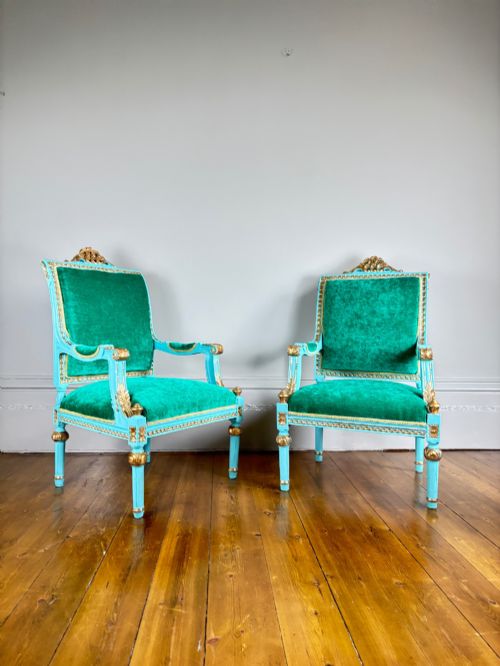
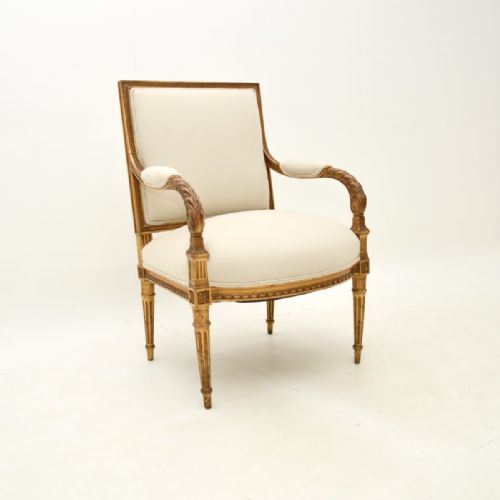
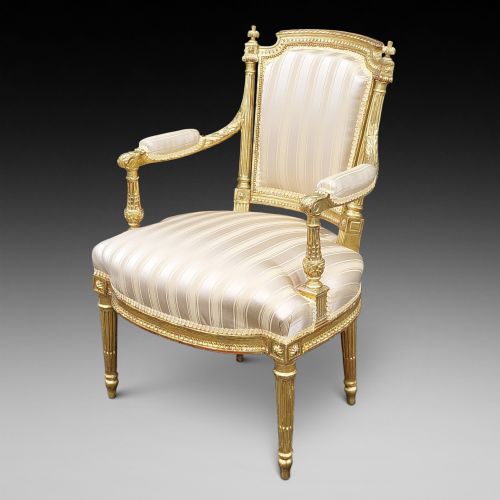
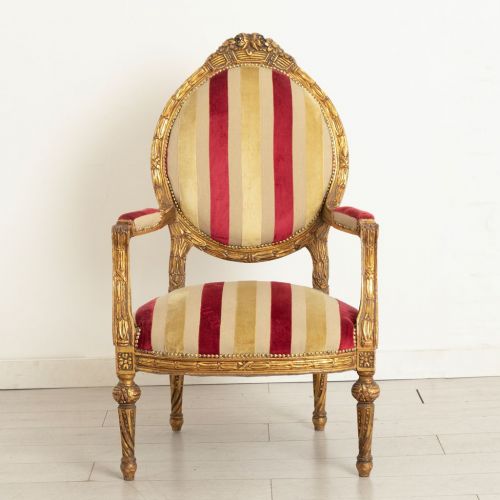
When seeking louis xvi giltwood chairs, a buyer looks at seating defined by classical restraint, straight fluted legs, and geometric frames that contrast with earlier rococo curves.
The versions met most frequently on this page belong to the nineteenth and early twentieth centuries, created as revivals of the eighteenth-century French style.
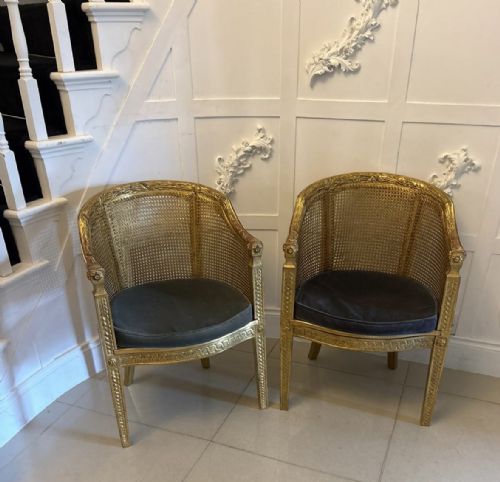
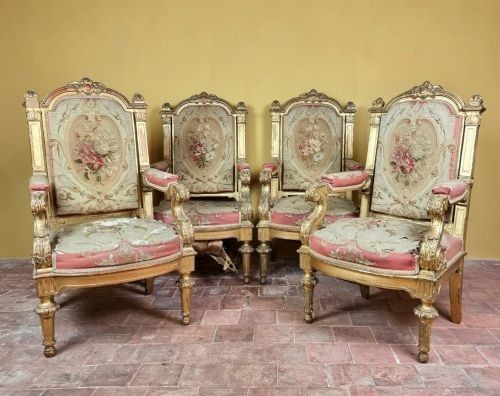
Forms span open armchairs, bergères, side chairs, and larger salon suites upholstered in velvet, silk damask, or textile covers.
How They Were Made
Makers shaped timber frames through careful carving, applying gold leaf or gilt finishes over the wood to create a luminous metallic surface.
Upholstery methods utilised traditional textiles such as velvet, damask fabric, and tapestry secured to timber foundations with brass detailing.
One notable set on record once belonged to Lady Diana at Spencer House.
What Varies in Quality
The calibre of the hand-carved ornamentation on the wooden frame separates standard production from finer examples, distinguishing crisp architectural motifs from softer details.
The integrity of the original gilt finish and the quality of the textile upholstery dictate the overall character and preservation of each piece.
Holland And Sons
The Louis XVI Giltwood Chairs Glossary
- Giltwood
- Timber coated with gold leaf or a gilt finish. This decorative surface provides the bright metallic appearance characteristic of these salon seats.
- Bergère
- An enclosed upholstered armchair with solid sides filled with upholstery or cane work. It offers a deeper and more enclosed seat than an open armchair.
- Damask
- A reversible figured fabric traditionally woven from silk or wool. It frequently appears as the primary upholstery material on formal dining and salon suites.
- Neoclassical
- A style drawing inspiration from classical antiquity, marked by straight lines and symmetrical balance. This aesthetic forms the design foundation for the Louis XVI period.
Louis XVI Giltwood Chairs: Frequently Asked Questions
How do I identify a true Louis XVI chair?
Look for straight, fluted legs, rectangular or medallion-shaped backs, and symmetrical neoclassical ornamentation rather than curving rococo lines.
Many examples found today date from the nineteenth and early twentieth centuries rather than the original eighteenth-century reign.
Where should I place these chairs in a home?
These pieces suit formal living rooms, reception hallways, or bedrooms as statement seating alongside matching side tables.
Pairing armchairs with a sofa or day bed creates a cohesive classical arrangement within a modern interior.
Are these chairs suitable for daily dining use?
Dining chairs and salon suites provide sturdy seating when constructed from solid timber and properly maintained over time.
Delicate open armchairs serve better as decorative accent pieces or occasional seating rather than heavy daily use.
What upholstery fabrics appear on these chairs?
Original and replacement coverings include silk damask, velvet, tapestry, and plain textiles secured with brass tacks.
Many historical examples retain their period textile covers, while others feature modern velvet or damask upholstery.