


Louis XVI Bronze Lamps
Louis xvi bronze lamps bring classical French symmetry and patinated metalwork into rooms needing architectural weight.

Louis XVI Bronze Lamps
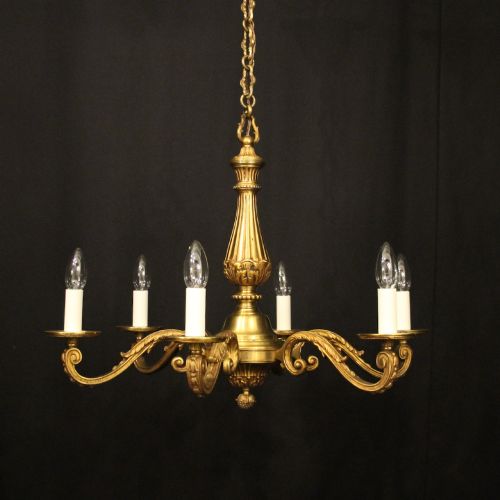
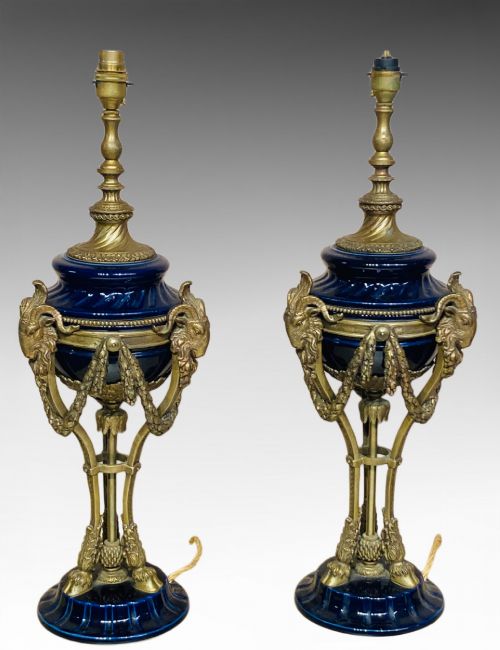
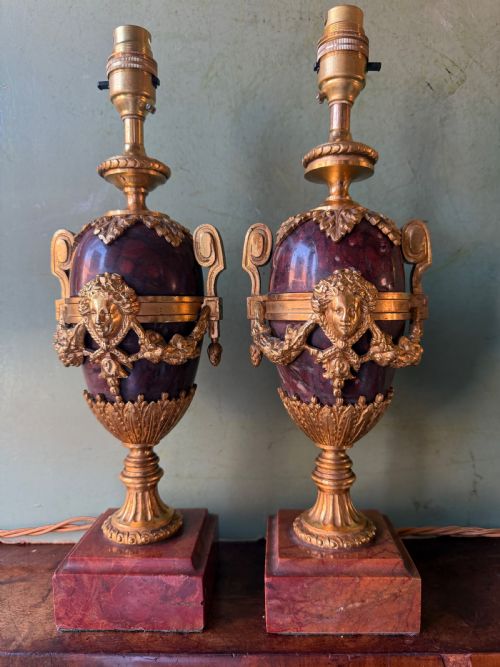
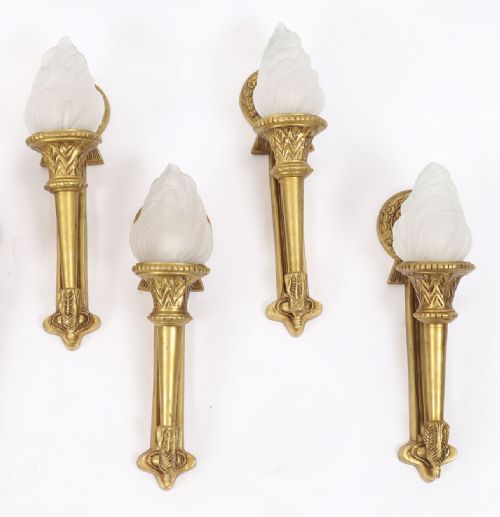
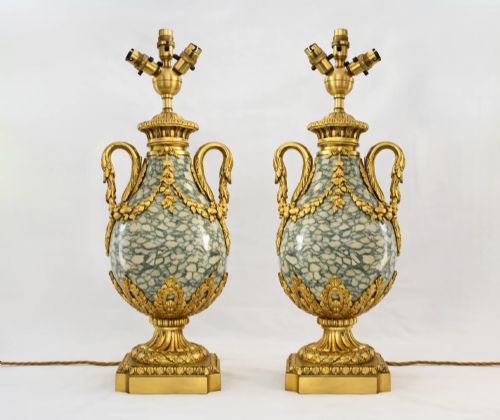
When searching for louis xvi bronze lamps, you encounter lighting fixtures grounded in the neoclassical aesthetic, appearing frequently as table lamps, wall lights, and converted candelabra. The selection includes paired items mounted on marble bases, alongside single decorative urns and cassolettes adapted for illumination.
Most examples hail from the nineteenth century and the early twentieth century, showing revival styles inspired by eighteenth-century models. French workshops dominate the record, utilising bronze, ormolu, and gilt finishes paired with marble bodies.
How they were made
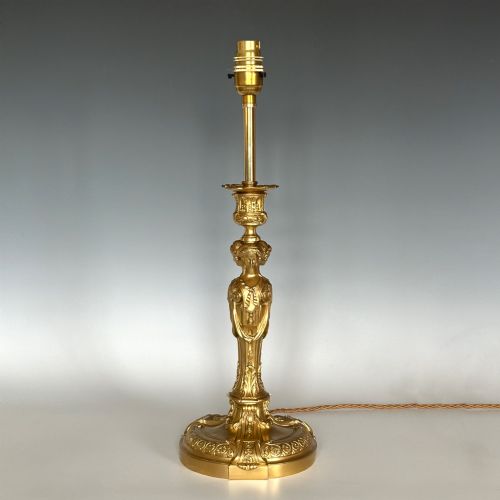
The construction relies on cast bronze and ormolu, often mercury-gilded, combined with turned and polished marble elements such as rouge or white variants. Metal components are chased by hand to sharpen acanthus leaves, bead reels, and classical drapery.
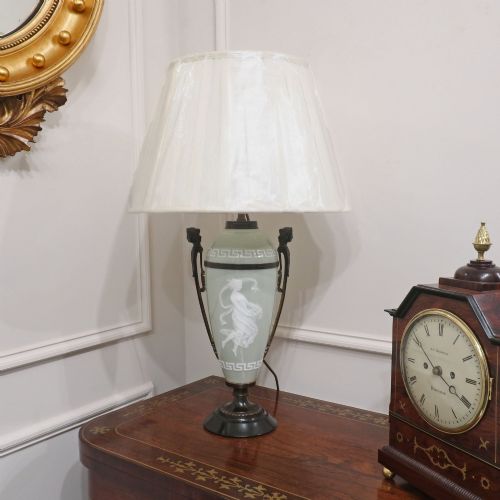
Many items incorporate cut glass or porcelain inserts, including pate sur pate details and Sevres style bodies. Wiring is typically added later during conversions from original oil burners or candlesticks.
Listings feature eighteenth-century revival styles executed in gilt bronze, ormolu, and various marbles across the nineteenth and early twentieth centuries.
What varies in quality
The crispness of the bronze chasing dictates the visual hierarchy, separating sharp, hand-finished ornament from soft, shallow casting. High-grade pieces retain dense mercurial gilding that shows varied warmth under light rather than flat modern plating.
The selection of the marble base and its integration with the metal mounts indicate the maker's care. Superior examples feature heavy, solid stone tightly fitted to pinned or screwed bronze collars without visible gaps.
Jean Demosthene Dugourc·French Sevres
The Louis XVI Bronze Lamps Glossary
- Ormolu
- Gilt bronze produced by applying a mercury and gold amalgam to cast bronze before heating. This technique creates a durable, deep golden surface characteristic of French decorative arts.
- Cassolette
- A decorative vase or urn with a reversible lid that functions either as an incense burner or a solid finial. In lighting, these bodies are drilled and wired to form symmetrical lamp bases.
- Pate sur pate
- A ceramic technique where wet white slip is painted in successive layers upon a coloured clay body to build up a translucent cameo relief.
- Neoclassical
- A style spanning the eighteenth and nineteenth centuries that revives classical Greek and Roman motifs, including fluted columns, urns, swags, and torch elements.
- Casting
- The process of pouring molten metal into a mould to create the primary form of a lamp base, mount, or arm before hand-chasing.
Louis XVI Bronze Lamps: Frequently Asked Questions
How do I clean bronze lamps?
Dust the metal surfaces gently with a soft dry brush to prevent accumulation in the crevices of the chased ornament. Avoid chemical polishes that strip historical patina or damage the gilt layers.
Marble components respond well to a damp cloth followed immediately by a dry buffing. Keep moisture away from any electrical fittings or fabric shades.
Are these lamps converted from antiques?
Many examples originate as nineteenth-century oil lamps, candlesticks, or decorative cassolettes that later received electrical wiring. This adaptive reuse preserves the original patinated bronze and marble bodies while meeting modern functional requirements.
Inspect the base or stem entry points to understand how the cord routes through the historical structure. Professional rewiring ensures safety while retaining the original mounts.
How do I choose lamp shades?
Select shades that complement the classical proportions of the bronze and marble columns without overwhelming the chased ormolu details. Simple silk or linen drums in neutral tones allow the detailed metalwork to remain the visual focus.
Consider the height of the mounting harp to ensure the light source sits level with or slightly above the decorative urn or vase body.
How can I date these pieces?
Examine the casting quality, the method of assembly, and the wear patterns on the bronze and ormolu surfaces. Nineteenth-century examples often display hand-filed seams and heavier marble bases compared to later revival pieces.
Reference stylistic cues like the specific rendering of neoclassical swags or torch motifs against documented models by designers such as Dugourc.