



Louis XV Secretary Desk
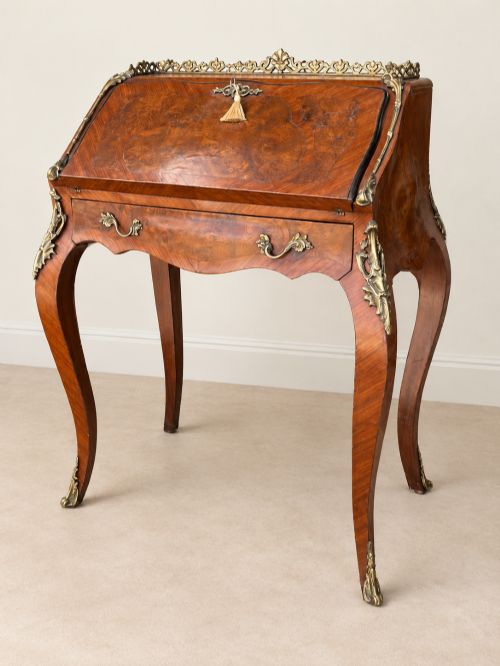
A louis xv secretary desk brings fluid rococo curves and rich marquetry veneers into a room, offering a private writing surface behind a fitted drop front.
Louis XV Secretary Desk
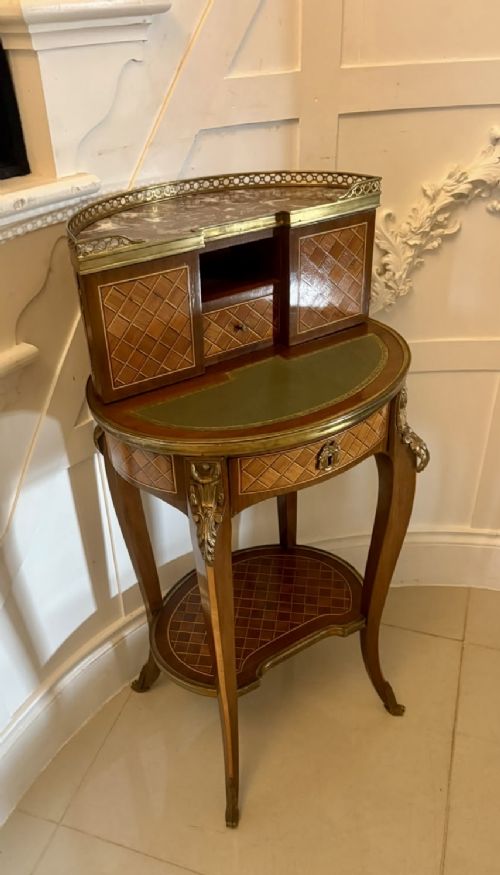
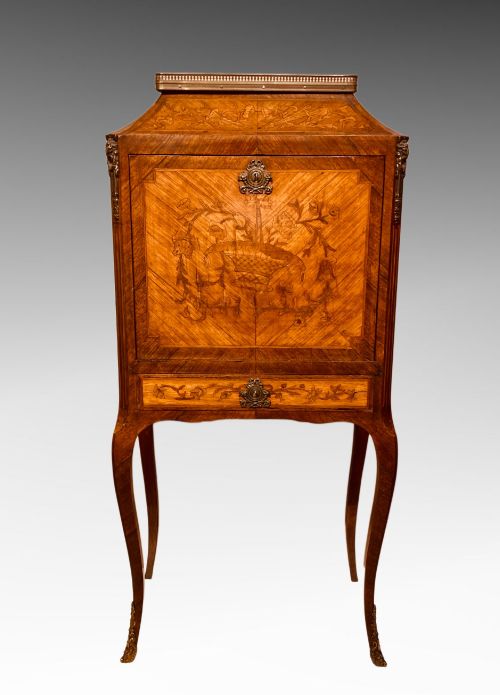
The assortment on this page ranges from compact ladies writing cabinets fitted with porcelain plaques to taller wall-standing drop-front units. Walnut, kingwood, and rosewood veneers dominate the structural carcases, frequently accented with marquetry floral details or geometric parquetry patterns.
Many examples adhere strictly to the Louis XV revival and French rococo styles, capturing the asymmetrical vitality and organic motifs characteristic of eighteenth-century court furniture without being made in that specific century.
Materials and construction
Cabinet makers built these pieces using dense hardwood carcases overlaid with decorative veneers of kingwood, walnut, and rosewood, often cutting the timber to display contrasting grain directions in elaborate parquetry or pictorial marquetry. Brass and ormolu mounts were cast and fire-gilt, then meticulously hand-fitted to edge the curved outlines, protect vulnerable corners, and frame porcelain plaques.
Internal compartments incorporated small drawers, pigeonholes, and occasionally leather-lined writing surfaces that revealed themselves upon lowering the fall front or sliding the upper cabinet components. Glass panels, marble slab tops, and delicate inlays completed the assemblies, requiring skilled joinery to maintain stability across complex serpentine contours.
Louis XV Secretary Desk Retail Price Guide 2026
Typical asking prices for louis xv secretary desk among the pieces listed under this phrase on Sellingantiques today, from the lower quarter to the upper quarter. They describe what is for sale here now, not the wider market.
Listings show these secretary desks spanning the Victorian period through to nineteen thirty, utilising kingwood, walnut, and rosewood veneers.
Judging quality and craftsmanship
The standard of a louis xv secretary desk rests heavily on the depth and crispness of the bronze ormolu mounts, where finely chased foliage and substantial weight distinguish superior workshops from lighter, mass-produced alternatives. The precision of the marquetry cutting also marks the difference, as tight joints between contrasting wood veneers indicate superior cabinet work.
Structural integrity along complex curved facades and the smooth operation of internal drop fronts and small drawers reveal the maker's underlying skill. The selection of finely figured kingwood or rosewood grain patterns further elevates an individual piece above simpler walnut versions.
The Louis XV Secretary Desk Glossary
- Ormolu
- Gilded bronze mounts applied to furniture for decoration and edge protection. These metallic elements define the ornate silhouettes typical of nineteenth-century French revival pieces.
- Marquetry
- Decorative veneer work forming pictures or patterns using various tinted woods. Artisans cut thin slices of timber to assemble floral sprays and geometric arrangements across the desk surfaces.
- Parquetry
- Geometric wood inlay forming repeating patterns such as cubes or checkers. This technique showcases the natural tonal variations of kingwood and rosewood.
- Bonheur du jour
- A light ladies writing desk featuring a small cabinet or set of drawers on the upper surface. These compact writing desks became popular during the nineteenth-century revival periods.
- Escritoire
- A writing cabinet featuring a drop-front panel that conceals internal compartments. It provides a concealed workspace while maintaining a polished exterior appearance.
- Secretaire abattant
- A tall wall-standing desk with a vertical fall-front writing surface. This form allows for substantial interior storage hidden behind disciplined architectural facades.
Louis XV Secretary Desk: Frequently Asked Questions
How do I date my desk?
Examine the secondary woods inside the drawers and the style of the hardware for clues to the manufacturing era. Most pieces matching this description originate from the nineteenth-century revival movements rather than the original Louis XV reign.
Look closely at the construction techniques of the internal pigeonholes and the patination of the timber. Machine-cut dovetails or modern fixings point to later reproduction work, while hand-cut joints align with Victorian production standards.
Were these desks used for writing?
These pieces served as private writing desks where correspondents penned letters, managed household accounts, and stored stationery. The fitted interiors provided dedicated spaces for inkwells, sealing wax, and folded papers.
The drop-front or pull-out writing surfaces offered a clean leather or wood plane for daily correspondence. Once finished, the user simply closed the fall front to conceal any clutter from view.
How do I clean the ormolu?
Dust the gilded bronze mounts gently with a soft, dry brush to prevent the accumulation of dirt in the crevices. Avoid abrasive metal cleaners that can strip away the original fire gilding.
If deeper cleaning is necessary, use a damp cloth with mild soap, drying the metal immediately afterwards. Protecting the surrounding wood veneer from moisture during any cleaning process is essential.
What is kingwood?
Kingwood is a dense, heavy tropical timber prized for its rich brown colour and distinct dark violet or black veining. It was frequently utilised by nineteenth-century cabinet makers for luxury veneer work.
The striking grain patterns made kingwood an ideal choice for parquetry and contrasting borders on French revival desks. It takes a high polish, enhancing the decorative impact of the furniture.