






Louis XV Pendulum Clock
A louis xv pendulum clock brings flowing asymmetrical curves and rich gilding into a room, offering the unmistakable presence of nineteenth-century French horology.
Louis XV Pendulum Clock
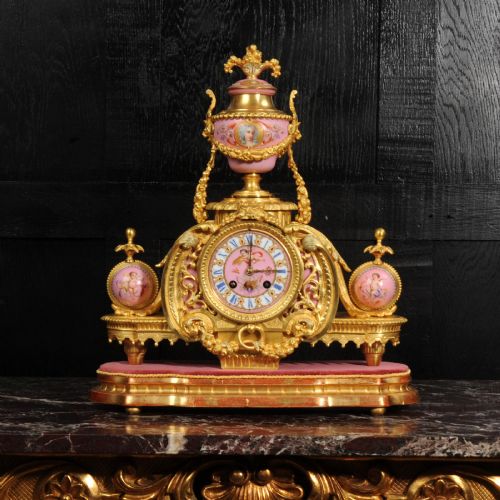
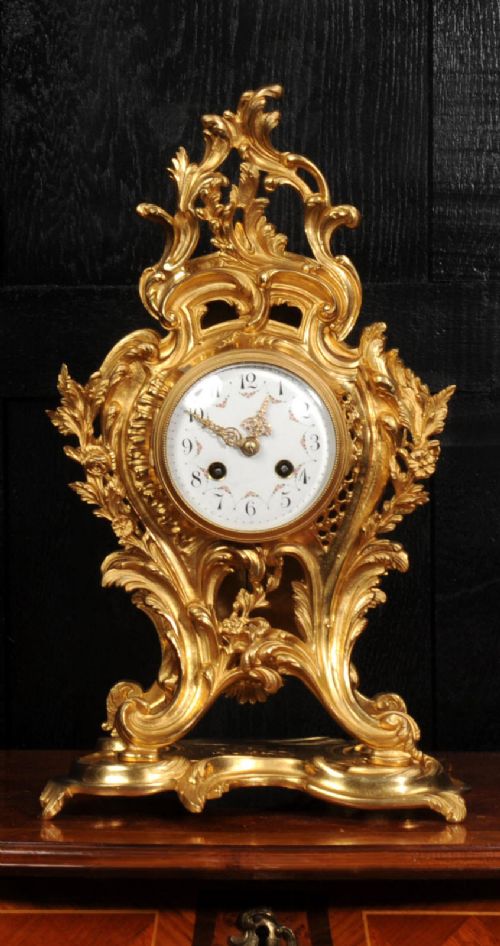
When you search for a louis xv pendulum clock, you encounter timepieces dominated by the French Rococo aesthetic and its later nineteenth-century revivals. These objects take the form of mantel clocks, wall-hanging cartel clocks, and occasional longcase or grandfather clocks dating predominantly from the Victorian era up to around nineteen-ten.
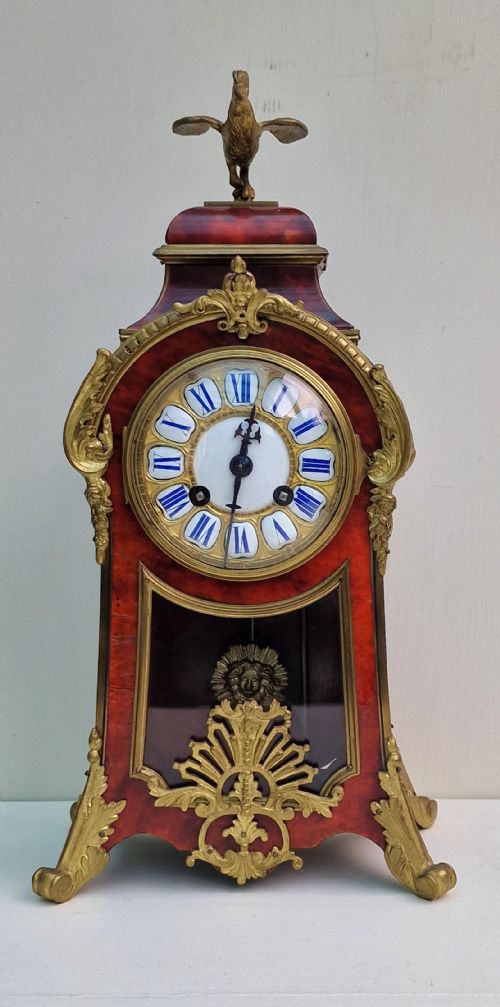
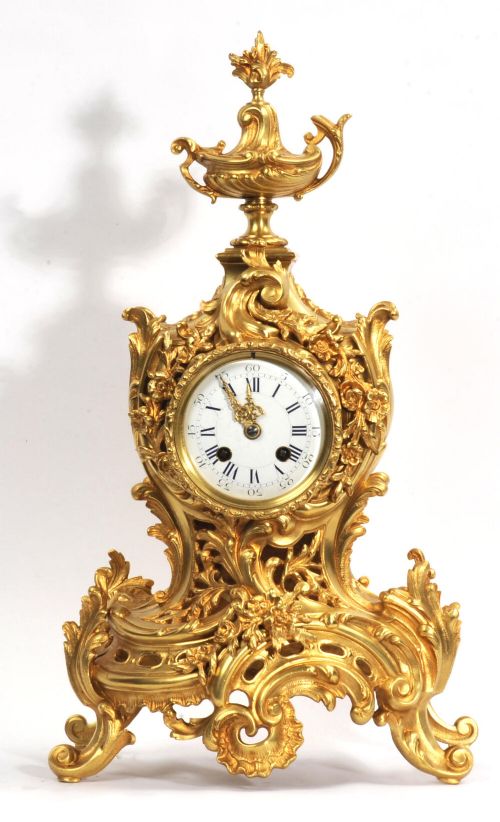
The version you meet most frequently on this page is the mantel clock cast in gilt bronze or ormolu, alongside striking Boullework examples featuring tortoiseshell and cut brass inlay. Formats vary from compact shelf pieces to monumental wall cartel clocks decorated with figures such as Cupid.
How they were made
Makers shaped these cases using cast gilt bronze and ormolu, applying mercury gilding or modern electroplating to achieve a deep metallic lustre. Brass and gilt metal form the structural chassis for intricate cartel and mantel housings, often paired with glass panels to protect the movement.
The decorative surfaces frequently incorporate panels of Sèvres porcelain and polished enamel dials with delicate painted numerals. Artisans also employed tortoiseshell and cut brass in intricate Boulle marquetry techniques across wooden foundations.
Listings on this page span the Victorian era, utilising materials such as enamel, porcelain, tortoiseshell, and gilt bronze within French Rococo revival designs.
What varies in quality
The distinction between tiers rests upon the crispness of the bronze casting and the depth of the chasing work on the acanthus scrolls and asymmetrical mounts. Superior examples exhibit hand-finished detailing where every leaf and shell retains sharp definition rather than softened edges from worn moulds.
Horological merit also separates the standard production from the exceptional, visible in signed movements by notable makers and the integration of matching enamel dials with finely pierced hands. Cases built with genuine tortoiseshell and precise brass inlay demand a higher level of cabinet-making skill than plain timber or standard gilt metal equivalents.
Achille Brocot·Delettrez·Samuel Marti
The Louis XV Pendulum Clock Glossary
- Ormolu
- Gilded bronze produced by applying a mixture of gold amalgam to a bronze base and heating it. This technique creates a durable, warm yellow metallic finish characteristic of French luxury clocks.
- Cartel clock
- A wall-mounted clock featuring an ornate, asymmetrical frame designed to hang directly on a wall. These pieces often display elaborate scrolling foliage and cast figures.
- Boullework
- A style of marquetry consisting of tortoiseshell and engraved brass inlaid in contrasting patterns. Named after the master cabinetmaker André-Charles Boulle, it defines grand nineteenth-century revival pieces.
- Sèvres porcelain
- Fine ceramic panels produced by the French national factory, frequently incorporated into clock dials and pedestals. They display hand-painted floral or figuran motifs against rich coloured grounds.
- Rococo Revival
- A nineteenth-century artistic movement that revived the curving, naturalistic ornamentation of the eighteenth-century Louis XV period. It rejects straight lines in favour of C-scrolls, shells, and asymmetrical plant forms.
Louis XV Pendulum Clock: Frequently Asked Questions
How do I wind a louis xv pendulum clock?
Winding requires a dedicated key inserted into the dial winding holes, turning slowly until resistance is met. Care must be taken not to overwind the mainsprings.
Pendulum clocks also need to be kept level on a stable surface to ensure the beat remains even and the movement does not stop.
Where should I place a cartel clock?
Cartel wall clocks need a secure fixing directly into a solid wall stud or masonry anchor to support their considerable weight. Placing them away from direct sunlight protects tortoiseshell and gilt surfaces.
Choose a room with stable temperature and humidity to prevent timber warping and to keep the brass and bronze finishes secure.
How can I tell a nineteenth-century revival piece apart from an eighteenth-century original?
Nineteenth-century revival pieces often house standardised mechanical movements produced by volume makers like Samuel Marti, paired with machine-cast brass and bronze components. Examination of the movement backplate and the casting marks usually reveals the later production date.
Original eighteenth-century examples display entirely hand-forged internal components and distinct casting methods that differ from Victorian interpretations of the style.
Why does my clock pendulum need regulating?
Changes in ambient temperature cause the metal suspension spring and pendulum rod to expand or contract, altering the speed of the beat. Regulating involves adjusting the small nut at the bottom of the pendulum bob.
Turning the nut raises or lowers the bob by fractions of a millimetre to bring the timekeeping back to accuracy over a twenty-four-hour period.