
Louis XV Marble Commode
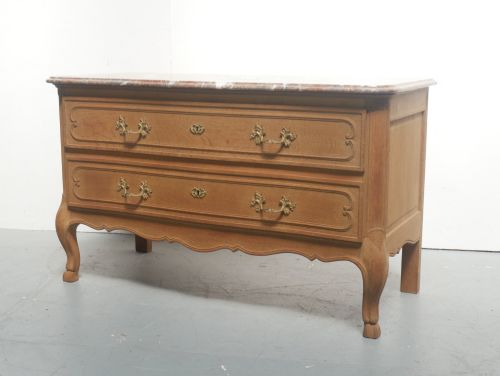
A louis xv marble commode brings sculptural curves and fitted stone to a room, offering generous storage paired with classical French elegance.
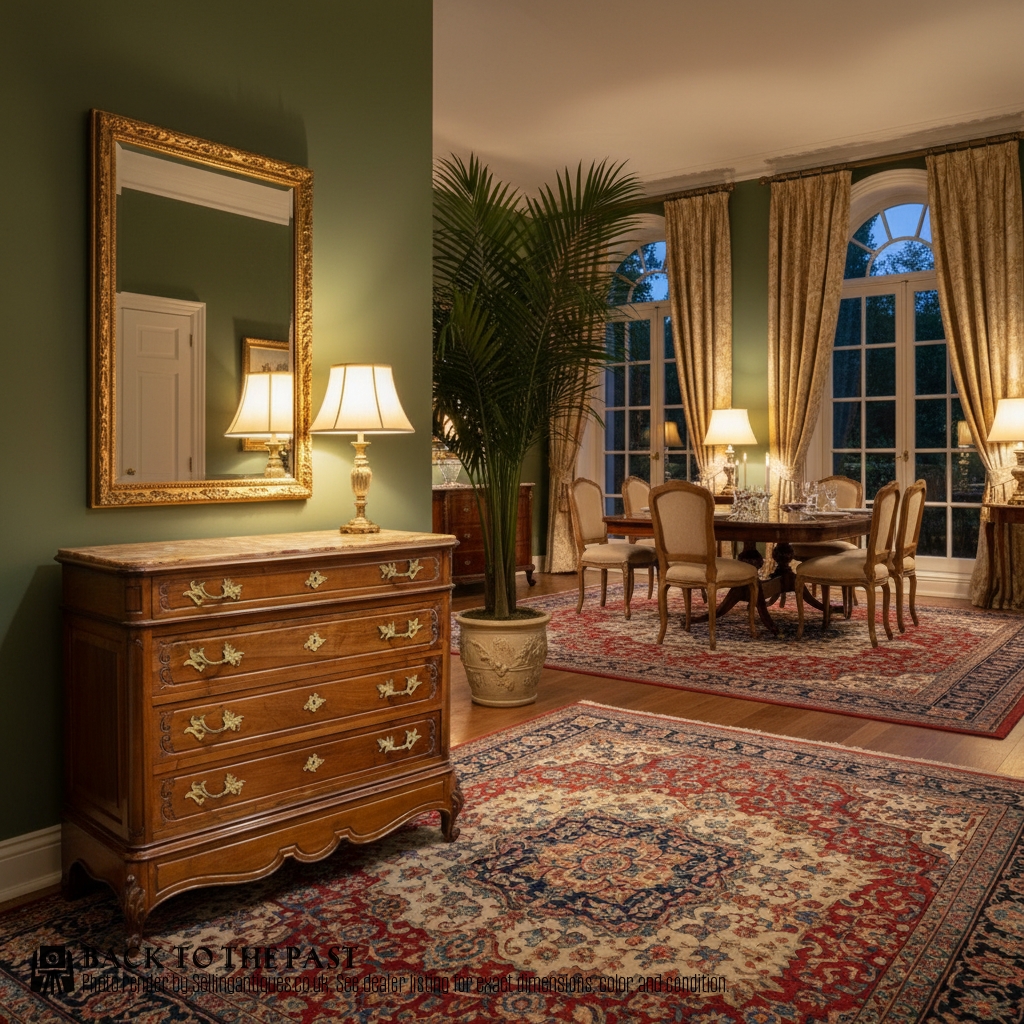
Louis XV Marble Commode
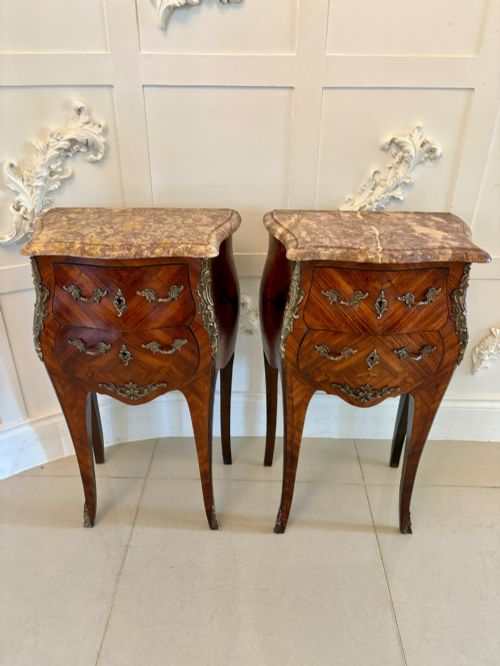
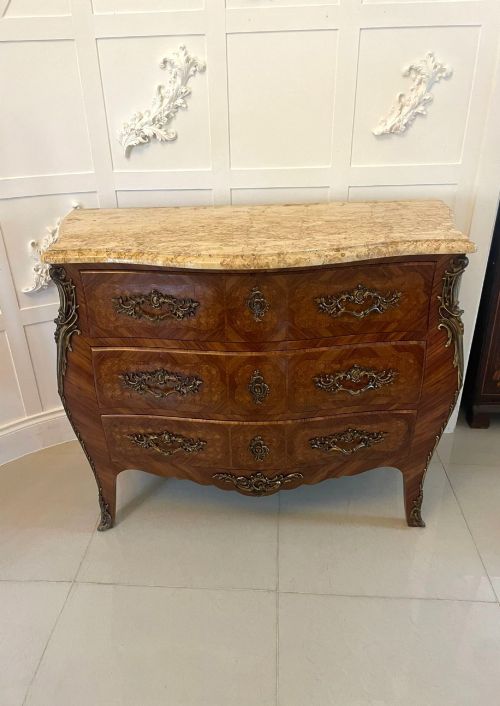
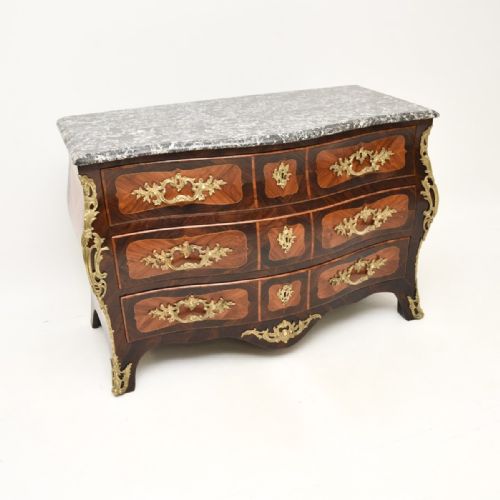
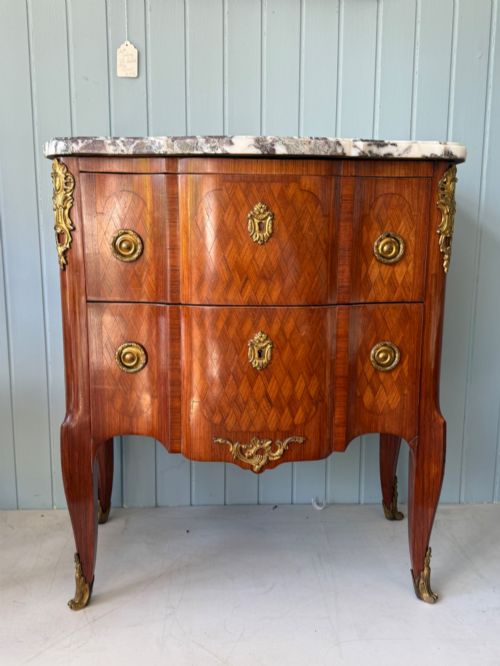
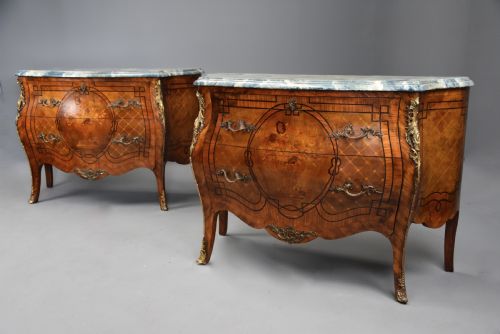
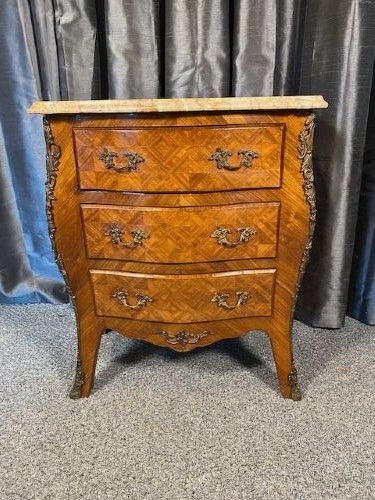
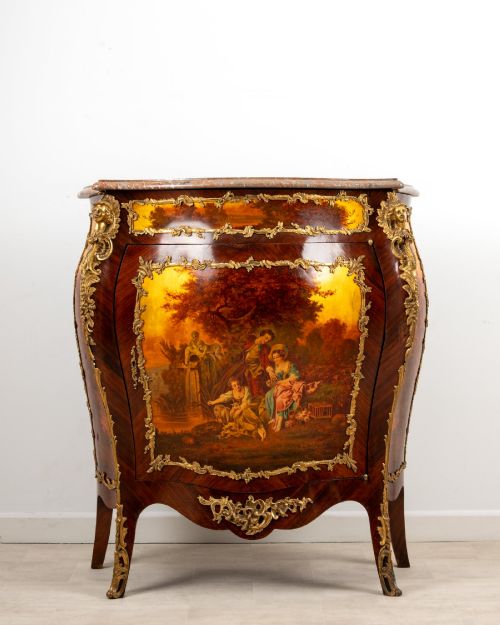
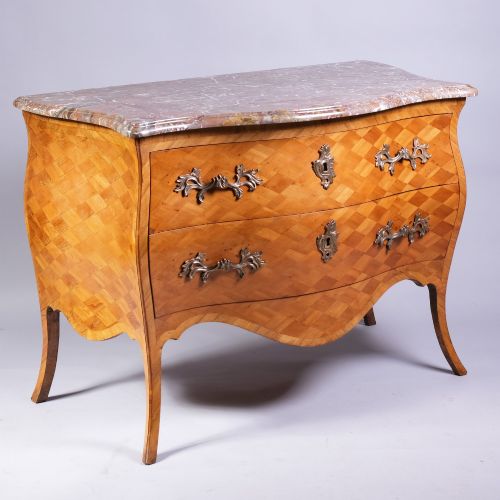
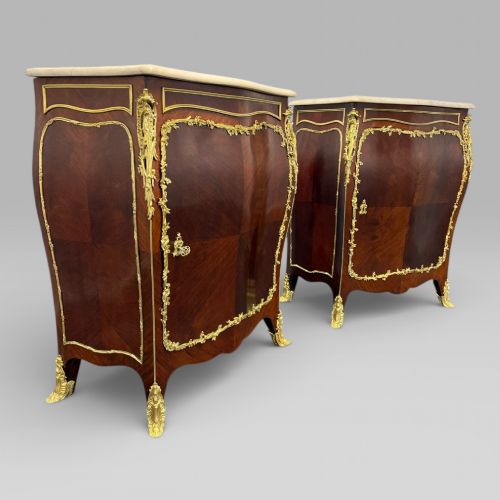
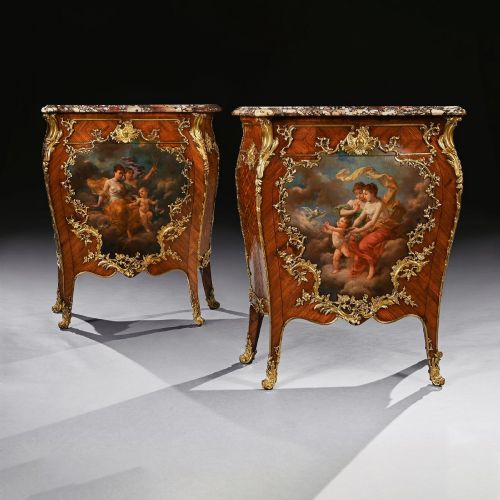
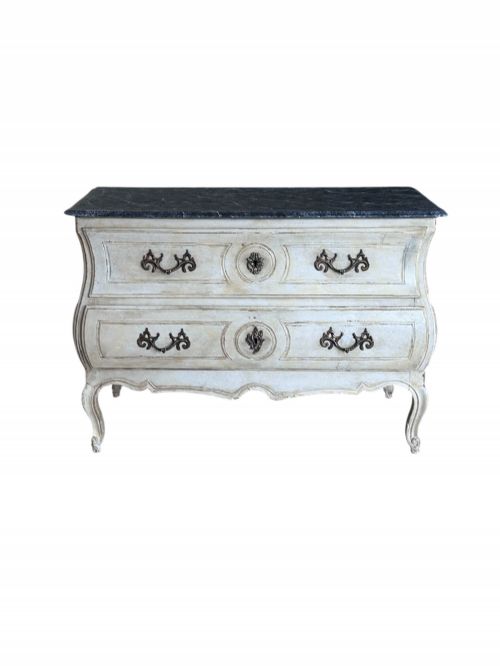
A louis xv marble commode is a low chest of drawers featuring a shaped stone top and characteristic serpentine or bombé silhouettes. These storage pieces originate from eighteenth-century France and reappear across the nineteenth and twentieth centuries in faithful revival styles.
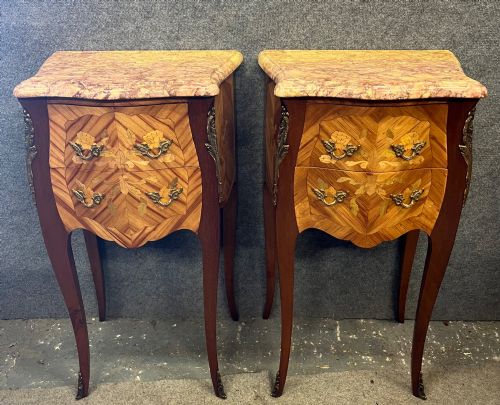
Most examples encountered on this page date from the nineteenth century onwards, adopting the sweeping contours and asymmetrical mounts of the original rococo period. Forms range from full-sized salon chests down to compact bedside cabinets and lamp tables.
Makers working in provincial workshops as well as Parisian ateliers utilised local timbers and imported veneers to construct these case pieces. The inclusion of a heavy marble slab, often contoured to follow the wooden carcass below, remains a defining characteristic across both eighteenth-century antiques and later revivals.
Materials and Construction
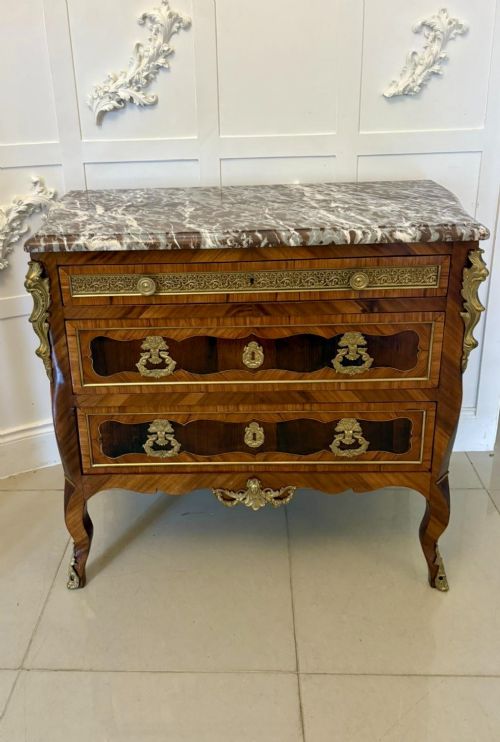
The primary carcase construction relies on native hardwoods such as oak and walnut, which provide structural stability for the sweeping curves. Cabinetmakers applied decorative veneers of kingwood, tulipwood, and rosewood over these foundations, often arranging the grain in intricate parquetry or marquetry patterns.
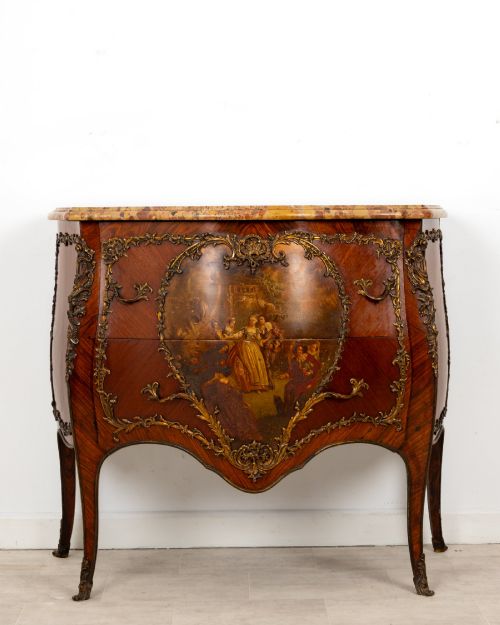
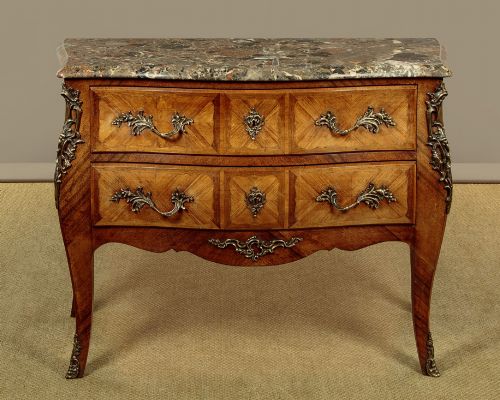
Cast bronze and ormolu mounts accentuate the corners, handles, and aprons, secured to the wooden body with pins or screws. Heavy marble tops, finished with moulded edges, rest directly upon the upper surface of the chest to complete the construction.
Listings feature pieces spanning from the eighteenth century through the nineteen-thirties, utilising marble, ormolu, kingwood, and oak.
Distinctions in Execution
Quality rests heavily on the precision of the cabinetmaker's joinery and the depth of the bronze work. Finer examples display crisply chased ormolu mounts that integrate smoothly with the contours of the wood, whereas simpler pieces use heavier, coarser cast metal.
The selection and arrangement of timber veneers dictate much of the visual merit. Superior commodes exhibit carefully matched grain patterns across the drawer fronts, while lesser pieces rely on plain surfaces or simpler painted finishes.
Jacques Bircklé·E. Kahn
The Louis XV Marble Commode Glossary
- Bombe
- A bulging, outward-curving chest shape swelling on the front and sides. This profile demands advanced woodworking skill to maintain structural integrity.
- Ormolu
- Gilt bronze mounts applied to furniture for decoration and edge protection. The technique involves treating brass or bronze with a gold amalgam.
- Marquetry
- Inlaid wood veneers forming pictorial or geometric patterns on the surface. Cabinetmakers cut contrasting timber sheets together to ensure tight joints.
- Parquetry
- Geometric patterns formed by small pieces of wood veneer arranged in grids or repeating tiles. This technique creates subtle textural variety across flat surfaces.
- Serpentine
- A shape featuring a central concave curve flanked by two convex sweeps. The contour moves fluidly across the front of the cabinet.
Louis XV Marble Commode: Frequently Asked Questions
What rooms suit a louis xv marble commode?
These chests function well as principal storage in bedrooms or as decorative sideboards in hallways and living spaces. The stone surface provides a practical platform for lamps and display items.
Because the proportions are relatively low, they anchor a wall without dominating the vertical space of a room. Pairing them with contemporary or traditional interior schemes highlights their sculptural lines.
How do I care for the marble top?
Clean the stone surface regularly with a damp cloth and mild, neutral soap. Avoid acidic liquids like citrus juice or vinegar, which etch polished marble surfaces.
Applying a specialist stone sealer helps protect against stains from daily use. Lift objects rather than dragging them across the stone to prevent scratching.
How can I tell an 18th-century piece from a 19th-century revival?
Examine the interior drawer construction, timber shrinkage, and hand-cut dovetails for signs of early age. Eighteenth-century pieces often show natural wear patterns and tool marks consistent with period handcraft.
Nineteenth-century revivals frequently employ machine assistance or standardised hardware while closely imitating the earlier rococo aesthetic. Checking the underside and backboards reveals the construction methods typical of later workshops.
Why are some commodes called serpentine?
The term describes a front edge that curves inward in the middle and outward at the sides in a continuous wave. This undulating form replaces flat surfaces to create dynamic shadow and movement.
Crafting this shape requires precise shaping of both the wooden carcase and the corresponding marble top. It stands as a hallmark of advanced cabinetmaking during the rococo revival.