


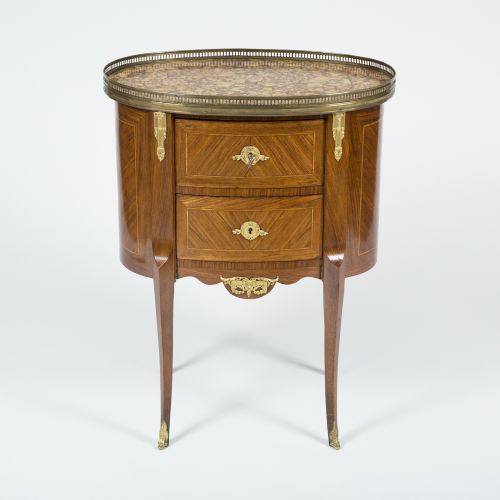
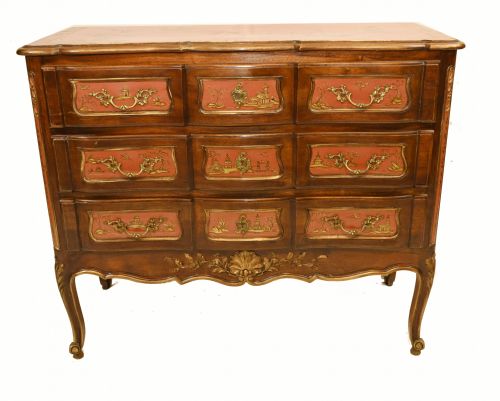


Gilt Brass Mounted Chest
A gilt brass mounted chest brings formal architectural presence and tactile hardware to a room through centuries of cabinet-making craft.
Gilt Brass Mounted Chest
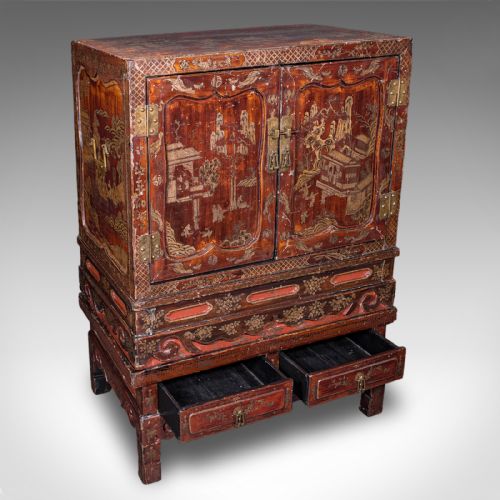
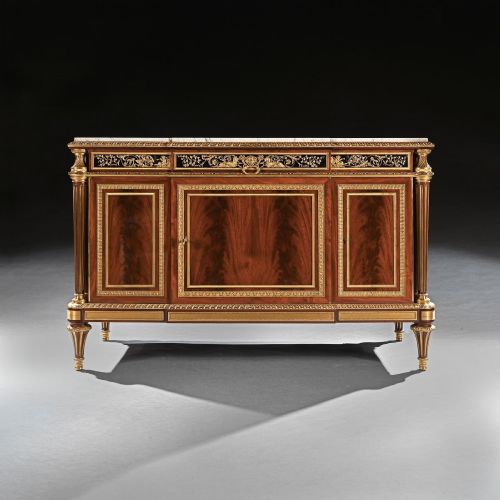
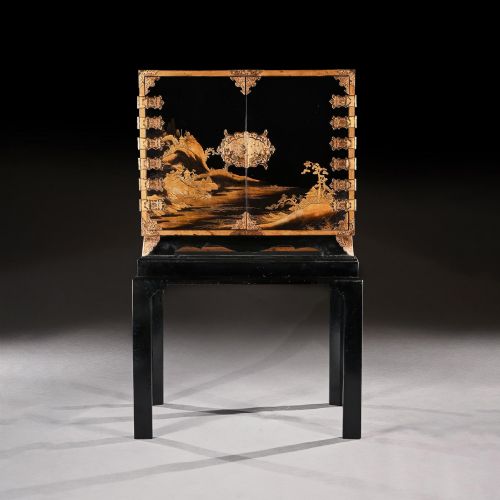
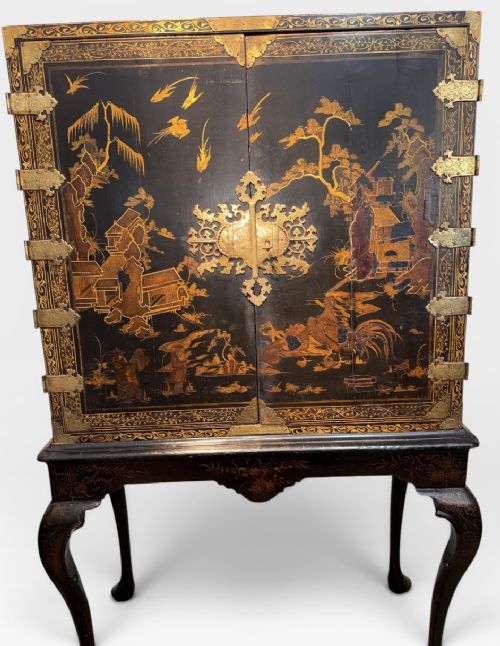
When you search for a gilt brass mounted chest, you encounter storage forms ranging from compact table cabinets and work-boxes to substantial commodes and cabinets on stands. These pieces span the seventeenth, eighteenth, and nineteenth centuries, carrying influences from Queen Anne, Louis XV, Louis XVI, Regency, and Chinoiserie traditions.
The most common formats on this page are commodes, chests of drawers, and cabinets raised on stands, often finished with polished lacquer, walnut, mahogany, or tortoiseshell. Their defining characteristic is the application of metal mounts, which frame drawers, corners, and panels to add structural emphasis and decorative contrast.
Materials and construction
Makers constructed these carcasses from dense timbers like mahogany, walnut, and coromandel, frequently applying exotic veneers or layered lacquer panels across the exterior surfaces. Specialist techniques included parquetry, inlays, and tooling on leather or tortoiseshell backgrounds.
Metal elements in gilt brass or ormolu were cast, chased, and secured to the timber carcasses to protect vulnerable edges and ornament keyways and handles. Marble tops, including breche d'alep varieties, were shaped and polished to cap specific commodes and cabinets.
Object forms include commodes, drinks cabinets, work-boxes, and table cabinets mounted in gilt brass and ormolu.
Judging quality and execution
Quality rests in the crispness of the cast metal mounts and how cleanly they integrate with the surrounding timber or lacquer surfaces. Superior examples display refined hand-chasing on the brass work and precise matching of wood grains or pictorial lacquer scenes.
Internal construction reveals the maker's hand through traditional joinery in the drawer linings and the weight and fit of the cabinet doors. The harmony between the proportions of the carcass and the scale of the metal mounts dictates the visual success of the piece.
Henry Dasson·Weisweiler·Riesener
The Gilt Brass Mounted Chest Glossary
- Commode
- A low chest of drawers or cabinet developed in France during the seventeenth century. It typically stands on relatively short legs and serves both functional and decorative roles in formal rooms.
- Ormolu
- Finely ground and penciled gold leaf applied to a bronze or brass base through a mercury amalgamation process. This technique creates a rich, durable golden finish found on high-status mounts.
- Chinoiserie
- European decorative style inspired by Chinese art and craftsmanship, featuring painted or lacquered landscapes, figures, and motifs. It gained popularity during the seventeenth and eighteenth centuries.
- Parquetry
- Geometric mosaic woodwork used for decorative veneer on floors and furniture surfaces. Artisans cut small pieces of contrasting timber to form repeating patterns.
- Bombe
- A swelling, outward-curving profile on the front and sides of a chest or commode. This Baroque and Rococo form requires advanced shaping of the timber carcass.
Gilt Brass Mounted Chest: Frequently Asked Questions
What is a gilt brass mounted chest?
A gilt brass mounted chest is a wooden storage piece, such as a commode or cabinet, decorated with cast and gilded metal mounts.
These metal elements highlight the corners, feet, and drawer fronts, combining storage utility with decorative metalwork.
How do I date a lacquer cabinet?
Dating relies on examining the timber construction of the stand, the style of the painted or applied lacquer panels, and the mounting hardware.
Earlier pieces from the seventeenth and eighteenth centuries often feature distinct joinery methods and hand-mixed pigments compared to later nineteenth-century interpretations.
Where should I place a commode?
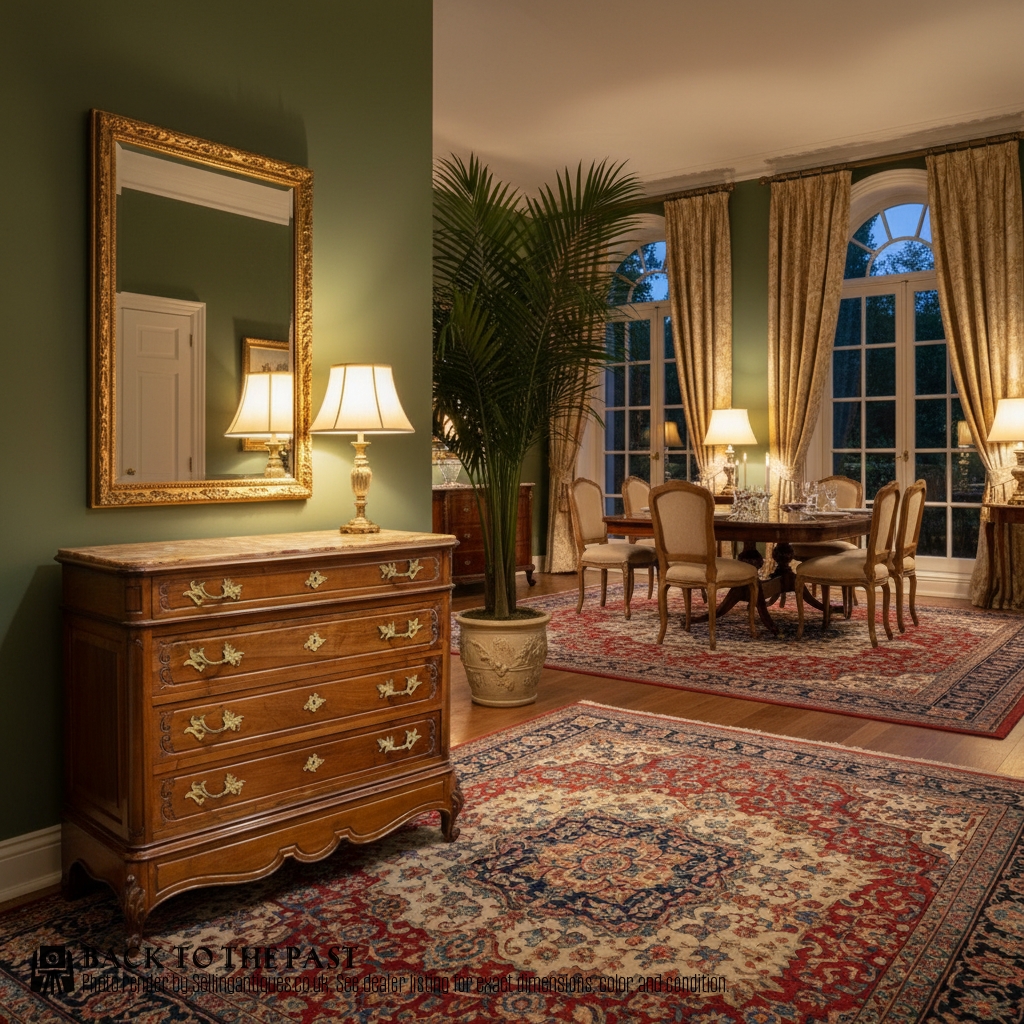
A commode suits placement against a prominent wall in a living room, hallway, or bedroom where its surface can hold lighting or decorative objects.
Its finished top and decorative mounts allow it to function as a focal point within a room scheme.
What is the difference between a commode and a chest of drawers?
A commode generally refers to a low, decorative French-style chest of drawers or cabinet resting on legs, often featuring marble tops and elaborate mounts.
A standard chest of drawers focuses primarily on utilitarian vertical storage with simpler proportions and minimal hardware.