
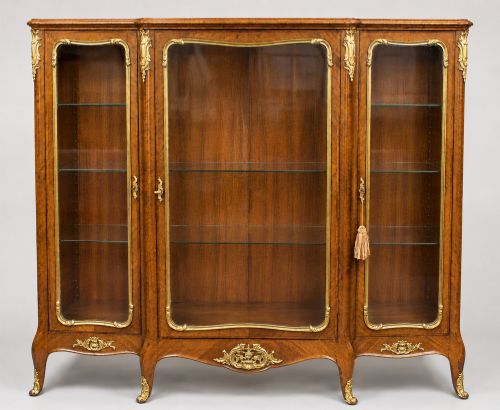

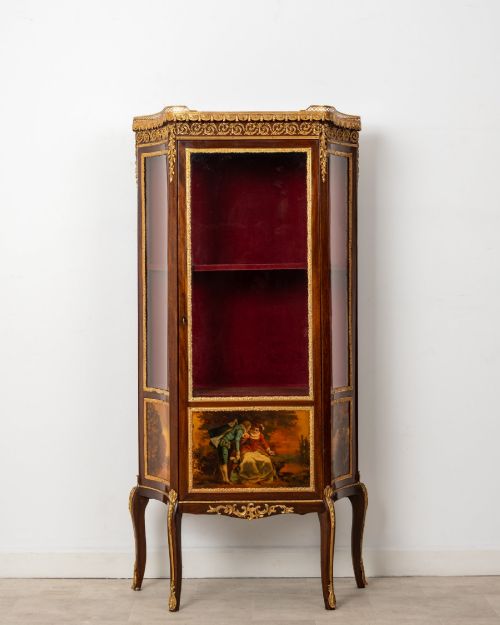
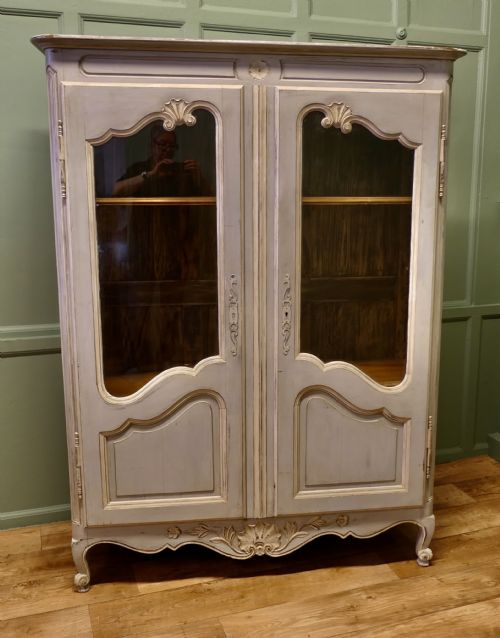
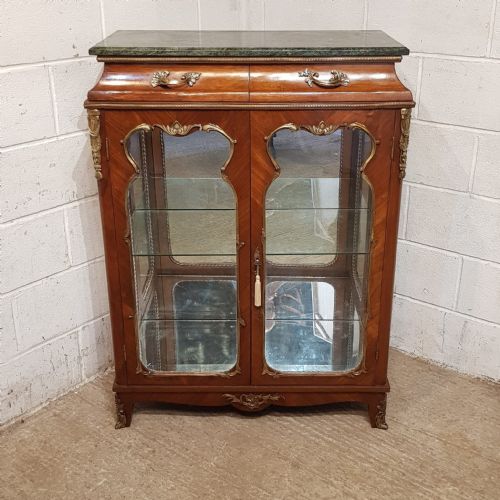
Louis XV Glazed Cabinet
A louis xv glazed cabinet brings organic curves and delicate glazing to a drawing room, offering a display space that draws the eye.
Louis XV Glazed Cabinet
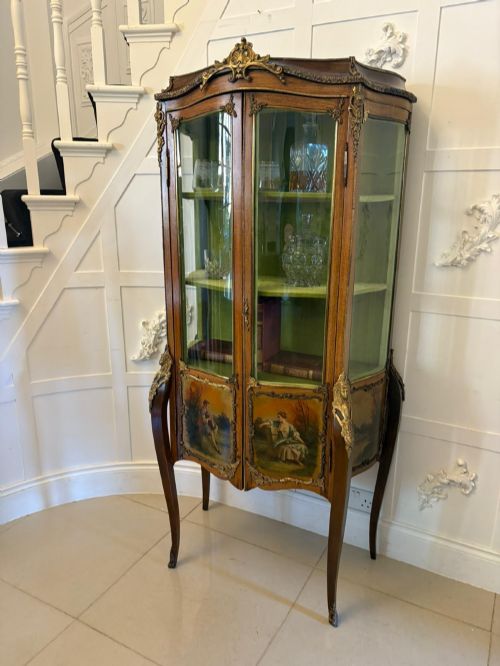
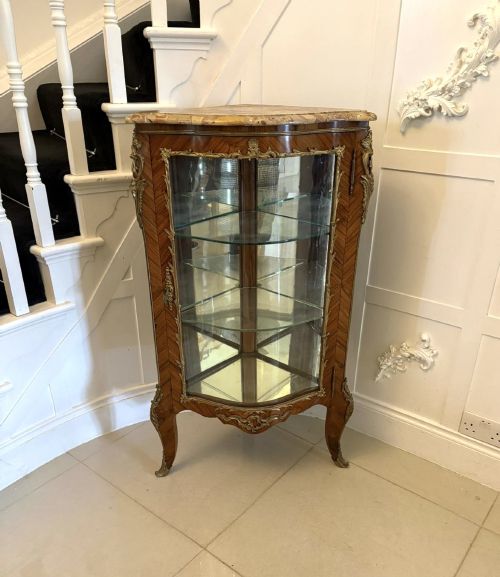
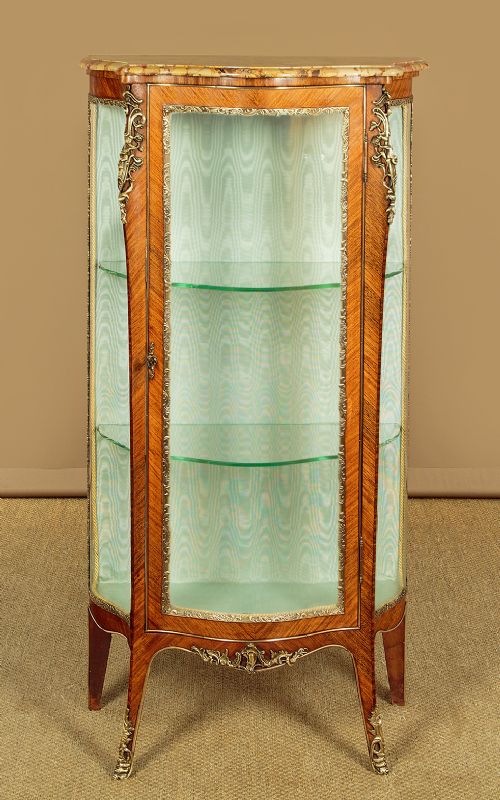
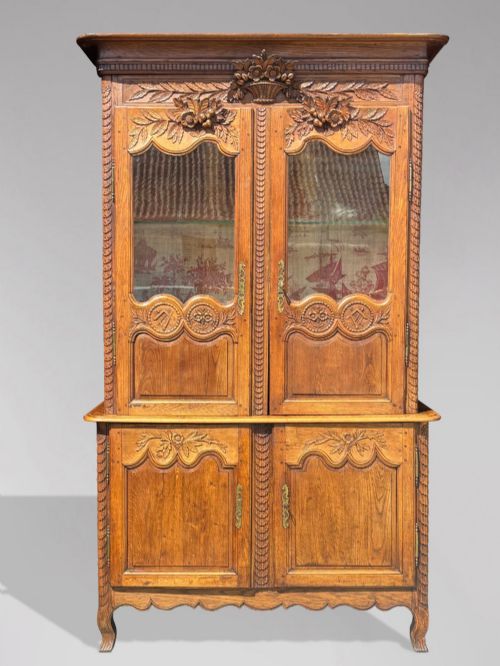
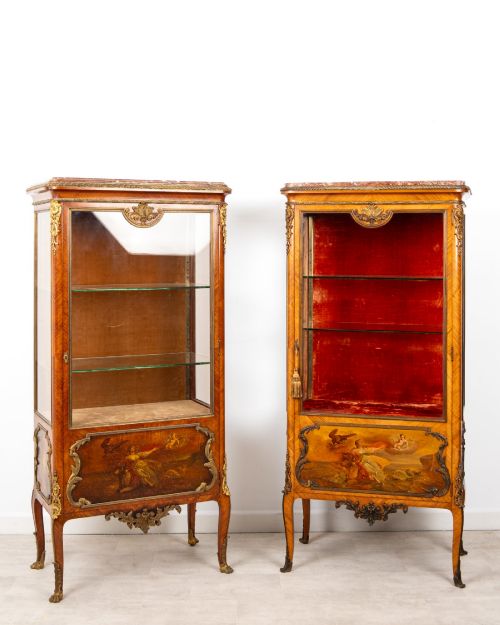
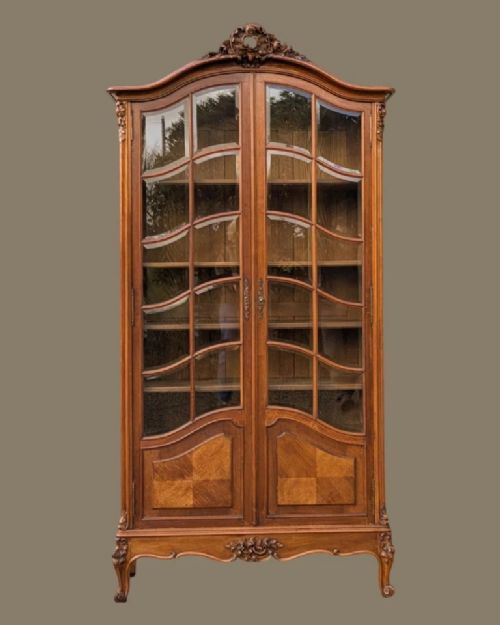
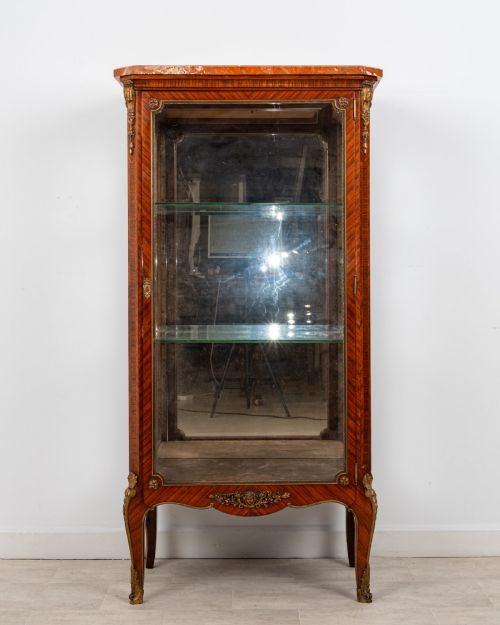
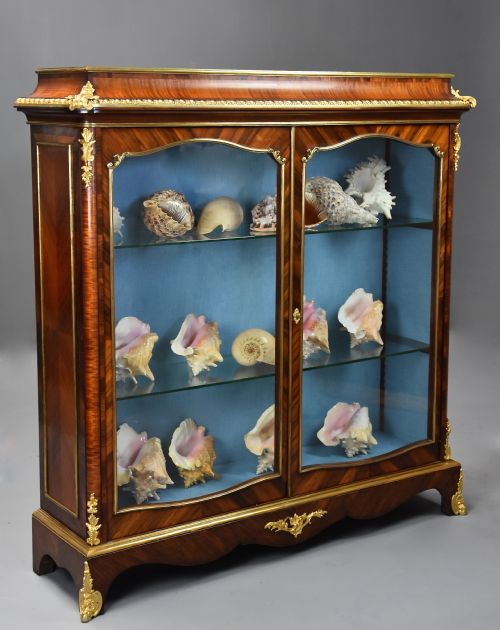
A louis xv glazed cabinet typically appears on this page as a freestanding vitrine or display cabinet originating from the nineteenth century. Makers and manufacturers produced these pieces in revival styles such as French Rococo, incorporating serpentine forms and glazed panels designed for showcasing porcelain and curiosities.
The selection also includes credenzas, bookcases, and side cabinets influenced by French provincial and chateau aesthetics. Walnut, mahogany, and kingwood carcasses frequently form the basis of these items, often paired with matching display furniture.
Dating ranges primarily from the Victorian era into the early twentieth century, alongside occasional eighteenth-century examples. Forms vary from large double-door display units down to compact table-top vitrines and wall-hanging cabinets.
How they were made
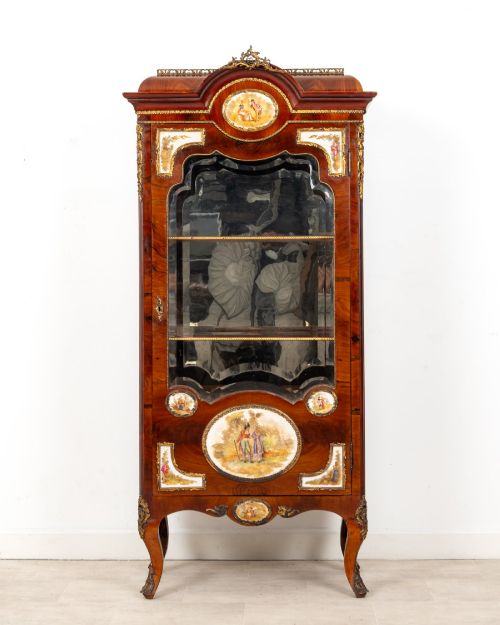
Craftsmen built these cabinets using timber frames of walnut, mahogany, or kingwood, frequently applying elaborate marquetry and parquetry patterns. Ormolu mounts, cast in gilt bronze or gilt metal, embellish corners, feet, and cornices to accentuate the fluid contours.
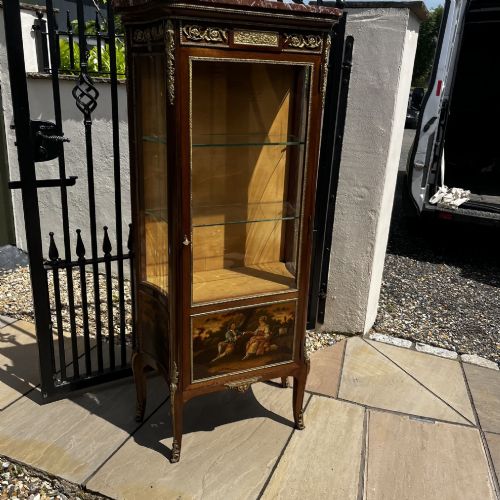
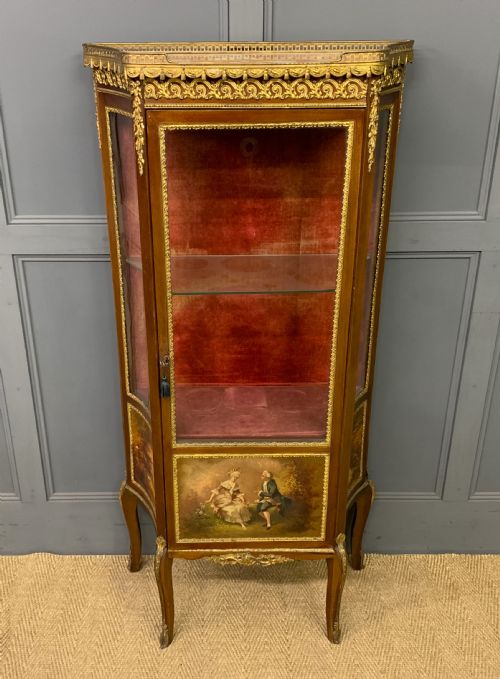
Glazing takes the form of fitted glass panels, sometimes curved or concave, allowing light to enter the interior display area. Painted panels executed in the Vernis Martin technique and inset porcelain plaques further decorate the surfaces of specific cabinets.
Some miniature versions sit entirely upon tabletops, offering a tiny stage for the display of exceedingly small treasures.
What varies in quality
The sophistication of the bronze or ormolu mounts dictates much of the visual distinction, with finely chased metalwork standing apart from simpler castings. The depth and precision of the underlying marquetry or parquetry also separate standard production from masterwork pieces.
Attribution to documented makers introduces a distinct tier of craftsmanship in construction and detailing. The integration of hand-painted Vernis Martin panels and genuine marble tops further elevates the finish of individual cabinets.
François Linke·G. Durand·Paul Sormani
The Louis XV Glazed Cabinet Glossary
- Vitrine
- A glass-fronted display cabinet used for showcasing fine porcelain, objects, and small collections. The term derives from the French word for glass.
- Ormolu
- Gilded bronze mounts applied to furniture for decorative enrichment. The technique involves applying a gold amalgam to bronze before firing.
- Vernis Martin
- A simulated Japanese lacquer technique developed in eighteenth-century France and replicated on revival furniture. It produces translucent painted decorative panels.
- Kingwood
- A dense Brazilian timber with rich dark violet and brown figuring used heavily in cabinetmaking. It is frequently cut into veneers for geometric marquetry.
- Serpentine
- A furniture front or top curving inward centrally and outward at the ends in an undulating line. This contour defines much of the Rococo aesthetic.
Louis XV Glazed Cabinet: Frequently Asked Questions
What is a louis xv glazed cabinet used for?
These cabinets were originally designed to display prized porcelain, decorative objects, and collectibles securely while protecting them from dust. The glazed panels and sides allowed light to illuminate the interior contents from multiple angles.
Today, they serve a similar purpose in domestic interiors, acting as focal points for curated displays of glassware, ceramics, or small antiques within a reception room or study.
How do I identify a revival piece?
Revival pieces from the nineteenth century adopt the characteristic asymmetry, C-scrolls, and floral motifs of the original eighteenth-century French movement. Examining the construction methods, wood ageing, and screw types helps clarify the actual period of manufacture.
Many pieces on this page date to the Victorian era or around nineteen hundred, utilising period veneer techniques and heavy ormolu mounts that mimic earlier craftsmanship.
Where should I place a vitrine?
A vitrine requires a stable location away from direct sunlight to protect vulnerable wood veneers and interior fabric linings from fading. Positioning the cabinet near a light source enhances the visibility of items placed behind the glass panels.
Because many examples feature finished backs or serpentine shapes, they suit placement against principal drawing room walls or angled neatly into corners.
How do marble tops affect the cabinet?
Marble tops provide a durable, decorative surface finish that contrasts with the warm tones of kingwood or walnut cabinetry. They add substantial weight to the overall structure, increasing stability for tall display units.
Original marble slabs often feature shaped or moulded edges that match the serpentine contour of the wooden carcase beneath.