
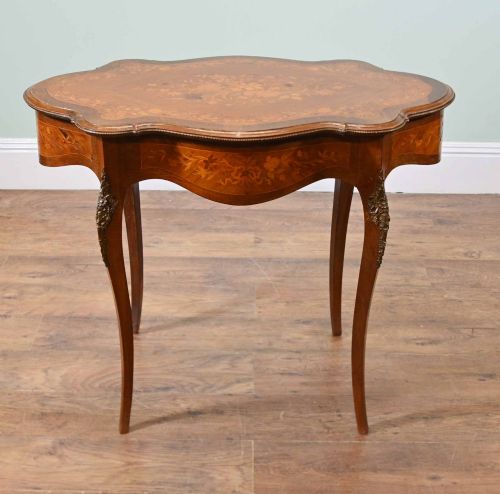
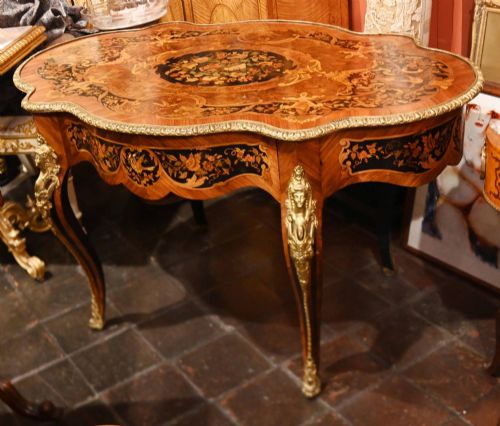
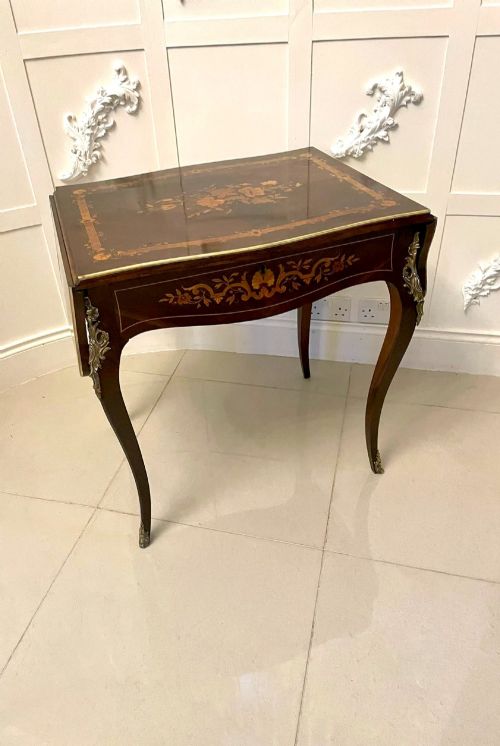
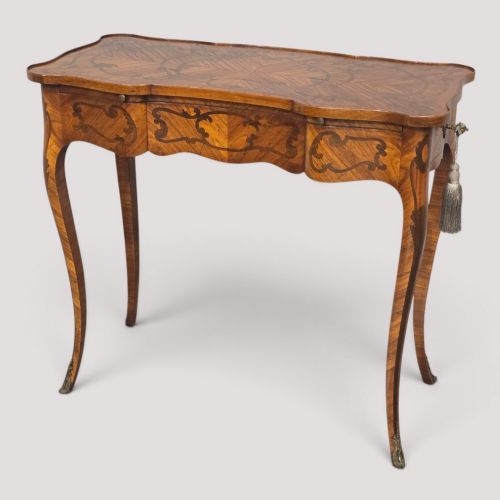



Louis XV Floral Desk
A louis xv floral desk brings curved French rococo elegance to a room through intricate marquetry and mounts.
Louis XV Floral Desk
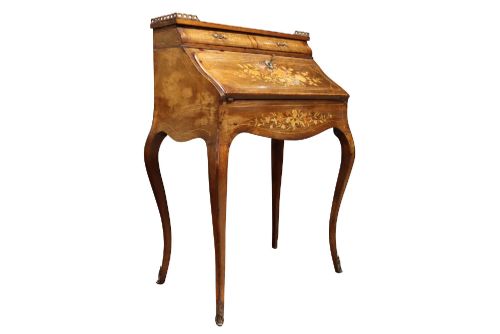
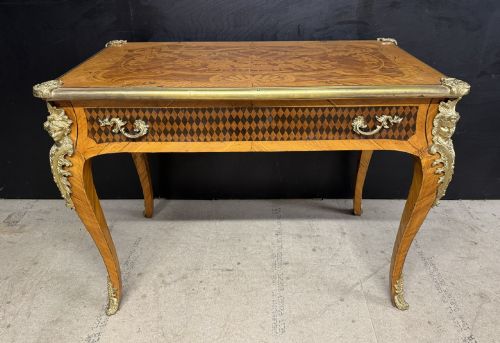
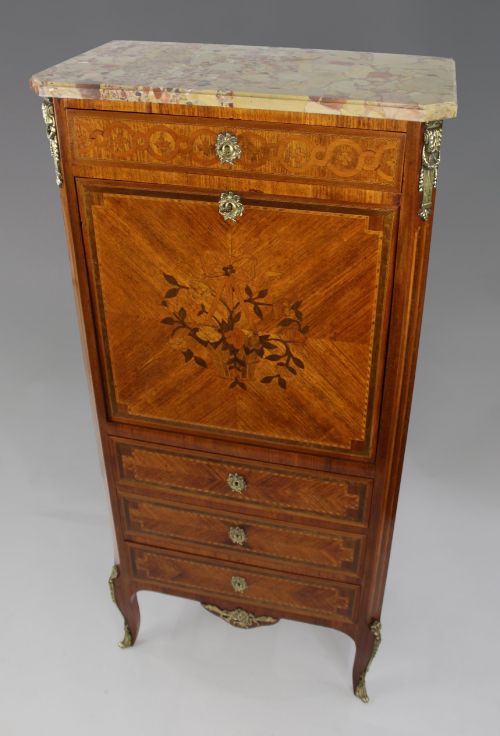
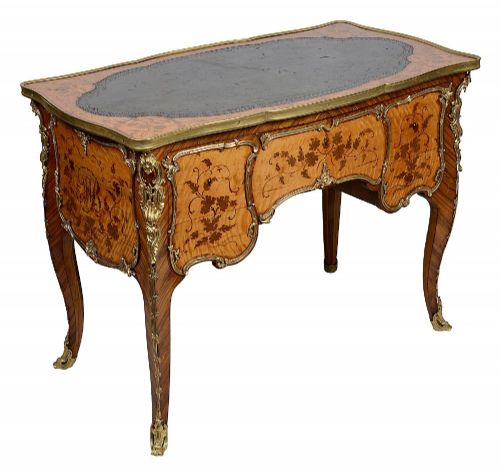
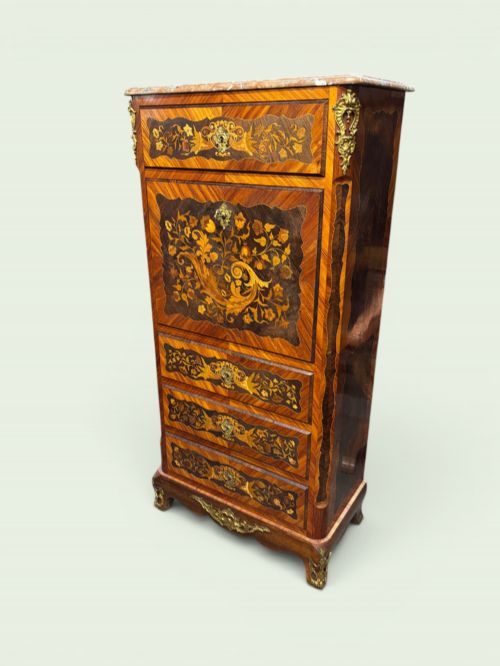
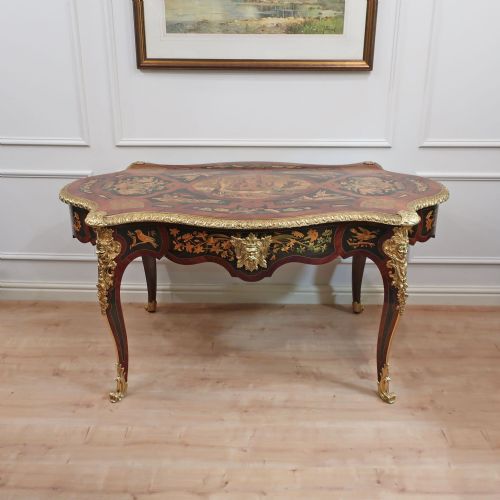
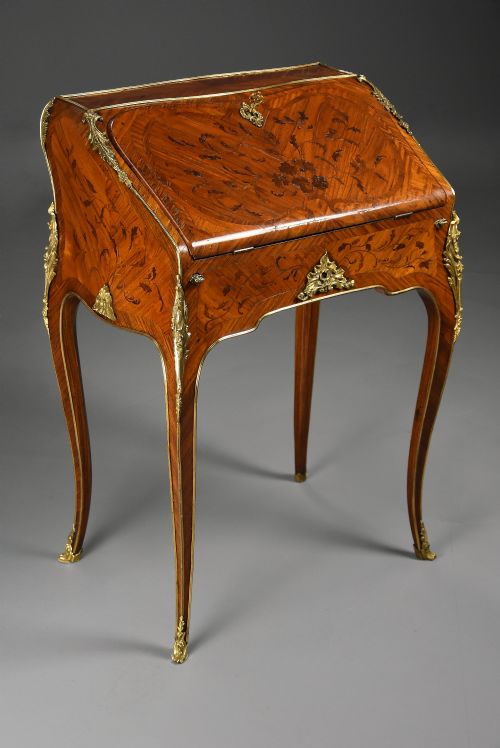
A louis xv floral desk encompasses writing tables, bureau de dame forms, and freestanding centre tables created during the nineteenth century revival periods.
The pieces emerge primarily from French traditions, capturing the asymmetrical flair of rococo design alongside floral marquetry patterns.
Most examples seen here date from the nineteenth century, including specific decades such as 1860, 1880, and 1900, interpreting earlier mid eighteenth century aesthetics.
Materials and Construction
Cabinetmakers build the carcases using rosewood, kingwood, walnut, and fruitwood, applying detailed floral marquetry inlay across the surfaces.
Ormolu and gilt bronze mounts accent the curves, while brass detailing and leather writing inserts complete the functional sections of the desks.
Some nineteenth century ladies desks secretly housed tiny compartments for hiding love letters and gossip.
Craftsmanship and Proportion
Quality rests in the crispness of the floral marquetry and the precision of the joinery shaping the cabriole legs and serpentine curves.
The finesse of the ormolu mounts and the selection of cabinet woods distinguish finer desks from standard revival iterations.
BVRB·Marti
The Louis XV Floral Desk Glossary
- Marquetry
- Decorative veneer work arranged in pictorial patterns, such as floral motifs, across the furniture surface.
- Ormolu
- Gilded bronze mounts applied to the angles and feet of furniture for decorative enhancement.
- Bureau Plat
- A flat topped writing table, often freestanding and fitted with drawers.
- Cabriole Leg
- A furniture leg that bends outward and then tapers inward, typical of rococo design.
- Escritoire
- A writing cabinet featuring a sloping or drop front desk compartment.
Louis XV Floral Desk: Frequently Asked Questions
What is a bureau de dame?
A bureau de dame is a ladies compact writing desk, frequently equipped with small drawers and a sloping lid for correspondence.
These pieces were designed for domestic boudoirs and private reception rooms during the nineteenth century.
Where were these desks placed?
Freestanding centre tables and bureau plat desks were designed to sit in the middle of a room rather than against a wall.
This placement displayed the floral marquetry inlay from all visible angles.
What woods are commonly used?
Cabinetmakers utilised exotic timbers like rosewood and kingwood alongside walnut and fruitwood for contrasting marquetry tones.
These veneers create the detailed floral designs characteristic of the period.