
Louis XV Bureau Desk
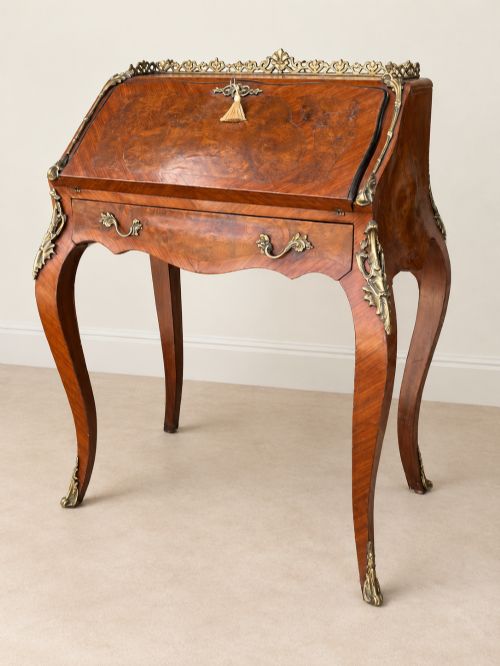
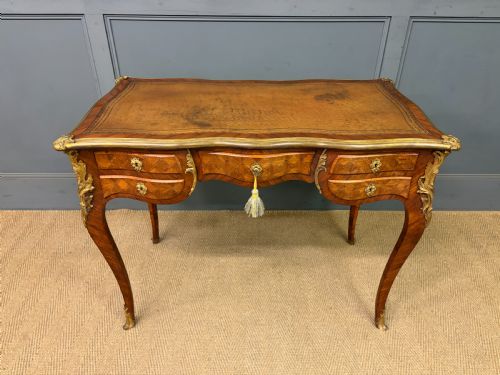
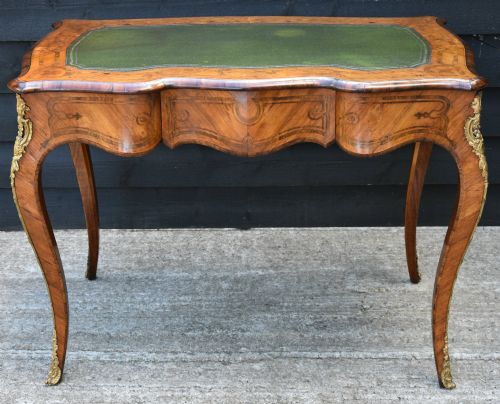
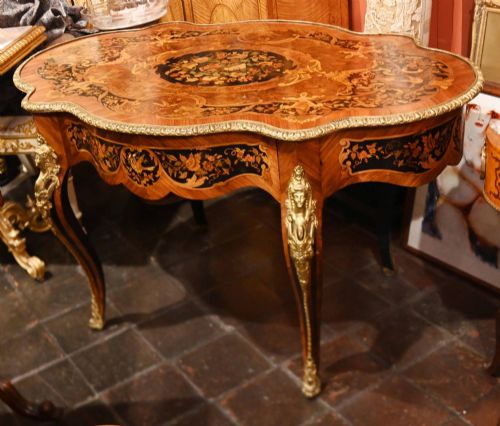
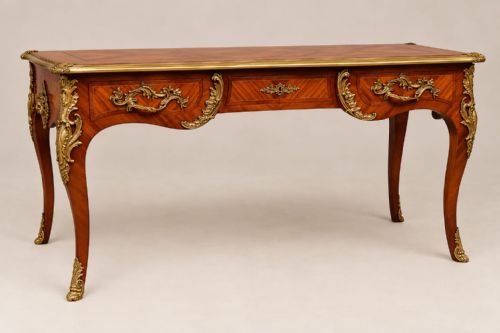
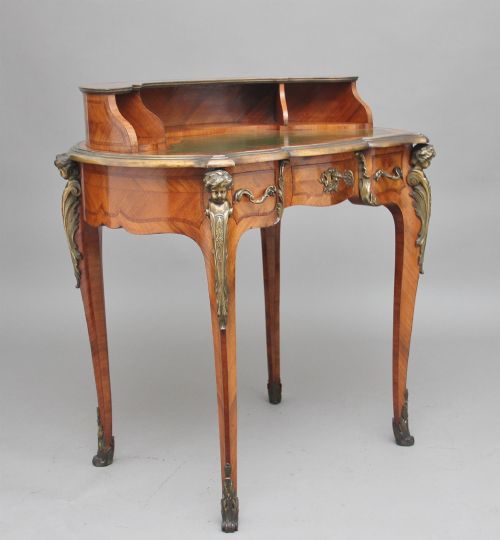
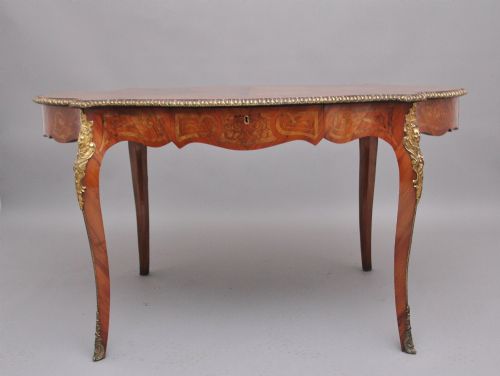
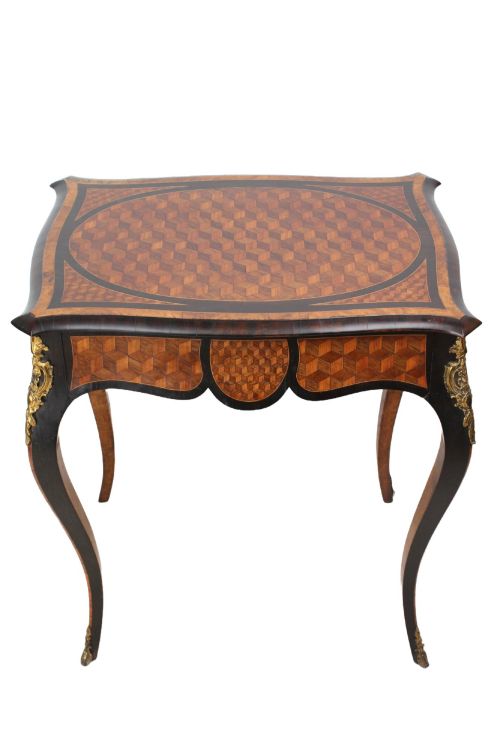
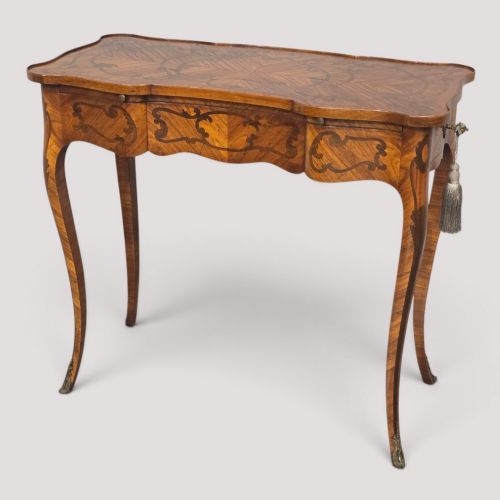
These pieces are a louis xv bureau desk, shaped by serpentine curves and delicate marquetry to offer an elegant writing surface.
Louis XV Bureau Desk
When you search for a louis xv bureau desk, you enter a world of serpentine forms, cabriole legs and freestanding writing furniture rooted in the French Rococo tradition. The examples met most often on this page span the nineteenth-century revival periods, alongside authentic eighteenth-century survivals.
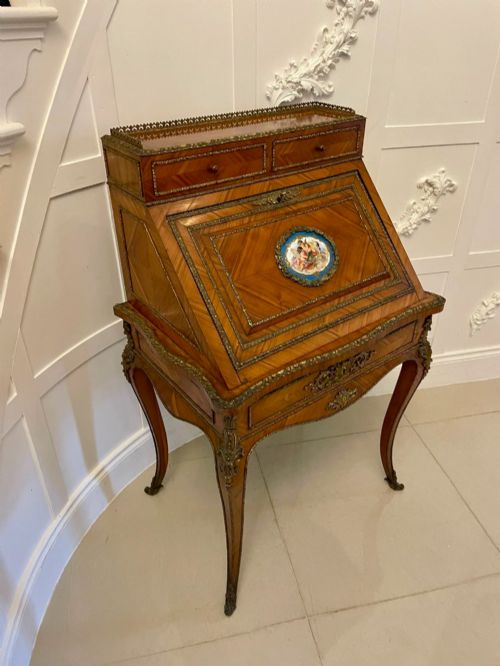
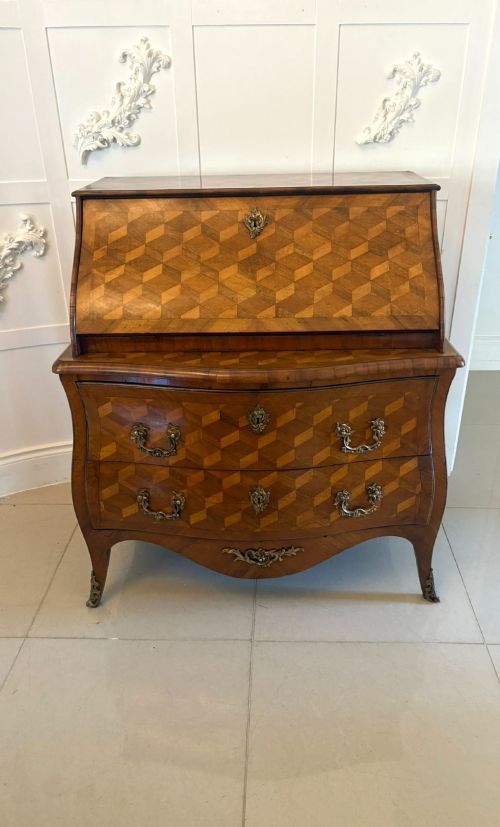
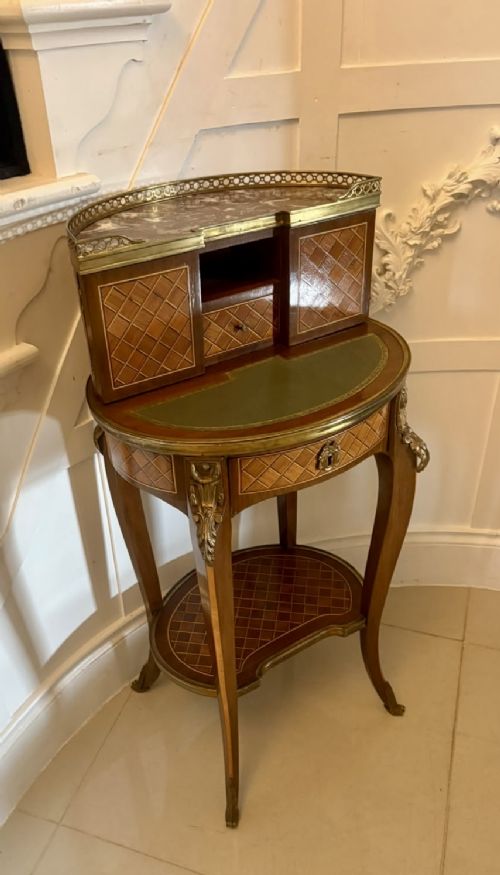
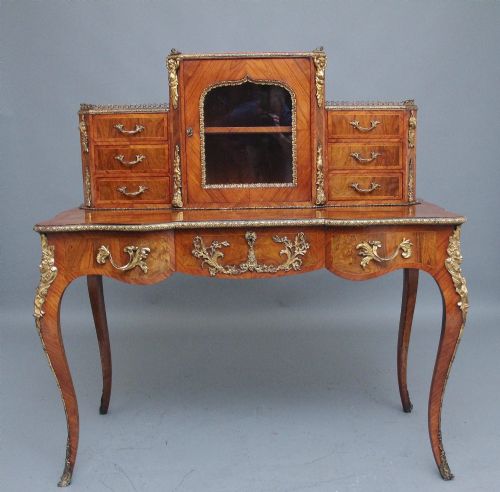
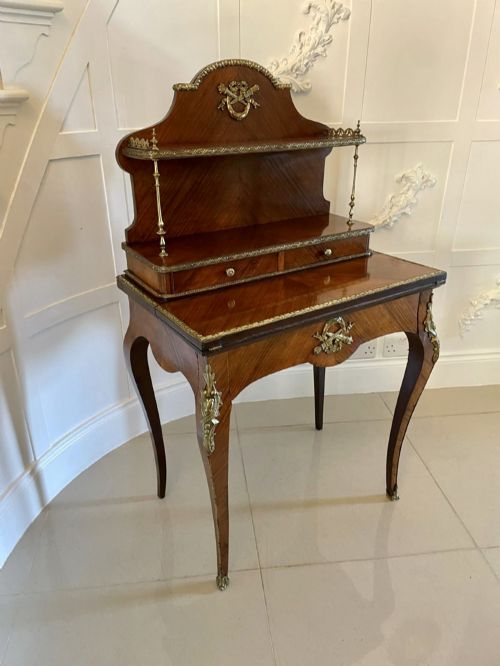
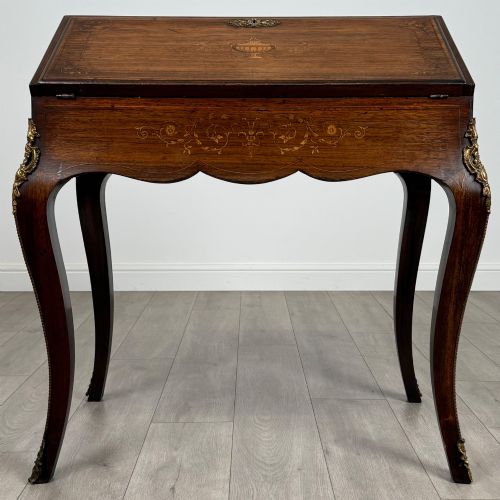
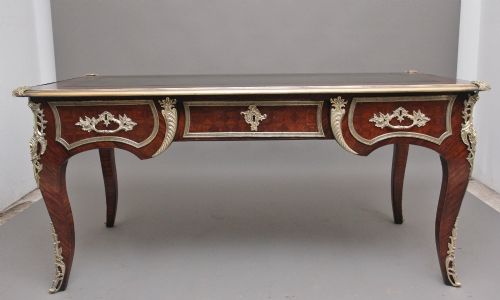
Forms range from the writing table or bureau plat to the compact bonheur du jour and the slope-front bureau de dame. Makers shaped these desks for private chambers and salons, balancing functional writing surfaces with elaborate inlaid veneers.
The aesthetic relies heavily on the French Louis XV style, often executed with asymmetrical floral marquetry, gilt bronze mounts and fitted leather writing inserts.
How they were made
Cabinet makers constructed carcass frames from native walnut or oak, laying down complex geometric parquetry or floral marquetry veneers in kingwood, rosewood and tulipwood. These surfaces received meticulous hand-polishing to highlight the natural grain contrasts.
Casters, handles, sabots and decorative corner mounts were cast in ormolu or gilt bronze, then chased by hand to sharpen the foliate details. Leather writing surfaces were typically tooled with gold leaf borders and set into recessed wooden frames.
Several desks include hidden compartments designed for secret love letters.
What varies in quality
The distinction between ordinary production and master craftsmanship lies in the crispness of the gilt bronze mounts and the precision of the veneer work. Maker attribution plays a central role, with signed pieces by renowned workshops commanding greater appreciation for their structural integrity and artistic execution.
Subtleties in the hand-chasing of ormolu mounts and the depth of the timber selection elevate certain desks above standard revival workshop pieces. Original details, such as fitted leather inserts and matching keys, preserve the intended character of the desk.
JAS Shoolbred·Francois Linke·Edwards and Roberts·Paul Sormani·CH Jeanselme and Co·Durand·Alphonse Tahan
The Louis XV Bureau Desk Glossary
- Bureau plat
- A freestanding writing table fitted with drawers and typically a leather inset top, designed to stand away from the wall.
- Ormolu
- Gilt bronze mounts applied to furniture edges and corners for decorative accent and structural protection.
- Marquetry
- Elaborate veneer patterns formed by fitting together thin slices of various coloured woods to create pictorial designs.
- Cabriole leg
- An outward-curving furniture leg inspired by animal limbs, ending in a pad, scroll or sabot foot.
- Bonheur du jour
- A small, light ladies' writing desk featuring a tiered superstructure with small drawers or shelves above the main surface.
Louis XV Bureau Desk: Frequently Asked Questions
Where was a bureau plat placed?
A bureau plat was traditionally placed in the centre of a room rather than against a wall, as the back is finished with the same attention to detail as the front.
This freestanding nature allowed the owner to conduct correspondence from a prominent position within a grand salon or library.
How do I identify a nineteenth-century revival piece?
Nineteenth-century revival pieces display mechanical consistency in their marquetry cutting and standardised casting methods for their ormolu mounts, reflecting the industrial advances of the period.
Examining the secondary timbers inside the drawer linings and the oxidation of the metal helps differentiate these later interpretations from eighteenth-century originals.
What is a bonheur du jour used for?
A bonheur du jour served as a light, portable writing desk for a lady's morning correspondence and personal notes.
The upper tiers and small compartments held stationery, inkwells and seals, keeping writing materials organised in a compact footprint.
Why do some desks feature porcelain plaques?
Porcelain plaques were incorporated into select nineteenth-century pieces, particularly bonheur du jour desks, to introduce painted floral panels that complemented the gilt bronze mounts.
Sèvres-style ceramics added colour and luxury, aligning with the Victorian taste for eclectic ornamentation.