

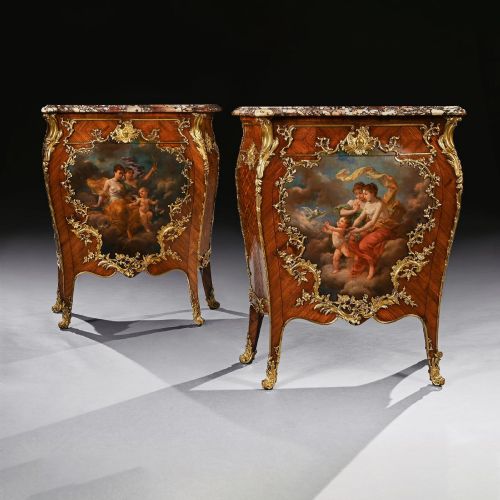
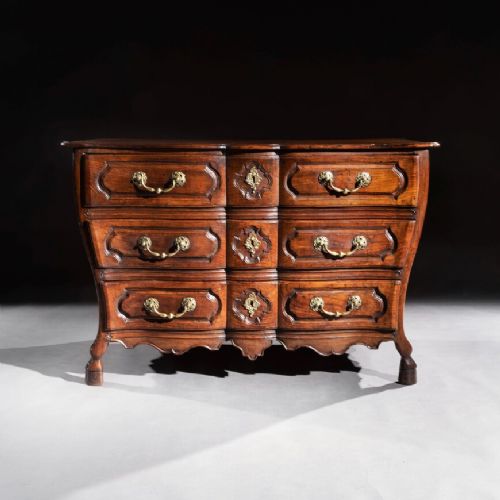
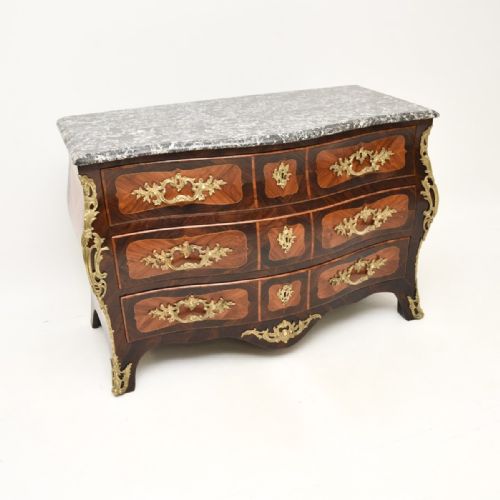
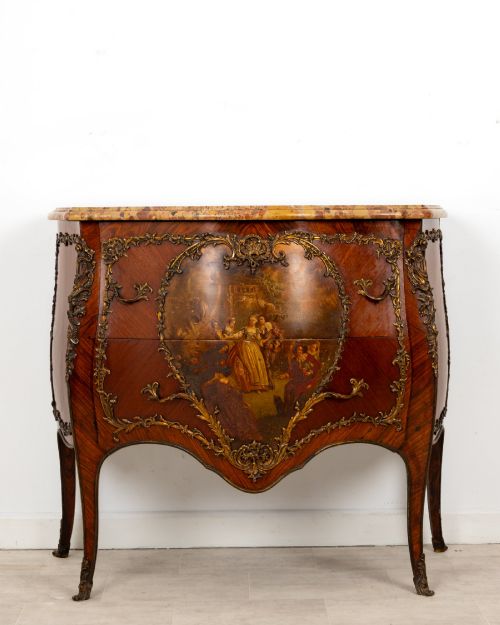


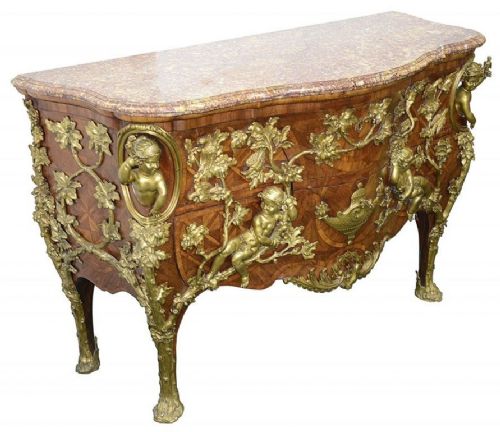
Louis XV Bombee Commode
A louis xv bombee commode brings sweeping serpentine curves and rich marquetry into a room, offering grand storage through opulent eighteenth-century French design.
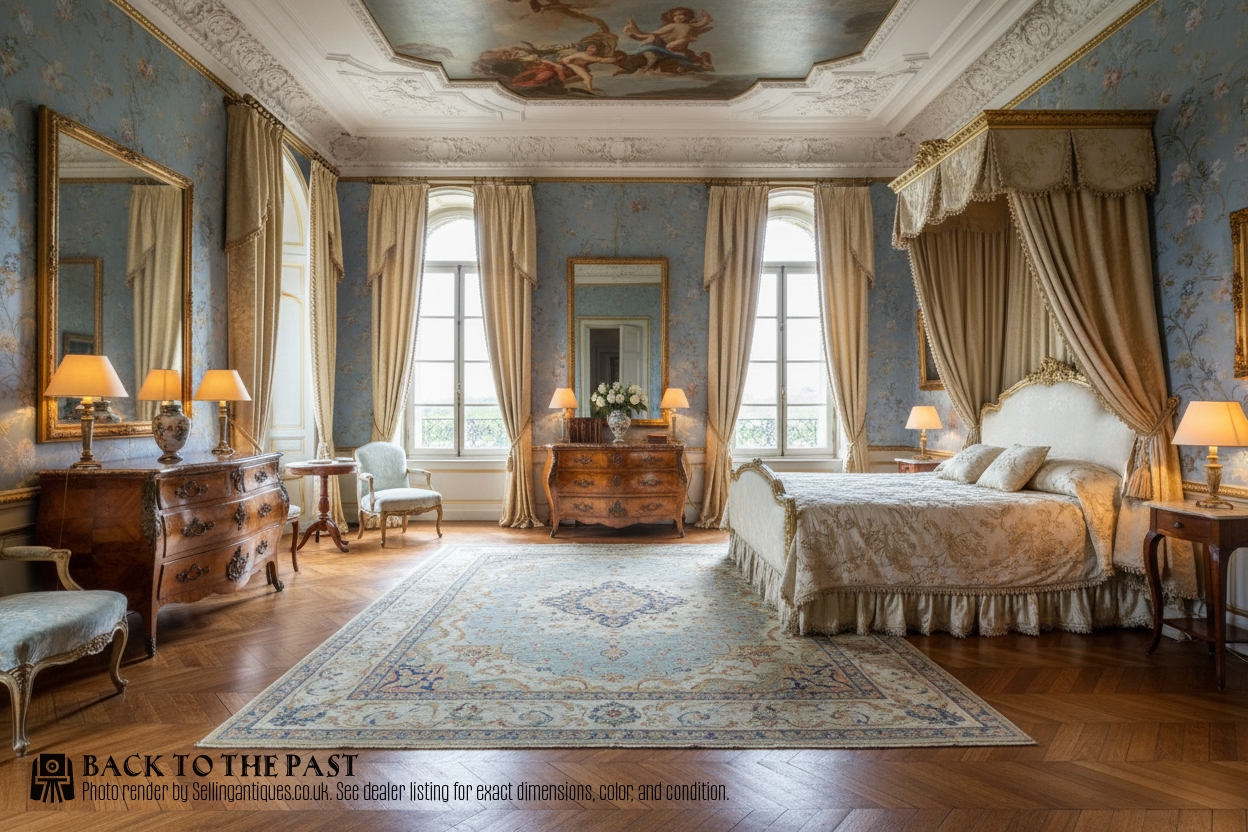
Louis XV Bombee Commode
When you search for a louis xv bombee commode, you encounter swelling, rounded chests of drawers shaped with characteristic serpentine lines and subtle curvature. These grand storage pieces emerge primarily from nineteenth-century revival periods as well as mid-eighteenth-century origins, capturing the extravagant aesthetic of French chateaux.
The versions you are most likely to meet on this page span the 19th Century, 1800s revival eras, and occasional pieces bearing detailed marquetry or marble tops. They function equally well as striking focal points in hallways or as luxurious bedside chests in period bedrooms.
Makers and workshops across these periods channel classical French Rococo styles, often incorporating distinct commode forms alongside broader chests of drawers and cabinets. Each piece displays the swelling bombé profile that defines this sought-after silhouette.
Materials and construction
Gilt bronze and ormolu mounts punctuate the exterior, cast and chased into ornate rococo scrolls that accent the corners, handles, and apron. Brass details and specialised finishes like Vernis Martin further enrich the surface, showcasing the intricate labour involved in authentic French cabinetmaking.
Louis XV Bombee Commode Retail Price Guide 2026
Typical asking prices for louis xv bombee commode among the pieces listed under this phrase on Sellingantiques today, from the lower quarter to the upper quarter. They describe what is for sale here now, not the wider market.
Listings feature nineteen-century revival interpretations alongside mid-eighteenth-century origins, utilising Kingwood, walnut, rosewood, and marble.
Judging the quality
Quality rests in the fluidity of the bombé contour and the precision of the veneer work, where superior examples exhibit seamless grain continuity across curved drawer fronts. The crispness of the gilt bronze mounts and the weight of the marble top also distinguish finer items from simpler production.
Subtleties in marquetry design and the depth of the timber patination separate standard revival items from pieces executed with exceptional sculptural ambition. Masterful chasing on the bronze hardware reveals a higher tier of workshop output.
Jacques Bircklé·Charles Cressant
The Louis XV Bombee Commode Glossary
- Bombé
- A swelling, outward-curving profile characteristic of baroque and rococo case furniture. This bulging shape requires advanced woodworking skill to achieve successfully.
- Ormolu
- Gilded bronze mounts applied to furniture for decorative accent. The technique involves coating cast bronze in a layer of gold amalgam.
- Marquetry
- Decorative patterns formed by inserting thin veneers of different coloured woods into a fitted background. Artisans use this method to create elaborate floral or geometric scenes.
- Vernis Martin
- A type of glossy resin varnish used to imitate Japanese lacquer on European furniture. It was developed by the Martin brothers in eighteenth-century Paris.
- Serpentine
- A furniture front or edge shaped with a central concave curve flanked by two convex curves. It softens the boxy geometry of traditional storage pieces.
Louis XV Bombee Commode: Frequently Asked Questions
What is a bombee commode?
A bombee commode is a decorative chest of drawers featuring a distinct outward-swelling or bulging profile. These pieces originated in France and are celebrated for their curved, organic lines.
They serve as both functional storage units and grand decorative statements, often elevated on cabriole legs and adorned with ornate metal mounts.
How do I spot a revival piece?
Revival pieces from the nineteenth century often mimic eighteenth-century forms using machine-prepared veneers alongside hand-chased mounts. Examining the interior construction and secondary woods helps determine the precise era of manufacture.
Many examples on the market date from this later nineteenth-century period when French chateau styles experienced a major resurgence.
Where should I place a commode?
These commodes work exceptionally well as statement pieces in entrance halls, living rooms, or spacious bedrooms. Their finished backs and sides often allow them to sit proudly away from the wall.
Ensure you measure both floor space and clearance for the drawers, as the swelling profile extends further than standard straight-fronted chests.
How do I care for the marble top?
Marble tops require gentle cleaning with a damp cloth and mild, neutral soap to preserve the polish without scratching the stone. Avoid acidic liquids like citrus juice or wine, which can etch the polished surface.
Using coasters and mats protects the stone from everyday wear while maintaining the historic character of the piece.