


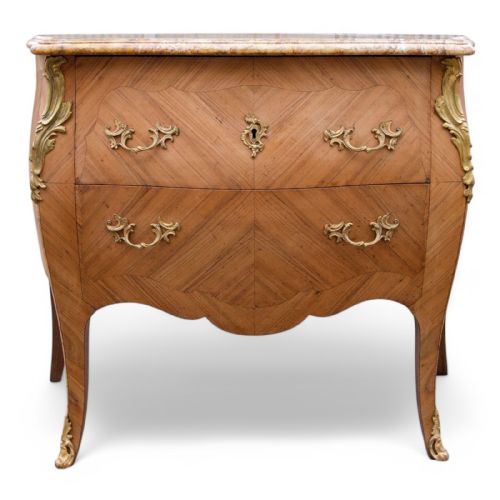

Louis XV Bombe Cabinet
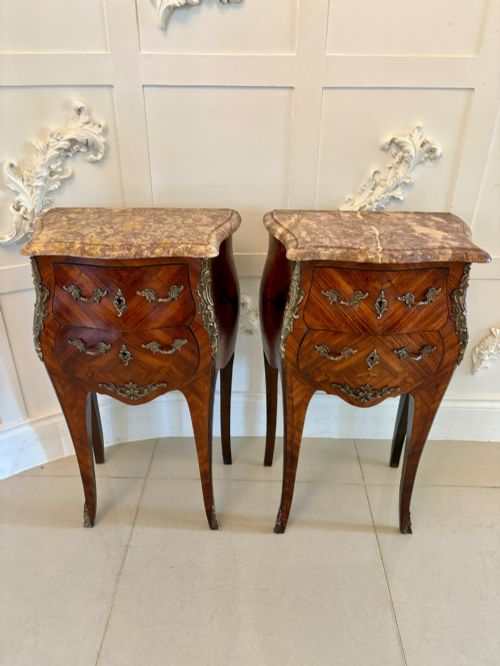
These pieces known as a louis xv bombe cabinet bring sweeping curves and rich marquetry into a room, offering both display space and deep storage.
Louis XV Bombe Cabinet
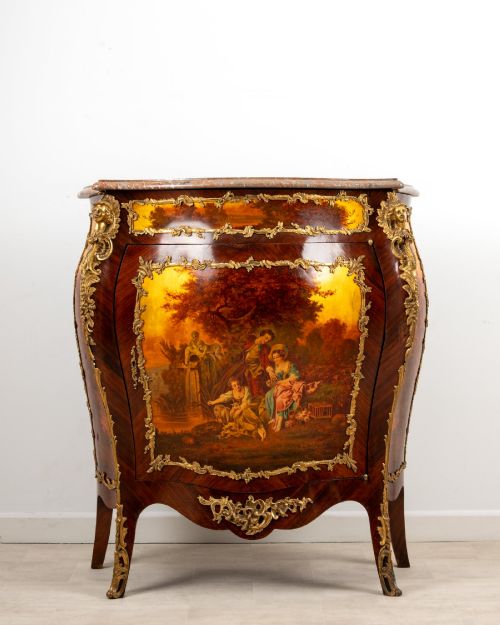
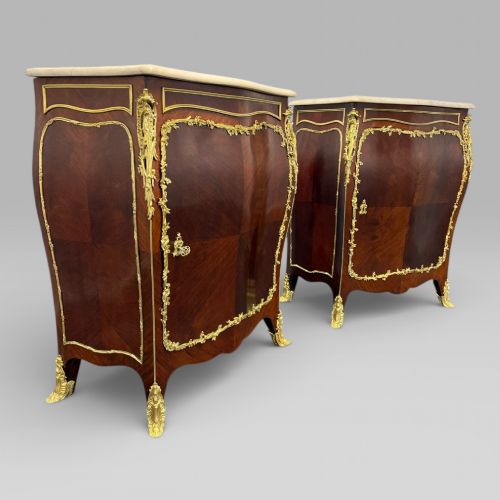
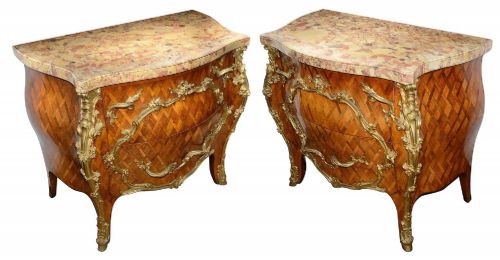
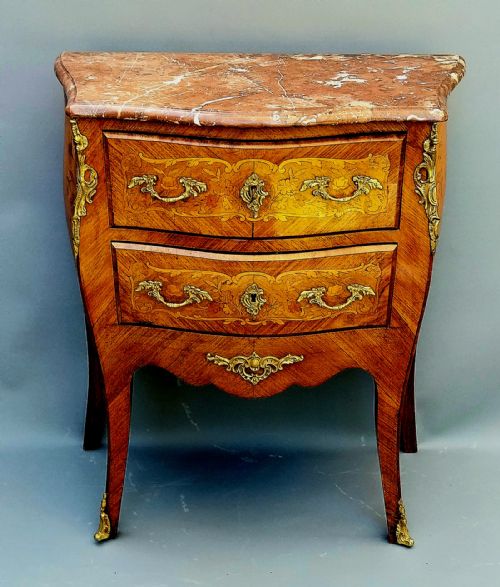
A louis xv bombe cabinet presents a bulging, swelling front and sides that taper gracefully toward the feet, embodying the French Rococo spirit. You will frequently encounter nineteenth-century revival interpretations alongside pieces from the nineteen-twenties and thirties.
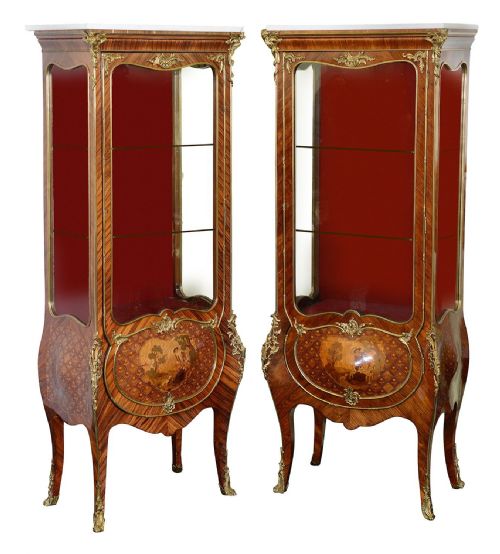
The forms span from small bedside tables and compact commodes to large display cabinets and vitrines. These items emerge primarily through nineteenth-century French cabinet making, drawing heavily on eighteenth-century aesthetics.
The Measure of Quality
Quality rests in the fluidity of the serpentine contour and the precision of the veneer work, where grain patterns align deliberately across the curved surfaces. Master makers constructed frames with rigorous joinery that sustained the complex swelling form without warping.
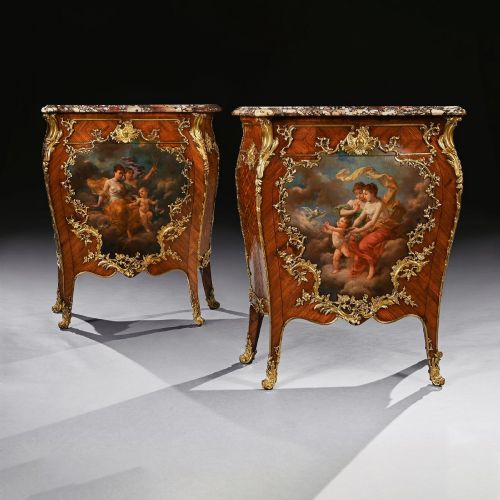
The crispness and weight of the ormolu mounts dictate the upper tiers of production, showing sharp chasing rather than soft casting. Selected marble tops fitted specifically to the irregular perimeter further separate standard examples from finer commissions.
Several bedside cabinets hid chamber pots behind their curving doors, proving that eighteenth-century comfort required considerable architectural disguise.
E. Kahn·Gouffel·Zweiner
The Louis XV Bombe Cabinet Glossary
- Bombe
- A swelling, outward-curved contour found on the front and sides of furniture. This profile demands advanced woodworking skill to shape accurately.
- Ormolu
- Gilded bronze applied to furniture as decorative mounts and feet. The metal is cast and chased to produce crisp ornamentation.
- Vernis Martin
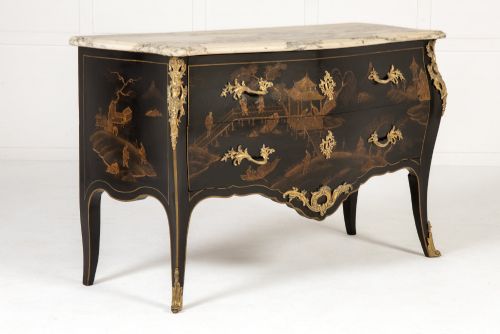
- A simulated Japanese lacquer technique developed in eighteenth-century France. Artisans used successive layers of varnish to achieve glossy painted finishes.
- Marquetry
- Decorative patterns formed by fitting together thin slices of wood veneer. Craftsmen arrange contrasting timbers to picture floral or geometric designs.
- Vitrine
- A glass-fronted cabinet designed for displaying porcelain and small objects. These pieces utilise glass panels on the sides as well as the doors.
Louis XV Bombe Cabinet: Frequently Asked Questions
What is a bombe cabinet?
A bombe cabinet is a storage piece featuring sides and fronts that bulge outward in sweeping curves. These pieces originate largely from French revival periods and draw on eighteenth-century design.
Craftsmen built them using timber frames covered in exotic veneers and embellished with cast metal mounts. Their distinctive shape provides substantial interior volume while maintaining a decorative presence.
How do I style a cabinet in a modern home?
These cabinets work effectively as focal points in hallways, living rooms, or bedrooms due to their strong silhouettes and reflective marble tops. Their compact bedside versions fit neatly beside modern low-profile beds.
Keep surrounding decor simple to let the intricate marquetry and gilt bronze mounts stand out. Use the display shelves for curated objects or leave them clear to highlight the lacquer work.
How do I tell an eighteenth-century piece from a revival piece?
Nineteenth-century revival pieces dominate the available selection, often exhibiting heavier ormolu mounts and machine-prepared timbers beneath the veneers. True eighteenth-century examples show construction methods and timber ageing consistent with earlier workshops.
Examine the secondary woods inside the drawers and the style of the hardware for clues to the manufacturing era. Stylistic markers often blend Louis XV and Louis XVI elements in nineteenth-century interpretations.
What are Vernis Martin finishes?
Vernis Martin is a specialised European lacquer technique that imitates Asian lacquerware. Artisans applied multiple translucent coats of varnish over painted scenes to produce a deep, glossy finish.
This technique appears on cabinets and commodes, frequently featuring pastoral or Chinoiserie motifs. The finish requires careful handling to preserve the integrity of the painted layers.