

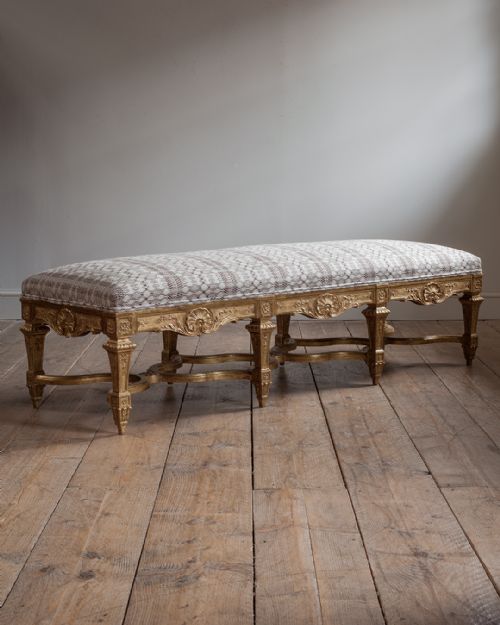
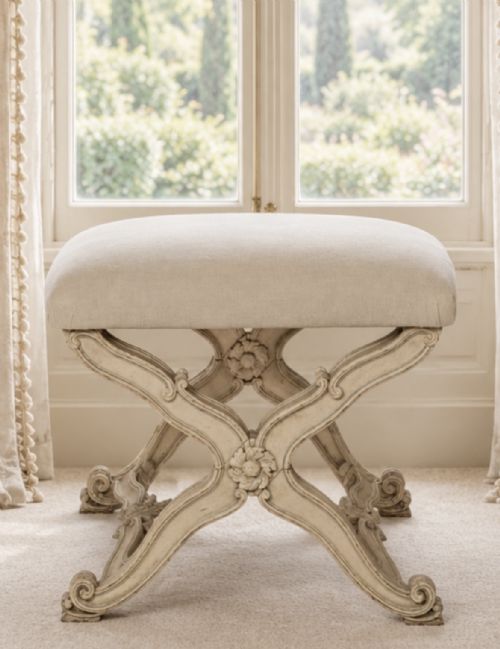
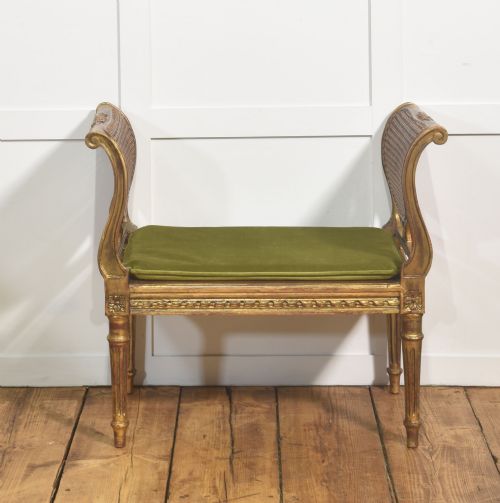
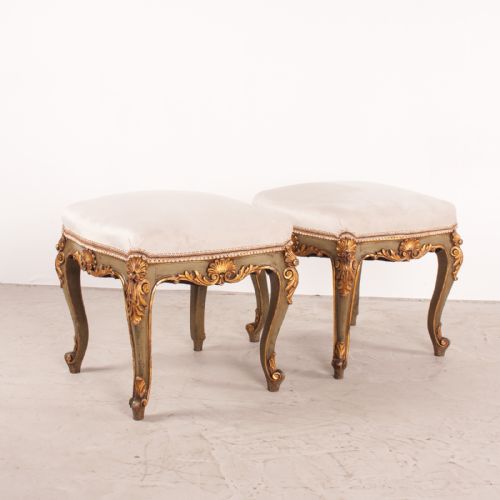


Louis Style Stool
These louis style stool examples bring ornate French seating into modern interiors through carved frames and rich upholstery.
Louis Style Stool
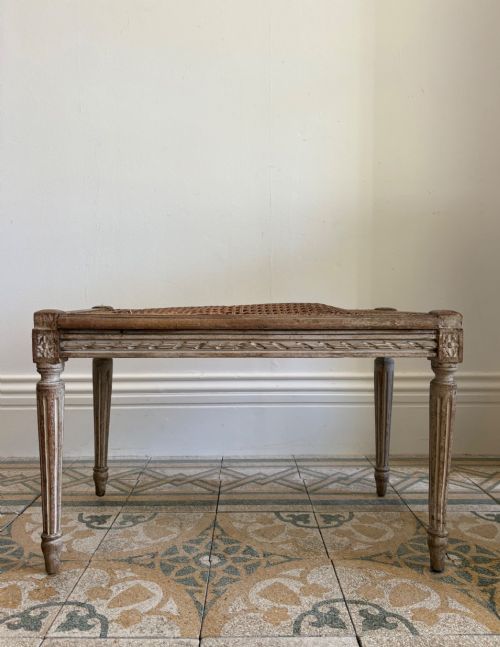
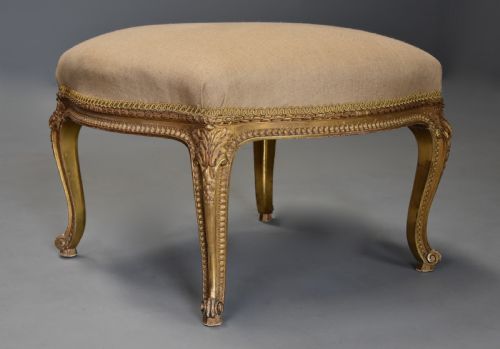
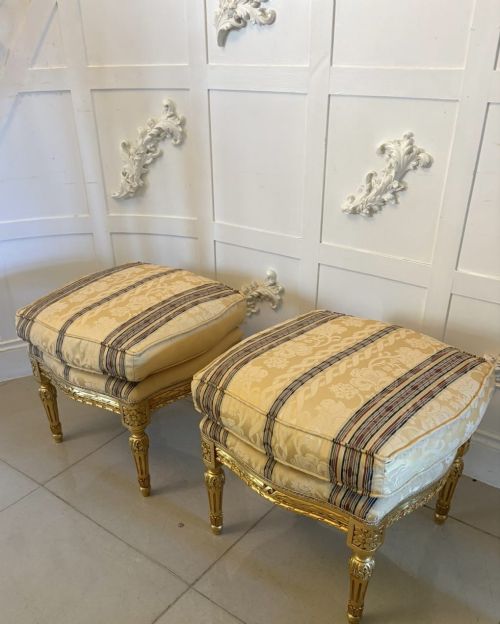
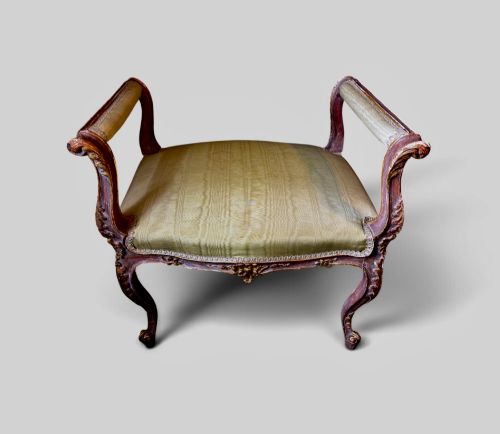
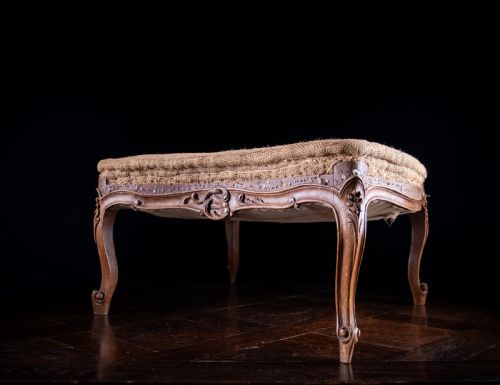
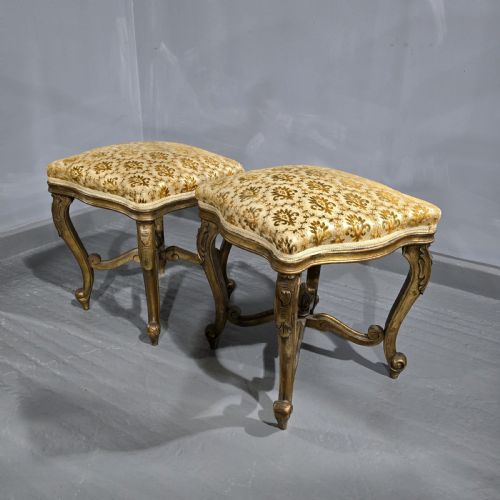
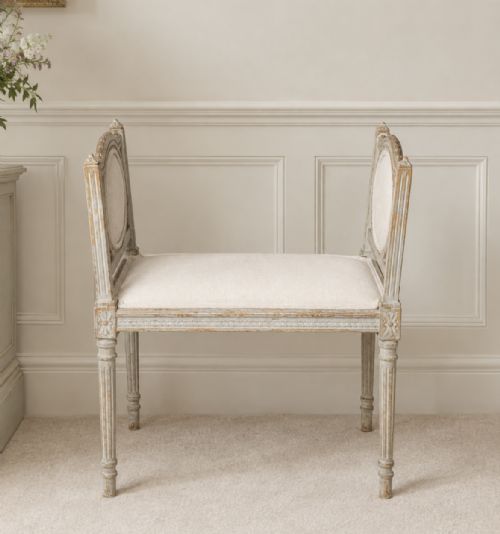
A louis style stool follows classical French design traditions, drawing heavily on the aesthetics of the French Chateau, Rococo Revival, and neoclassical periods. These low seats and window benches serve both decorative and practical roles in period rooms, often taking the form of footstools, long benches, and circular boudoir seats.
The pieces on this page emerge predominantly from the nineteenth and early twentieth centuries, spanning the Victorian era through to the 1930s. Makers of these periods reinterpreted earlier court aesthetics, producing walnut, beech, and giltwood seating designed for refined drawing rooms and salons.
Most entries display traditional French styling such as Louis XV and Louis XVI motifs, alongside related Gustavian and Adams influences. Buyers encounter everything from compact footstools to large window seats featuring intricate carved details and diverse upholstery options.
Materials and construction
Cabinetmakers relied on solid hardwoods such as beech and walnut to build the foundational frames, ensuring durability beneath heavy ornamentation. Woodcarvers then hand-shaped the timber into elaborate cabriole legs, fluted columns, and scrolling supports characteristic of French revival aesthetics.
Surfaces received specialised treatments including fine giltwood, parcel gilding, and white or coloured paint finishes. Artisans applied textile coverings such as velvet, fabric, needlework, and cane work to the seats, securing them to complete the functional seating.
Louis Style Stool Retail Price Guide 2026
Typical asking prices for louis style stool among the pieces listed under this phrase on Sellingantiques today, from the lower quarter to the upper quarter. They describe what is for sale here now, not the wider market.
Listings feature woods including beech, walnut, and painted timber, alongside giltwood finishes.
Indicators of quality
The depth and crispness of the hand carving separate standard commercial seating from exceptional cabinet work. Superior frames display undercut foliage, smooth scrollwork, and precise joinery that remains tight after generations of use.
Materials and finish application dictate the upper tier of pieces. Thick layers of genuine gold leaf on giltwood surfaces, premium hardwood frames like walnut, and well-preserved period textiles or intricate needlework distinguish finer examples from simpler painted beech alternatives.
LOIDRAULT FRERES PARIS
The Louis Style Stool Glossary
- Giltwood
- Wood that has been coated with a thin layer of gold leaf. This finish creates a brilliant metallic lustre favoured in formal French decor.
- Cabriole leg
- A furniture leg that curves outward and then tapers inward. It typically ends in an ornamental foot inspired by animal forms.
- Banquette
- A long upholstered bench or stool designed for seating multiple people. These pieces often sit beneath windows or serve as footrests.
- Cane
- Woven rattan material used to form seats or back panels. It offers a lightweight, flexible surface on wooden frames.
- Needlework
- Hand-stitched textile used for upholstery, often featuring floral or geometric patterns. It provides a textured, decorative surface for historical stools.
Louis Style Stool: Frequently Asked Questions
Where should I place a louis style stool?
These stools fit well at the foot of a bed, beneath a large window, or beside a fireplace in a drawing room. Their compact footprint allows them to serve as flexible extra seating during gatherings.
Larger window seats work effectively in hallways or long corridors, while smaller footstools complement armchairs and sofas in living spaces.
How do I care for giltwood frames?
Giltwood surfaces require gentle dusting with a soft, dry cloth to prevent abrasion of the delicate gold leaf layer. Avoid liquid cleaners and chemical sprays, which can strip the metallic finish over time.
Keep these pieces away from direct sunlight and moisture to protect both the wooden substrate and the historical gilding from cracking.
What is the difference between Louis XV and Louis XVI styles?
Louis XV style furniture emphasises asymmetric curves, organic motifs, and flowing lines associated with the Rococo movement. Frames feature undulating shapes and cabriole legs with naturalistic floral carvings.
Louis XVI style shifts toward neoclassical geometry, featuring straight lines, symmetry, and architectural details like fluted legs and classical urns or ribbons.
Can I reupholster an antique stool?
Reupholstering is a common practice for older seating, especially when original fabrics are worn or damaged. Many pieces survive as upholstery projects awaiting new textiles.
Selecting period-appropriate fabrics such as velvet, silk damask, or traditional needlework helps maintain the aesthetic integrity of the antique frame.